can you clean toys with lysol wipes
You can clean some hard, nonporous toys with Lysol wipes if the current wipe label allows that surface and you follow every direction. For toys that go in a child’s mouth, plush toys, unfinished wood, or toys with electronics and openings, soap-and-water cleaning or the manufacturer’s care method is usually the better choice.
The main challenge is that toys combine different materials, finishes, seams, and openings. A wipe that suits plain plastic may damage printed details, leave residue on a mouth-contact surface, or introduce moisture into an electronic toy.
⚡ The TidyFormula™ Quick Decision
Best approach: Use soap and water for routine cleaning; reserve Lysol wipes for compatible hard, nonporous surfaces when the product label permits.
Use caution with: Mouth-contact toys, painted details, porous materials, glued parts, stuffing, and electronic or battery compartments.
Replace instead of cleaning if: The toy is cracked, peeling, heavily contaminated inside, or impossible to rinse or dry properly.
What I Use For This Job
Using the right tools saves time and protects your belongings. Here are my exact recommendations:
*As an Amazon Associate, TidyFormula earns from qualifying purchases.
Check the Toy Before Using a Wipe
Lysol wipes aren’t suitable for every toy. Check the toy’s care instructions and the current wipe label before applying the product.
| Toy type | Recommended approach |
|---|---|
| Plain hard plastic with no openings | A compatible cleaning wipe may be used according to its label. Soap and water is usually enough for routine dirt. |
| Teething toy or frequently mouthed toy | Use the manufacturer’s approved washing method. If a product label requires rinsing after use on a mouth-contact surface, follow that direction exactly. |
| Painted, printed, or coated toy | Test a hidden area first. Stop if color transfers, the finish becomes tacky, or printed details fade. |
| Unfinished or unsealed wood | Avoid disinfecting wipes unless the toy maker specifically permits them. Moisture and cleaning ingredients may affect the grain or finish. |
| Plush or fabric toy | Follow the care tag. A wipe can leave a damp patch or residue without cleaning the stuffing. |
| Electronic or battery-powered toy | Use minimal moisture only on compatible exterior surfaces. Keep liquid away from speakers, buttons, ports, seams, and the battery compartment. |
| Bath toy with holes | Surface wiping won’t address residue trapped inside. Clean and dry the interior using a method appropriate for the toy. |
How to Use Lysol Wipes on a Compatible Toy
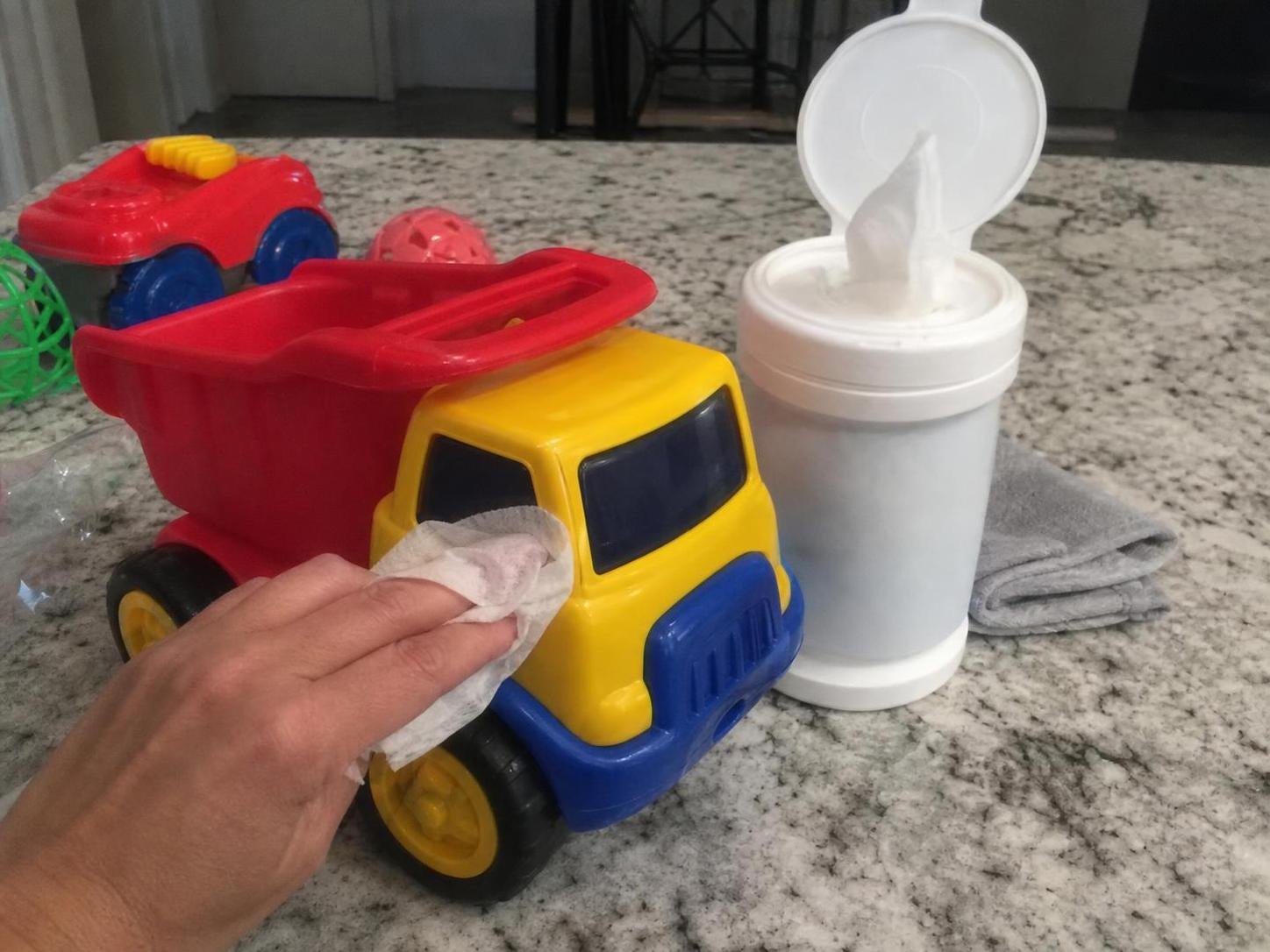
Use this method only for a hard, nonporous toy that the wipe label and toy manufacturer allow you to treat. The product label controls how the wipe should be used, including any surface-wetness, ventilation, protection, or rinsing directions.
- Remove batteries and detachable pieces when possible. Check seams, openings, loose paint, cracks, and damaged coatings before cleaning. Don’t use a wet wipe near exposed wiring or a battery compartment.
- Remove visible dirt first. Use a damp cloth with a small amount of mild dish soap, if the toy’s care instructions permit it. Wipes work poorly when crumbs, grease, or sticky residue remain on the surface.
- Test an inconspicuous spot. Gently wipe a small area and watch for color transfer, cloudiness, tackiness, swelling, or a change in texture. Choose another method if the finish changes.
- Wipe the compatible exterior surface. Use enough product to meet the current label directions without forcing liquid into joints, holes, speakers, or glued seams. Don’t soak the toy.
- Follow the label’s waiting and rinsing instructions. Product formulations and approved uses can differ. Don’t guess at contact time, and don’t assume every treated surface should be handled in the same way.
- Remove residue when required. If the label directs you to rinse a food-contact or mouth-contact surface, use clean water as instructed. If you cannot rinse the toy without trapping water or damaging it, choose a different cleaning method.
- Let the toy dry completely. Place it in a ventilated area away from direct heat. Reinstall batteries or return detachable parts only after all surfaces, seams, and compartments are dry.
Material-Specific Adjustments
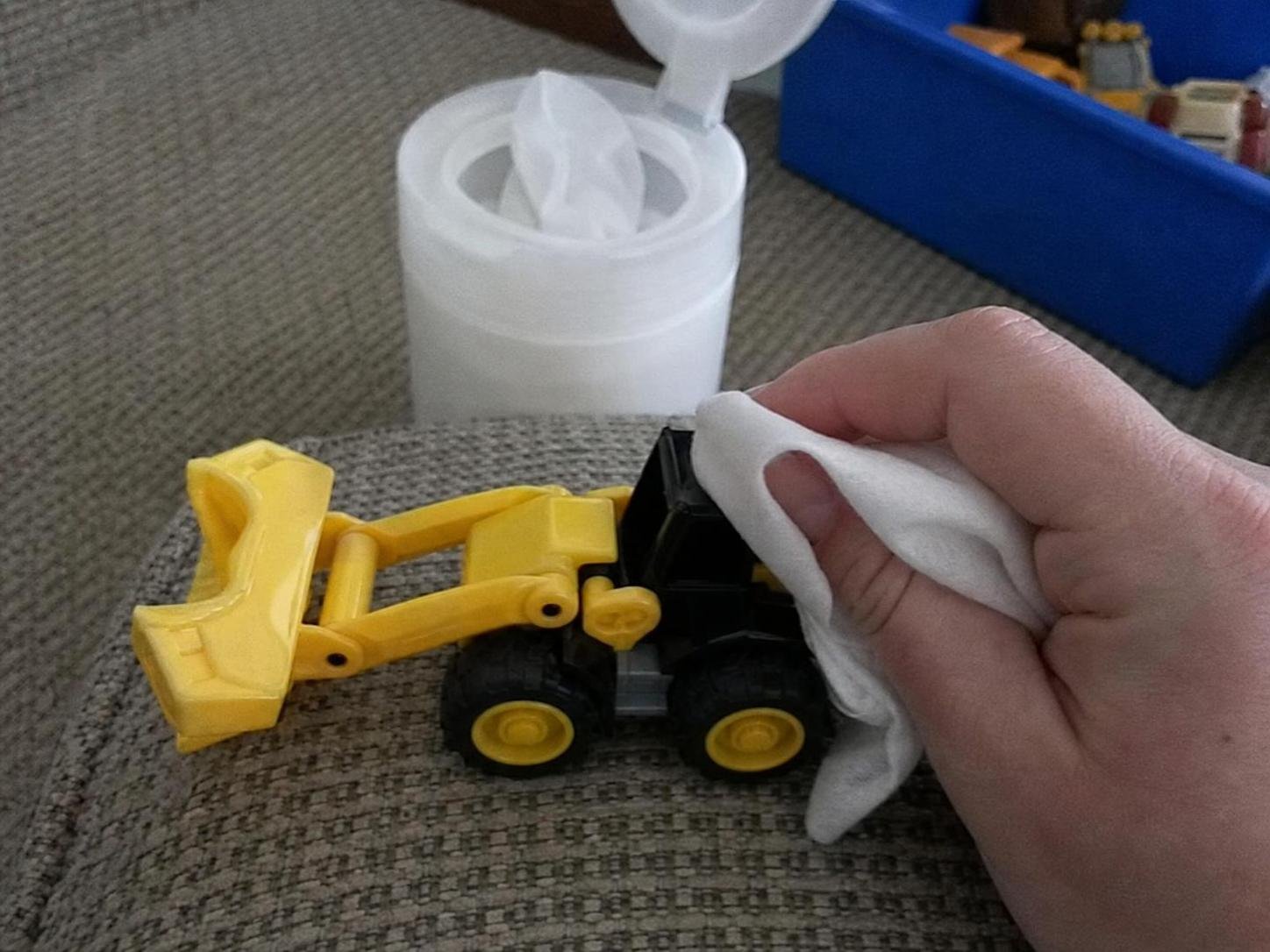
Reduce moisture whenever a toy has glued components, hollow sections, delicate finishes, or parts that cannot be opened for drying. A lightly damp cloth is often more controllable than a saturated cleaning wipe.
Plush and fabric toys
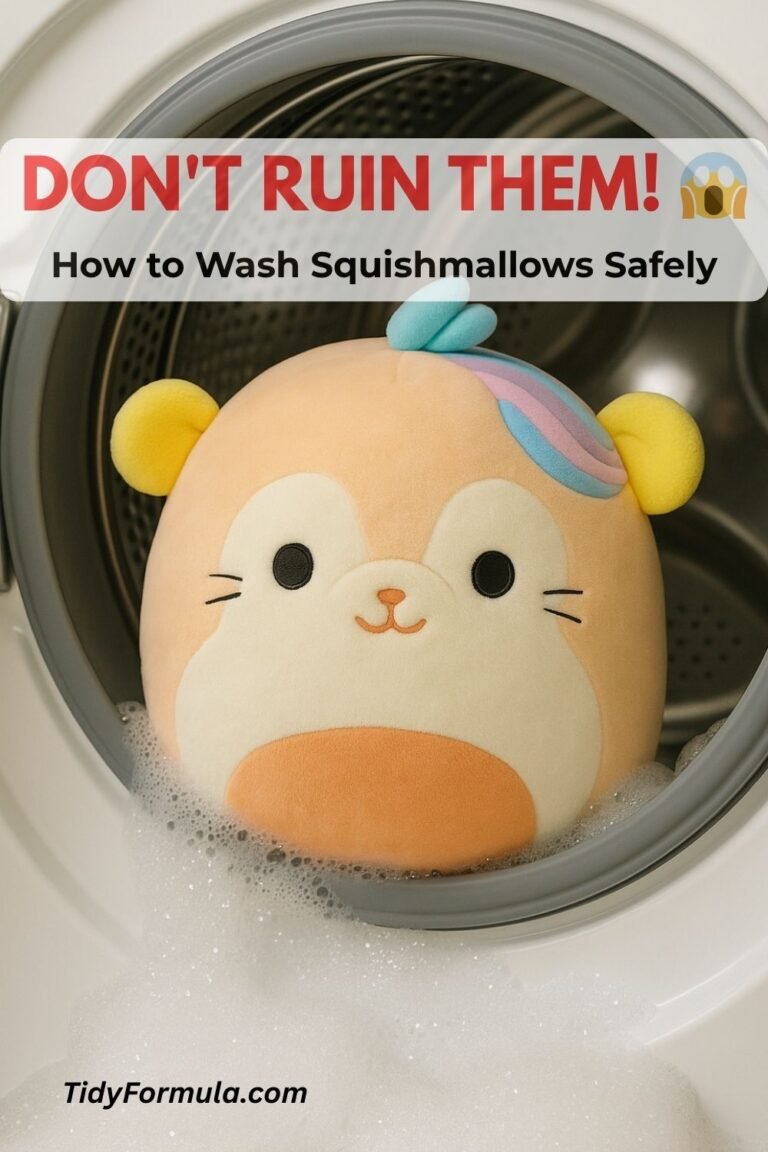
Don’t use a disinfecting wipe as a substitute for washing a plush toy. It may affect the fabric’s color or texture while leaving dirt and moisture in the stuffing. For a non-machine-washable item, use an appropriate surface-cleaning method for plush toys and follow the care tag.
Bath toys
A wipe can clean an accessible outer surface, but it cannot reach residue inside a hollow toy. Toys with squeeze holes need thorough internal cleaning and drainage; the steps for cleaning bath toys inside and out address that separate problem.
For solid, water-safe toys that need a broader wash, consider an appropriate bathtub toy-cleaning method rather than wiping each piece individually. Keep electronic toys and moisture-sensitive materials out of the tub.
Electronic toys
Turn the toy off and remove batteries if the instructions allow it. Apply minimal moisture to the cloth or wipe rather than saturating the toy, and never push liquid around buttons, charging ports, speaker grilles, or seams.
Problems to Watch For
Stop cleaning if the toy’s appearance or texture begins to change. Continuing usually makes finish damage harder to correct.
- Color appears on the wipe: The paint, print, or dye may not be compatible. Stop immediately and blot the area with a clean, slightly damp cloth if the toy’s instructions permit.
- The surface feels sticky or cloudy: Product residue or finish damage may be present. Check the wipe label for rinsing directions and the toy maker’s guidance before using another cleaner.
- A strong product odor remains: Increase ventilation and allow more drying time. Don’t cover the smell with another cleaning product.
- Moisture entered a seam or opening: Turn the toy off, remove batteries when safely possible, and leave the compartment open to dry. Don’t operate it until it is completely dry.
- Printed details begin fading: Stop using the wipe. Future cleaning should use a gentler, manufacturer-approved method with less moisture and pressure.
Never mix Lysol products with bleach, vinegar, ammonia, alcohol, or another household cleaner. Using several products in succession can also create unwanted residue or damage, so rinse only when directed and avoid adding an unapproved second cleaner.
Drying and Returning the Toy to Use
Drying matters most around seams, hollow sections, glued parts, and battery compartments. Set the toy on a clean towel in an area with good airflow, rotating it if needed so moisture doesn’t collect underneath.
Avoid hair dryers, heaters, and other direct heat, which may warp plastic, loosen adhesive, or affect finishes. Drying time varies with the toy’s material, construction, airflow, humidity, and any moisture trapped inside.
Before returning the toy, check that it no longer feels damp or tacky. Confirm that moving parts work normally and that battery contacts are dry before reinstalling batteries. Store washable toys in a dry area rather than a closed container while moisture remains.
Frequently Asked Questions
Are Lysol wipes safe for baby toys?
Not automatically. Safety depends on the exact product label, the toy’s material, and whether the toy is mouthed. For teethers and other mouth-contact items, use the toy manufacturer’s approved cleaning method and follow any product-label rinsing requirements.
Can you spray Lysol directly on toys?
Don’t assume a spray and a wipe have the same instructions or approved uses. Use a spray only if its current label allows the specific surface and application, and keep it away from openings, stuffing, glued seams, and electronics.
Does wiping a visibly dirty toy count as disinfecting it?
Not necessarily. Cleaning removes visible soil, while disinfection is a separate label-directed use. If you need to use a product for disinfection, pre-clean when directed and follow the exact label requirements rather than relying on a quick pass.
Should you rinse a toy after using a Lysol wipe?
Follow the current wipe label. Rinsing requirements can depend on the surface and intended use. Pay particular attention to instructions for items that may contact food or a child’s mouth.
For most routine toy care, mild soap and water is the practical first choice. Use Lysol wipes only on compatible hard, nonporous surfaces, follow the current label exactly, and keep excess moisture out of seams and electronics. Let every toy dry completely before it goes back into use or storage.
Everything Mentioned Above
Before you leave, grab the tools you need to get the job done right the first time:
*As an Amazon Associate, TidyFormula earns from qualifying purchases.