can you clean toys with rubbing alcohol
Yes, you can clean some hard, nonporous toys with rubbing alcohol, but mild dish soap and water is usually the better routine choice. Reserve alcohol for manufacturer-approved, alcohol-compatible surfaces, test a hidden spot first, and avoid porous, painted, glued, rubbery, or mouth-contact toys unless their care instructions specifically allow it.
The complication is that toys often combine several materials. A plastic body may also have printed eyes, adhesive labels, soft grips, internal electronics, or openings where liquid can collect.
⚡ The TidyFormula™ Quick Decision
Best approach: Use soap and water for routine cleaning, and use rubbing alcohol only on a compatible hard surface after checking the toy’s instructions and testing a hidden area.
Use caution with: Paint, printed details, coatings, adhesives, rubber, vinyl, silicone, wood, fabric, stuffing, electronics, and anything children put in their mouths.
Replace instead of cleaning if: The toy is cracked, peeling, impossible to dry internally, or contaminated inside an inaccessible hollow area.
What I Use For This Job
Using the right tools saves time and protects your belongings. Here are my exact recommendations:
*As an Amazon Associate, TidyFormula earns from qualifying purchases.
Check the Toy’s Materials Before Using Alcohol
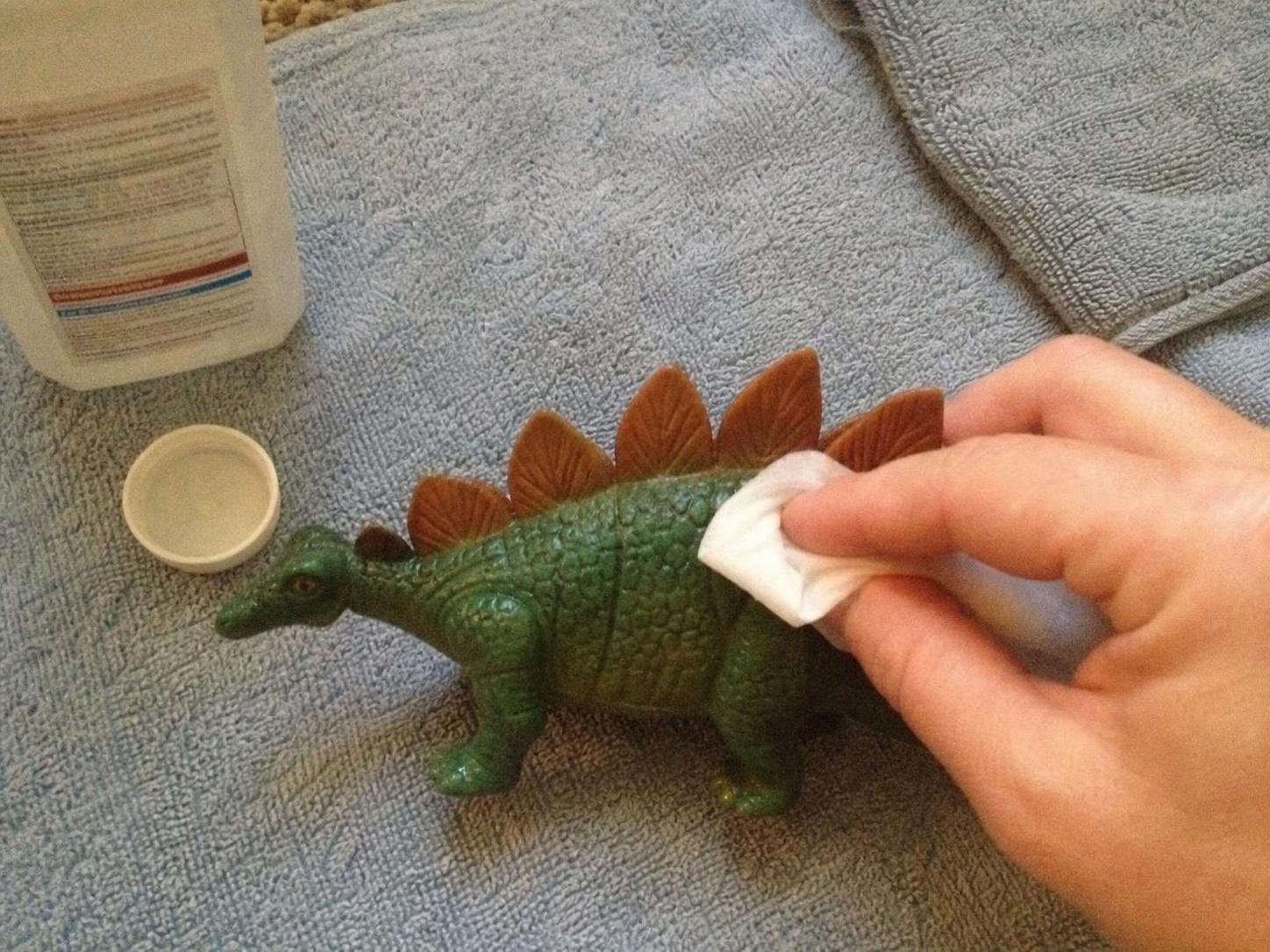
Rubbing alcohol isn’t suitable for every toy material or finish. Check the care label or manufacturer instructions first, especially if the toy is electronic, vintage, collectible, painted, or made with several materials.
| Toy material or condition | Recommended approach |
|---|---|
| Hard, unpainted, nonporous plastic or metal | Alcohol may be suitable if the manufacturer permits it and a hidden-area test shows no change. |
| Painted, printed, coated, or decorated surfaces | Avoid alcohol unless the care instructions specifically approve it. Alcohol may dull the finish or lift color. |
| Rubber, vinyl, silicone, or soft-touch plastic | Use the manufacturer’s cleaning method. Formulations differ, and alcohol may cause discoloration, tackiness, or surface changes. |
| Wood, foam, cardboard, or other porous material | Avoid alcohol. It may absorb unevenly, affect finishes, or leave trapped odor. |
| Plush or stuffed toys | Use a fabric-appropriate surface-cleaning or washing method instead of alcohol. |
| Electronic or battery-powered toys | Clean only as directed by the manufacturer. Never allow liquid into speakers, switches, charging ports, or battery compartments. |
| Teethers and other mouth-contact toys | Default to the manufacturer-approved soap-and-water method. Don’t use alcohol unless the instructions expressly allow it and provide any necessary rinsing directions. |
What You’ll Need
Keep the setup simple and use only enough liquid to dampen your cloth. More alcohol doesn’t produce a better cleaning result and increases the chance of finish or moisture damage.
- Rubbing alcohol in its original labeled container
- A clean white microfiber cloth or soft cotton cloth
- Cotton swabs for accessible grooves, if needed
- Mild dish soap and water for washable toys with visible grime
- A separate clean cloth for rinsing or drying
A white cloth makes color transfer easier to notice. Follow the rubbing alcohol label, including any ventilation or protective-equipment directions, and don’t dilute the product unless its label instructs you to do so.
Never combine rubbing alcohol with bleach or any other cleaning product. Keep alcohol away from flames, sparks, hot surfaces, and other ignition sources.
How to Use Rubbing Alcohol on a Compatible Hard Toy
Use this method only for a hard, nonporous surface that the manufacturer allows you to clean with alcohol. Apply alcohol to the cloth rather than directly to the toy so you can control the moisture.
- Inspect the toy. Look for cracks, loose paint, peeling decals, open seams, exposed adhesive, and damaged battery compartments. Choose another method if liquid could enter the toy or reach a vulnerable finish.
- Remove loose dirt first. Wipe away dust and crumbs. If the washable toy has sticky grime, clean it with mild dish soap and water according to its care instructions, remove all soap residue, and let the surface dry before using alcohol. Don’t apply alcohol over another wet cleaner.
- Test a hidden area. Put a small amount of alcohol on a white cloth and wipe an inconspicuous spot. Let the spot dry completely, then check for color transfer, cloudiness, dullness, swelling, softness, or tackiness. Stop if you notice any change.
- Dampen the cloth. The cloth should be moist but not dripping. Don’t pour alcohol onto the toy, spray it around electronics, or soak the item.
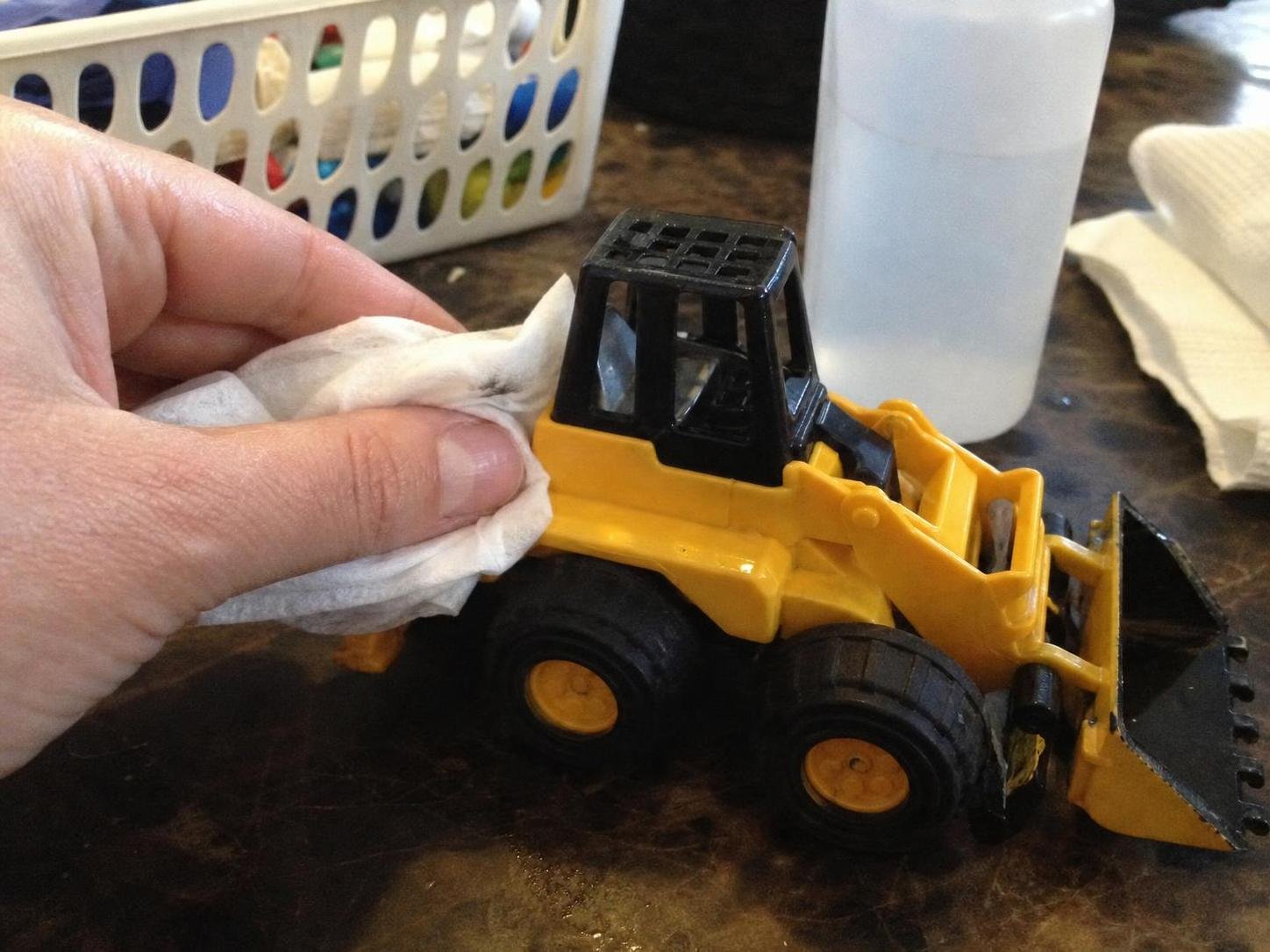
- Wipe the compatible surface gently. Use light pressure and work around seams, decals, painted details, speaker openings, buttons, and glued parts. Use a lightly dampened cotton swab only in accessible grooves where liquid cannot become trapped.
- Follow the product label. If the label gives surface-use, contact, wiping, or rinsing directions, follow them exactly. A casual alcohol wipe should be described as cleaning, not assumed to disinfect the toy.
- Let the toy air-dry. Place it in a ventilated area away from children, pets, flames, sparks, and direct heat. Don’t return batteries or allow play until the toy is completely dry and no alcohol odor remains.
Where Alcohol Is the Wrong Choice
Choose another cleaning method when alcohol could damage the material or enter an area that won’t dry properly. This applies even if the main body of the toy is hard plastic.
Bath toys with holes or trapped water
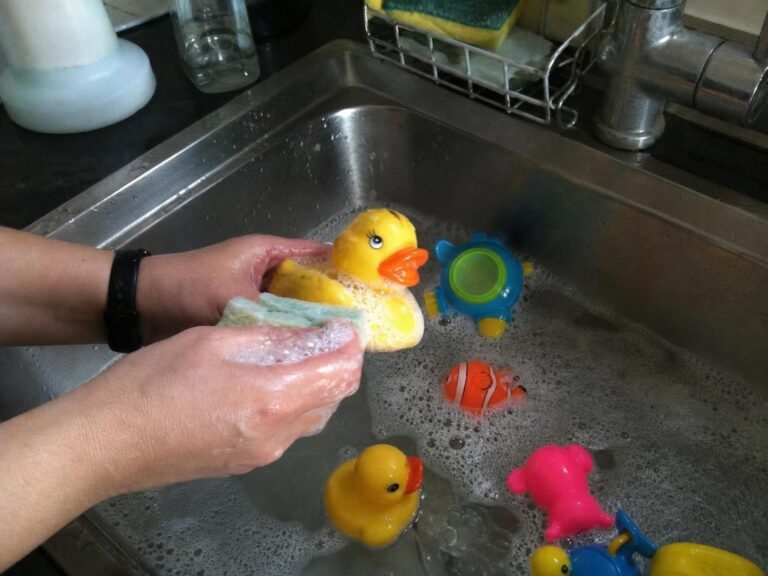
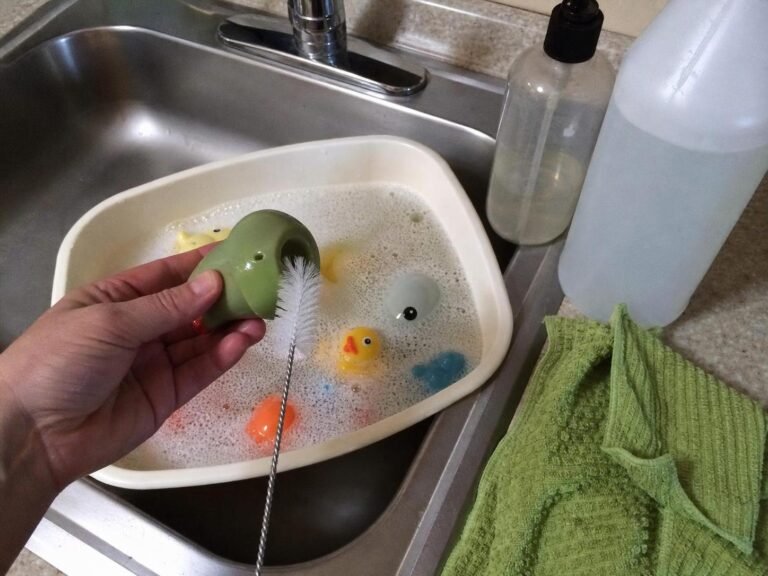
Alcohol wiped across the outside won’t address residue or moisture trapped inside a hollow bath toy. If the toy can be opened and cleaned, follow its care instructions; otherwise, replacement may be more practical when the interior can’t be reached or dried. For suitable washing options, see how to get bath toys clean.
Plush and stuffed toys
Alcohol can create water marks, affect dye, stiffen some fibers, and carry moisture into stuffing. Use a fabric-specific method and avoid saturating seams. The steps for cleaning plush toys without a washing machine are a better fit for non-machine-washable items.
Painted, collectible, or vintage toys
Older finishes and printed details can be especially difficult to identify. Don’t assume a hard surface is alcohol-resistant. Use the manufacturer’s instructions when available, or choose a minimally damp method and seek specialist advice for a valuable item.
Electronic toys
Don’t spray or soak an electronic toy. Remove the batteries if the instructions permit, keep moisture away from openings, and use only the exterior-cleaning method approved by the manufacturer. If liquid has entered the toy, don’t reinstall batteries until you have followed the manufacturer’s guidance.
Stop If You See These Damage Signs
Alcohol-related damage can begin as a subtle surface change. Stop immediately rather than continuing to scrub if you notice any of the following:
- Color appearing on your cleaning cloth
- A cloudy, faded, or unusually shiny patch
- Paint, decals, or printed details lifting
- Plastic becoming sticky, soft, swollen, or brittle-looking
- Adhesive softening around labels, eyes, grips, or seams
- A crack widening or liquid entering an opening
If the material allows damp cleaning, wipe the affected area with a clean cloth lightly dampened with water to remove remaining residue, then blot it dry. Don’t try to correct cloudiness or tackiness with more alcohol or aggressive polishing; some finish damage may not be reversible.
Troubleshooting Residue, Odor, and Trapped Moisture
Most problems come from using too much liquid, skipping the compatibility test, or cleaning a toy with inaccessible internal spaces.
The toy still feels sticky
Sticky residue may be leftover grime, but it can also indicate that the material or coating reacted poorly. Stop using alcohol. If the care instructions allow water, wipe with a clean damp cloth and dry thoroughly. Replace the toy if the surface continues to break down or transfer material.
There’s a lingering alcohol odor
Move the toy to a well-ventilated area away from ignition sources and allow more drying time. Don’t return it to a child while it remains damp or smells strongly of alcohol. Persistent odor in a porous or stuffed section suggests that too much liquid was absorbed.
Liquid entered a seam or battery compartment
Remove batteries only if you can do so safely and the manufacturer permits it. Keep the toy out of use until the internal area is completely dry. If you can’t access the moisture, notice corrosion, or the toy behaves abnormally, follow the manufacturer’s service or replacement guidance.
A white or dull mark appeared
Don’t scrub the mark or apply another solvent. Let the area dry, then check the care instructions for finish-specific guidance. If the mark remains, continued cleaning may make it more noticeable.
Drying and Returning the Toy to Use
Proper drying matters as much as the wiping step. Drying time varies with the toy’s material, seams, internal spaces, airflow, and the amount of liquid used.
- Blot visible moisture with a clean, dry cloth.
- Air-dry the toy in a ventilated location away from direct heat and ignition sources.
- Position openings downward only if doing so safely helps moisture drain.
- Check seams, screw holes, sound openings, and battery compartments for dampness.
- Reinstall batteries or removable parts only after every accessible area is dry.
- Store clean toys in a dry place rather than a closed container while any moisture remains.
Frequently Asked Questions
Does rubbing alcohol disinfect toys?
Don’t assume that wiping a toy with rubbing alcohol disinfects it. Product formulation, surface compatibility, application, and label directions all matter. If disinfection is necessary, use only a product labeled for the intended surface and follow its current directions, including any rinsing requirements.
Can you use alcohol wipes on toys?
Possibly, but check both the wipe label and the toy manufacturer’s instructions. Wipes can contain ingredients other than alcohol, and they may not be appropriate for painted details, soft plastics, electronics, or mouth-contact surfaces.
Is alcohol suitable for baby toys?
There isn’t one safe method for every baby toy. For washable baby toys, manufacturer-approved soap and water is generally the more practical default. Follow specific care and rinsing instructions for teethers, pacifiers, feeding-related items, and anything regularly placed in the mouth.
For routine toy cleaning, choose mild soap and water whenever the item is washable. Use rubbing alcohol only on a confirmed compatible hard surface, apply it sparingly with a cloth, and stop at the first sign of finish or material damage. Careful drying and regular checks for cracks or trapped moisture help keep toys easier to maintain.
Everything Mentioned Above
Before you leave, grab the tools you need to get the job done right the first time:
*As an Amazon Associate, TidyFormula earns from qualifying purchases.