Can You Put Gold Plated Silverware in the Dishwasher? Real Answer + Care Guide
No—unless the manufacturer’s written care instructions specifically say the set is dishwasher safe. Traditional gold-plated silverware should be hand washed because dishwasher detergent, heat, prolonged moisture, and contact with other utensils can dull, scratch, or wear through the thin gold layer. Some PVD-coated gold-tone flatware is dishwasher safe, but care requirements vary by brand.
If you cannot confirm what type of finish you have, treat the pieces as hand-wash only. This is especially important for vintage, heirloom, sterling-based, silver-plated, or decorated flatware.
Quick Decision Guide
| Type of flatware | Dishwasher? | Safest care |
|---|---|---|
| Traditional gold-plated flatware | No, unless explicitly approved | Hand wash and dry immediately |
| Vintage or heirloom gold flatware | No | Hand wash one piece at a time |
| Gold plating over sterling silver or silver plate | No | Hand wash; avoid abrasives and prolonged soaking |
| PVD-coated gold-tone stainless steel | Sometimes | Follow the manufacturer’s cycle, detergent, and loading directions |
| Unknown finish or missing care instructions | No | Assume hand-wash only |
A gold color alone does not tell you whether the finish is electroplated gold, a PVD coating, lacquer, or another decorative treatment. Do not rely on appearance or a magnet test to determine dishwasher safety.
The Science: Why Gold Plated Silverware Is Usually Not Dishwasher Safe
What gold plated silverware actually is
Gold plated silverware isn’t solid gold. It’s usually:
- A base metal, such as stainless steel, sterling silver, silver plate, or another metal alloy
- Covered with a very thin layer of gold applied by electroplating
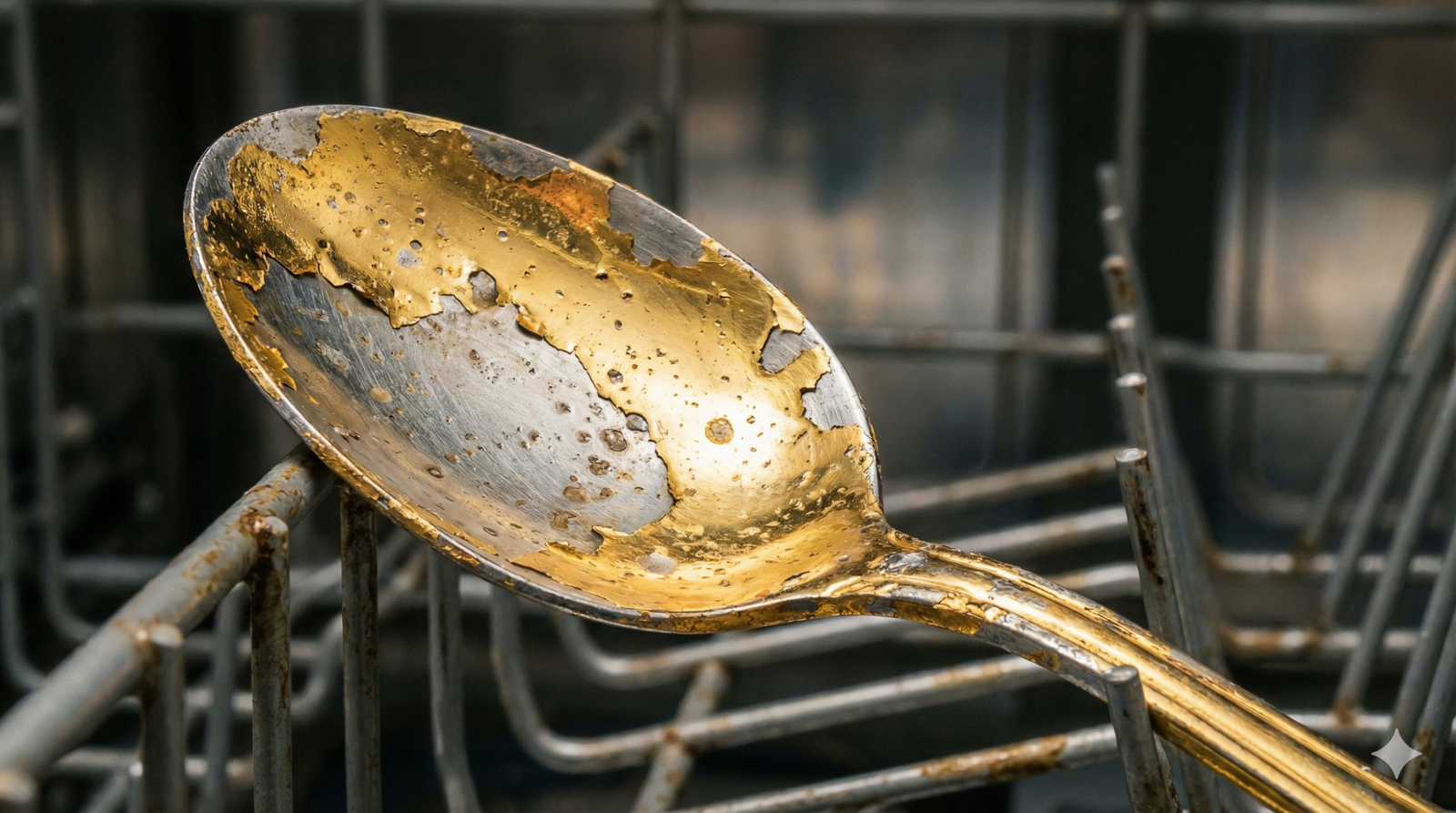
That outer layer is much thinner and softer than the metal beneath it. The plating naturally wears first at fork tines, spoon bowls, knife edges, handle ridges, and other high-contact areas.
What I Use For This Job
Using the right tools saves time and protects your belongings. Here are my exact recommendations:
*As an Amazon Associate, TidyFormula earns from qualifying purchases.
Some modern “gold” flatware uses a PVD (Physical Vapor Deposition) coating. PVD is a different finishing process that can produce a harder, more wear-resistant gold-colored surface. However, PVD does not automatically mean dishwasher safe. The manufacturer must still approve the finished product, including its base metal, decorative details, and construction.
What happens inside your dishwasher
A dishwasher exposes flatware to several conditions that can shorten the life of a decorative finish:
- Concentrated alkaline detergent: Dishwasher detergent is more aggressive than mild hand-washing liquid and may dull decorative finishes or expose weaknesses in already-worn plating.
- Heat: Hot washing and heated drying can worsen spotting, baked-on residue, and stress on pieces that contain lacquered, glued, hollow, or decorated components.
- Spray and movement: Utensils can vibrate against one another, creating fine scratches and worn edges.
- Prolonged moisture: Water and detergent can remain around scratches, seams, hollow handles, or exposed base metal.
- Contact with other metals: Mixed-metal contact in a wet, detergent-filled environment may contribute to staining or corrosion, particularly where the gold layer is already damaged.
Gold itself is relatively resistant to tarnish, but the thinness of the plating and the condition of the metal underneath determine how well the piece survives repeated washing.
PVD vs. traditional gold plating
According to common cutlery care guidance:
- PVD gold-tone flatware
- Usually has a harder and more wear-resistant surface than traditional gold electroplating
- May be dishwasher safe if the manufacturer specifically says so
- Still benefits from gentle detergent, careful loading, and prompt drying
- Traditional electroplated gold flatware
- Has a thin decorative gold layer that can wear at edges and contact points
- Is generally best kept out of the dishwasher
- Can become scratched, dull, or patchy with repeated harsh washing
Because shoppers often cannot identify the coating—and because many heirloom or vintage sets are electroplated—the safest rule is: do not put gold plated silverware in the dishwasher unless the maker clearly permits it.
How to Identify the Finish and Find the Right Care Instructions
Before washing, look for:
- The brand and pattern name on the original box, receipt, or product listing
- Words such as “gold plated,” “gold electroplate,” “PVD,” “titanium-coated,” “gold-tone stainless,” or “hand wash only”
- A model number or maker’s mark stamped on the handle
- Separate instructions for knives, serving pieces, or utensils with decorative handles
A stamp such as “18/10 stainless” identifies the underlying stainless steel, not necessarily the gold-colored finish. Likewise, “sterling” indicates the base material but does not tell you how thick or durable the gold plating is.
If the product page has disappeared, contact the manufacturer with the pattern name and a photo. Until you receive a clear answer, hand wash the set.
The “Top Rack” Rule
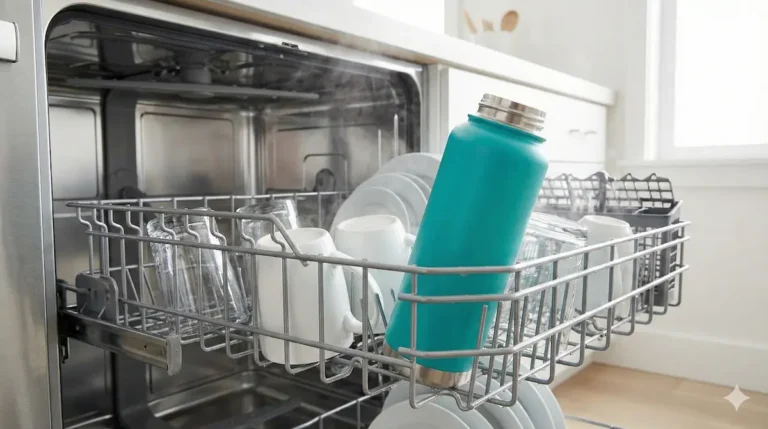
Most gold plated sets are best kept out of the dishwasher entirely. If you own a modern PVD-coated set or another gold-tone set explicitly labeled dishwasher safe, careful placement can reduce scratching.
Use a flatware tray when available
A dedicated upper flatware tray keeps pieces separated and reduces metal-on-metal contact. It is usually preferable to placing delicate flatware loosely on a regular top rack, where utensils may fall through or interfere with the spray arms.
If your dishwasher only has a cutlery basket:
- Do not cram pieces together.
- Keep gold-tone pieces from rubbing against heavy stainless utensils.
- Position sharp knives exactly as the dishwasher and cutlery manufacturers direct.
- Make sure long handles cannot block a spray arm.
Dishwasher designs differ, so the manufacturer’s loading location takes priority over a general “top rack” recommendation.
If your manufacturer says “dishwasher safe,” do this:
- Inspect each piece first.
- Hand wash any utensil with peeling, bubbling, exposed base metal, loose decoration, cracks, or gaps around a hollow handle.
- Rinse off damaging residue promptly.
- Remove salty, acidic, egg-based, and tomato-based food instead of letting it dry on the surface.
- Separate the utensils.
- Use a dedicated flatware tray or load the basket loosely so pieces cannot knock together.
- Select the permitted cycle.
- Use the gentle, low-temperature, or normal cycle specified by the flatware maker. Skip sanitize settings unless the manufacturer expressly allows them.
- Use an appropriate detergent.
- Follow the flatware maker’s detergent guidance. Avoid chlorine bleach, abrasive cleaners, and unusually aggressive “power” products unless specifically approved.
- Turn off high-heat drying when advised.
- Open the door after the cycle and remove the flatware promptly.
- Dry and inspect.
- Use a soft, lint-free towel and check for cloudiness, color transfer, rough spots, or new areas of exposed metal.
Stop using the dishwasher if the color becomes lighter, uneven, cloudy, rough, or patchy. Those changes indicate that the finish or exposed base metal may be reacting poorly to the process.
Step-by-Step Washing Guide
Use this two-tier rule:
- No clear dishwasher-safe claim: Hand wash only.
- Verified dishwasher-safe PVD or gold-tone set: Follow the maker’s dishwasher instructions and load the pieces carefully.
1. Safest method: hand washing
Use this method for traditional gold plating, vintage pieces, heirloom sets, and any flatware with unknown care requirements.
- Prepare the washing area.
- Place a soft towel or rubber sink mat in the basin to reduce scratching and prevent pieces from striking a hard sink.
- Do not wash delicate gold flatware in a sink filled with heavy pots, knives, or stainless utensils.
- Pre-rinse promptly.
- Rinse off salt, mustard, vinegar-based dressings, citrus, tomato sauce, eggs, and other residue after the meal.
- Prepare lukewarm soapy water.
- Use warm, not scalding, water with a small amount of mild liquid dish soap.
- Wash a few pieces at a time.
- This prevents forks, spoons, and knives from scraping against one another.
- Wipe gently.
- Use a soft sponge, nonabrasive cloth, or microfiber cloth. Clean along the length of the handle rather than scrubbing hard in circles.
- Soak only briefly when necessary.
- A short soak can loosen food, but prolonged soaking may allow water into seams or expose damaged areas to moisture.
- Rinse thoroughly.
- Remove all soap so it does not dry into a cloudy film.
- Dry immediately.
- Pat each piece dry with a clean, soft, lint-free towel. Do not leave the utensils wet in a draining rack or stacked together.
- Inspect before storage.
- Look for loose handles, rough edges, lifting finish, dark spots, or exposed silver- or copper-colored metal.
2. Dishwasher method for approved gold-tone flatware
Only use this method when the specific set is clearly sold as dishwasher safe:
- Read the manufacturer’s care guide, including any separate instructions for knives or serving pieces.
- Remove food residue before it dries.
- Place pieces separately on a dedicated flatware tray or loosely in the approved basket.
- Keep them from touching silver, aluminum, rusty utensils, and heavy cookware.
- Choose the cycle and detergent permitted by the manufacturer.
- Skip sanitize and high-heat drying settings unless expressly approved.
- Remove the flatware promptly and hand-dry it with a soft towel.
- Compare the finish with an unused or rarely used piece. If you notice fading or cloudiness, switch to hand washing.
Dishwasher-safe does not mean wear-proof. Hand washing generally reduces abrasion and gives you better control over detergent exposure, contact, and drying.
Cleaning Methods to Avoid
Do not use the following on gold plated silverware unless the manufacturer specifically approves them:
- Steel wool, scouring pads, or stiff brushes, which can scratch through thin plating
- Abrasive powders or cream cleansers, which can create fine scratches and dull the finish
- Toothpaste or baking soda paste, both of which can act as abrasives
- Silver dip or tarnish-removing chemicals, which may affect the gold layer or exposed base metal
- Generic metal polish, which can remove a small amount of surface material each time it is used
- Chlorine bleach, including cleaners or dishwasher products containing it when the maker advises against them
- Undiluted vinegar, lemon juice, or acidic soaking solutions
- Boiling water, steam cleaning, or ultrasonic cleaning without approval from the maker or a qualified restorer
Never mix cleaning products. For valuable, antique, or heirloom pieces, ask a professional conservator or reputable silver restorer before attempting stain removal or polishing.
What Could Go Wrong?
1. Dulling and discoloration
Detergent residue, mineral deposits, surface wear, or damage to the decorative coating can leave the flatware looking flat, hazy, or unevenly faded. A removable film may improve with gentle hand washing, but true color loss will not.
2. Scratches and patchy plating
Contact with other utensils can wear the finish at:
- Fork tines
- Spoon bowls and rims
- Knife edges and shoulders
- Raised handle designs
- Areas where pieces overlap in storage
Silver-, gray-, or copper-colored streaks that remain after gentle cleaning usually indicate exposed base metal rather than surface dirt.
3. Pitting and corrosion
If scratches expose the base metal, moisture and detergent can reach those areas. Warning signs include:
- Tiny pits or pinholes
- Orange-brown rust spots
- Greenish discoloration
- Darkened seams
- Rough or raised areas under the finish
Stop dishwashing affected pieces. Dry them completely and consult the manufacturer or a professional restorer if the set is valuable.
4. Peeling, flaking, or bubbling
A lifting finish cannot be repaired with household polish. Continued washing may enlarge the damaged area. Set the piece aside so loose edges do not catch on cloths or scratch neighboring utensils.
5. Damage to matching pieces
Gold-rimmed plates, decorated glasses, and metallic-trimmed china may have different care requirements from the flatware. Do not assume they are dishwasher safe because the cutlery is. Wash each item according to its own manufacturer instructions.
What to Do If You Already Put Gold Plated Silverware in the Dishwasher
One dishwasher cycle does not necessarily mean the set is ruined. Take these steps:
- Remove the pieces promptly and rinse away any remaining detergent with lukewarm water.
- Dry each piece completely using a soft, lint-free towel.
- Check the finish in bright, indirect light for cloudiness, spots, roughness, peeling, or exposed metal.
- Rewash gently by hand if the surface only has a removable detergent film.
- Do not scrub persistent marks. If a patch remains after mild soap and water, it may be plating loss rather than residue.
- Switch to hand washing if any new fading, pitting, bubbling, or discoloration appears.
Do not try to recolor worn areas with gold paint, marker, or unapproved plating kits, especially on surfaces that touch food. Professional replating may be an option for valuable pieces.
Aftercare and Storage
Drying without water spots
Hard-water minerals and dried detergent can make gold surfaces look cloudy. After rinsing:
- Dry each utensil immediately.
- Use a clean microfiber or soft cotton cloth.
- Wipe gently rather than buffing aggressively.
- Make sure seams and decorative grooves are dry before storage.
Safe storage
Store gold plated silverware in a clean, dry location:
- Use a felt-lined drawer, cutlery chest, or soft individual sleeves.
- Keep pieces separated so bowls, tines, and handles do not rub.
- Do not bundle the set tightly with rubber bands, which can leave pressure marks and may affect some metals over time.
- Avoid damp basements, humid cabinets, and areas exposed to household cleaning fumes.
- Make sure the flatware is completely dry before closing a storage chest.
For fingerprints or light film, begin with mild soap and water. Use a polishing cloth only if it is nonabrasive and specifically approved for the particular gold finish.
FAQ: Gold Plated Silverware and Dishwashers
1. How do I know if my gold plated silverware is dishwasher safe?
Check the original packaging, product page, pattern information, or manufacturer’s care guide for an explicit “dishwasher safe” statement. Do not assume a set is dishwasher safe simply because its base is stainless steel or its finish is described as PVD.
If you cannot verify the instructions, treat it as hand-wash only.
2. Can gold plated silverware go in the dishwasher once in a while?
An occasional dishwasher cycle can still cause scratching, cloudiness, or finish wear, particularly on traditional electroplating. Frequency does not remove the risk. Hand wash unless the specific set is approved for dishwasher use.
3. Can I wash gold rimmed china with gold plated silverware?
Only if the care instructions for both products permit dishwasher use. Gold-trimmed china often requires hand washing because detergent and spray action can wear away metallic decoration. The fact that one item is dishwasher safe does not make the other safe.
4. Can faded or patchy gold plating be restored?
Ordinary cleaning cannot replace missing gold. A professional metal finisher may be able to strip and replate suitable pieces, but feasibility depends on the base metal, construction, condition, and value of the set. Avoid aggressive polishing because it can remove more of the remaining finish.
5. Why does my gold flatware look cloudy after washing?
Cloudiness may be dried detergent, hard-water residue, fine scratching, or a change in the finish. First wash the piece gently with mild dish soap, rinse thoroughly, and dry it with a soft cloth. If the haze remains or the color looks uneven, stop dishwashing the set and contact the manufacturer for finish-specific advice.
Everything Mentioned Above
Before you leave, grab the tools you need to get the job done right the first time:
*As an Amazon Associate, TidyFormula earns from qualifying purchases.