How to Clean Quartz Countertops without Dulling
Clean quartz countertops with a soft microfiber cloth, warm water, and a few drops of mild dish soap, then dry the surface completely. Avoid abrasive pads, bleach-heavy cleaners, and strong acids like vinegar or lemon juice on a regular basis, since they can wear down the resin binders that give quartz its shine and eventually leave the surface looking dull or streaky.
If your quartz countertop already looks hazy or flat in certain spots, that dullness usually builds up gradually from repeated use of the wrong cleaner or from harsh scrubbing rather than from a single mistake.
⚡ The TidyFormula™ Quick Decision
Best approach: Warm water, a mild dish soap, and a microfiber cloth, followed by a full dry-off with a clean towel.
Use caution with: Vinegar, bleach, ammonia-based glass cleaners, abrasive powders, and scouring pads, all of which can dull the resin surface over repeated use.
Stop and reassess if: You notice a dull film, faint scratches, or a rough patch developing, especially near the sink or stovetop, where cleaner residue and heat exposure are most common.
What I Use For This Job
Using the right tools saves time and protects your belongings. Here are my exact recommendations:
*As an Amazon Associate, TidyFormula earns from qualifying purchases.
Why Quartz Needs Gentler Care Than It Looks Like It Does
Quartz countertops are engineered from crushed natural quartz combined with resin binders and pigments, then polished to a glossy or matte finish. That polished layer is durable against everyday scratches and stains, but it is not indestructible. Strong acids and abrasive scrubbing can wear down the resin over time, which is what causes the surface to look duller or slightly rougher even though the counter is not technically damaged in a structural sense.
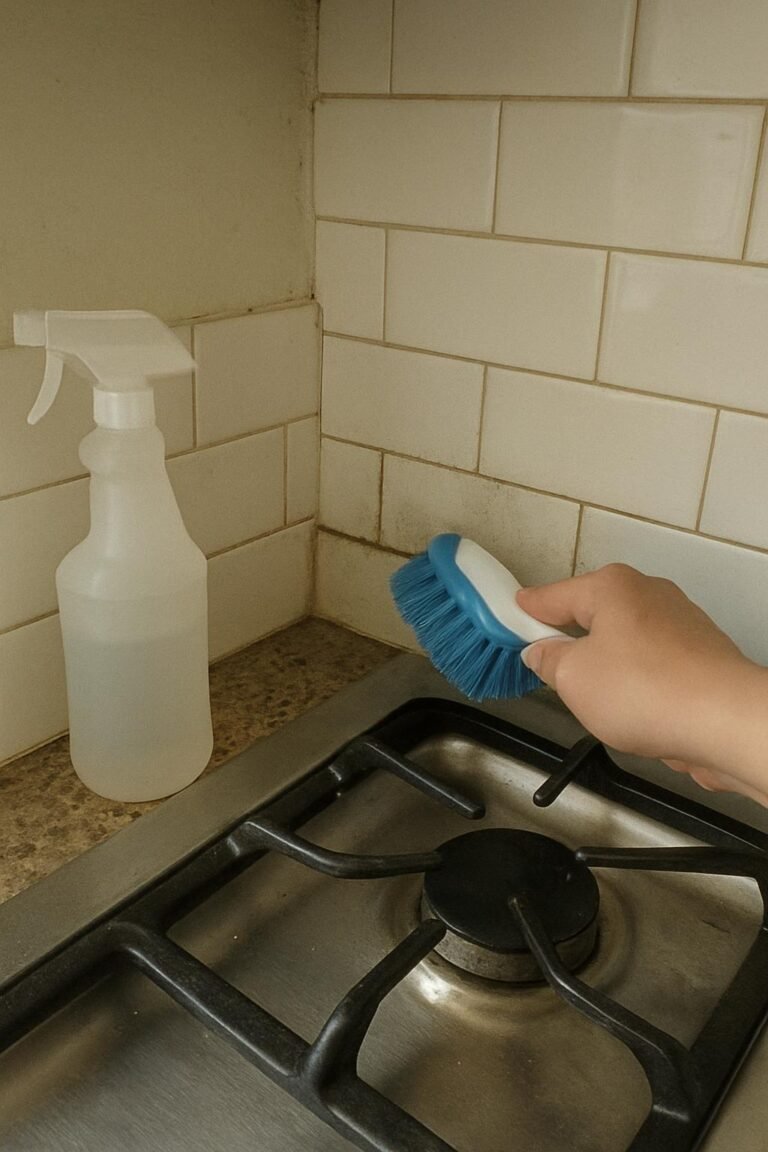
This matters most in high-use areas like the section around the stove, the sink, and any spot where a bottle of vinegar-based cleaner tends to sit and get reached for out of habit.
The Safest Everyday Cleaning Method
- Wipe up spills promptly. Quartz resists staining well, but sugary drinks, oils, and colored liquids sit on top of the surface and can leave a slight residue if left for hours.
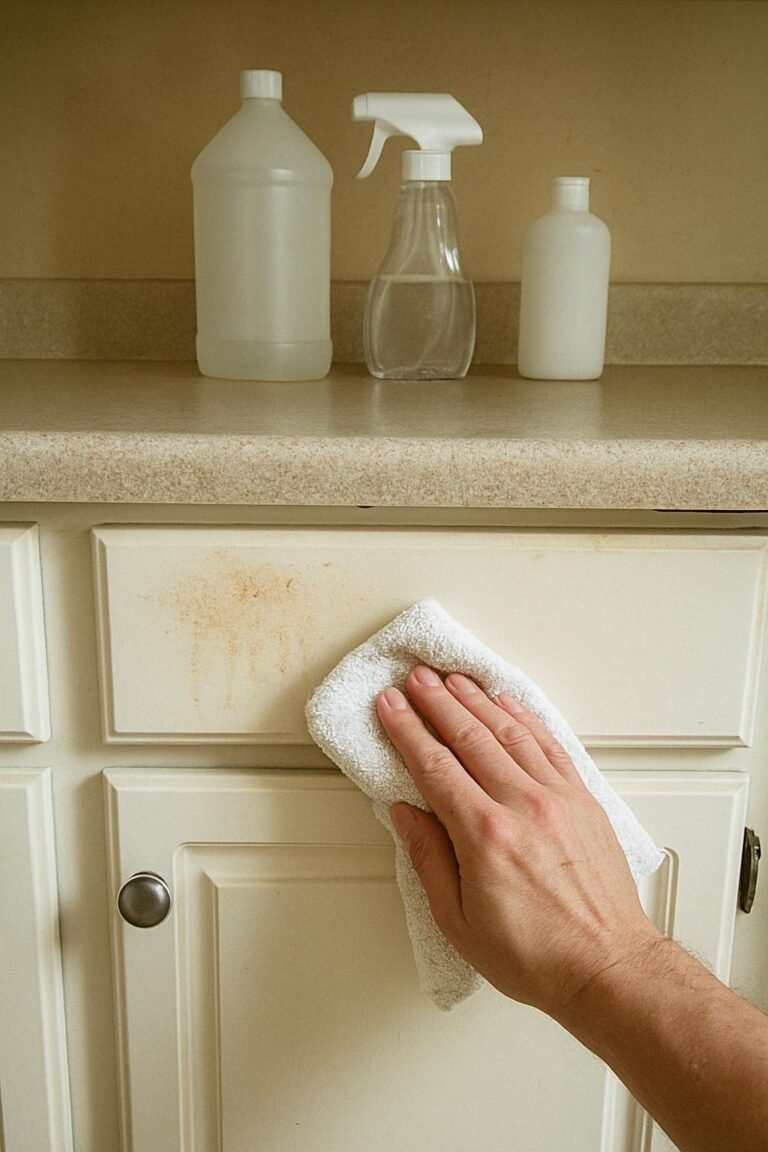
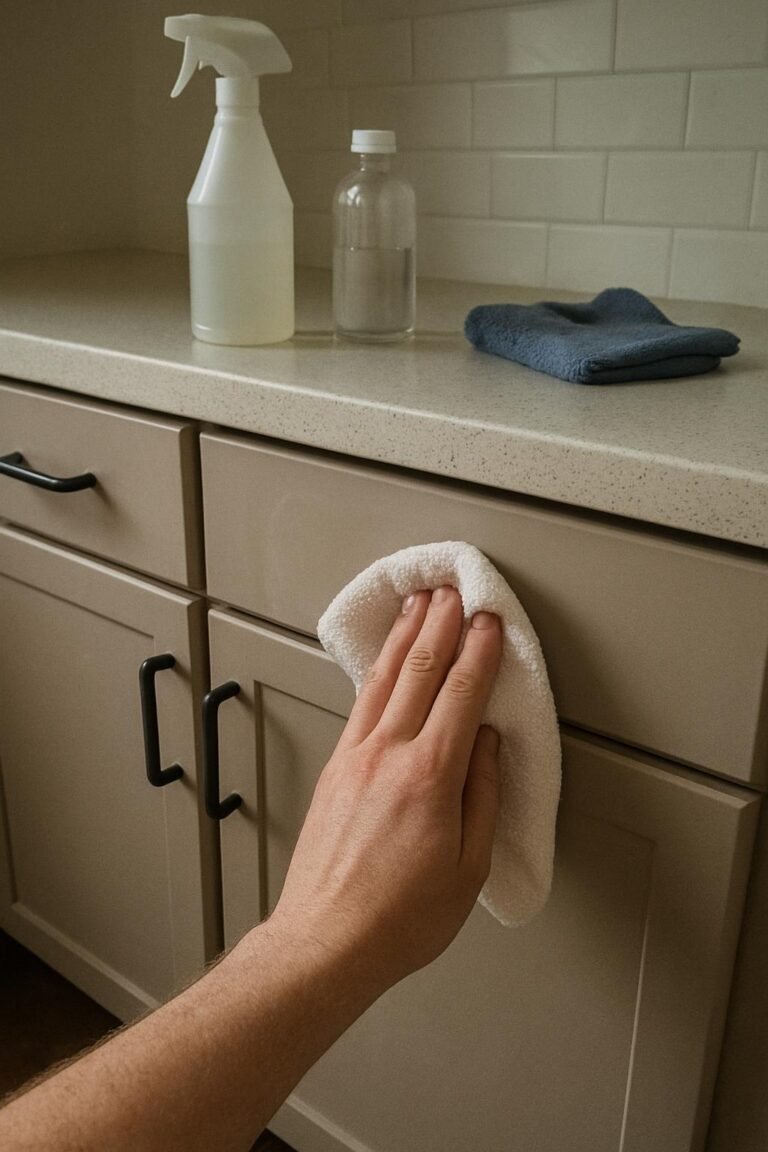
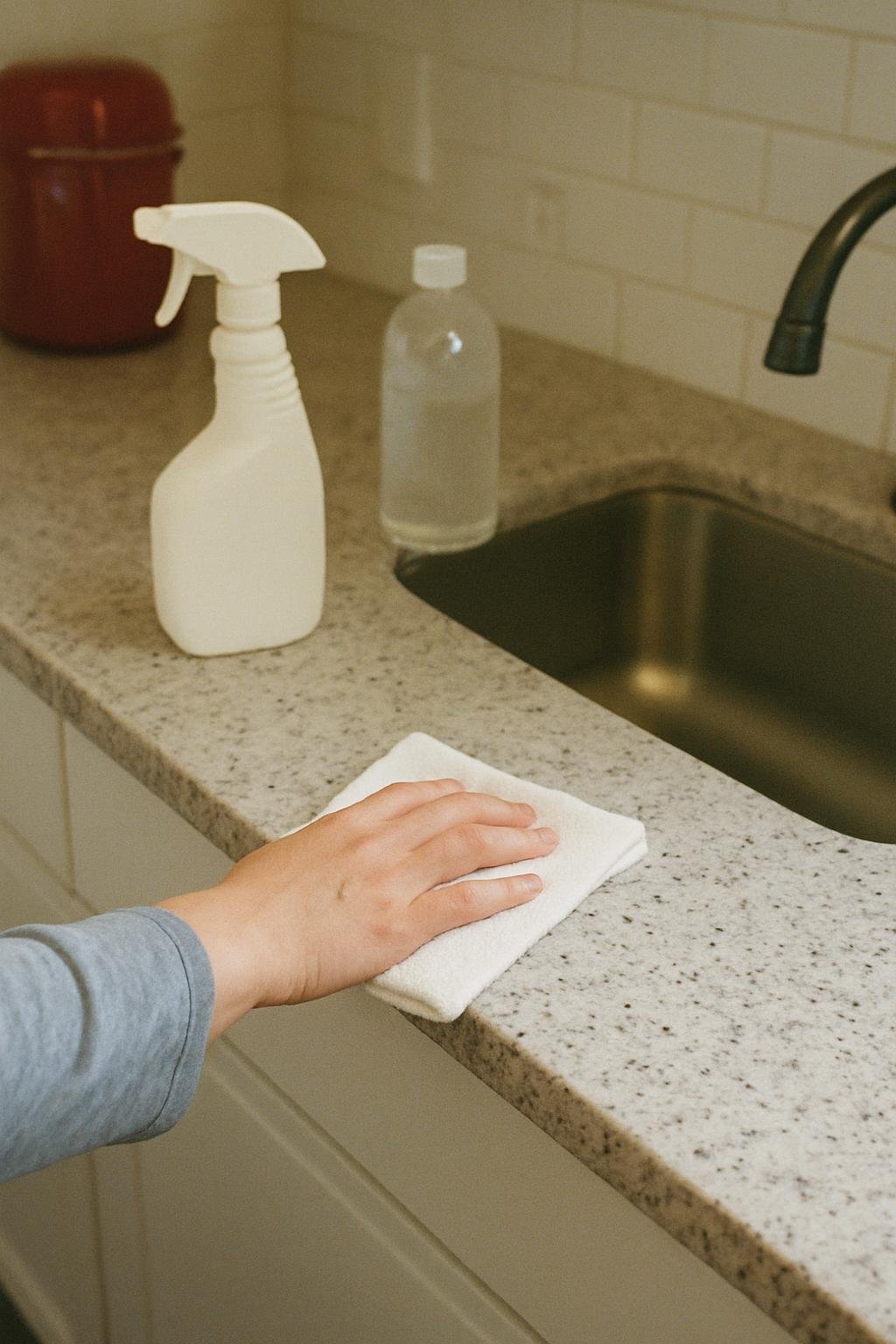
- Dampen a microfiber cloth with warm water. Avoid paper towels for daily wiping, since they can leave faint lint or drag debris across the surface.
- Add a small amount of mild dish soap if the counter has grease, food residue, or fingerprints. A few drops mixed into the water is enough; you do not need a heavy concentration.
- Wipe in gentle, even strokes rather than pressing hard or scrubbing in one spot. Quartz does not need aggressive pressure to come clean.
- Rinse the cloth and go over the surface again with plain water to remove any soap film, since leftover soap residue can look streaky once it dries.
- Dry the counter completely with a clean towel. Air-drying can leave mineral spots if your water is hard, and a fully dry surface is part of what keeps the finish looking even.
Cleaning Mistakes That Slowly Dull the Surface
Most quartz dulling is not caused by one dramatic accident. It tends to build up from small, repeated habits.
- Using vinegar or citrus-based cleaners regularly. Occasional light contact is unlikely to cause visible harm, but frequent use of acidic cleaners can gradually break down the resin’s shine.
- Reaching for bleach or bleach-based sprays. Bleach is not recommended as a routine quartz cleaner, since it can affect the surface finish over time and is not necessary for normal kitchen cleaning.
- Scrubbing with abrasive sponges or powders. Anything gritty enough to scour a pot can also create fine scratches in quartz that catch light differently and make the surface look hazy.
- Letting cleaning products sit for a long time before wiping. Even mild cleaners left to dry on the surface can leave a film that looks like dullness rather than dirt.
- Placing hot pans directly on the counter. Quartz has heat tolerance, but repeated direct heat exposure in the same spot can affect the resin’s appearance over the years. A trivet or pot holder is a simple habit that prevents this.
How Often You Actually Need to Clean Quartz
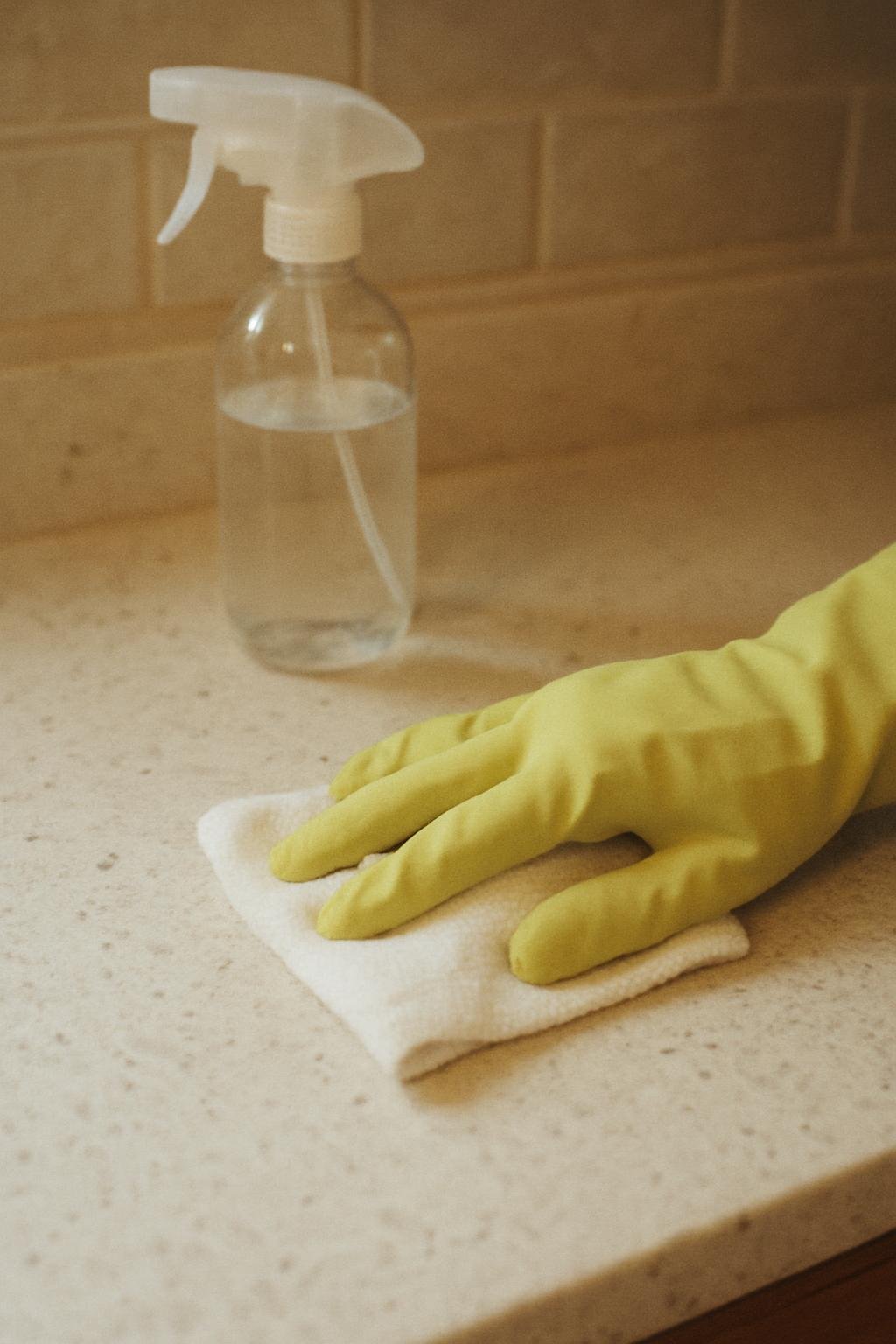
A quick wipe-down after cooking or food prep is usually enough for daily maintenance. A more thorough clean with warm water and mild soap once or twice a week keeps buildup from accumulating in high-traffic areas like near the sink or coffee maker. Quartz does not require daily deep cleaning or heavy-duty products to stay in good shape, and using stronger cleaners more often than necessary is one of the more common ways homeowners unintentionally dull the finish.
What to Do About Stubborn Spots
For dried food, hardened grease, or a stuck-on spill, avoid immediately reaching for a knife or metal scraper. Instead, soften the spot first.
- Lay a warm, damp cloth over the area for a few minutes to loosen the residue.
- Wipe with a soft cloth and a small amount of dish soap.
- If residue remains, a plastic scraper or old credit card held at a low angle can lift dried material without scratching the surface. Avoid metal blades and razor scrapers unless the manufacturer of your specific countertop explicitly states they are safe, since this can vary by product line.
If a spot still will not budge after gentle scraping and soap, check whether your quartz manufacturer has a specific stain-removal recommendation, since formulations and finishes can differ between brands.
When Dullness Might Not Be From Cleaning
If your countertop developed a hazy patch that appeared suddenly rather than gradually, consider whether something acidic sat on the surface recently, whether a new cleaning product was used, or whether a hot item was placed directly on the counter. If none of those apply and the dullness persists after switching to gentler care, it may be worth contacting the countertop manufacturer or installer, since some warranty programs cover finish issues that are not related to the homeowner’s cleaning habits.
For other kitchen and household cleaning tasks that call for a gentler approach, you can also see how to clean an oven without harsh chemicals or how to clean a sink drain without chemicals, both of which follow the same general principle of choosing the mildest effective method first.
Everything Mentioned Above
Before you leave, grab the tools you need to get the job done right the first time:
*As an Amazon Associate, TidyFormula earns from qualifying purchases.