How to Remove Turmeric Stains from Countertops
The fastest way to remove a turmeric stain from a countertop is to treat it while it’s still fresh: blot up excess turmeric, then clean the area with dish soap and warm water before the pigment has time to set. For dried or set-in stains, a baking soda paste worked into the stain and left to sit usually lifts more color, but how far you can push the process depends heavily on whether your countertop is sealed stone, quartz, laminate, or wood.
Turmeric is a strong, oil-soluble pigment, so it behaves differently depending on the surface underneath it. A stain that wipes off a sealed quartz counter in seconds can soak into unsealed butcher block or a hairline crack in grout and linger for days.
⚡ The TidyFormula™ Quick Decision
Best approach: Blot fresh turmeric immediately, then clean with dish soap and warm water; for dried stains, use a baking soda paste on nonporous, sealed surfaces and let it sit before scrubbing gently.
Use caution with: Unsealed natural stone, untreated wood, and any countertop with visible etching, chips, or an unclear care history, since porous or damaged surfaces absorb pigment instead of releasing it.
Stop and reassess if: The stain sinks in and darkens instead of lightening, the surface shows new dullness or texture changes after cleaning, or your countertop has a specific manufacturer care instruction that conflicts with this method.
What I Use For This Job
Using the right tools saves time and protects your belongings. Here are my exact recommendations:
*As an Amazon Associate, TidyFormula earns from qualifying purchases.
Check Your Countertop Material Before You Start
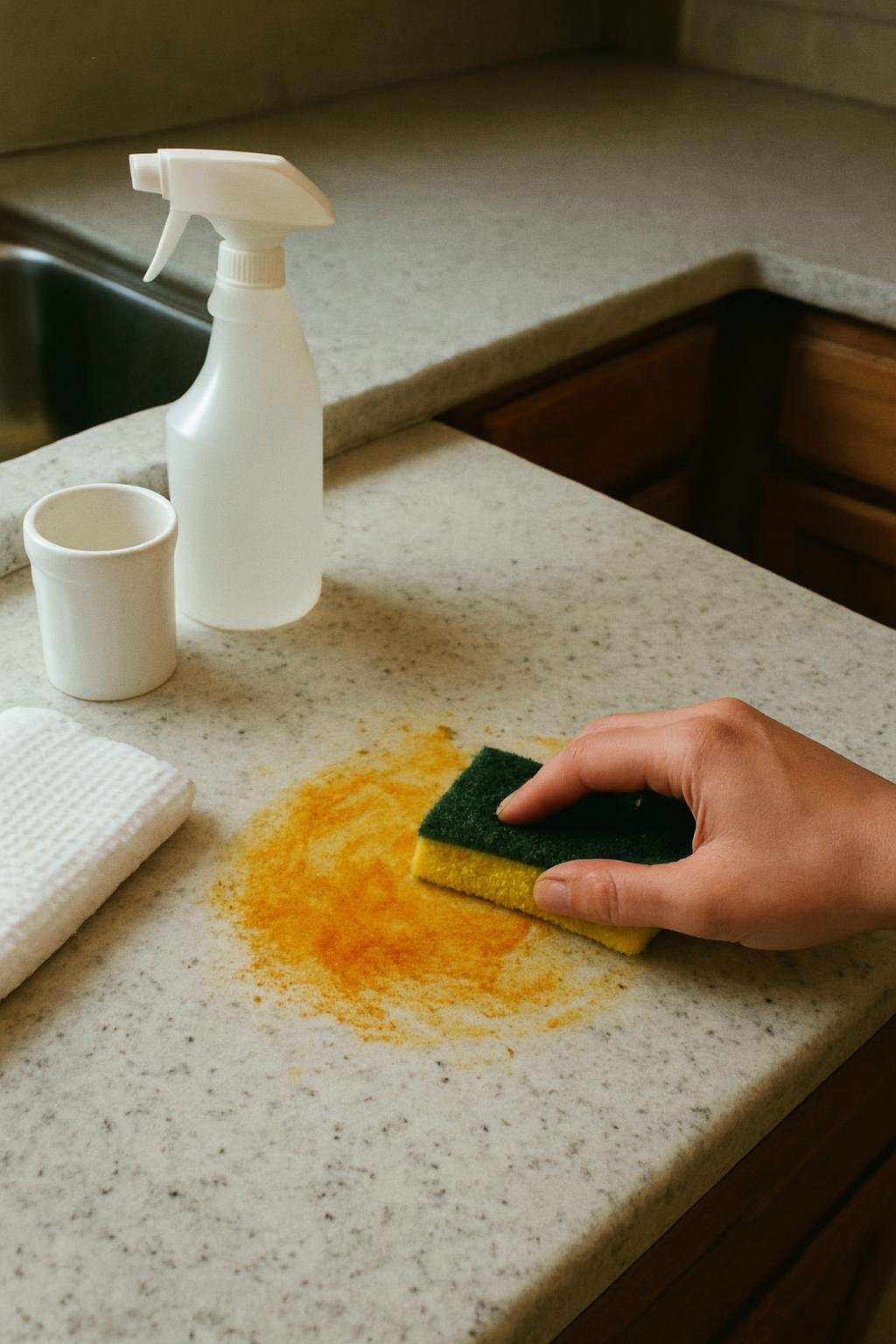
Turmeric removal isn’t one-size-fits-all. Before applying anything beyond soap and water, take a moment to identify what you’re working with:
- Sealed granite, marble, or quartz: These nonporous or well-sealed surfaces generally resist staining and respond well to gentle scrubbing pastes.
- Laminate: Durable and nonporous, but the surface layer can scratch, so avoid abrasive pads or gritty powders.
- Unsealed or older natural stone: More porous and prone to absorbing pigment. Aggressive scrubbing can also dull the polish.
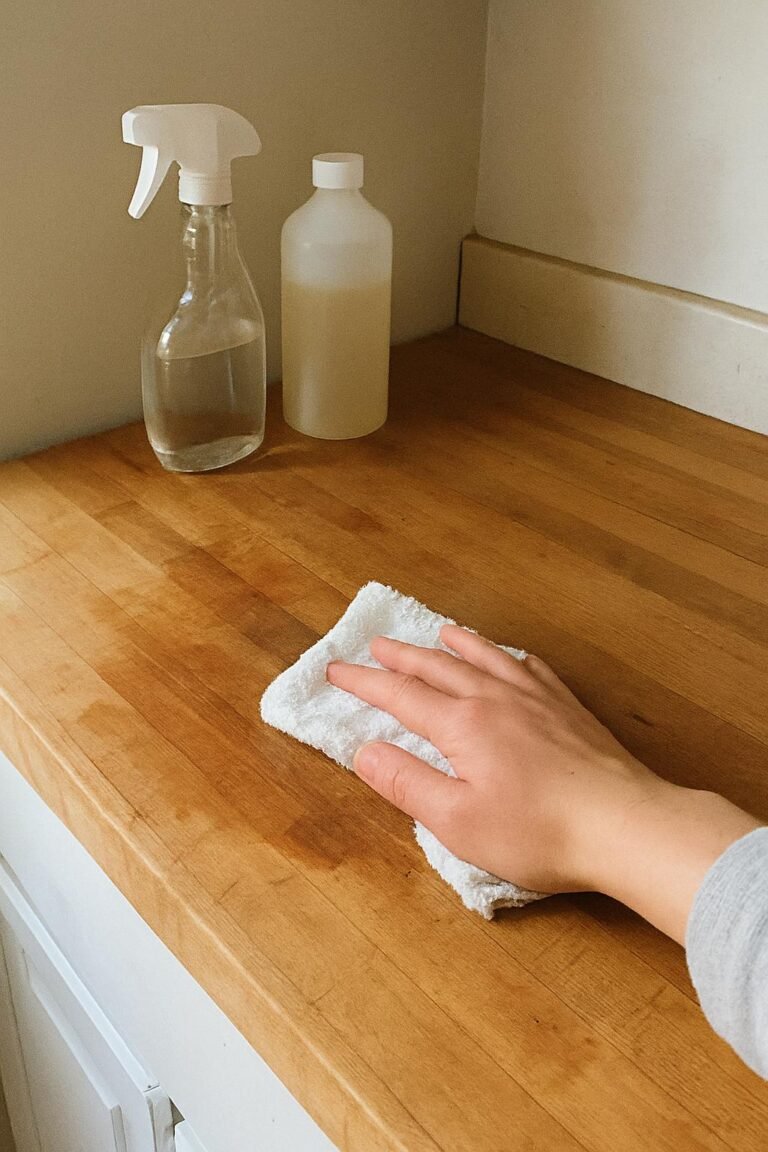
- Butcher block or untreated wood: Highly porous. Turmeric can soak in quickly, and moisture from cleaning can also affect the wood itself.
- Stainless steel: Nonporous, but can show scratches from abrasive scrubbing, which may trap future stains along the scratch lines.
If you’re not sure whether your counter has a specific care requirement, check the manufacturer’s care instructions before using anything beyond mild dish soap.
Removing a Fresh Turmeric Stain
Fresh turmeric is far easier to remove than dried turmeric, so speed matters more than the specific product you use.
- Blot the spill with a paper towel or clean cloth. Avoid wiping in a way that spreads the pigment across a larger area.
- Rinse the area with warm water to dilute the remaining turmeric before it has a chance to dry.
- Apply a small amount of dish soap directly to the stain and scrub gently with a soft cloth or non-scratch sponge.
- Rinse thoroughly and dry the surface. Check the spot under good lighting, since a faint yellow tint can be easy to miss while the counter is still damp.
Treating a Dried or Set-In Turmeric Stain
Once turmeric dries, the pigment binds more tightly to the surface, especially on porous or lightly textured countertops. A baking soda paste is a common, relatively gentle option for nonporous or sealed surfaces.
- Mix baking soda with a small amount of water to form a thick paste.
- Apply the paste directly over the stain, covering it completely.
- Let the paste sit for about 10 to 15 minutes. Longer contact time can help loosen pigment on stubborn stains, but avoid letting it dry out completely on natural stone.
- Scrub gently in a circular motion using a soft cloth or non-scratch sponge. Apply light pressure rather than heavy force, particularly on polished stone or laminate.
- Rinse thoroughly with warm water and dry with a clean cloth.
- If color remains, repeat the process once more before trying a different method. Avoid repeated scrubbing sessions in the same spot within a short time, since this can wear down a polished or sealed finish.
If the stain is still visible after two attempts, or if you notice any dulling, scratching, or texture change on the countertop, stop and treat it as a material-specific problem rather than continuing with the same approach.
Matching the Method to the Surface
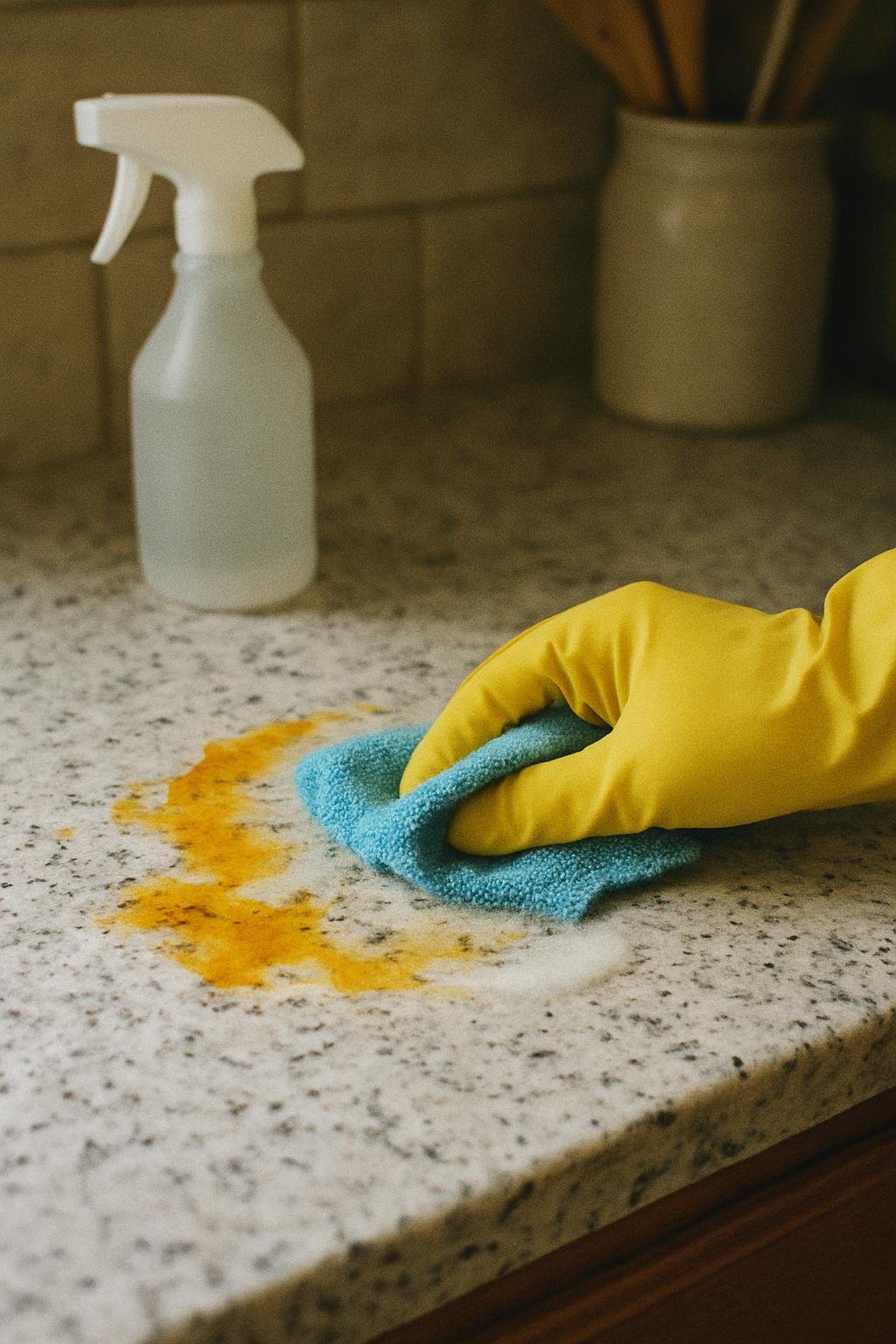
Because turmeric reacts differently depending on what it lands on, it helps to match your cleaning approach to the specific material rather than applying the same method everywhere.
| Countertop Material | Generally Safe Approach | Caution |
|---|---|---|
| Sealed quartz or granite | Dish soap first; baking soda paste for dried stains | Avoid abrasive powders that can dull the sealant over time |
| Laminate | Dish soap and a soft cloth; light baking soda paste if needed | Skip scouring pads, which can scratch the surface layer |
| Unsealed or older natural stone | Dish soap only, applied quickly | Test any paste in a small hidden area first; porous stone may hold pigment |
| Butcher block or untreated wood | Wipe immediately, then clean with a barely damp cloth and mild soap | Avoid soaking the wood; excess moisture can affect the finish separately from the stain itself |
| Stainless steel | Dish soap and a soft cloth, wiping with the grain | Avoid gritty pastes that can scratch the surface |
Cleaning Mistakes That Make Turmeric Stains Worse
A few common habits can turn a manageable turmeric stain into a lingering one:
- Wiping instead of blotting fresh spills: This spreads pigment over a wider area instead of lifting it away.
- Reaching for bleach or strong chemical cleaners right away: These can be inappropriate for certain sealed stone or laminate finishes, and mixing cleaning products is never a good idea. Stick with dish soap or a baking soda paste unless your countertop manufacturer specifically recommends something else.
- Using abrasive scouring pads on polished surfaces: This can create fine scratches that trap pigment and make future stains harder to remove.
- Letting moisture sit too long on wood or unsealed stone: This can introduce a separate water-mark or discoloration issue on top of the turmeric stain.
- Skipping a small test spot on an unfamiliar surface: If you’re unsure how your countertop will react, test any paste or cleaner in a small, inconspicuous area first.
Preventing Turmeric Stains from Countertops
Turmeric is one of the more persistent kitchen stains simply because of how concentrated its pigment is, so prevention saves more effort than removal.
- Use a cutting board or mixing bowl when working with turmeric powder or fresh turmeric root instead of prepping directly on the counter.
- Wipe up spills or splatters immediately rather than letting them sit while you continue cooking.
- Keep a damp cloth nearby when cooking with turmeric-heavy dishes like curries, so you can catch drips before they dry.
- If your countertop is natural stone, ask about resealing on a regular schedule, since a well-maintained sealant makes future stains far easier to wipe away.
Everything Mentioned Above
Before you leave, grab the tools you need to get the job done right the first time:
*As an Amazon Associate, TidyFormula earns from qualifying purchases.