How to Clean Matte Kitchen Cabinets without Streaks
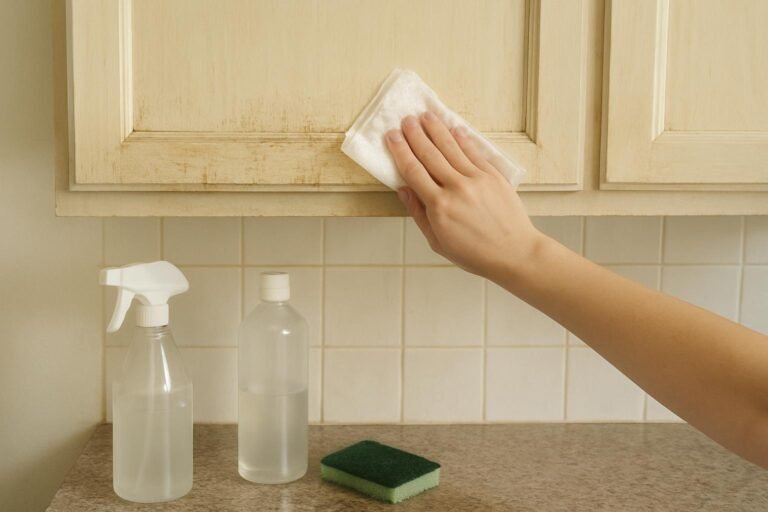
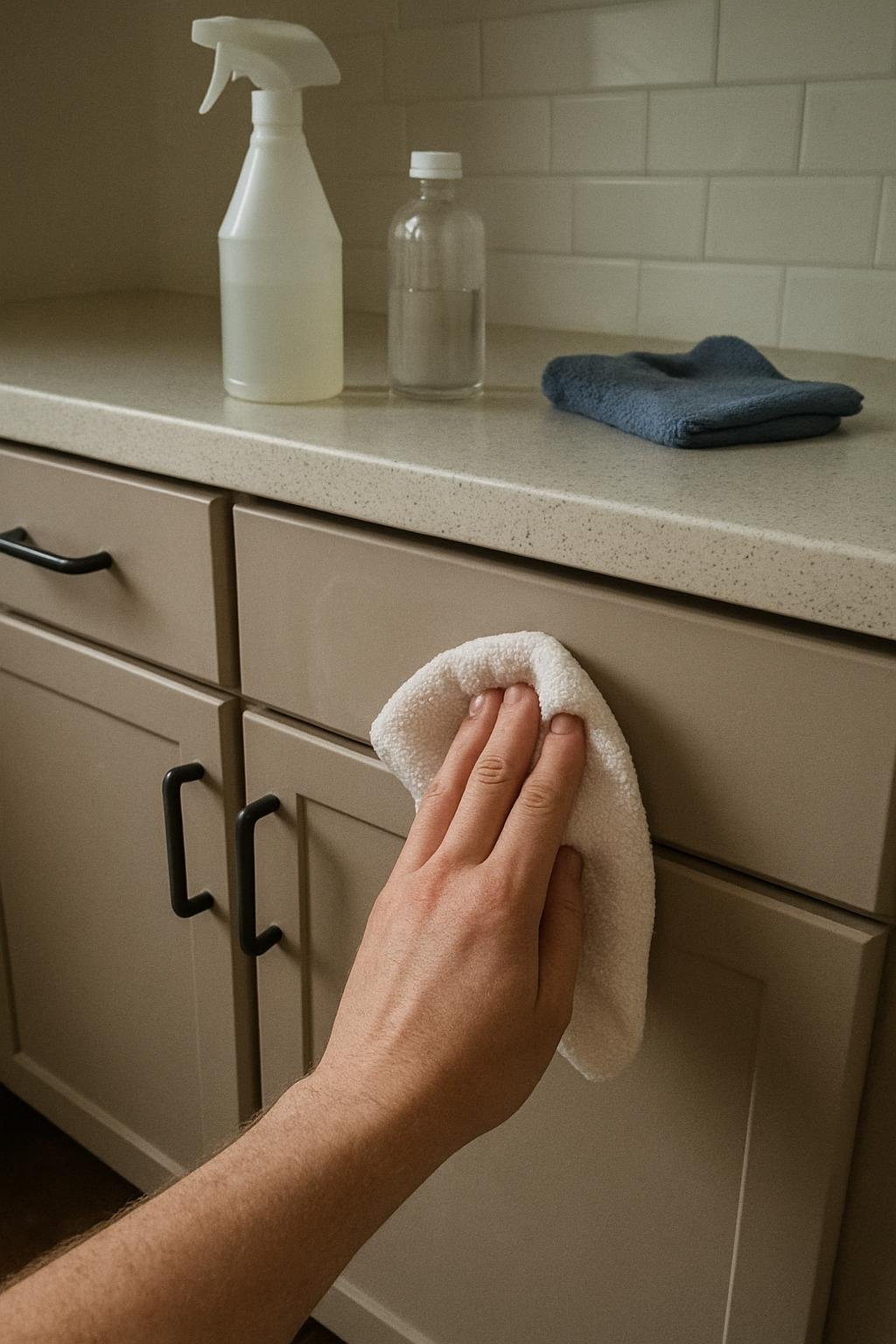
The best way to clean matte kitchen cabinets without streaks is to use a soft microfiber cloth with a small amount of warm water and a mild, non-abrasive dish soap, wiping gently in one direction and drying immediately with a second dry cloth. Streaking on matte finishes almost always comes from too much liquid, harsh cleaners, or letting water spots air-dry instead of wiping them away.
Matte cabinets show streaks and water spots more easily than glossy ones because there’s no shiny surface to hide minor residue. If your cabinets already have cloudy streaks or a dull film from a previous cleaner, you may need a slightly different approach than a routine wipe-down, which the sections below cover.
⚡ The TidyFormula™ Quick Decision
Best approach: Use a barely damp microfiber cloth with a drop of mild dish soap, wipe with the grain of the finish, and dry immediately with a separate clean cloth.
Use caution with: Glass cleaner, vinegar-based sprays, degreasers, and anything abrasive, since these can leave a hazy film or dull the matte texture on some cabinet materials.
Stop and reassess if: The surface feels sticky after cleaning, the finish looks blotchy or lighter in the cleaned area, or streaks reappear no matter how little liquid you use, since that may point to a coating issue rather than a cleaning-technique problem.
What I Use For This Job
Using the right tools saves time and protects your belongings. Here are my exact recommendations:
*As an Amazon Associate, TidyFormula earns from qualifying purchases.
Why Matte Cabinets Streak So Easily
Matte finishes are designed to scatter light rather than reflect it, which is what gives them that soft, non-shiny look. That same texture also means any leftover soap film, mineral deposits from water, or uneven moisture shows up as a visible streak or cloudy patch. Glossy cabinets can sometimes hide this residue; matte ones rarely do.
This is why the biggest factor in getting a streak-free result isn’t a special product, it’s controlling how much liquid touches the surface and making sure nothing is left to dry on its own.
What to Check Before You Clean
Matte kitchen cabinets are made from several different materials, and the safest cleaning method depends on which one you have:
- Painted wood or MDF with a matte topcoat – generally tolerates a mild soap-and-water wipe but can be damaged by soaking, scrubbing, or solvent-based cleaners.
- Matte laminate or thermofoil – fairly durable against moisture but can peel at the edges if water is allowed to pool or seep into seams.
- Matte lacquer or matte polyurethane finishes – can be sensitive to alcohol, ammonia, and abrasive pads, which may dull or unevenly lighten the sheen.
If you have manufacturer care instructions for your cabinets, follow those first. When in doubt, test any cleaning solution on a small, hidden spot, such as the inside edge of a door, and let it dry fully before using it on the whole cabinet.
Step-by-Step: Cleaning Matte Cabinets Without Streaks
- Dust first. Wipe down the cabinets with a dry microfiber cloth to remove loose dust and crumbs. Cleaning over dry debris with a wet cloth is a common cause of smearing.
- Mix a mild solution. Combine a few drops of gentle dish soap with warm water in a bowl. Avoid pouring soap directly onto the cabinet.
- Dampen, don’t soak, your cloth. Dip a microfiber cloth into the solution and wring it out well. The cloth should feel barely moist, not wet.
- Wipe with the grain. Clean in the same direction as the wood grain or panel texture, using light, even pressure. Going in circles or scrubbing hard can create uneven streaking on matte finishes.
- Rinse the cloth as needed. Switch to clean water if the cloth picks up grease, especially near the stove, so you’re not spreading residue.
- Dry immediately with a second cloth. This step matters more on matte surfaces than almost any other. Use a completely dry microfiber cloth to buff the surface right after wiping, before the moisture has a chance to air-dry into a streak or water spot.
Cleaning Mistakes That Cause Streaks
| Mistake | Why It Causes Streaks | What to Do Instead |
|---|---|---|
| Using glass or ammonia-based cleaner | Can leave a hazy residue on matte coatings that isn’t visible until it dries | Stick to mild dish soap and water |
| Letting water air-dry | Minerals in tap water leave visible spots on matte surfaces | Dry with a cloth immediately after wiping |
| Scrubbing with a sponge or abrasive pad | Can burnish or unevenly lighten the matte texture | Use a soft microfiber cloth only |
| Applying too much cleaner at once | Excess liquid pools in grooves and dries unevenly | Use a barely damp cloth, not a spray-soaked one |
Removing Grease Without Leaving a Film
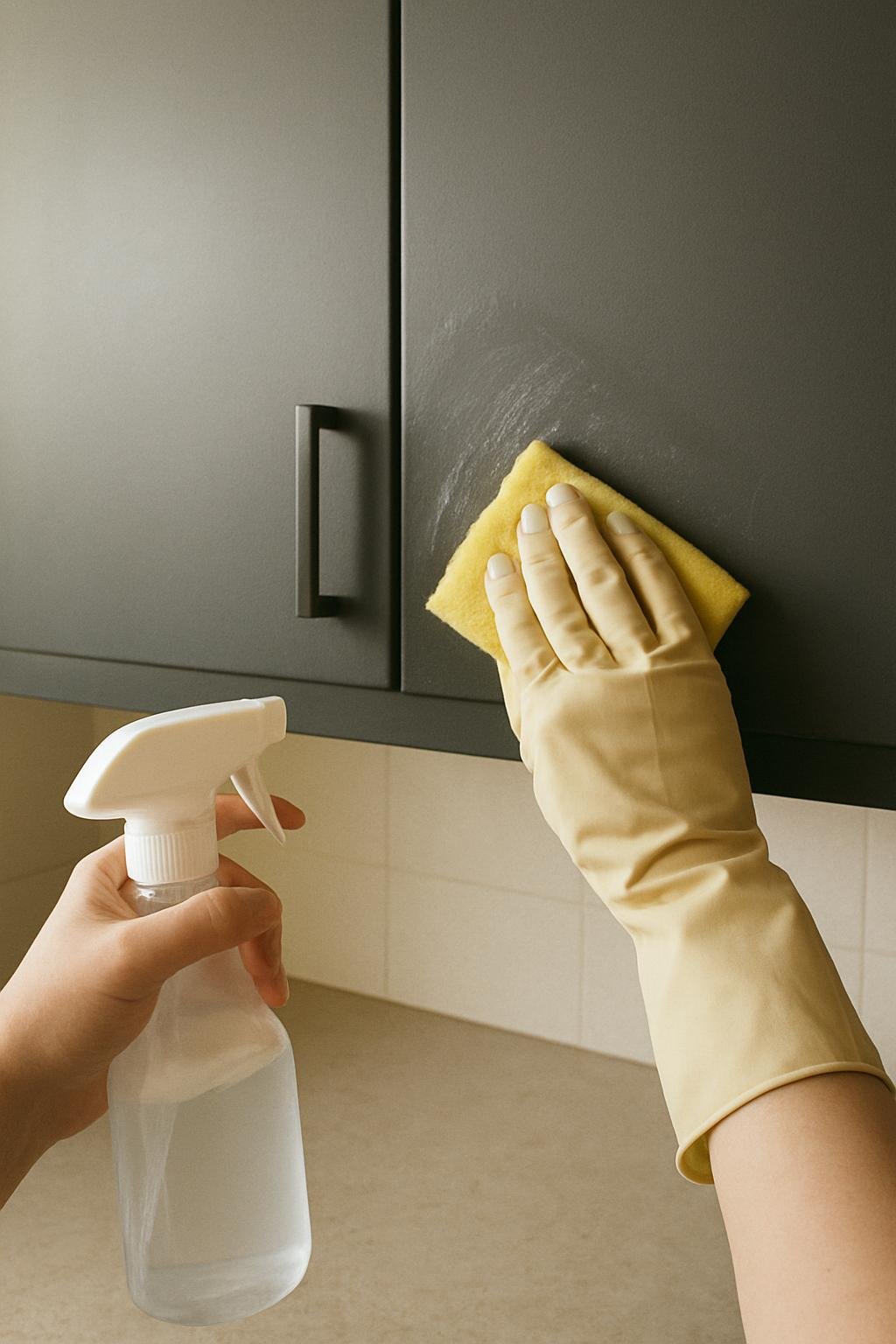
Grease buildup near the stove or handles needs a bit more attention than dust, but not a stronger chemical. Add a slightly higher concentration of dish soap to your water, apply it with a damp cloth, and let it sit on the greasy spot for a minute before wiping. Follow with a clean, damp cloth to lift the loosened grease, then dry the area right away. Avoid degreasing sprays marketed for ovens or stovetops; these are often too harsh for painted or lacquered cabinet finishes and can leave a dull patch behind.
How Often to Clean Matte Cabinets
A quick wipe-down of handles and high-touch areas once a week helps prevent grease and fingerprints from building up into something harder to remove. A full wipe of all cabinet faces every two to four weeks is usually enough for most kitchens, though homes with heavy cooking or young kids may need it more often. Cleaning lightly and frequently is easier on a matte finish than deep-scrubbing buildup after it has hardened.
If Streaks Won’t Go Away
If you’re still seeing streaks after switching to a mild soap solution and drying immediately, the cause is likely one of the following:
- Residue from a previous cleaner is trapped in the finish. Try one gentle cleaning pass focused only on removing old product buildup, then start fresh with the soap-and-water method going forward.
- Hard water spots are forming as the cabinets dry. Try distilled or filtered water for the final wipe, since minerals in tap water are a common cause of cloudy marks on dark or richly colored matte finishes.
- The finish itself is uneven or damaged, which can happen over time on lacquered or painted surfaces. If streak-like marks don’t wipe away and seem to be part of the surface rather than sitting on top of it, that’s a finish issue rather than a cleaning problem, and a cleaning product won’t fix it.
When cabinets have a persistent dull film despite gentle cleaning, avoid reaching for a stronger household chemical to compensate. Contact the cabinet manufacturer or a finish-repair professional before using anything beyond mild soap and water, since matte coatings can be difficult to restore once damaged.
If you’re dealing with streaking on other kitchen surfaces at the same time, the approach for cleaning a stainless steel fridge without streaks follows a similar principle of using minimal liquid and drying immediately, though the safe products differ by material. For grease buildup inside the oven itself, see how to clean an oven without chemicals for a gentler alternative to standard oven cleaners.
Everything Mentioned Above
Before you leave, grab the tools you need to get the job done right the first time:
*As an Amazon Associate, TidyFormula earns from qualifying purchases.