How to Remove Grease from Painted Kitchen Cabinets
The best way to remove grease from painted kitchen cabinets is with warm water and a few drops of dish soap, applied with a soft microfiber cloth in gentle circular motions. For heavier buildup, a paste of baking soda and water lifts grease without stripping the paint. Always dry the surface afterward, and skip anything abrasive or highly acidic on painted finishes.
Grease near the stove tends to bond with dust and cooking residue over time, so what starts as a light film can turn into a sticky, slightly darkened layer that feels tacky to the touch. That combination is common on cabinets close to the range, especially on upper doors that catch rising steam and oil.
⚡ The TidyFormula™ Quick Decision
Best approach: Warm water with a small amount of dish soap on a soft cloth, followed by a baking-soda paste for stubborn spots, then a dry wipe-down.
Use caution with: Painted cabinets with a matte, chalk, or hand-brushed finish, and any older paint that may be chipped, cracked, or already lifting at the edges.
Stop and reassess if: The paint starts to soften, dull, streak, or transfer onto your cloth, or if grease has seeped into cracks in the finish rather than sitting on top of it.
What I Use For This Job
Using the right tools saves time and protects your belongings. Here are my exact recommendations:
*As an Amazon Associate, TidyFormula earns from qualifying purchases.
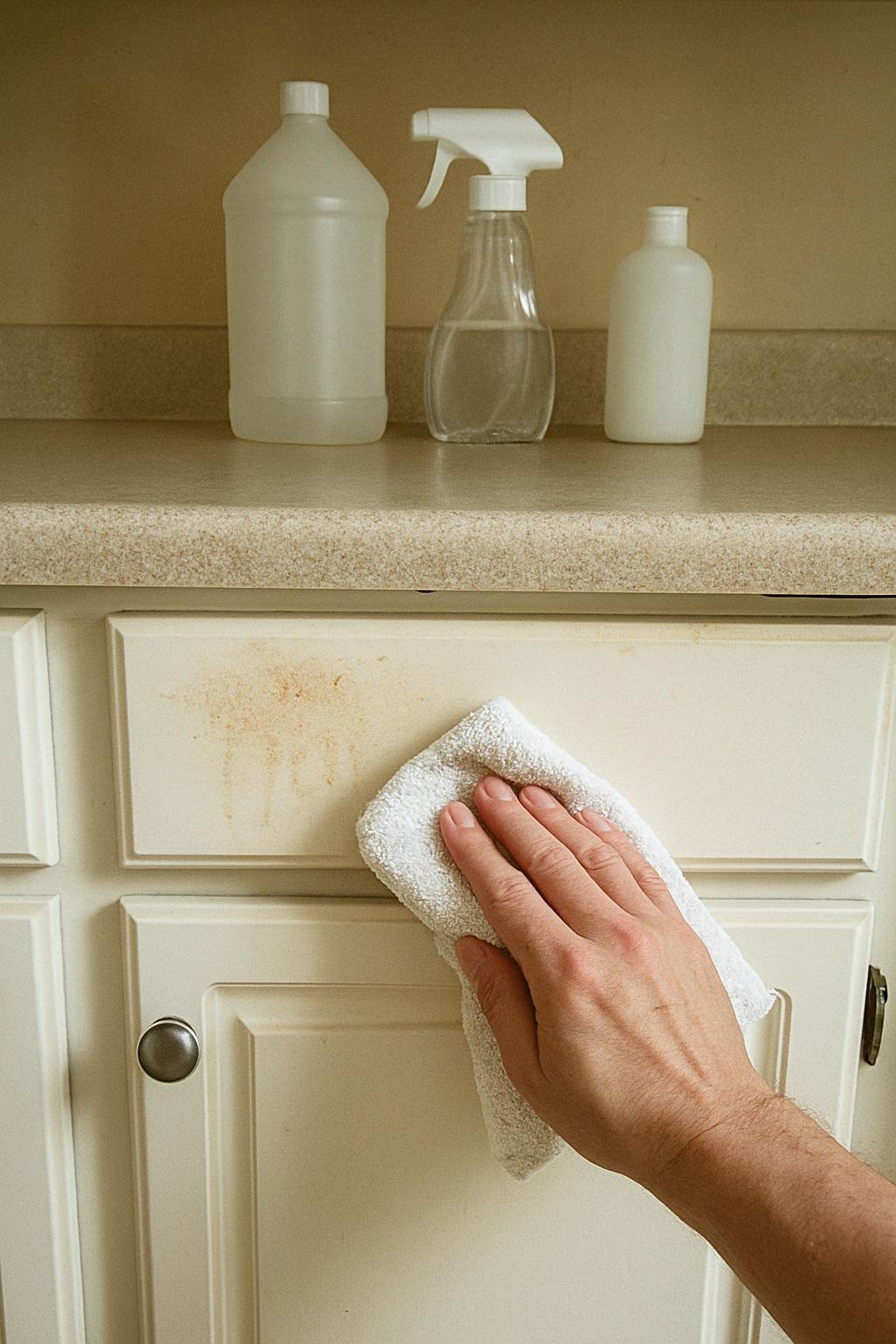
Check the Finish Before You Start
Painted cabinets vary more than most people expect. A cabinet with a factory-baked enamel finish can usually handle a bit more scrubbing than one with a hand-painted or chalk-style finish, which scratches and dulls more easily. If you’re unsure how durable the paint is, test your cleaning method in a hidden spot, such as the inside edge of a door, before treating a visible panel.
Also look closely at the paint itself. Bare or touch-up areas, hairline cracks, or peeling edges are more vulnerable to moisture and scrubbing. Treat those spots more gently than the rest of the cabinet, and avoid soaking them.
What You’ll Need
- Warm water
- A few drops of mild dish soap
- Two soft microfiber cloths (one for cleaning, one for drying)
- Baking soda, for a stronger paste on heavy grease
- A soft-bristle brush or old toothbrush for grooves and hardware, if needed
Step-by-Step: Removing Grease from Painted Cabinets
- Mix a mild cleaning solution. Combine warm water with a few drops of dish soap in a bowl. Dish soap is formulated to break down oil, which makes it a reasonable first choice for painted surfaces since it doesn’t rely on abrasives or strong solvents.
- Wipe with the grain of the cabinet panel. Dampen your cloth, wring it out so it isn’t dripping, and wipe in the same direction as any visible brush strokes or panel lines. This reduces the chance of streaking the paint unevenly.
- Rinse the cloth often. Grease transfers to the cloth quickly, and reusing a saturated cloth just spreads it around. Rinse and wring frequently as you work.
- Target stubborn spots with a baking soda paste. For areas where grease has thickened or darkened, mix baking soda with a small amount of water to form a soft paste. Apply it with your finger or a soft cloth, let it sit for a minute or two, then wipe gently. Avoid pressing hard or scrubbing in tight circles, since baking soda has mild abrasive properties that can dull paint if overworked.
- Dry the surface completely. Painted wood can be sensitive to trapped moisture. Go over the cabinet with a dry microfiber cloth immediately after cleaning, paying attention to grooves, panel seams, and areas around hardware where water can collect.
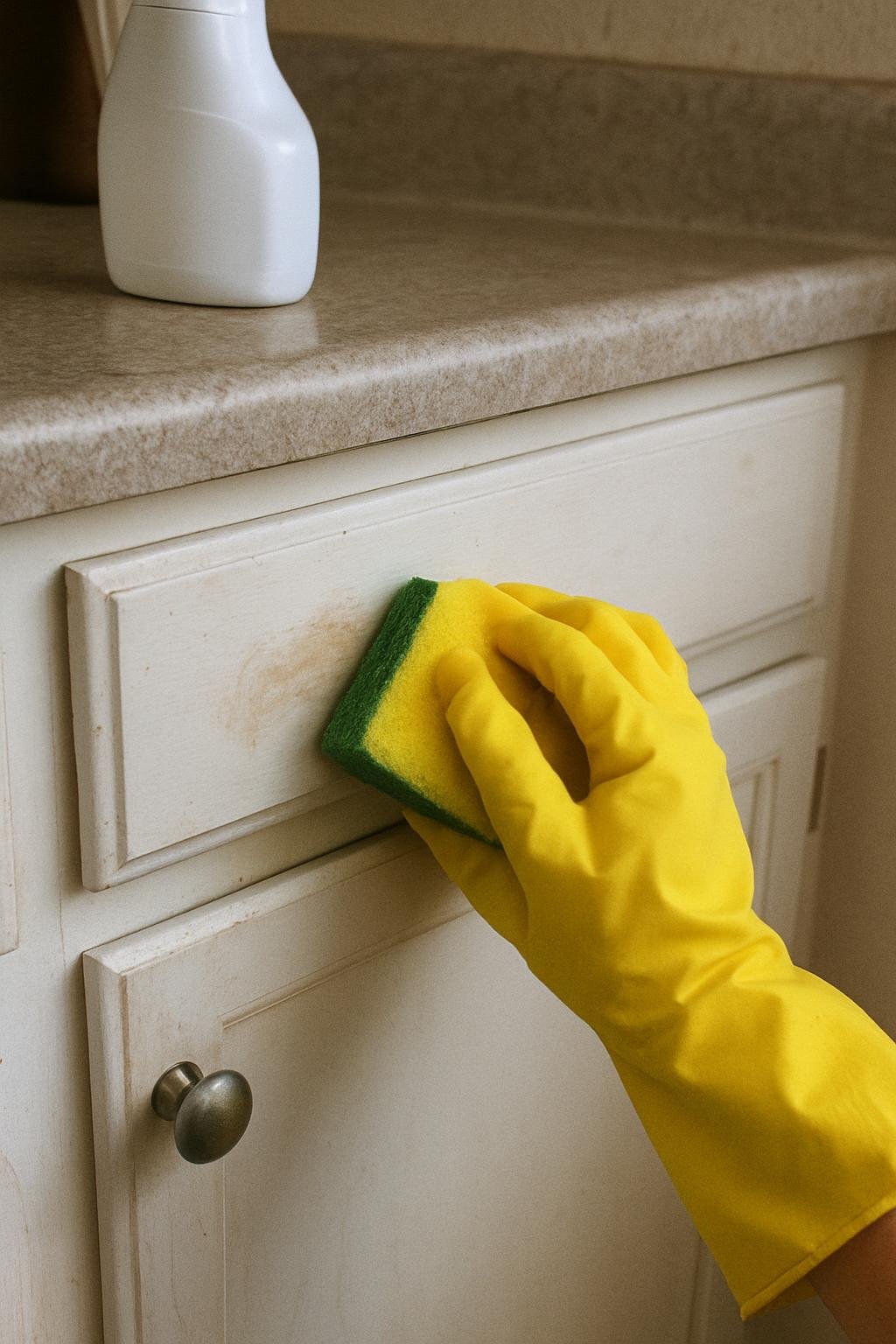
Cleaning Mistakes That Damage Painted Cabinets
A few habits show up again and again when grease removal goes wrong on painted surfaces:
- Using vinegar or other acidic cleaners. Vinegar is a common recommendation for grease, but its acidity can dull or discolor painted finishes over repeated use, especially on softer or older paint.
- Scrubbing with abrasive pads or powders. Anything textured enough to scratch a fingernail can also scratch paint, leaving fine lines that catch light and grease more easily going forward.
- Letting water sit on the surface. Painted wood cabinets are porous underneath the paint layer. Standing moisture near seams or edges can eventually lead to swelling, cracking, or peeling.
- Spraying cleaner directly onto the cabinet. Overspray can run into corners, hinges, and gaps between doors and frames. Apply cleaner to your cloth instead, and use the cloth to control moisture.
- Skipping the test spot. Every paint job reacts a little differently. A quick test in an inconspicuous area takes a few minutes and can prevent a visible mistake on a door front.
If Grease Has Built Up Over Time
Layered, sticky grease near the stove or above a range hood sometimes needs more than one pass. Rather than pressing harder or using a stronger chemical, repeat the warm water and dish soap step a second time after the first layer has softened. This is generally safer for the paint than jumping to a harsher degreaser, which may be more appropriate for bare metal or unfinished surfaces but isn’t necessary for most painted wood.
If a specific cabinet manufacturer provided care instructions, those should take priority over general guidance, since some painted or coated finishes have specific cleaning restrictions.
Preventing Grease Buildup Going Forward
Cabinets closest to the stove will always collect more grease than those farther away, but a simple habit can slow the buildup considerably: wipe cabinet fronts with a dry or barely damp cloth once a week, especially the doors directly above or beside the range. Catching grease while it’s still a light film is far easier than treating it after it has thickened and darkened.
Using a range hood or exhaust fan while cooking, particularly when frying or sautéing at higher heat, also reduces how much airborne grease settles on nearby surfaces in the first place.
When to Consider Repainting Instead of Cleaning
If grease has been left untreated for a long time, or if previous cleaning attempts have already dulled or scratched the finish, cleaning alone may not restore the cabinet’s appearance. Persistent discoloration, a rough or uneven texture, or paint that continues to flake despite gentle care are signs that the finish itself may need attention rather than another round of cleaning. At that point, a light sanding and repaint of the affected panels is usually a more realistic fix than continued scrubbing.
Everything Mentioned Above
Before you leave, grab the tools you need to get the job done right the first time:
*As an Amazon Associate, TidyFormula earns from qualifying purchases.