How to Remove Mildew Smell from a Basement
To remove mildew smell from a basement, you have to dry the space before you clean it. Run a dehumidifier until relative humidity sits between 30 and 50 percent, remove damp cardboard and soaked textiles, scrub hard surfaces with detergent and water, then let everything dry completely. Odor without moisture control always comes back.
I know how discouraging that musty wave is when you open the basement door. You’ve sprayed air freshener, maybe set out a bowl of vinegar, and two days later the smell is right back. That’s because the smell isn’t really an odor problem. It’s a moisture problem that happens to smell bad.
⚡ The TidyFormula™ Quick Decision
Best approach: Lower the humidity with a dehumidifier, clear out porous clutter, wash hard surfaces with detergent and warm water, and dry everything fully before you add any odor absorber.
Use caution with: Chlorine bleach on unsealed concrete, wood framing, or painted drywall — it adds water, can discolor surfaces, and never mix it with ammonia or other cleaners.
Replace instead of cleaning if: Carpet padding, cardboard boxes, upholstered furniture, ceiling tiles, or drywall have been wet or smell musty after drying — porous items hold odor and rarely come clean.
What I Use For This Job
Using the right tools saves time and protects your belongings. Here are my exact recommendations:
*As an Amazon Associate, TidyFormula earns from qualifying purchases.
Why Your Basement Smells Musty in the First Place
Mildew smell is a byproduct of mold and mildew growth, and growth needs moisture. Basements are below grade, cooler than the rest of the house, and often poorly ventilated. Warm, humid summer air sinks down there, hits cool concrete, and condenses. Add a slow foundation seep or a leaky water heater and you have a permanent damp zone.
Before you clean anything, walk the space and look for the source. This step saves you from repeating the entire job in a month.
Common moisture sources to check
- Grading and downspouts: Water pooling near the foundation is the most common culprit. Downspouts should discharge several feet away from the house.
- Condensation on cold water pipes, ductwork, or the foundation walls themselves.
- An unvented or poorly vented clothes dryer.
- A sump pump that isn’t working, or a sump pit left uncovered.
- Cardboard boxes, old newspapers, and stored fabric sitting directly on concrete.
- Basement bathroom or laundry with no exhaust fan.
Run your hand along the lower walls. Chalky white residue is efflorescence, a mineral deposit left behind by water moving through concrete. It’s a signal that moisture is coming through the wall, not just sitting in the air.
The Best Way to Remove Mildew Smell From a Basement
Here’s the order that actually works. Do not skip ahead to scrubbing — cleaning a wet basement just spreads moisture around.
Step 1: Dry the space first
Set up a dehumidifier sized for the square footage and let it run continuously for several days. Empty the bucket daily or run a hose to a floor drain so it doesn’t shut off. Target 30 to 50 percent relative humidity, and buy a cheap hygrometer so you’re measuring instead of guessing. If humidity won’t drop below 60 percent, you have an active water source that needs fixing before anything else.
Add a box fan or two for air movement. Moving air dries corners that a dehumidifier alone won’t reach.
Step 2: Clear out the porous stuff
This is the step people resist, and it’s the one that makes the biggest difference. Cardboard, particleboard, old carpet remnants, upholstered chairs, stacked paper, and fabric bins all absorb moisture and hold odor permanently. Move everything out to a dry area or the driveway on a sunny day.
Sort ruthlessly. Anything with visible growth or a persistent musty smell after 48 hours of drying should go. Hard plastic totes, glass, metal, and sealed plastic containers can be washed and kept. Damp cardboard is a lost cause.
Suitcases and duffel bags stored downstairs are frequent offenders — if yours came out spotted, our guide to cleaning mold off luggage and killing the musty smell walks through the fabric-safe approach.
Step 3: Vacuum the dust and debris
Use a vacuum with a HEPA filter on the floor, along baseboards, on window wells, and on exposed joists. Dust and settled spores contribute to the smell. A standard shop vac without fine filtration can blow particles back into the air, so if that’s all you have, vent it outside or wear an N95 respirator.
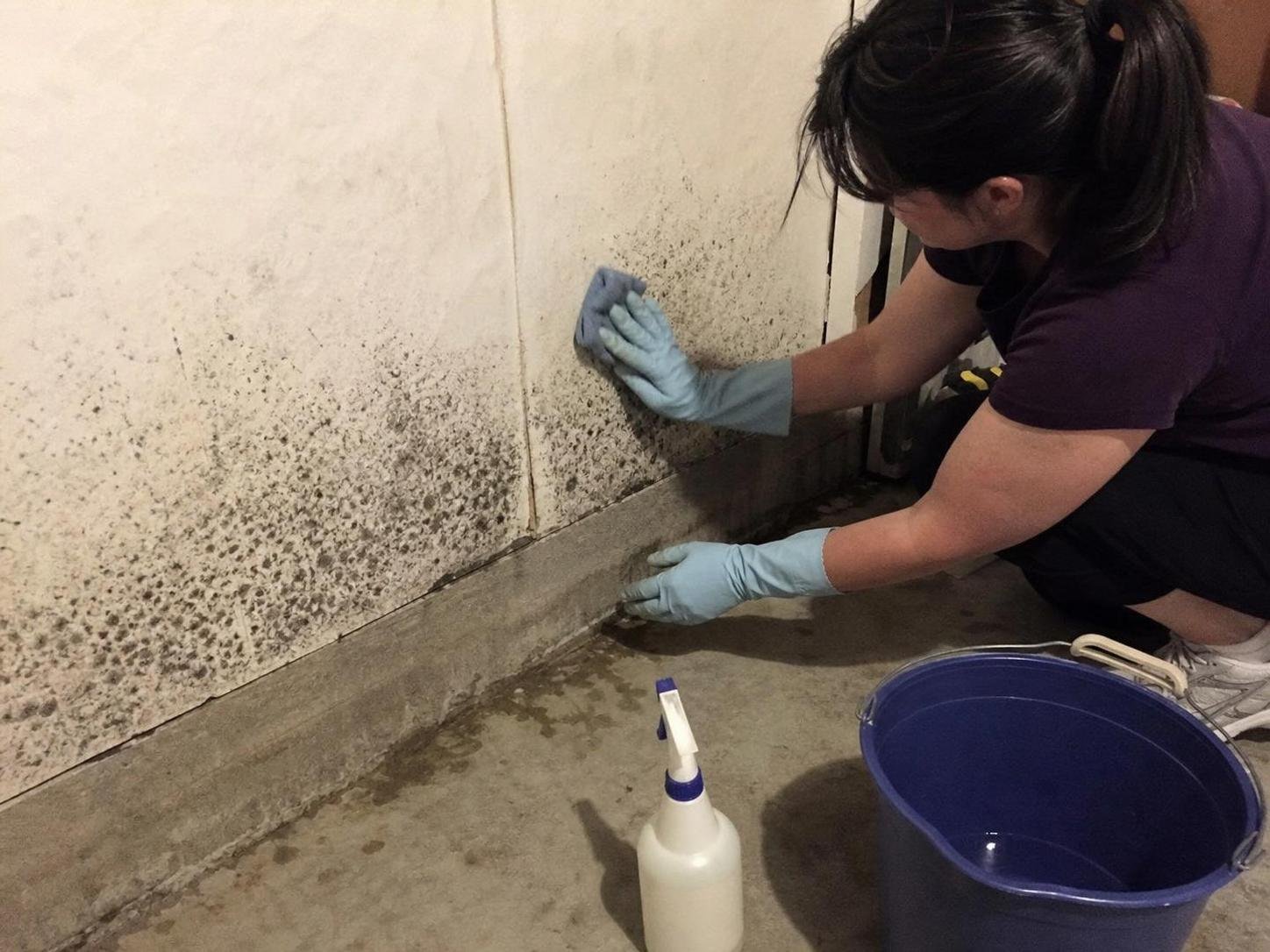
Step 4: Wash hard surfaces with detergent and water
The EPA’s guidance for small mold cleanup is straightforward: scrub hard surfaces with detergent and water, then dry completely. You don’t need a specialty biocide for a modest musty basement. The EPA’s mold cleanup recommendations are worth reading before you start, especially the part about drying being non-negotiable.
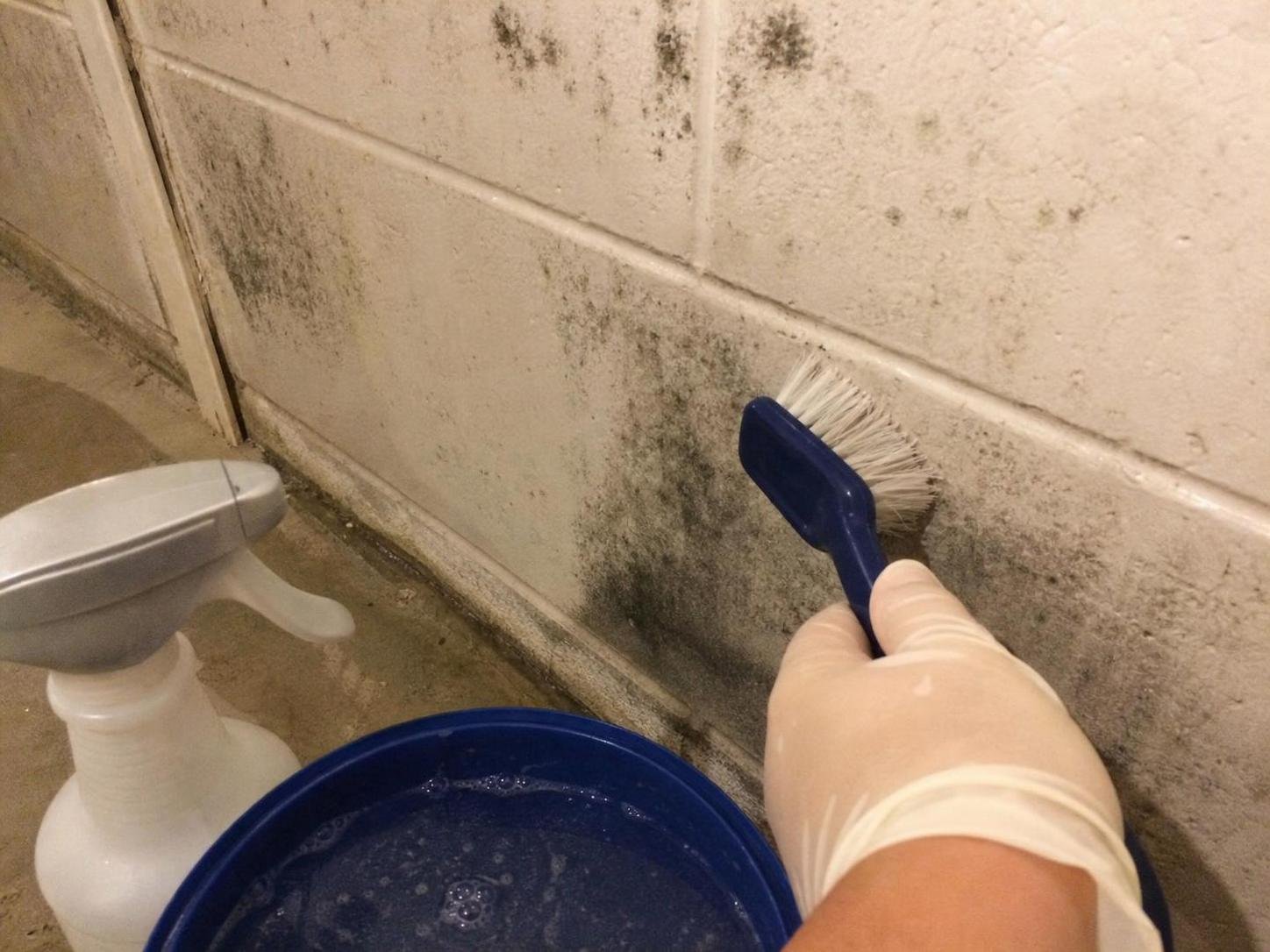
Practical mix: a squirt of dish soap or a general-purpose cleaner in a bucket of warm water. Use a stiff brush on concrete, a sponge or microfiber cloth on painted surfaces. Wipe, rinse with a barely damp cloth, and dry with towels. Keep the dehumidifier running the whole time.
Step 5: Address the concrete floor
Unsealed concrete is porous and holds odor deep in the pores. Scrub it with your detergent solution, then rinse and extract the water with a wet vac rather than letting it soak in. If the floor still smells after drying, an enzyme-based odor cleaner made for concrete can help break down organic residue. Apply, let it dwell per the label, and dry thoroughly.
Step 6: Only then use odor absorbers
Once the space is dry and clean, absorbers are useful for finishing the job. Activated charcoal bags, open containers of baking soda, or a commercial moisture absorber placed in corners will pull down the last of the residual smell over a week or two. Refresh or replace them on schedule. These are finishers, never fixes.
Safe Cleaners for Basement Mildew Smell
You have fewer options than the internet suggests, and that’s fine — the simple ones work.
Detergent and warm water
The default choice for concrete, sealed masonry, metal shelving, painted block, plastic bins, and finished wood. Cheap, low-odor, and safe around most surfaces. Use this unless you have a specific reason not to.
White vinegar
Reasonable on plastic, glass, tile, and sealed concrete for general cleaning and light odor. Skip it on natural stone, unsealed grout, and waxed wood, where acid can etch or dull the finish. Vinegar also has its own strong smell that lingers for a day or so.
Chlorine bleach — limited use
A diluted bleach solution can be used on hard, non-porous surfaces like glazed tile or plastic. It’s a poor choice for porous materials because the water carries into the surface while the bleach stays on top. It can also discolor concrete and damage fabric. If you use it, ventilate well, wear gloves and eye protection, and never mix bleach with ammonia, vinegar, or any other cleaner.
Enzyme cleaners
Useful on concrete and porous surfaces where organic residue is feeding the smell — think pet accidents, spilled food, or old flood residue. These need dwell time to work, so follow the label instead of wiping immediately. The same logic applies to soft goods; our breakdown of how enzyme treatment kills odor in a mattress explains why patience matters more than scrubbing pressure.
How to Remove Mildew Smell Without Damaging Your Basement
Damage in a basement usually comes from adding water or over-treating a surface, not from being too gentle.
- Don’t pressure wash indoors. You’ll drive water into block cavities and behind finished walls where it can’t dry.
- Don’t paint over musty drywall. Odor-blocking primer on a damp or moldy wall traps the problem and buys you a few weeks at most.
- Don’t seal a wet floor. Concrete sealer applied over trapped moisture will bubble, peel, and make future drying harder.
- Test cleaners in a hidden spot on painted walls, epoxy floors, and finished trim before you go wide.
- Protect wood framing. Wipe rather than soak, and get fans on it right away.
Mildew Smell Cleaning Mistakes That Keep the Odor Coming Back
These are the patterns that turn a weekend job into a recurring chore.
Masking instead of removing
Plug-in fragrances, scented candles, and heavy air freshener layer a smell on top of a smell. Two weeks later you have musty vanilla. Skip them until the source is handled.
Opening the windows on a humid day
This feels productive and often backfires. When outdoor air is warmer and more humid than your basement, ventilating pulls moisture in and it condenses on cool surfaces. Ventilate on cool, dry days. Otherwise keep it closed and let the dehumidifier work.
Keeping the wet carpet
Basement carpet with a soaked pad almost never recovers. The pad is a sponge, the backing traps moisture against concrete, and surface cleaning doesn’t reach it. If it’s been wet more than a day or two, pull it.
Storing things directly on the floor
Concrete transfers moisture. Put shelving or pallets down and keep at least a few inches of air under everything. Leave a gap between stored items and exterior walls, too.
Turning off the dehumidifier once the smell fades
The smell fades before the space is genuinely dry. Keep it running through humid months, not just during cleanup.
Ignoring the furniture you brought down there
Mattresses, futons, and upholstered pieces stored in a damp basement absorb everything. A futon that’s been down there through a humid summer may need its own treatment — the process for saving a futon mattress from mold and odor covers how far you can realistically go before replacement makes more sense.
How to Prevent Mildew Smell From Coming Back
Prevention is almost entirely about water management. Handle these and the smell stops being a seasonal event.
- Keep humidity between 30 and 50 percent year-round. A dehumidifier with a built-in humidistat and a drain hose is the single best purchase for a musty basement.
- Extend your downspouts so roof water discharges well away from the foundation, and keep gutters clear.
- Slope the soil away from the house. Even a modest grade correction reduces water reaching the wall.
- Test the sump pump a couple of times a year by pouring water into the pit. Cover the pit if it’s open.
- Vent the dryer outside and run an exhaust fan in any basement bathroom.
- Insulate cold water pipes to stop condensation drips.
- Store in sealed plastic totes on shelves, not cardboard on the slab.
- Keep air moving. A small fan running on low in a closed storage room prevents stagnant pockets.
When to Stop and Call a Professional
Most musty basements are a DIY project. Some aren’t. Stop and get help if any of these apply:
- Visible mold growth covering roughly 10 square feet or more, which is the threshold where the EPA suggests considering a professional.
- Water actively entering through walls, cracks, or the floor slab.
- Sewage backup or flood water contact — that’s a remediation job, not a cleaning job.
- Mold behind finished walls, inside HVAC ductwork, or in insulation.
- The smell returns within days no matter what you do, which usually means hidden moisture.
- Anyone in the household has a health concern about air quality. That’s a conversation for a doctor, and a reason to hire out the work rather than disturb it yourself.
Structural repairs like foundation crack injection, drain tile, exterior waterproofing, and grading work are worth the money because they fix the reason your basement smells. Every cleaning method above is temporary if water keeps coming in.
A Realistic Timeline
Set your expectations here so you don’t give up halfway. Day one is clearing clutter and getting the dehumidifier and fans running. Day two or three is vacuuming and washing surfaces. From there, expect one to two weeks of continuous dehumidifying before the smell is genuinely gone rather than just reduced. Porous materials release odor slowly, and concrete takes time to dry out.
If you’re a week in with steady humidity readings under 50 percent, a clean and cleared space, and the smell has clearly dropped but not vanished, you’re on track. If nothing has changed at all, you have a water source you haven’t found yet. Go back to the foundation, the downspouts, and the sump pit and look again.
Everything Mentioned Above
Before you leave, grab the tools you need to get the job done right the first time:
*As an Amazon Associate, TidyFormula earns from qualifying purchases.