How to Clean Foam Play Mats Safely
Clean foam play mats by wiping them with a soft cloth dampened in mild soap and warm water, then wiping again with a clean, water-only cloth to remove residue, and letting them air-dry fully before reassembling. Avoid soaking the foam or using harsh solvents, since most foam mats are not sealed and can absorb moisture or break down with strong cleaners.
The tricky part is usually the seams between interlocking tiles. Dirt, crumbs, and spilled liquid tend to collect in those grooves, and if the mat gets put back together while still damp underneath, it can trap moisture against the floor.
⚡ The TidyFormula™ Quick Decision
Best approach: Wipe with a mild soap-and-water solution on a soft cloth, rinse with a separate damp cloth, and air-dry each tile fully before putting mats back together.
Use caution with: Foam is porous and not sealed like vinyl or rubber flooring, so soaking, steam, or strong solvents can weaken the material or leave moisture trapped inside.
Stop and reassess if: The foam feels soft, spongy, or crumbly after cleaning, tiles develop a musty smell, or colors start bleeding or fading, since these signs point to water damage or breakdown rather than dirt.
What I Use For This Job
Using the right tools saves time and protects your belongings. Here are my exact recommendations:
*As an Amazon Associate, TidyFormula earns from qualifying purchases.
What Foam Play Mats Are Made Of (and Why It Matters)
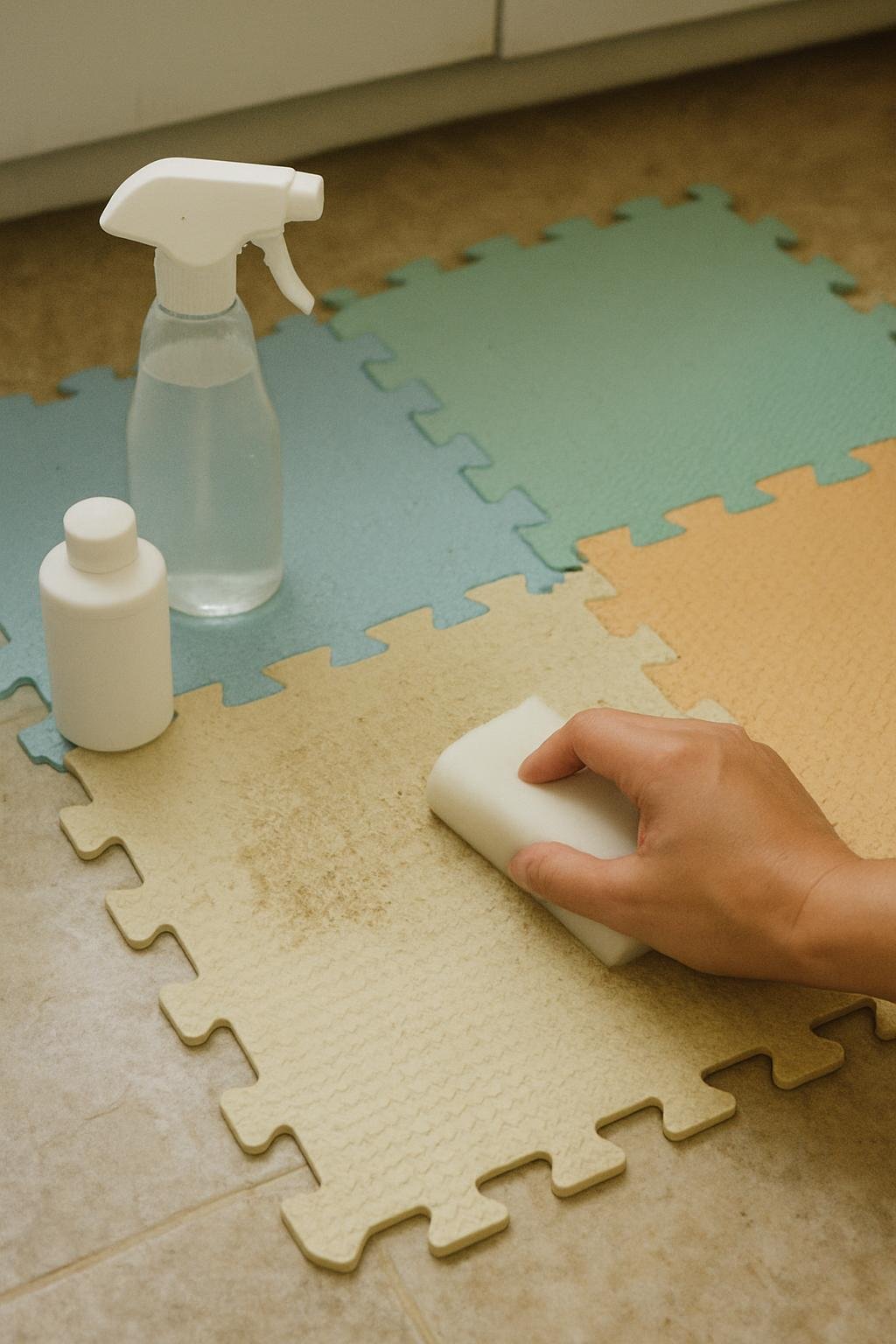
Most foam play mats are made from EVA foam, a lightweight, closed-cell material that resists water on the surface but is not fully waterproof all the way through. Small nicks, seams, and edges can let moisture in, especially if a mat has been used for a while and has surface wear. This is why the safest cleaning approach treats foam more like a sponge that needs light moisture, not a hard surface that can handle heavy scrubbing or soaking.
Because foam mats separate into interlocking tiles, you can usually pull individual pieces apart for cleaning. This is helpful, since it lets you clean both sides and dry each tile flat instead of trying to clean an assembled mat in place.
What to Check Before You Start
- Look for a care label or manufacturer insert. Some brands specify a particular cleaner or explicitly warn against certain products. If you still have the packaging or product page, check it before choosing a cleaner.
- Inspect the mat for existing damage. Cracked, torn, or crumbling foam will only get worse with moisture, so treat those areas gently or consider replacing that tile instead of cleaning it repeatedly.
- Identify the type of mess. Dust and dry debris need a different first step than sticky spills or stains, which matters for how much moisture you use.
The Safe Way to Clean Foam Play Mats
- Separate the tiles. Pull the mats apart at the interlocking edges so you can clean each piece individually and reach the seams, where debris tends to collect.
- Remove loose debris first. Shake out crumbs or dust, or use a vacuum on a low-suction setting or a soft brush attachment. This step keeps you from grinding dirt into the foam once it gets wet.
- Mix a mild soap solution. Warm water with a small amount of gentle dish soap is usually enough for everyday grime. Avoid strong degreasers, ammonia-based cleaners, or anything labeled as a solvent, since these can affect the surface coating on some foam mats.
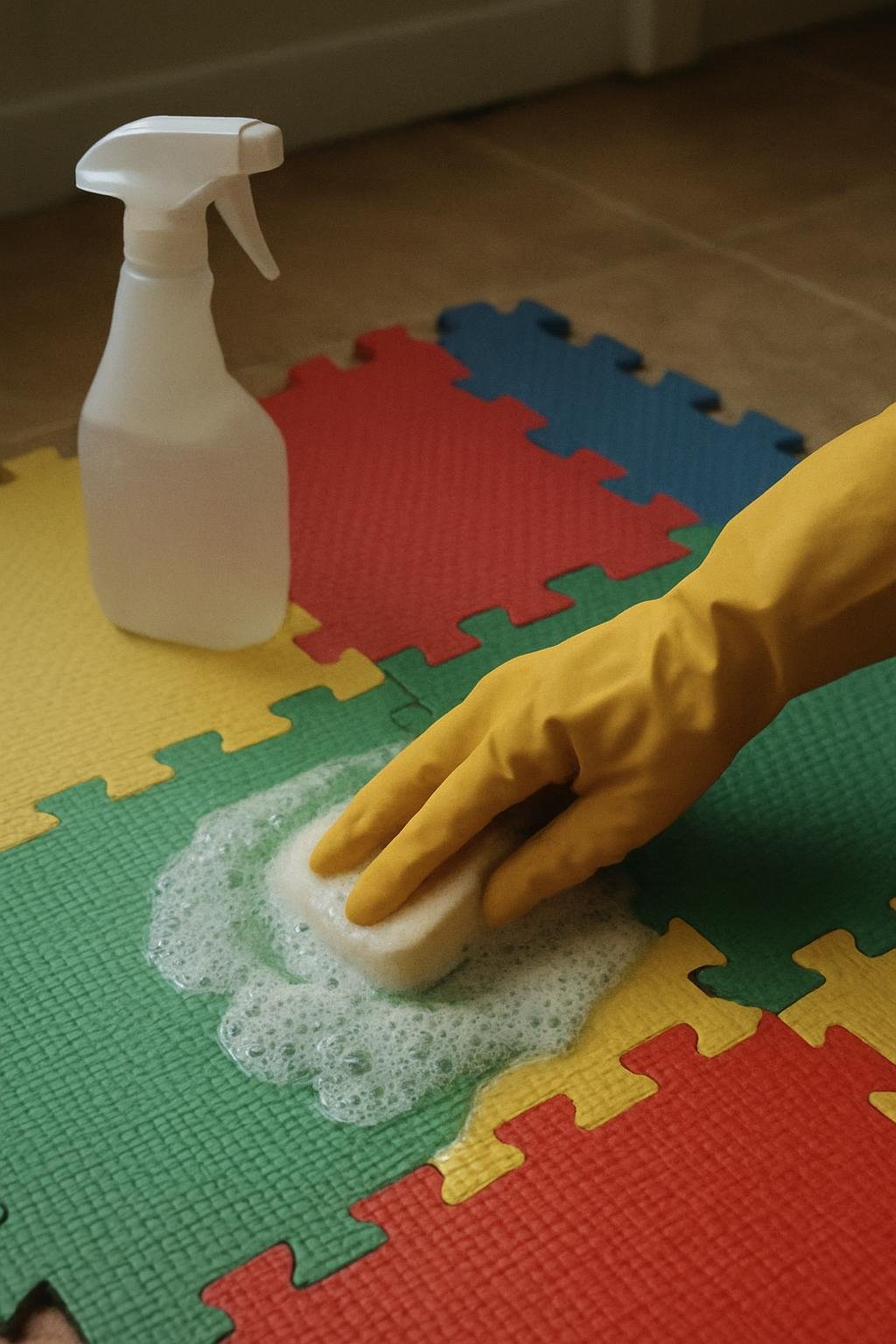
- Wipe, don’t soak. Dampen a soft cloth or sponge with the soap solution and wipe the surface in sections. The cloth should feel damp, not dripping, so water doesn’t pool in seams or edges.
- Rinse with a separate clean cloth. Wipe the same areas again using a cloth dampened with plain water only. This step removes soap residue, which can otherwise leave a dull film or feel sticky once dry.
- Dry each tile completely before reassembling. Lay tiles flat, ideally with some airflow, and let them air-dry fully. Standing tiles on edge can help both sides dry evenly. Avoid direct high heat, such as a hair dryer held close or placing tiles near a heater, since heat can warp EVA foam.
Treating Spills, Stains, and Sticky Messes
For sticky spills like juice or food residue, wipe up the excess first with a dry cloth before applying any soap solution. This keeps you from smearing a sugary residue deeper into the foam’s surface texture.
For light surface stains, the same mild soap-and-water method usually works with a bit more wiping pressure. Avoid scrubbing with abrasive pads or brushes, since foam scratches and pits more easily than harder flooring materials, and those marks are permanent.
If a stain does not lift with soap and water, it is safer to accept a faint mark than to escalate to a stronger cleaner without knowing how the specific foam will react. Testing any new cleaner on a small, hidden edge of one tile first can help you catch discoloration before it spreads across a visible section.
Mistakes That Damage Foam Mats
| Mistake | Why It Causes Problems |
|---|---|
| Soaking tiles or hosing them down | Foam can absorb water through edges and seams, leading to a soft, waterlogged feel or a musty smell that is hard to reverse. |
| Using strong solvents or undiluted cleaners | These can break down the foam’s surface, causing peeling, discoloration, or a rougher texture over time. |
| Scrubbing with abrasive pads | EVA foam scratches easily, and abrasion can leave permanent marks or thin out the surface layer. |
| Reassembling while still damp | Trapped moisture between tiles and the floor can encourage a musty odor and slower drying, especially in carpeted rooms. |
| Using high heat to speed up drying | Direct heat can warp or shrink foam tiles, making seams fit together poorly afterward. |
How Often to Clean Foam Play Mats
A quick wipe-down every one to two weeks is reasonable for mats in regular use, especially in households with young children, pets, or frequent snacking on the floor. A deeper clean, where you separate all the tiles and clean both sides, works well every month or so, or sooner if you notice a change in smell, texture, or visible grime building up in the seams.
If the mat sits in a high-traffic area or gets used for messy activities like painting or eating, more frequent spot-cleaning of just the affected tiles is more practical than a full teardown every time.
When Cleaning Isn’t Enough
If a tile has developed a persistent odor, visible mold-like spots, or foam that feels crumbly or soft even after drying, cleaning is unlikely to fully restore it. At that point, replacing the individual tile is usually more practical than continuing to clean a piece that has already broken down structurally, especially since most interlocking mats allow you to swap out single sections without replacing the whole set.
If you’re also tackling other household cleaning projects that call for chemical-free methods, you may find related guidance useful, such as how to clean an oven without chemicals or how to clean a sink drain without chemicals, both of which follow the same gentle-first approach that works well for sensitive materials.
Everything Mentioned Above
Before you leave, grab the tools you need to get the job done right the first time:
*As an Amazon Associate, TidyFormula earns from qualifying purchases.