how to use toy cleaner
I once sprayed an intimate toy so heavily that cleaner pooled around the buttons and left a tacky film after drying. The problem was not the product. I had skipped the label, used far too much, and treated a splash-resistant toy as though it were waterproof.
Learning how to use toy cleaner is mostly about applying the right amount, respecting the stated contact time, and removing any residue the way the manufacturer directs. This guide covers cleaners intended for adult toys; children’s toys have different care and product-label requirements.
The material matters just as much as the cleaner. Silicone, glass, stainless steel, soft porous materials, and battery-operated toys cannot always be cleaned the same way.
⚡ The TidyFormula™ Quick Answer
The Fix: Apply toy cleaner to cover the washable surface, leave it on for the label’s stated contact time, then rinse or wipe away the residue and let the toy dry completely.
What You Need Before Cleaning
Start by checking both the toy instructions and the cleaner label. Look for the toy’s material, waterproof rating, removable components, and any ingredients the manufacturer says to avoid. Good material compatibility prevents discoloration, swelling, surface damage, and sticky finishes.
What I Use For This Job
Using the right tools saves time and protects your belongings. Here are my exact recommendations:
*As an Amazon Associate, TidyFormula earns from qualifying purchases.
- A toy cleaner that is approved for the toy’s material
- Lukewarm water if the toy can be rinsed
- A clean, soft microfiber cloth
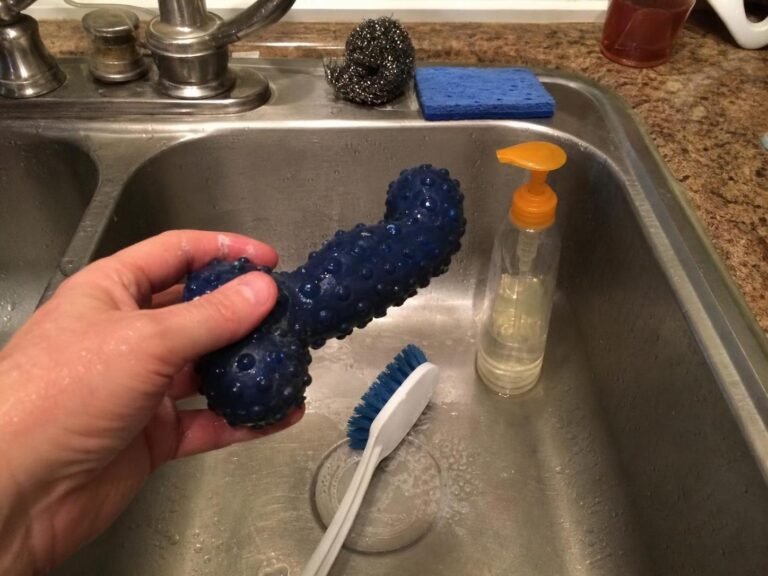
- A small, soft-bristled brush for textured surfaces
- A clean towel or drying rack
- A timer for products with a stated contact time
- The manufacturer’s cleaning instructions
A timer may sound overly fussy, but it is genuinely useful. I used to spray and wipe immediately, which meant I was not giving products enough time to work. On the other hand, leaving a cleaner on longer than directed is not automatically better.
Do not reach automatically for bleach, rubbing alcohol, household disinfectant, glass cleaner, essential oils, or abrasive powder. These can damage soft materials, remove finishes, enter seams, or leave irritating residue. If you need broader guidance about toy use and care, the Planned Parenthood overview of sex toys provides practical safety information.
How to Use Toy Cleaner Step by Step
1. Read the Cleaner and Toy Labels
Confirm that the cleaner can be used on the toy’s material. A product described as “toy safe” may still have restrictions for porous materials, painted surfaces, specialty finishes, or natural rubber.
Check whether the toy is waterproof, splash-resistant, or not water-resistant. These terms are not interchangeable.
Look for directions about rinsing, wiping, and dwell time. If the cleaner and toy instructions conflict, follow the toy manufacturer’s restrictions or contact the manufacturer before proceeding.
2. Disconnect Power and Inspect the Surface
Turn off rechargeable toys and unplug charging cables. Remove replaceable batteries when the design allows it.
Inspect seams, charging ports, battery compartments, textured areas, and removable sleeves.
Stop if you notice cracks, peeling, unexplained swelling, exposed wiring, corrosion, or a surface that has become permanently sticky. Cleaning cannot repair deteriorated material.
Buttons and charging areas need the same cautious approach used when cleaning sensitive electronic controls without compressed air: apply moisture to the cloth when possible rather than flooding the device.
3. Remove Visible Residue First
If the toy is fully waterproof and its instructions permit rinsing, run lukewarm water over the washable section.
For a non-waterproof model, wipe the surface with a barely damp cloth. Keep liquid away from ports, control panels, openings, and battery compartments.
Use a soft brush on grooves if necessary. Avoid aggressive scrubbing, especially on soft-touch coatings.
Removing visible residue first gives the cleaner direct access to the surface. Think of it like wiping crumbs from a counter before cleaning it properly.
4. Apply the Product Evenly
When learning how to use toy cleaner spray, begin with the smallest amount that provides even coverage. Usually, a light mist is enough.
Spray a waterproof toy directly only if both labels permit it. For toys with motors, buttons, or open charging ports, spray the cleaner onto a cloth and wipe the washable surface.
Rotate the toy and cover grooves, curves, and textured sections without soaking openings (the tiny seams are always where residue hides).
5. Wait for the Required Contact Time
Leave the cleaner on for exactly the period stated on its label. Some formulas are designed for a short wipe-down, while others require several minutes.
Keep the surface visibly covered if the directions require it, but do not repeatedly add product unless instructed.
If the material begins changing color, becoming tacky, or developing an unusual texture, rinse or wipe the cleaner off and stop using that formula.
The label’s contact period matters particularly when considering how to use antibacterial toy cleaner. “Antibacterial” does not mean instant, and it does not mean the product destroys every type of microorganism. Use only the claims and directions actually printed on the bottle.
6. Rinse or Wipe Away the Cleaner
For rinse-required formulas and fully waterproof toys, rinse with lukewarm water until the surface no longer feels slippery.
For no-rinse products, follow the label. If it directs you to wipe the toy, use a clean damp cloth and turn to a fresh section of the cloth as you work.
Pay attention to grooves, suction bases, and removable parts. Careful thorough rinsing prevents cleaner from drying inside textured areas.
7. Check the Finished Surface
Run clean fingers over the dryable surface. It should not feel sudsy, slick, gritty, or coated.
Smell the toy from a normal distance. A strong lingering cleaner fragrance may indicate excess product or incomplete rinsing.
Repeat the rinse or damp-cloth wipe if you find residue. Do not add more cleaner merely to cover an odor.

🧪 Why This Works
Toy cleaner typically uses surface-active ingredients that help water lift oils and residue away, rather like dish soap loosening grease from a plate. Removing visible debris first lets the formula reach the surface, while the correct waiting period gives it time to perform as directed. Rinsing or wiping then carries the loosened material away instead of letting it dry back onto the toy.
Toy Cleaner vs Soap and Water
The toy cleaner vs soap question does not have one universal winner. A properly formulated cleaner is convenient, particularly for quick care or non-waterproof devices. However, many manufacturers permit a small amount of fragrance-free soap and lukewarm water on nonporous, waterproof toys.
| Method | Best For | Advantages | Limitations |
|---|---|---|---|
| Toy cleaner spray | Quick cleaning and detailed surfaces | Convenient, easy to control, and formulated for compatible toy materials | May require a specific contact time or rinsing; formulas vary |
| Mild soap and water | Waterproof, nonporous toys when manufacturer-approved | Simple, inexpensive, and effective at removing ordinary residue | Unsuitable for electronics that cannot be submerged; too much soap leaves film |
| Damp-cloth cleaning | Splash-resistant or non-waterproof devices | Limits moisture near controls and openings | Requires patient work around grooves and seams |
| Household disinfectant | Generally not recommended unless explicitly approved | None for routine toy care without manufacturer approval | May damage materials or leave harsh residue |
When comparing toy cleaner vs soap and water, follow the manufacturer rather than assuming the stronger-smelling option cleans better. Scent is not a reliable measure of cleanliness.
Common Mistakes to Avoid
Using Too Much Spray
More liquid creates more residue and increases the chance of moisture entering buttons or charging ports. A light, even coating is usually easier to control than a dripping surface.
Ignoring the Waterproof Rating
Splash-resistant toys should not be submerged. If water gets into a motor housing, stop using the toy until it is completely dry and consult the manufacturer if performance changes.
Wiping an Antibacterial Formula Off Immediately
An antibacterial cleaner may require a stated dwell period. Wiping too early means the product has not been used according to its directions. Leaving it indefinitely is also a mistake because dried residue can collect in seams.
Using Hot Water on Every Material
Very hot water can affect adhesives, soft coatings, batteries, and electronic components. Boiling is appropriate only for certain non-motorized materials when the manufacturer specifically approves it.
Mixing Cleaning Products
Do not combine toy cleaner with bleach, alcohol, soap, vinegar, or another disinfectant. Mixing products does not guarantee better cleaning and may create fumes, residue, or material damage.
Cleaning Only After Use
Dust and storage lint can settle on a clean toy. A quick inspection before use is sensible, especially when the item has been stored for a while.
Drying and Storage
Blot the toy with a clean, lint-free towel, then place it somewhere ventilated for complete air drying. Drying time ranges from roughly 30 minutes to several hours depending on grooves, removable parts, room humidity, and whether water entered a seam. Never charge or reassemble a device while moisture remains around its port or battery compartment.
Once dry, store each toy in its own breathable pouch or manufacturer-provided case. Separate storage reduces dust transfer and prevents different soft materials from resting against one another. Avoid sealed storage while anything is damp.
Clean travel cases periodically too. If a pouch has leaked into a suitcase compartment, the staged approach used for cleaning luggage without damaging its lining is useful: empty it, spot-test the material, use minimal moisture, and dry it fully before repacking.
A Practical Pro Tip
Set a phone timer as soon as the spray touches the toy, then place the cleaner bottle beside the sink with its directions facing you. I use this simple setup because it prevents two common errors at once: forgetting the contact time and forgetting whether the product needs rinsing.
Frequently Asked Questions
What is toy cleaner, what is toy cleaner used for, and what is toy cleaner made of?
Toy cleaner is a liquid, foam, wipe, or spray intended to remove residue from compatible intimate toys. What toy cleaner is made of varies, but many formulas contain water, mild surfactants, preservatives, and pH-adjusting ingredients. Antibacterial versions may include a stated active ingredient. Always check the product label because formulas differ.
Does toy cleaner work, and how does toy cleaner work?
Yes, a compatible cleaner can remove ordinary oils and surface residue when used according to its directions. How toy cleaner works depends on the formula, but most loosen residue so it can be rinsed or wiped away. Any antibacterial performance depends on the specific product claim and required contact time.
Do you need a toy cleaner?
Not always. If the manufacturer approves mild soap and water, that may be enough for routine cleaning of a waterproof, nonporous toy. A dedicated cleaner can be convenient for quick care, textured surfaces, or devices that must not be submerged.
Does toy cleaner expire, and how long is toy cleaner good for?
Toy cleaner can expire. Follow the printed expiration date or period-after-opening symbol. If neither is provided, ask the manufacturer rather than guessing. Discard the product if its color, smell, texture, or consistency changes, or if the packaging becomes damaged.
How do you use antibacterial toy cleaner safely?
Confirm material compatibility, apply enough for even coverage, wait for the exact label-directed contact time, and rinse or wipe as instructed. Do not assume “antibacterial” means no-rinse, safe for every material, or suitable for internal use.
Using toy cleaner correctly is a straightforward routine: inspect, apply sparingly, wait as directed, remove residue, and dry fully. The final reminder is simple—when the cleaner label and the toy’s care instructions disagree, pause and check with the manufacturer rather than risking the material or electronics.
Everything Mentioned Above
Before you leave, grab the tools you need to get the job done right the first time:
*As an Amazon Associate, TidyFormula earns from qualifying purchases.