How to Clean Solar Panels from the Ground
The best way to clean solar panels from the ground is to rinse and lightly brush them with a soft, water-fed telescoping pole while you remain on stable ground. Use plain water unless the panel manufacturer allows a specific cleaner, and avoid pressure washers, abrasive pads, harsh chemicals, and tools that can scratch glass or catch panel wiring.
Most dust and light grime do not need aggressive scrubbing. The goal is to lift loose buildup without putting your weight on the roof, forcing water into electrical components, or damaging the panel glass, frame, seals, or mounting hardware.
⚡ The TidyFormula™ Quick Decision
Best approach: Rinse panels with a garden hose, then use a soft brush or microfiber pad on a telescoping pole with light pressure.
Use caution with: Roof access, overhead power lines, hot panels, cracked glass, loose wiring, and any cleaner not approved in the panel manufacturer’s instructions.
Replace instead of cleaning if: A panel has broken glass, exposed wiring, a loose junction box, or visible separation around the frame or seals; contact a qualified solar service provider instead.
What I Use For This Job
Using the right tools saves time and protects your belongings. Here are my exact recommendations:
*As an Amazon Associate, TidyFormula earns from qualifying purchases.

Check the panels and your setup before you start
Ground-level cleaning is the safer choice only if you can reach the full panel surface without climbing, overextending, or standing beneath an unsafe roof edge. Before bringing out a pole or hose, look for damage that cleaning will not fix.
- Check for cracked or shattered glass, loose frames, exposed cables, or damaged mounting hardware.
- Look for heavy bird droppings, sticky tree residue, soot, or mineral spotting. These may need gentle repeated cleaning rather than harder scrubbing.
- Confirm that your hose, pole, and body will stay well clear of overhead electrical lines.
- Review the solar panel manufacturer’s current cleaning instructions, especially if the system is under warranty or has a specialty coating.
- Choose a cool part of the day if possible. Spraying cold water onto very hot glass can create unnecessary temperature stress, and water may dry too quickly in direct sun.
Stop before cleaning if you see damaged glass, loose electrical parts, water inside a junction box, or a panel that appears to be separating from its frame. A soft brush cannot safely correct structural or electrical problems.
What to use from the ground
A simple, low-pressure setup is usually enough for routine solar panel cleaning. Choose tools that are soft, nonabrasive, and easy to control from the ground.
- A garden hose with a gentle spray setting, not a high-pressure nozzle
- A telescoping pole long enough to reach without climbing or stretching
- A soft-bristle brush head designed for delicate glass, or a clean microfiber pad attachment
- A bucket of clean water if your pole attachment needs it
- A soft microfiber cloth for reachable lower panels or small remaining spots
- A hose filter or softened water supply if mineral spotting is a recurring issue in your area
Do not use scouring pads, stiff deck brushes, metal-edged squeegees, razor blades, powdered cleansers, or abrasive paste cleaners. They can scratch the glass or leave residue. Avoid pressure washers as well; their force can stress seals, frames, and nearby electrical connections. If you need a lower-pressure outdoor cleaning approach for another hard surface, this patio cleaning method without a pressure washer follows the same basic principle of using controlled water instead of force.
Clean the panels with a soft pole and light pressure
For normal dust, pollen, and light grime, start with water and use the least aggressive method that removes the buildup. Work one panel at a time so loosened dirt does not dry back onto the glass.
- Rinse the first panel gently. Spray from the top edge downward so water carries loose dust and debris toward the lower frame. Keep the spray gentle and avoid directing water at panel edges, wiring, junction boxes, or connectors.
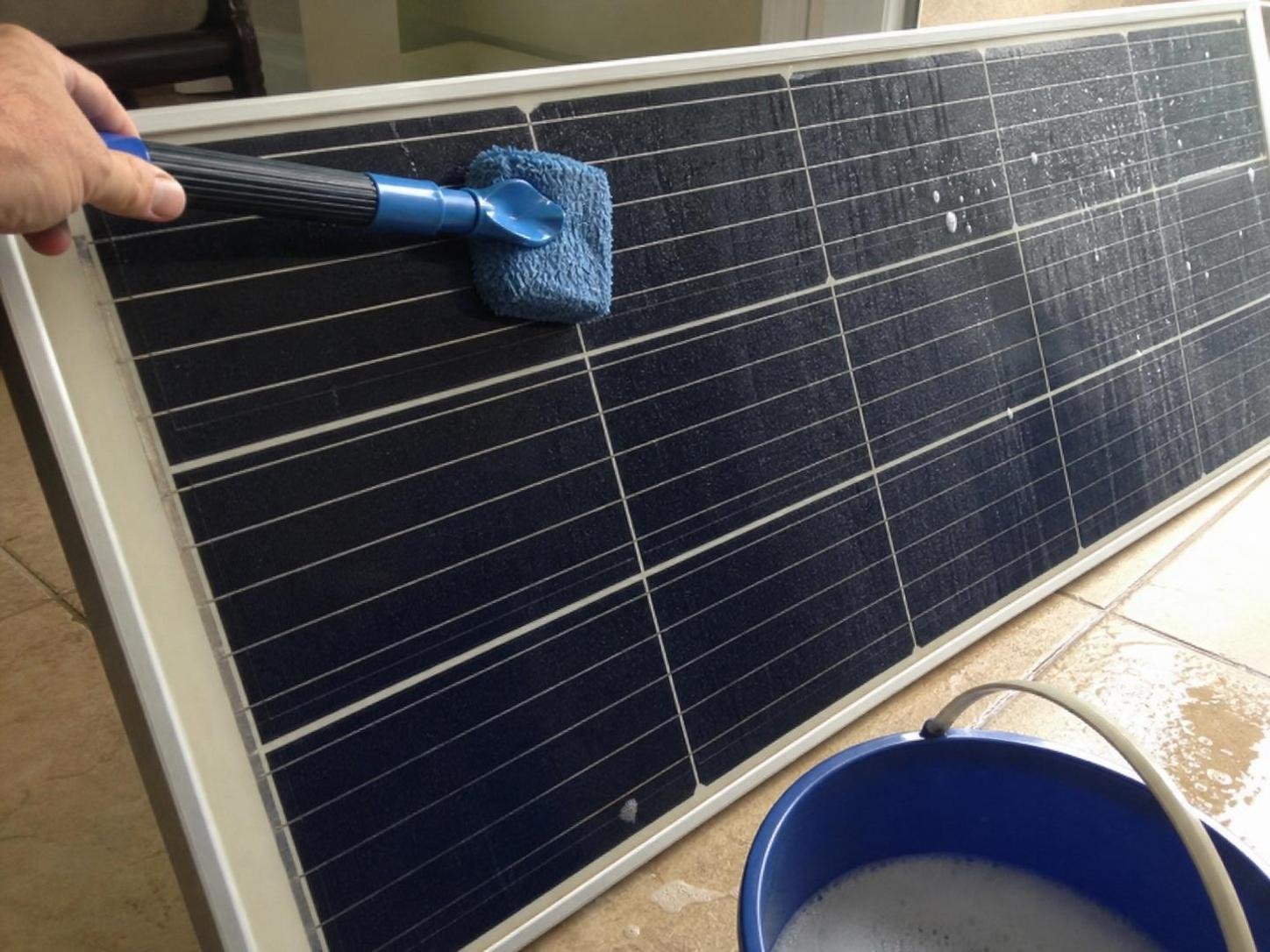
- Brush only where dirt remains. Wet the soft brush or microfiber pad, then move it across the glass with light, even strokes. Let the wet fibers lift the grime; do not lean hard on the pole or scrub one spot aggressively.
- Use extra patience on stuck residue. Bird droppings and dried pollen may soften after a second gentle rinse. Re-wet the area and make another light pass instead of scraping it with a hard tool.
- Rinse away loosened debris. Give the panel a final gentle rinse from top to bottom. Check from different angles for streaks, remaining residue, or brush fibers caught around the frame.
- Move methodically across the array. Clean reachable panels in sections, keeping your footing stable. If a panel cannot be reached without stepping onto a roof, ladder, or unstable surface, leave it for a qualified cleaner.
🧪 Why This Works
Dust and loose outdoor debris usually release when they are wetted and lifted with a soft surface. A gentle rinse removes the loosened material without the unnecessary force of a pressure washer, while a long pole lets you clean reachable panels without climbing onto the roof.
When plain water is enough—and when to use a cleaner
Plain water is the preferred starting point for solar panels. It is usually the lowest-risk option for ordinary dust and light grime, and it avoids leaving cleaner residue behind on the glass.
| Panel condition | Preferred approach |
|---|---|
| Light dust, pollen, or loose dirt | Gentle hose rinse, followed by a soft wet brush only if needed. |
| Dried bird droppings or mud spots | Re-wet, allow the water to soften the residue briefly, then make several light passes with a soft brush. |
| Sticky residue, oily film, or stubborn spotting | Check the panel manufacturer’s instructions before using any cleaner. Use only a product and method allowed for the panel surface. |
| White mineral marks after rinsing | Use cleaner water if available, reduce drying in strong sun, and follow manufacturer guidance for residue removal. |
| Cracks, cloudy areas beneath the glass, loose seals, or exposed wiring | Do not clean aggressively. Arrange professional inspection or service. |
If you use a solar-panel cleaner or another product specifically permitted by the manufacturer, follow the current product label and panel instructions exactly. Do not mix products, and do not assume a household glass cleaner, vinegar solution, dish soap, or degreaser is suitable for every panel coating or frame finish.
Solar panel cleaning mistakes to avoid
Most solar panels from the ground cleaning mistakes come from using too much force, too much product, or unsafe access methods. A careful, light-touch approach is usually more useful than trying to make the glass look perfectly polished.
Using a pressure washer
High pressure may force water and debris into panel edges, seals, mounting areas, or electrical components. If dirt does not release with a gentle rinse and soft brush, repeat the low-pressure method or check manufacturer guidance rather than increasing the force.
Cleaning very hot glass with cold water
Panels in full sun can become hot, and water can evaporate quickly before you finish rinsing. Wait for cooler conditions when practical, such as early morning or later in the day, so you can work more evenly and reduce water spotting.
Scrubbing with a dry brush or abrasive pad
A dry brush can drag grit across the glass. Always rinse first and keep the brush or microfiber pad wet. If the brush picks up sand, leaves, or grit, rinse it thoroughly before continuing.
Leaving soap or cleaner residue behind
Cleaner residue can dry into streaks or attract more dust. If a manufacturer-approved product is used, rinse as directed on the label and inspect the panel from the ground after it dries.
Reaching too far with a pole
A telescoping pole becomes harder to control as it extends. If you need to twist, lean backward, stand on a ladder, or work close to a roof edge to reach a panel, stop. A partially cleaned array is preferable to an unsafe fall risk.
How often to clean solar panels from the ground
Clean solar panels when you can see a meaningful layer of dust, pollen, bird droppings, or residue, rather than following a rigid schedule. Homes near trees, unpaved roads, farming activity, construction dust, or frequent bird activity may need more attention than panels in a relatively open, low-dust area.
Rain may rinse away some loose dust, but it may not remove sticky residue, droppings, or mineral deposits. Check the panels visually from the ground after periods of heavy pollen, dust, or bird activity. If they look mostly clear, routine inspection may be more worthwhile than unnecessary washing.
Aftercare and signs cleaning may not be worthwhile
After rinsing, let the panels air-dry. Do not try to dry high roof panels with towels, squeegees, or hard-edged tools from a pole. Those tools can catch on the frame or leave pressure marks if they are poorly controlled.
Once the glass is dry, look from the ground for obvious streaks, missed debris, or residue. A few water spots may be cosmetic, especially where hard water is common. If persistent haze appears to be beneath the glass, if output concerns continue after visible dirt is removed, or if one panel looks noticeably different from the others, cleaning may not be the answer. Contact your installer, panel manufacturer, or a qualified solar service provider for guidance.
For ordinary buildup, stick with a gentle water rinse and a soft pole-mounted brush, then let the panels air-dry. Avoid pressure, abrasives, unapproved cleaners, and unsafe roof access; careful routine inspection is a better long-term habit than aggressive cleaning.
Everything Mentioned Above
Before you leave, grab the tools you need to get the job done right the first time:
*As an Amazon Associate, TidyFormula earns from qualifying purchases.