Window Tracks Cleaning: Tips for Loosening, Lifting, and Wiping
Window tracks get cleaned best by loosening the dried dirt first, then lifting it out with a brush or vacuum attachment before wiping the channel with a damp cloth. Dry scraping or spraying heavy cleaner onto packed debris usually just smears it deeper into the corners, so the order of steps matters more than the specific tool you use. For streak-free glass cleanup nearby, see How to Clean Windows Without a Squeegee.
The TidyFormula Quick Decision
Best approach: Loosen dried grit with a stiff brush or old toothbrush, lift debris out with a vacuum crevice tool or folded cloth, then wipe the channel with a damp microfiber cloth and mild soapy water.
Use caution with: Painted wood tracks, older aluminum with pitted or flaking finish, and tracks near visible mold growth, since scrubbing or moisture can worsen damage in those cases.
Stop and reassess if: You see soft or crumbling wood, dark fuzzy growth that keeps returning, or a track that is bent or separated from the frame, since these point to a repair or professional issue rather than a cleaning one.
What Builds Up in Window Tracks
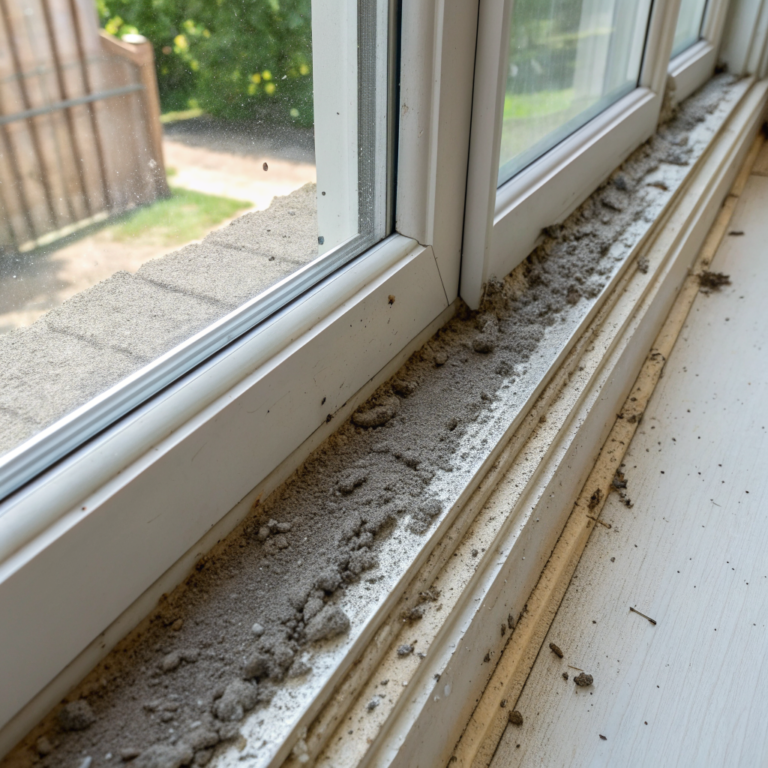
Window tracks collect a mix of dust, pollen, dead insects, and outdoor grit that gets pulled in every time the window opens or closes. Once that debris mixes with humidity or condensation, it can compact into a sticky gray or black layer that resists a quick wipe.
What I Use For This Job
Using the right tools saves time and protects your belongings. Here are my exact recommendations:
*As an Amazon Associate, TidyFormula earns from qualifying purchases.
This buildup is usually just dirt and organic residue, not something that needs disinfecting. The goal is removing visible grime and loose particles, not sanitizing the channel, and framing it that way helps you pick a reasonable cleaning method instead of an overly aggressive one.
How to Clean Window Tracks Step by Step
Most window tracks respond well to a simple sequence: loosen, lift, wipe, dry. Working in that order keeps you from grinding loose dirt back into the channel with a wet cloth before it has a chance to come out.
- Run a stiff-bristled brush, old toothbrush, or a butter knife wrapped in cloth along the track to break up packed dirt.
- Vacuum the loosened debris with a crevice attachment, or scoop it out with a folded paper towel if you do not have a vacuum handy.
- Dip a cloth or cotton swab in mild dish soap and water, then wipe along the full length of the track, including corners and drainage holes.
- Rinse the cloth and go over the track again with plain water to lift soap residue.
- Dry the channel with a clean cloth or leave the window open briefly so it air-dries before closing.
If a track has not been cleaned in a long time, going over it twice with a lighter touch usually works better than pressing hard on the first pass, especially in tight corners where debris tends to pack tightest. For help cleaning the adjacent sill and the area around the channel, see How to Clean Dirty Window Sills.
TidyFormula Tip
A dry cotton swab is often the fastest way to reach the narrow corners at each end of a window track where a cloth cannot fit.
Cleaning Sliding Vinyl and Aluminum Window Tracks
Vinyl and aluminum tracks generally tolerate mild soap and water well, but the approach can shift slightly depending on the finish. Aluminum tracks with a painted or anodized finish can scratch under abrasive scrubbing pads, so a soft brush is the safer choice there.
Vinyl tracks can develop a chalky residue over time from sun exposure, and scrubbing too hard in that spot can dull the finish further rather than restoring it. A gentler cloth pass, repeated as needed, is usually more effective than one aggressive scrub. If the track is part of a sliding door rather than a window, the same general steps apply, though the channel is often deeper and can hold more debris.
For guidance specific to that wider track style, see How to Clean Sliding Glass Door Tracks. If mineral deposits or haze are visible on the surrounding glass or exterior frames, check How to Remove Hard Water Stains from Exterior Windows for a targeted method.
What to Avoid When Cleaning Window Tracks
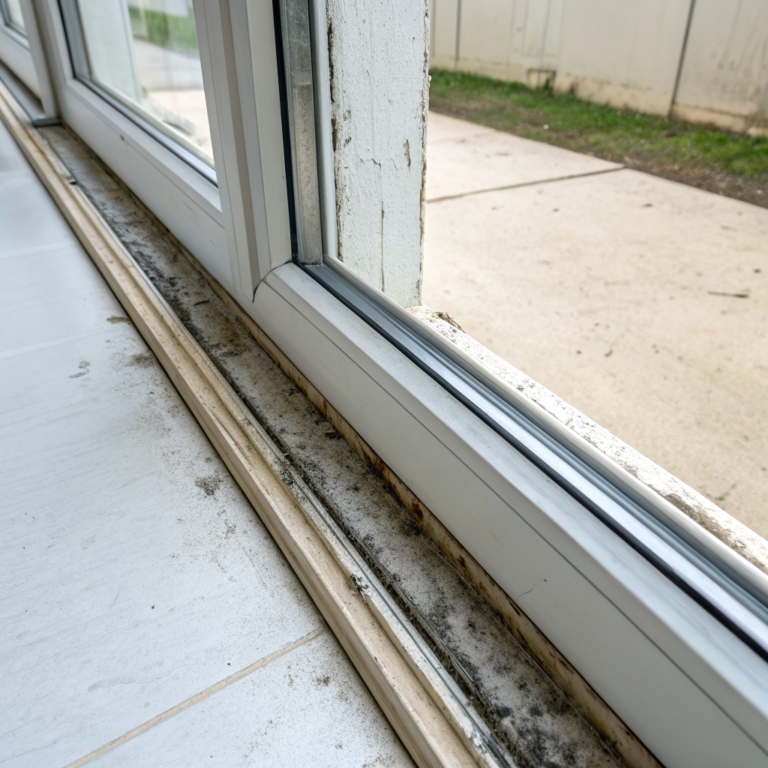
A few habits tend to make window tracks harder to clean over time rather than easier. Knowing what not to do saves you from creating a bigger problem while trying to fix a small one.
- Avoid using metal scrapers or knives directly on painted or anodized tracks, since they can scratch through the finish.
- Avoid soaking the track heavily with water, since excess moisture can seep into the frame or subfloor below.
- Do not mix bleach and ammonia-based cleaners, and do not combine any two cleaning products unless the labels specifically say they can be used together.
- Avoid pressing debris toward the drainage holes at the base of the track, since blocking them can trap water during rain.
If mold-like growth appears in a track and keeps returning after cleaning, that pattern often points to a moisture source in the frame rather than a surface cleaning issue, and it is worth having that looked at rather than repeating the same scrub. For discoloration on the surrounding frame itself, How to Remove Mold from Window Frames covers that separately.
Preventing Buildup Between Cleanings
A quick pass with a dry brush every few weeks keeps debris from compacting into the sticky layer that takes real effort to remove later. Wiping the track after heavy pollen days or storms also helps, since fresh debris comes out far more easily than debris that has already dried and set.
Keeping the window screen clean can reduce how much dust and pollen reach the track in the first place, since a clogged screen tends to shed more particles directly into the channel below it. See How to Clean Window Screens without Removing Them for a method that does not require taking the screen out. Cleaning nearby blinds also cuts how much dust settles into the channel; if you want a quick approach, try How to Clean Blinds Without Taking Them Down.
Frequently Asked Questions
Can I use a vacuum to clean window tracks?
Yes, a vacuum with a narrow crevice attachment is usually the fastest way to remove loosened dirt from a window track. If you do not have one, a folded cloth or cotton swab can substitute, though it may take a few more passes to clear the same amount of debris.
What household items work well for window track cleaning?
An old toothbrush, cotton swabs, and a cloth dampened with mild dish soap and water handle most buildup without needing a specialized product. For a full method built around common household tools, see How to Clean Window Tracks without a Vacuum.
How often should window tracks be cleaned?
Every few weeks is reasonable for most homes, with a deeper clean once or twice a year depending on local dust, pollen, and weather conditions. Homes near construction, farmland, or heavy traffic may need more frequent attention.
Why do window tracks feel gritty even after wiping?
Leftover grit usually means dirt was pushed into corners or drainage holes instead of being lifted out. Going back over the track with a brush first, then a damp cloth, typically clears the remaining residue.
Is it safe to use vinegar on window tracks?
Diluted white vinegar can help loosen light grime on many aluminum and vinyl tracks, though it is worth testing a small area first, especially on painted or coated finishes. Avoid combining vinegar with bleach-based products under any circumstances. For tips on avoiding streaks and haze when cleaning nearby glass, see How to Clean Windows Without Streaks.
Everything Mentioned Above
Before you leave, grab the tools you need to get the job done right the first time:
*As an Amazon Associate, TidyFormula earns from qualifying purchases.