How to Remove Hard Water Stains from Exterior Windows
The most reliable way to remove hard water stains from exterior windows is a mixture of white vinegar and water applied to the glass, left to sit for several minutes, then worked loose with a non-scratch pad and rinsed clean. On glass this is generally safe, but check your window screens, frames, and any tinted or coated glass before treating the whole window, since some coatings and vinyl finishes react differently to acidic cleaners.
If the stains have been building for months or years, plain vinegar and water may not fully dissolve them on the first try, especially near sprinkler heads or under mineral-heavy roof runoff. That doesn’t mean the method failed. It usually means the deposits need a second treatment or a slightly longer contact time.
⚡ The TidyFormula™ Quick Decision
Best approach: Apply a white vinegar and water solution to the glass, let it sit a few minutes to soften mineral deposits, then scrub gently with a non-scratch pad before rinsing and squeegeeing dry.
Use caution with: Tinted glass, low-E coatings, vinyl or wood window frames, and any surface with a manufacturer care instruction that says to avoid acidic cleaners.
Stop and reassess if: The glass looks etched, cloudy, or permanently hazy even after cleaning. That pattern usually points to mineral etching rather than a surface stain, and no amount of scrubbing will fix it.
What I Use For This Job
Using the right tools saves time and protects your belongings. Here are my exact recommendations:
*As an Amazon Associate, TidyFormula earns from qualifying purchases.
What Hard Water Stains on Exterior Windows Actually Are
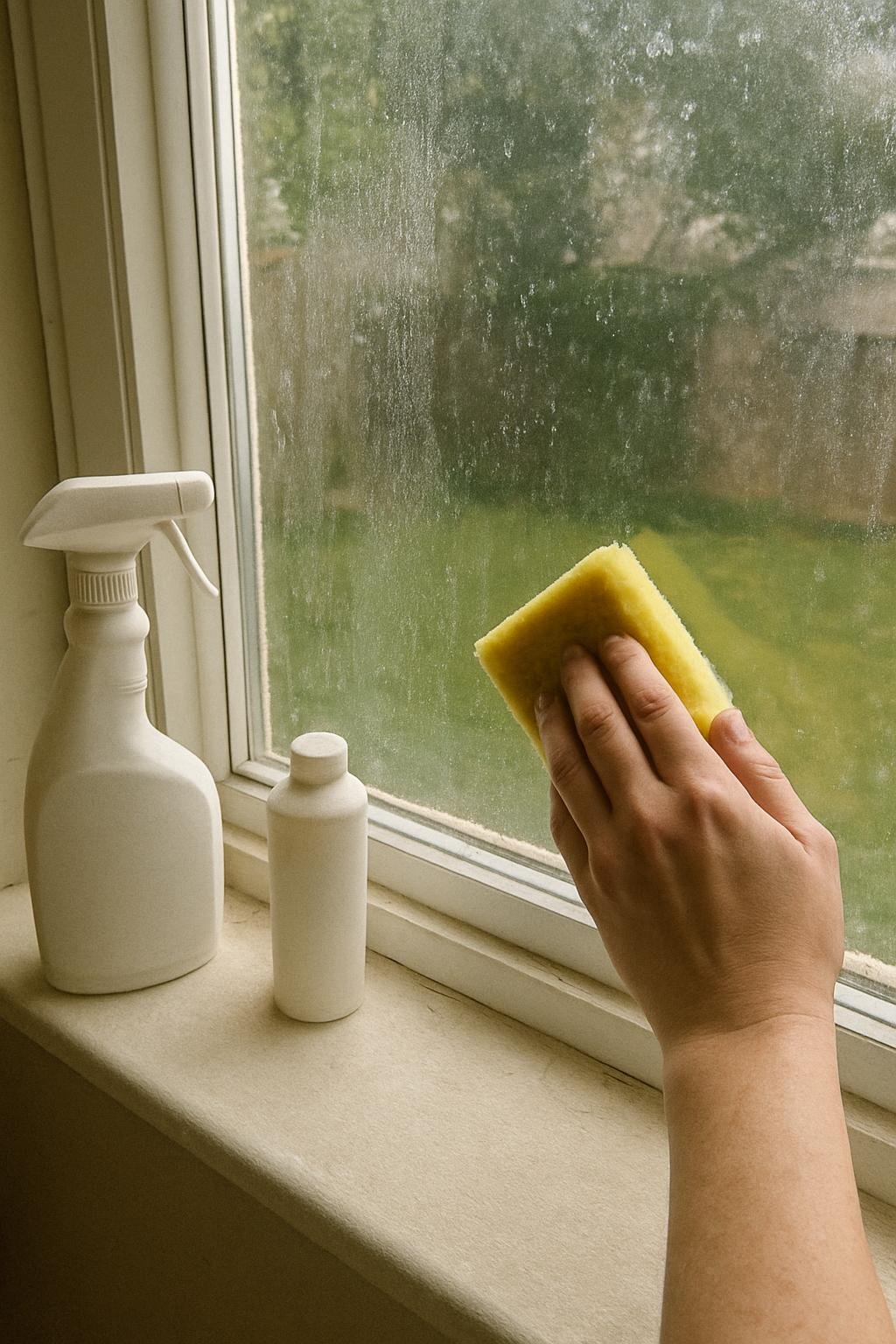
Hard water stains on exterior glass are mineral deposits left behind after water evaporates, usually from sprinklers, rain runoff carrying minerals from siding or roofing, or hose water used to clean the house. Over time these minerals can sit on the glass surface as a chalky white film, or in more stubborn cases they can bond more tightly to the glass, which makes them harder to remove with a simple wipe-down.
The difference matters because surface deposits usually respond well to a mild acidic cleaner, while long-term mineral etching may have actually altered the surface of the glass. You can’t reverse etching with cleaning products. If you scrub hard and the haze doesn’t budge, you’re likely dealing with etching rather than a removable stain.
What to Check Before You Start
- Window material and coatings. Standard clear glass tolerates a diluted vinegar solution well. Tinted, tempered, or low-E coated glass can be more sensitive, so test a small corner first if you’re unsure what type of glass you have.
- Frame material. Vinyl, aluminum, and painted wood frames can be affected differently by acidic cleaners left to sit too long. Keep your cleaning solution on the glass itself and rinse promptly if it drips onto the frame.
- Height and access. Upper-story windows may require an extension pole or a professional exterior window cleaning service. Don’t lean out of a window or use an unstable ladder to reach hard-to-reach panes.
- Weather. Clean on a cloudy day or in the early morning. Direct sun causes cleaning solutions to dry too fast, which can leave streaks and make mineral deposits harder to lift.
Step-by-Step: Removing Hard Water Stains from Exterior Glass
- Rinse the window first. Use a hose to knock loose dust, pollen, and loose debris. This keeps you from grinding grit into the glass once you start scrubbing.
- Mix a vinegar solution. Combine equal parts white vinegar and water in a spray bottle. For lighter mineral buildup, this ratio is typically enough. Avoid mixing vinegar with any other cleaning product, including bleach or ammonia-based glass cleaners.
- Apply and let it sit. Spray the solution generously over the stained areas and let it sit for five to ten minutes. This gives the acid time to soften the mineral deposits before you start scrubbing.
- Scrub gently with a non-scratch pad. A soft nylon scrub pad or a dedicated glass-safe scrubber works well. Avoid steel wool, scouring pads, or anything abrasive enough to scratch glass, since scratches are permanent and often more noticeable than the original stain.
- Rinse thoroughly. Hose the window down completely to remove any loosened mineral residue and leftover vinegar solution.
- Squeegee or dry with a lint-free cloth. Working top to bottom in overlapping strokes helps prevent new water spots from forming as the glass dries. If you don’t have a squeegee, a microfiber cloth works as an alternative.
- Repeat if needed. Heavier or older deposits sometimes need a second application. Repeating the process is normal and doesn’t mean you’re doing something wrong.
If you’re working without a squeegee or want a streak-free finish on the final pass, the drying step matters as much as the cleaning step. You can find more detail on that part of the process in how to clean windows without a squeegee and how to clean windows without streaks.
When Vinegar Alone Isn’t Enough
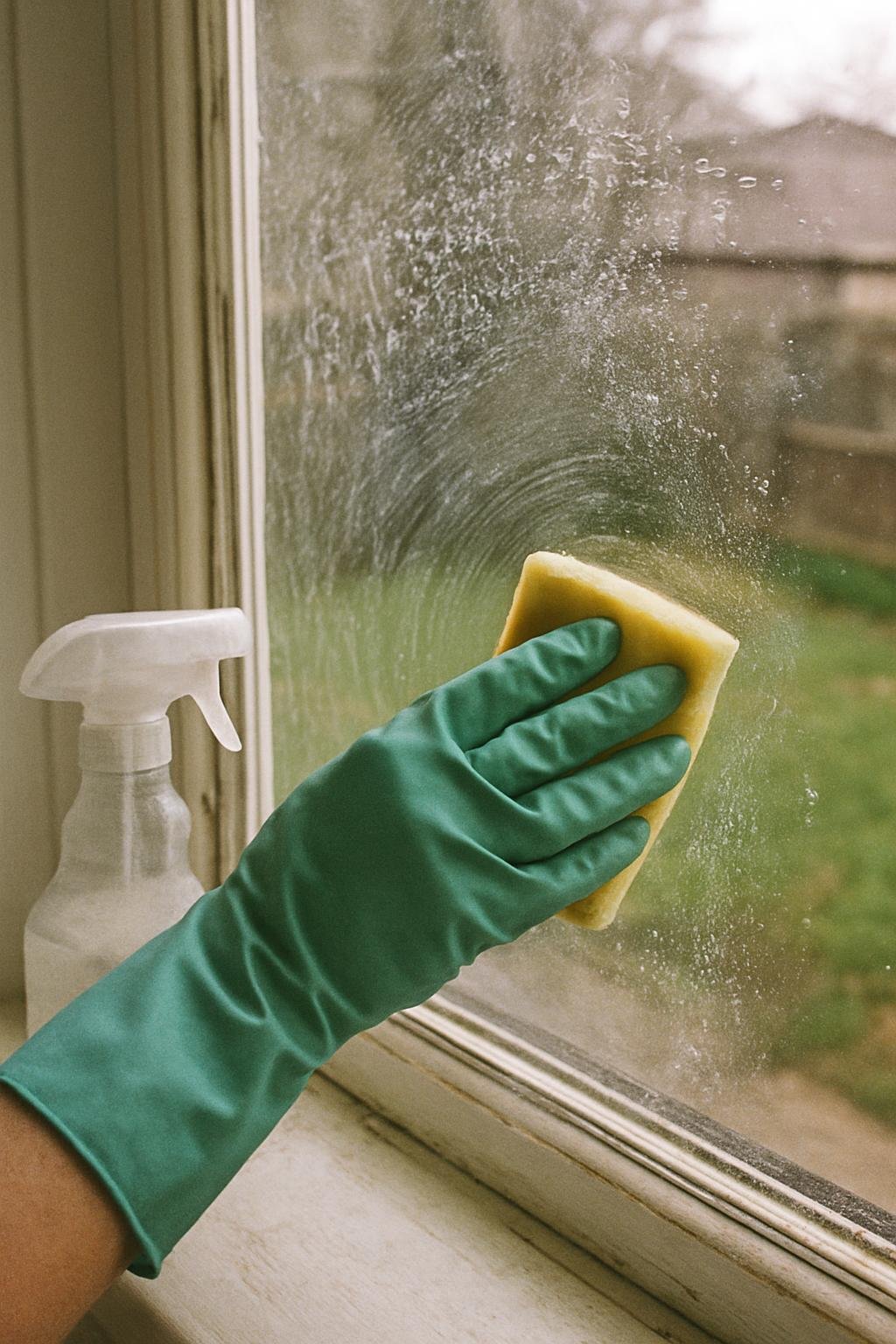
Some hard water deposits are thick enough that a single vinegar treatment only partially softens them. If you’ve scrubbed and rinsed and there’s still a visible film, apply the vinegar solution a second time and extend the contact time to closer to fifteen minutes before scrubbing again. Avoid the temptation to reach for a stronger acid or a scouring pad out of frustration. Both can damage glass or nearby frame finishes in ways that are harder to fix than the original stain.
For window panes with genuinely stubborn, long-standing mineral buildup, a specialized glass cleaner formulated for hard water deposits may work better than plain vinegar. If you go this route, follow the product label exactly, since these cleaners are often more concentrated and may not be safe on all frame materials or window coatings.
Cleaning Mistakes That Make Hard Water Stains Worse
| Mistake | Why It Backfires |
|---|---|
| Scrubbing with abrasive pads or steel wool | Can scratch the glass surface, leaving permanent marks that are more visible than the original mineral film. |
| Cleaning in direct sunlight | Solution dries too quickly, leaving new streaks and re-depositing minerals before you can rinse them away. |
| Skipping the rinse step | Leftover vinegar residue can dry into its own faint film, especially in hard water areas. |
| Letting cleaning solution sit on window frames | Some vinyl, aluminum, or painted finishes can be affected by prolonged contact with acidic cleaners. |
| Assuming stronger acid works faster | Higher-strength acids increase the risk of etching glass or damaging nearby caulking and frame seals. |
Preventing Hard Water Stains from Coming Back
- Adjust sprinkler positioning. If irrigation heads are spraying directly onto windows, redirecting them is one of the most effective long-term fixes.
- Rinse windows after heavy rain or irrigation cycles. A quick hose-down before mineral deposits have time to dry can prevent buildup from forming in the first place.
- Clean on a regular schedule. Light, frequent cleaning is easier than removing months of accumulated mineral film.
- Consider a water-repellent glass treatment. Some products designed for auto glass or exterior windows create a surface that sheds water more easily, which can reduce how much mineral residue is left behind after it dries. Check the product label to confirm it’s rated for exterior residential glass.
When Cleaning Isn’t the Right Fix
If the haze remains after multiple careful cleaning attempts and the glass feels rough or looks permanently cloudy rather than filmy, you’re likely looking at etched glass rather than a removable stain. Etching happens when mineral deposits are left on glass long enough, combined with sun exposure, to actually change the surface texture. At that point, a professional glass restoration service may be able to polish out light etching, but deep etching often means the pane itself needs replacing. A local window or glass professional can tell you which situation you’re dealing with and whether restoration is worth the cost compared to replacement.
Everything Mentioned Above
Before you leave, grab the tools you need to get the job done right the first time:
*As an Amazon Associate, TidyFormula earns from qualifying purchases.