How to Remove Mold from Window Frames
The safest way to remove mold from window frames is to clean with a mild detergent-and-water solution, scrub gently with a soft brush, then dry the area completely so the mold can’t return. The right cleaner and technique depend on whether the frame is painted wood, bare wood, vinyl, or aluminum, since porous surfaces need gentler treatment than sealed ones.
If the mold keeps coming back around the same window even after cleaning, the moisture source is usually the real problem, not the cleaning method.
⚡ The TidyFormula™ Quick Decision
Best approach: Clean with a mild detergent and warm water on all frame materials, using a soft brush for grooves and corners, then dry the frame thoroughly.
Use caution with: Bare or painted wood, since scrubbing too hard or using strong chemicals can strip finish, and porous wood can absorb mold below the surface where cleaning can’t fully reach.
Stop and reassess if: The wood feels soft, swollen, or crumbly, mold returns repeatedly in the same spot, or staining covers a large area of the frame or surrounding wall.
What I Use For This Job
Using the right tools saves time and protects your belongings. Here are my exact recommendations:
*As an Amazon Associate, TidyFormula earns from qualifying purchases.
Check the Frame Material Before You Clean
What your window frame is made of changes what you can safely use on it.
- Painted or sealed wood: The finish creates a barrier, but scrubbing too hard or using harsh solvents can wear it away and expose bare wood underneath.
- Bare or unfinished wood: This is the most vulnerable material. Mold can settle into the grain, and heavy moisture from wet cleaning can cause swelling or warping.
- Vinyl: Nonporous and generally easy to clean, but check for cracks or gaps where moisture and mold can hide.
- Aluminum: Durable and nonporous, though older aluminum frames may have a painted or anodized coating that scratches with abrasive scrubbing.
If you’re not sure which material you have, or the frame has an unusual finish, test any cleaning solution on a small hidden spot first.
What to Use to Remove Mold from Window Frames
For most window frames, a solution of a few drops of dish soap or a mild household detergent mixed into warm water is enough to lift surface mold without damaging paint, wood, or metal. This is the safest starting point regardless of material.
Diluted white vinegar can work on nonporous surfaces like vinyl or aluminum, but it isn’t a strong choice for painted or bare wood, where it can dull the finish or feed into open grain. If you try it, test a hidden area first and never combine vinegar with bleach or ammonia-based products.
Skip bleach on wood frames. It can lighten or discolor the wood and doesn’t reach mold that has settled below the surface. Bleach is sometimes used on hard nonporous surfaces, but it should never be mixed with other cleaning products, and it isn’t a reliable way to fully remove mold that has penetrated a porous material.
Step-by-Step: Cleaning Mold Off Window Frames
- Ventilate the room by opening a window or door and, if you have one, running a fan to move air away from you while you work.
- Protect yourself with gloves and, if the mold is extensive or you’re sensitive to it, a mask and eye protection. Disturbing mold can release spores into the air.
- Vacuum loose debris from the frame and track using a vacuum with a hose attachment, ideally one with a HEPA filter, before introducing any moisture. This reduces the amount of mold you spread around while wet-cleaning.
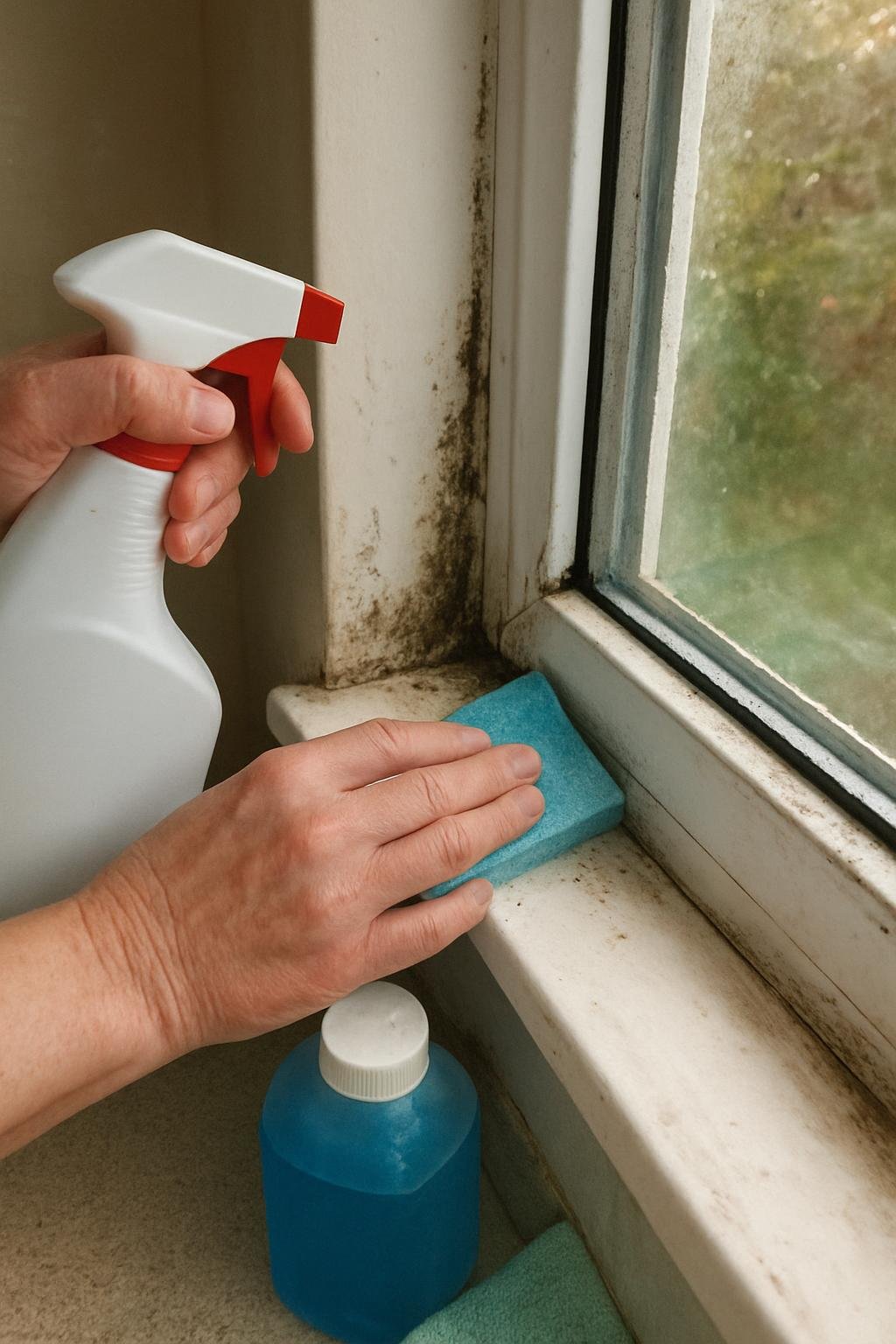
- Wipe with your cleaning solution using a soft cloth or soft-bristle brush. Work in one direction rather than scrubbing aggressively, especially on painted or wood surfaces.
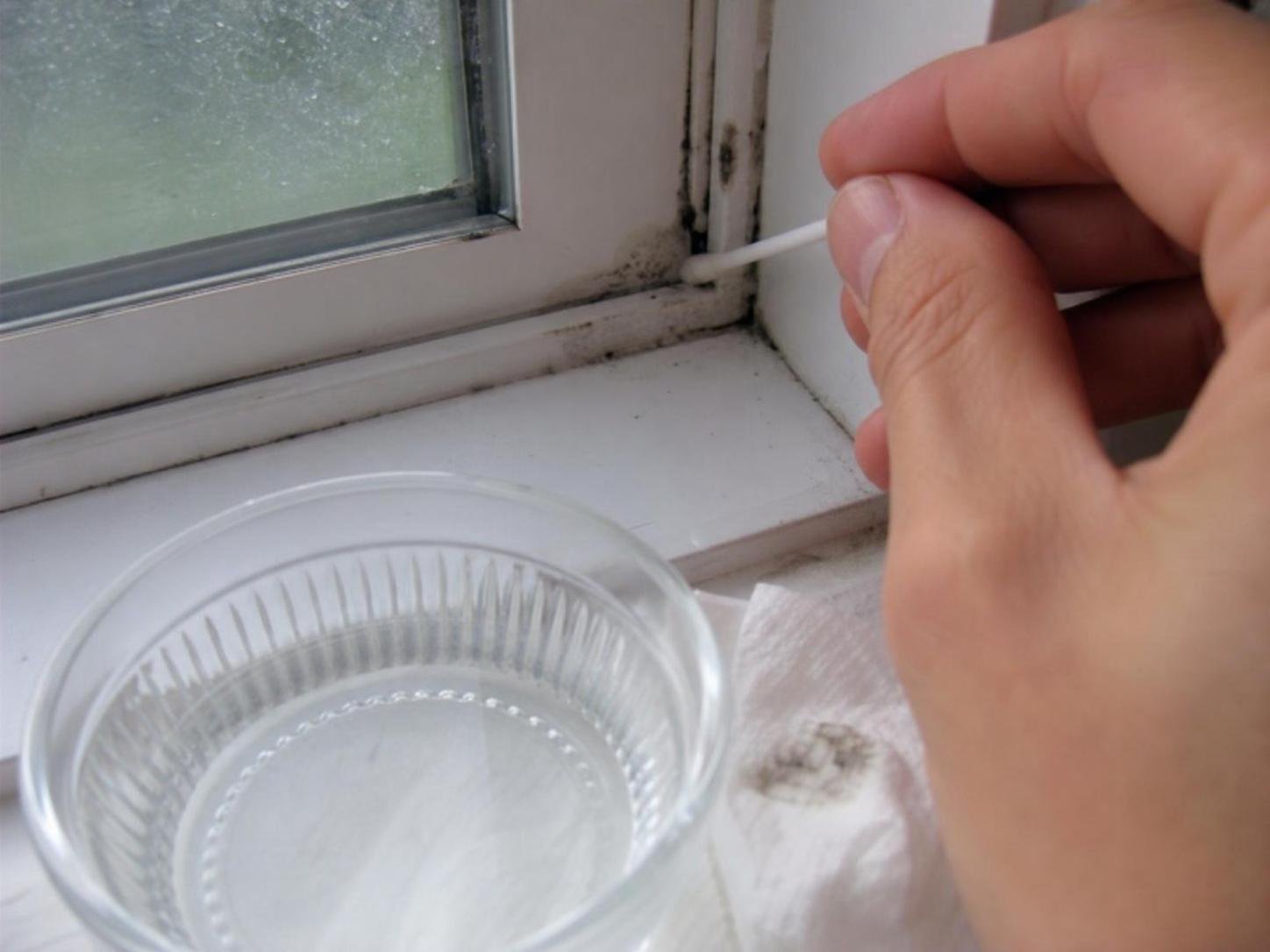
- Get into corners and grooves with an old toothbrush or narrow brush, since mold often collects in tracks, weep holes, and corner joints.
- Rinse with a clean, barely damp cloth to remove cleaning residue.
- Dry the frame completely with a dry towel, then leave the window open or run a fan for a while afterward. Mold needs moisture to return, so this step matters as much as the cleaning itself.
When the Stain Won’t Fully Come Out
Mold often leaves a dark stain behind even after the mold itself is gone. On nonporous surfaces like vinyl or aluminum, a diluted hydrogen peroxide solution can sometimes lighten leftover staining, but test it on a hidden area first and never combine it with other cleaning products. On painted wood, a stubborn stain may mean the mold reached the wood fibers under the paint, in which case cleaning won’t fully resolve it, and you may be looking at a repaint or repair rather than a cleaning fix.
If the wood feels soft, spongy, or the paint is bubbling and flaking away from the surface, that usually points to moisture damage that cleaning alone won’t solve.
Cleaning Mistakes That Make Mold Worse
- Scrubbing dry mold without vacuuming first can send spores into the air and onto nearby surfaces.
- Soaking wood frames instead of using a damp cloth can drive moisture into the grain and encourage more mold growth later.
- Skipping the drying step leaves behind the exact moisture mold needs to return within days.
- Painting over mold without cleaning it first traps it under the new coat, where it can resurface as staining or bubbling.
- Mixing bleach with vinegar, ammonia, or other cleaners to make a “stronger” solution is unsafe and should never be done.
Why Mold Keeps Coming Back on Window Frames
Window frames are prone to recurring mold because condensation collects on cold glass and drips down onto the frame, especially in winter or in rooms with high humidity, like bathrooms and kitchens. If you notice moisture beading on the glass regularly, that’s usually the source, not a cleaning failure. Wiping down glass and frames after condensation forms, using a dehumidifier in damp rooms, and checking that weatherstripping isn’t letting in outside moisture can all reduce how often mold returns.
If your window has an air conditioning unit installed in it, condensation or drainage issues from the unit can also contribute to moisture around the frame. Reviewing how to clean a window AC unit without removing it can help you address that moisture source alongside the frame itself.
When to Call a Professional
Cleaning is usually enough for surface mold on a small area of a window frame. Contact a mold remediation professional if mold covers a large section of the frame or wall, keeps returning despite repeated cleaning and drying, or if you notice a persistent musty smell you can’t trace to a visible source. A professional can also help if you suspect the mold has spread behind the wall or into the window’s structural framing, since that isn’t something cleaning products can address.
Everything Mentioned Above
Before you leave, grab the tools you need to get the job done right the first time:
*As an Amazon Associate, TidyFormula earns from qualifying purchases.