How to Remove Pink Mold from Shower Grout
The fastest, safest way to remove pink mold from shower grout is to apply a hydrogen peroxide paste or a diluted oxygen-based cleaner directly to the grout lines, let it sit for several minutes, then scrub gently with a soft brush and rinse well. Avoid full-strength bleach on colored or unsealed grout, and always check your grout sealant before using anything acidic or abrasive.
Pink mold tends to show up fast in a humid shower, disappear after one cleaning, then return within a week or two if the underlying moisture problem isn’t addressed. That recurring pattern is often more frustrating than the stain itself.
⚡ The TidyFormula™ Quick Decision
Best approach: Apply a hydrogen peroxide paste or diluted oxygen bleach directly to the pink-stained grout lines, let it sit, then scrub with a soft grout brush and rinse thoroughly.
Use caution with: colored grout, natural stone tile, and unsealed or aging grout, since strong cleaners can lighten color or wear down the surface faster.
Stop and reassess if: the pink residue returns within days, spreads under the tile edge, or the grout feels soft or crumbly, since that points to trapped moisture that cleaning alone won’t fix.
What I Use For This Job
Using the right tools saves time and protects your belongings. Here are my exact recommendations:
*As an Amazon Associate, TidyFormula earns from qualifying purchases.
What That Pink Residue Actually Is
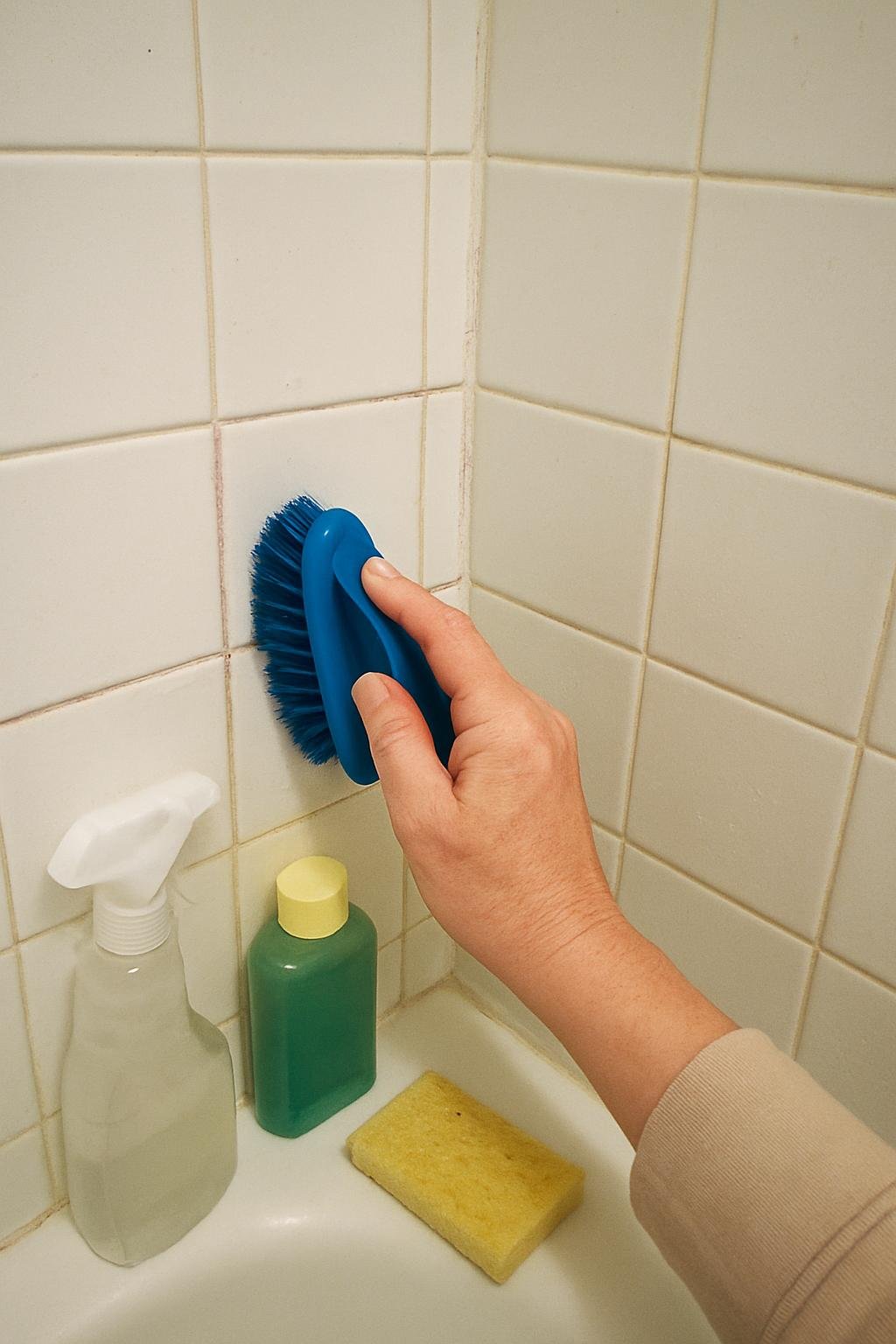
What most people call “pink mold” in a shower is commonly a bacteria known as Serratia marcescens, not a true mold. It thrives on soap film, shampoo residue, and standing moisture, which is why it shows up first in grout lines, corners, and around the base of shampoo bottles. This distinction matters for cleaning strategy: it responds well to routine cleaning and dryness, but treating it like a health emergency isn’t necessary. If you notice black or dark green fuzzy growth instead of a pink or orange film, you may be dealing with a different type of mold that can behave differently and may need a more targeted approach.
Check Your Grout Before You Clean
Grout itself is porous, which is exactly why pink residue can settle into it instead of rinsing away like it does on tile. Before choosing a cleaner, take a quick look at the condition of your grout:
- Sealed grout tolerates mild scrubbing and diluted cleaners better than unsealed grout.
- Colored or tinted grout can lighten with repeated use of strong oxidizers, so test in a small hidden area first.
- Crumbling, cracked, or soft grout is a sign of moisture getting underneath it, and cleaning won’t solve that on its own.
If your grout is original to an older bathroom or you’re unsure whether it’s sealed, test any cleaner on a small inconspicuous section before treating the whole shower.
How to Remove Pink Mold from Shower Grout
- Ventilate the bathroom. Open a window or turn on the exhaust fan before you start, especially if you’re using hydrogen peroxide or an oxygen-based cleaner.
- Apply a hydrogen peroxide paste. Mix hydrogen peroxide with baking soda until it forms a spreadable paste, then apply it directly to the pink-stained grout lines. Let it sit for 10–15 minutes so it has time to loosen the residue.
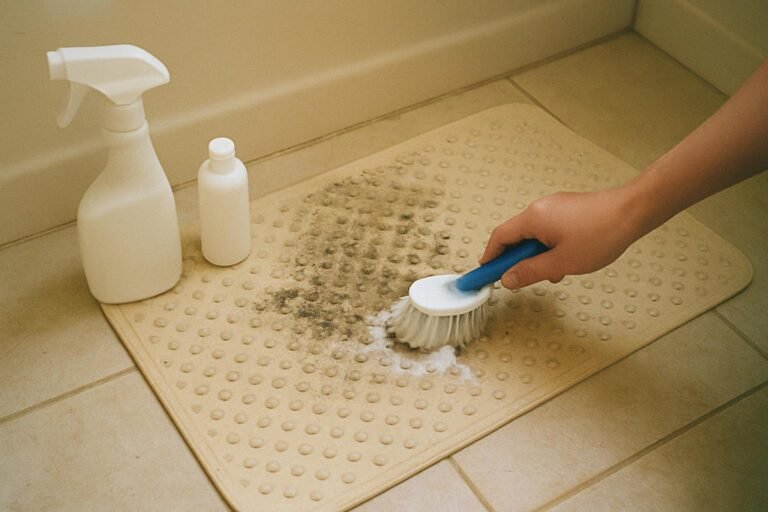
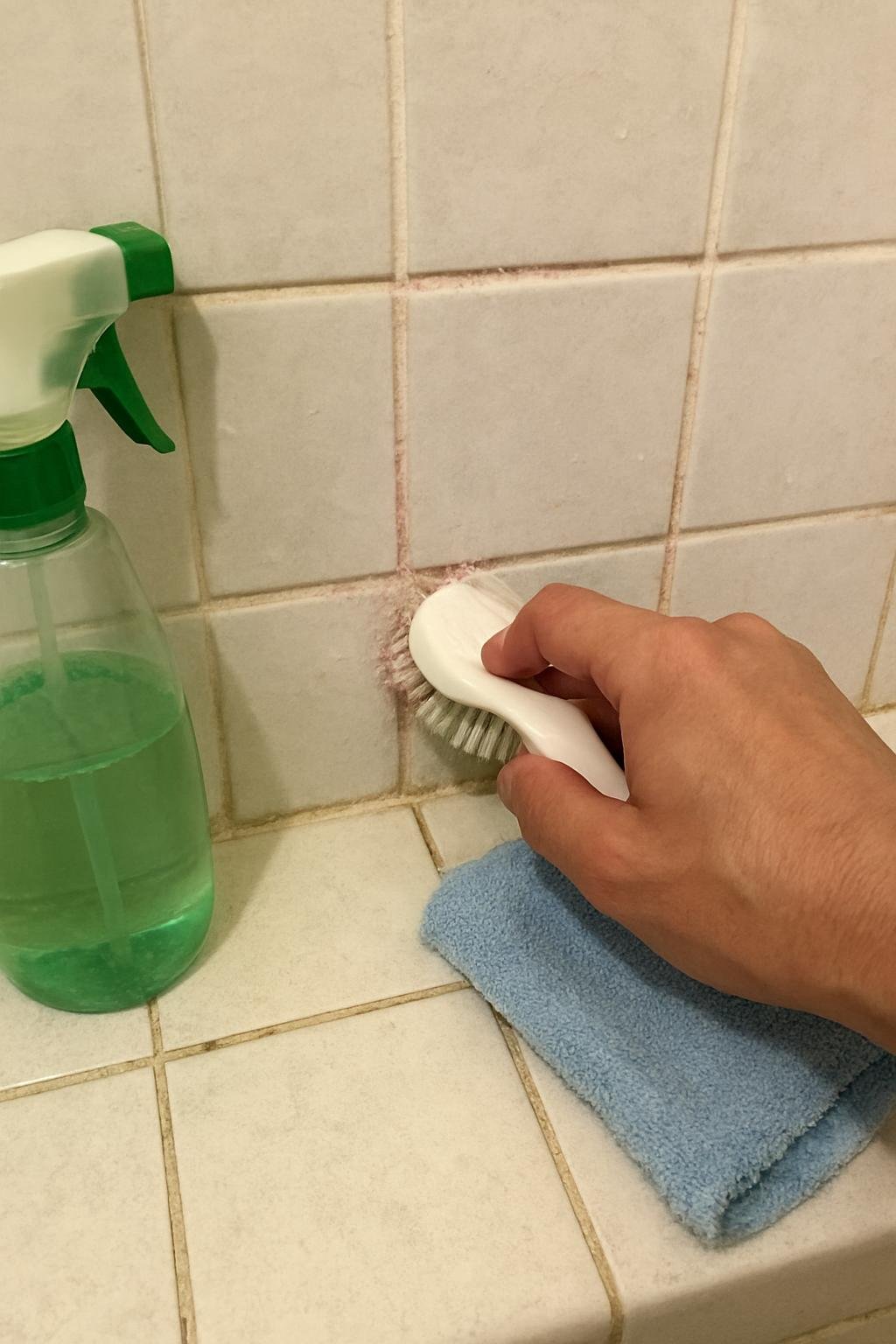
- Scrub with a soft grout brush. Use gentle, consistent pressure. Avoid metal brushes or abrasive scouring pads, which can wear grout down and create rougher texture that traps moisture and residue faster.
- Rinse thoroughly with warm water. Make sure no paste residue is left in the grout lines, since leftover buildup can attract new residue just as easily as the original stain.
- Dry the area completely. Wipe down the grout and tile with a clean towel or squeegee. Leaving the area damp undoes most of the cleaning progress you just made.
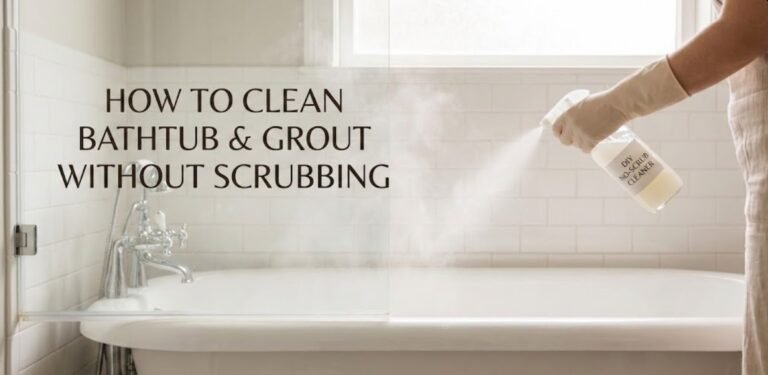
If the paste doesn’t fully lift the stain on the first try, repeat the application rather than reaching for a stronger product. Grout is porous enough that a second gentle pass is usually more effective than switching to something harsher. For grout that’s stained across a wider area, not just in isolated spots, the approach in this bathtub and grout cleaning method can help lift buildup without heavy scrubbing.
Cleaning Mistakes That Make Pink Mold Worse
- Mixing cleaning products. Never combine bleach with ammonia, vinegar, or other acidic cleaners. Stick to one product at a time and rinse the area before switching methods.
- Scrubbing too aggressively. Hard scrubbing can wear grooves into grout, giving future residue more surface area to grip.
- Skipping the rinse step. Cleaner residue left behind can feed new growth just as easily as soap scum does.
- Cleaning without addressing moisture. If the shower stays damp between uses, the pink film will likely return regardless of which cleaner you use.
When Cleaning Isn’t Enough
If pink residue keeps returning within a few days of cleaning, or you notice it spreading past the grout into caulk, drywall, or behind tile edges, that usually points to a moisture issue rather than a cleaning issue. Common contributors include poor ventilation, a leaking seal around the tub or shower pan, or grout that’s cracked enough to let water sit underneath. In that case, a fresh coat of cleaner won’t solve the underlying problem. Consider having the caulk or grout re-sealed, and if you suspect a leak behind the wall, that’s a situation worth having a contractor or plumber look at rather than continuing to treat the surface symptom.
Keeping Pink Mold From Coming Back
- Run the bathroom exhaust fan during and for at least 20–30 minutes after every shower.
- Squeegee or towel-dry the grout lines and tile after each use, especially in corners where water pools.
- Rinse soap dishes, shampoo bottle bottoms, and shower caddies weekly, since soap film is a major food source for this type of residue.
- Re-seal grout every year or two, or sooner if it starts absorbing water instead of beading it.
Consistent drying habits matter more here than any single cleaning product. Once moisture and soap film are kept in check, pink residue typically has far less to grow on.
Everything Mentioned Above
Before you leave, grab the tools you need to get the job done right the first time:
*As an Amazon Associate, TidyFormula earns from qualifying purchases.