How to Remove Blue Stains from Toilet Bowl
Blue stains in a toilet bowl are usually caused by copper minerals in the water supply or residue left behind by blue toilet-tank cleaning tablets, and both respond well to a non-abrasive porcelain cleaner and a soft brush or pad. Avoid scouring powders or steel wool, since scratching the porcelain glaze can make future staining worse. If the stain sits below the waterline or in a hairline crack, expect it to take a few rounds of treatment.
Some households discover the stain only after switching to well water or removing an old drop-in tank tablet, which can leave the ring looking more stubborn than a typical hard-water line.
⚡ The TidyFormula™ Quick Decision
Best approach: Use a non-abrasive toilet-bowl cleaner formulated for mineral or rust stains, applied with a soft nylon brush and left to sit before scrubbing.
Use caution with: Abrasive powders, metal scouring pads, or pumice stones used dry, since they can scratch the glaze and give future stains more surface to grip.
Stop and reassess if: The blue tint keeps returning within days, appears on faucets or other fixtures, or the porcelain looks etched or dull after cleaning.
What I Use For This Job
Using the right tools saves time and protects your belongings. Here are my exact recommendations:
*As an Amazon Associate, TidyFormula earns from qualifying purchases.
What Usually Causes Blue Stains in a Toilet Bowl
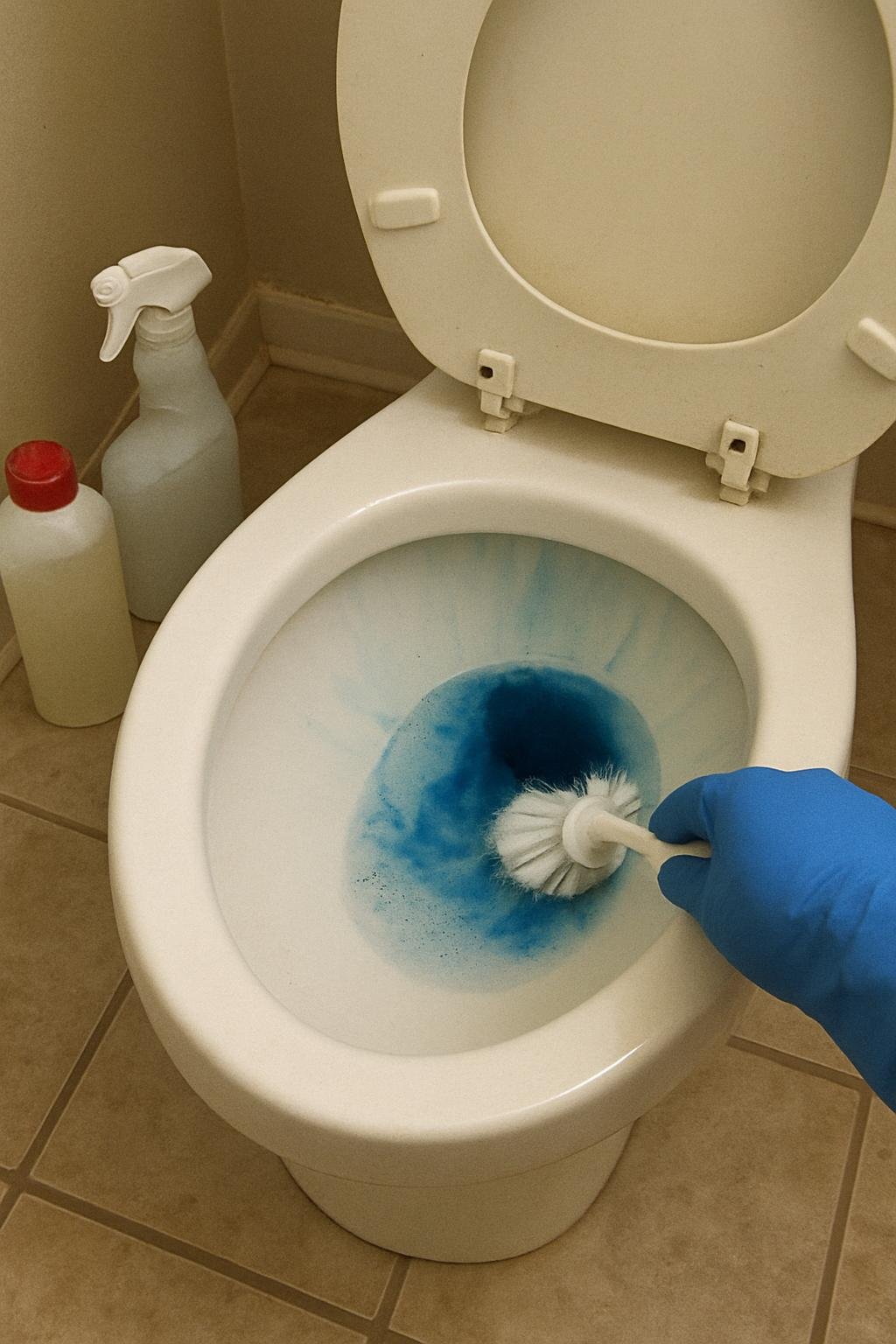
Blue-green staining in a toilet bowl is most often linked to copper. If your water has a slightly low pH or is naturally soft, it can be mildly corrosive to copper plumbing, and small amounts of dissolved copper leave that blue-green tint where water sits and evaporates repeatedly, usually right at or below the waterline.
The other common source is blue toilet-tank cleaning tablets or drop-in cleaners. These products dye the water blue with every flush, and over time that dye can settle into the porous areas of aging porcelain, into small cracks, or into the rim jets, leaving a stain even after you stop using the product.
If you’re not sure which situation you’re dealing with, check whether other fixtures fed by the same water line show a similar blue-green tint, such as a bathtub drain or a faucet aerator. That pattern points toward water chemistry rather than a cleaning-product residue.
Removing the Stain Safely
- Drain the bowl partially if possible. Turning off the water at the shutoff valve and flushing lets you work closer to the actual stain instead of through standing water.
- Apply a non-abrasive bowl cleaner directly to the stain. Choose a product labeled safe for porcelain and intended for mineral, rust, or hard-water stains. Follow the label’s contact time; most need several minutes to work rather than an immediate wipe.
- Scrub with a soft nylon toilet brush. Use moderate pressure in a circular motion. Avoid pressing hard enough to feel resistance from the brush bristles bending sharply, since that level of pressure usually means you’re relying on force instead of the cleaner doing its job.
- Rinse and inspect. Flush and look closely at the stain under good lighting. Faint shadowing after one treatment is common and does not necessarily mean the method failed.
- Repeat if needed, rather than switching to a stronger abrasive. A second or third application of the same gentle cleaner is safer for the porcelain than moving to scouring powder or a metal pad.
For a stain that sits stubbornly at the waterline, a pumice stone made specifically for toilet bowls can help, but only when it’s kept wet the entire time and used with light pressure. A dry pumice stone or one used on a dry bowl can scratch glazed porcelain, and that damage tends to attract new staining faster than before.
Cleaning Mistakes That Make Blue Stains Worse
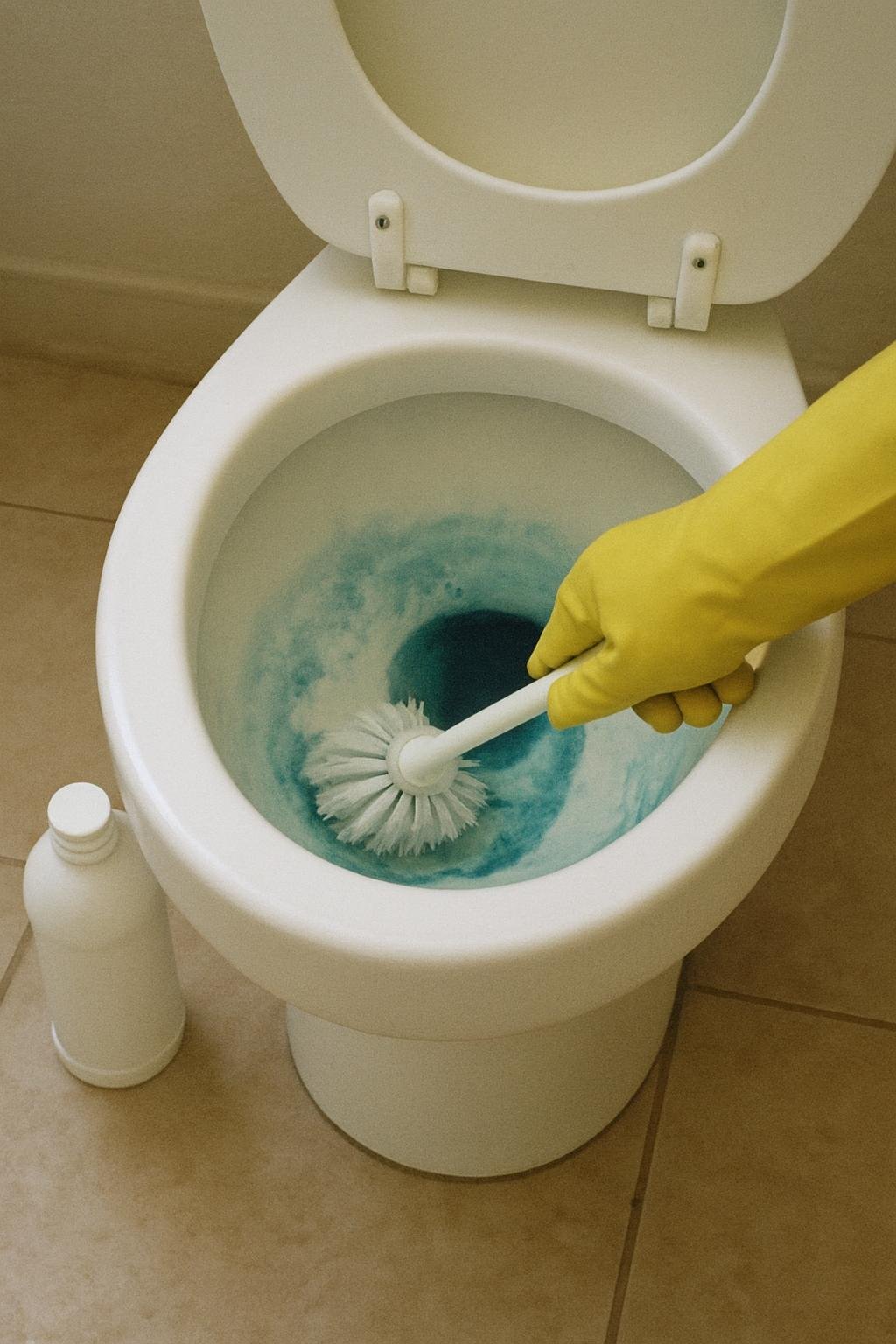
- Scrubbing immediately with an abrasive pad. This can dull or scratch the glaze before you’ve given a gentler cleaner a real chance to loosen the stain.
- Mixing cleaning products to boost strength. Never combine bleach-based cleaners with acidic bowl cleaners, vinegar, or ammonia-based products. Stick to one product at a time and follow its label.
- Ignoring the rim jets. If the stain seems to reappear from under the rim, the jets themselves may be holding mineral buildup or dye residue that a standard bowl scrub won’t reach.
- Ruling out the tank too quickly. If you’re using a blue tank tablet, the stain may keep returning no matter how well you clean the bowl, since the source is still dripping in with every flush.
If your regular cleaning routine already includes the toilet, working the bowl into your normal rotation makes it easier to catch new staining early. A household cleaning checklist can help you keep this on a consistent schedule instead of only addressing it once the stain is already set in.
Preventing Blue Stains From Coming Back
If a blue tank tablet is the cause, switching to a cleaner that doesn’t rely on a colored dye removes the source directly. If the tint traces back to copper in your water supply, a whole-house filtration or water-treatment approach is a plumbing and water-quality decision rather than a cleaning one, and it’s worth discussing with a licensed plumber or your water provider if the staining is widespread across fixtures.
Routine cleaning also matters. Letting mineral deposits or dye residue sit for weeks gives them more time to bond with the porcelain surface. If you prefer a lower-effort routine between deeper cleanings, the method described in how to clean a toilet bowl without a brush can help you maintain the bowl without scrubbing every time.
If you’ve tried a non-abrasive cleaner more than once and the stain hasn’t lightened at all, or the porcelain surface feels rough or looks dull where you scrubbed, stop and avoid further scrubbing. At that point, the safest next step is checking with the toilet manufacturer or a plumbing professional, since continued scrubbing on already-damaged glaze tends to make staining harder to remove over time, not easier.
Everything Mentioned Above
Before you leave, grab the tools you need to get the job done right the first time:
*As an Amazon Associate, TidyFormula earns from qualifying purchases.