How to Clean Blinds without Taking Them Down
You can clean most blinds thoroughly without removing them from the window by working section by section with a microfiber tool, then following up with a lightly damp cloth for grime. The best method depends on whether your blinds are aluminum, vinyl, wood, faux wood, or fabric, since moisture tolerance varies a lot between materials.
If your blinds have not been cleaned in months, you may find a mix of dry dust and sticky kitchen or bathroom residue. That combination usually means you need two passes: one dry step to lift loose dust, and one damp step to handle the buildup underneath.
⚡ The TidyFormula™ Quick Decision
Best approach: Close the blinds, dust each slat with a microfiber tool from top to bottom, then wipe stubborn spots with a cloth dampened in mild soapy water, working one slat at a time without saturating it.
Use caution with: Wood and faux-wood blinds, which can warp or discolor if they get too wet, and fabric or cellular shades, which may water-stain if you scrub too hard.
Stop and reassess if: Slats feel soft, swollen, or start separating from the ladder tape, or fabric shows a ring-shaped water mark that spreads when you try to fix it.
What I Use For This Job
Using the right tools saves time and protects your belongings. Here are my exact recommendations:
*As an Amazon Associate, TidyFormula earns from qualifying purchases.
Check the Material Before You Start
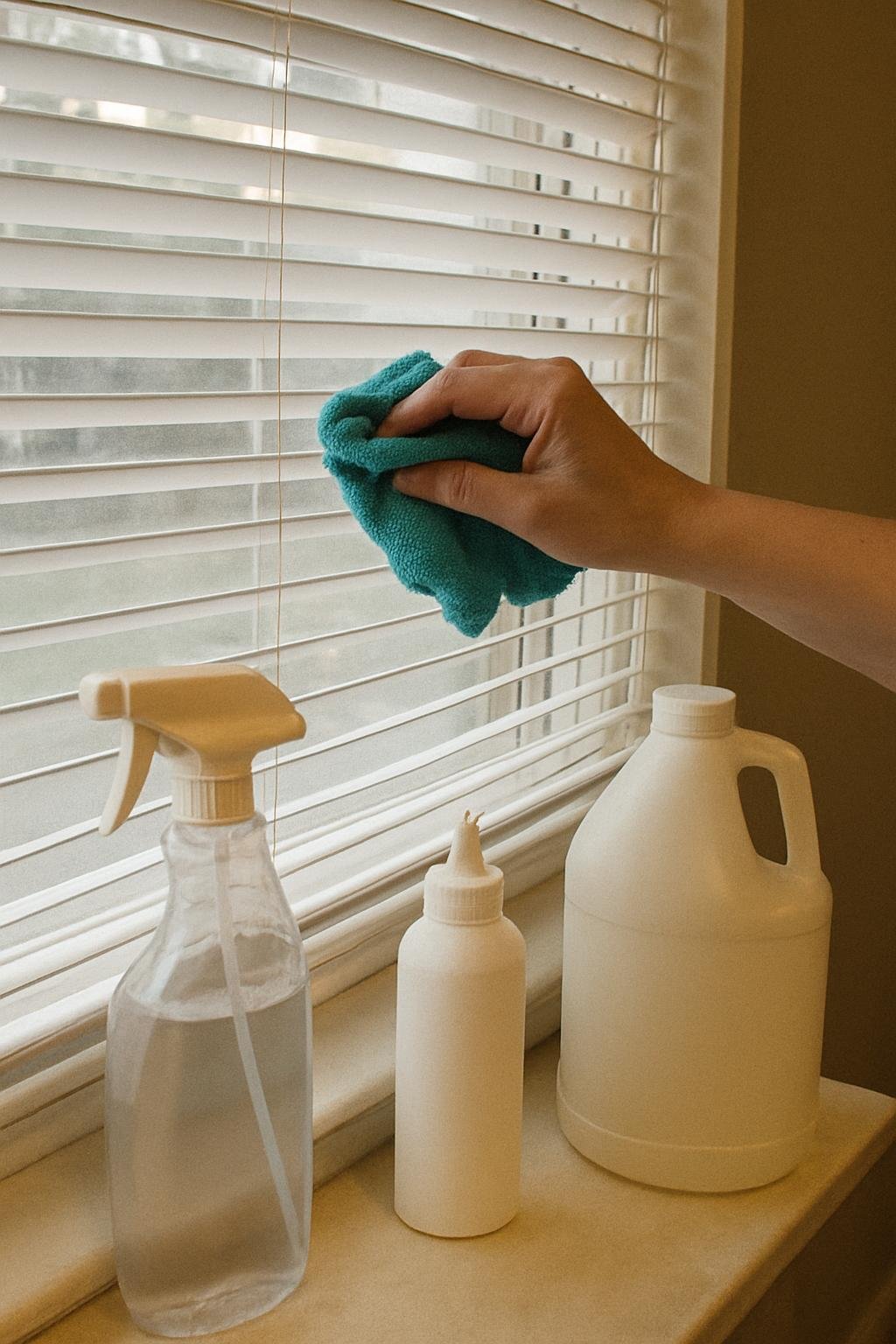
Blinds look similar from across the room, but they behave very differently once water gets involved. Take a close look at one slat before choosing a cleaning method.
- Aluminum and vinyl blinds handle light dampness well and are the most forgiving option for a damp-cloth wipe-down.
- Real wood blinds can warp, crack, or lose their finish if they absorb moisture, so they generally do best with dry dusting only.
- Faux-wood (composite) blinds tolerate light dampness better than real wood, but excess water at the routing holes can still cause long-term damage.
- Fabric or cellular shades are the most delicate. Vacuuming and spot-cleaning are usually safer than wiping with a wet cloth.
If you’re not sure what your blinds are made of, treat them as delicate until you confirm otherwise, and check any manufacturer care tag or instructions that came with the window treatment.
What You’ll Need
- A microfiber duster, blind-cleaning tool, or a clean sock over your hand
- A soft microfiber cloth
- A small bowl of warm water with a few drops of mild dish soap
- A vacuum with a brush or upholstery attachment (useful for fabric shades)
- A dry towel for catching drips on wood or faux-wood blinds
Avoid grabbing whatever glass cleaner or all-purpose spray is nearby. A safe cleaner for blinds without taking them down is almost always something mild and diluted, not a strong household cleaner meant for glass or countertops.
Step-by-Step: Cleaning Blinds in Place
- Close the slats fully so they lie flat and give you a wide surface to work across, rather than thin edges that are hard to clean evenly.
- Dust top to bottom with a microfiber tool. Work in one direction along each slat, then flip the wand or your hand and go the other direction to catch dust on both angled surfaces.
- Rotate the slats the opposite way and repeat the dusting pass. This exposes the side you missed the first time.
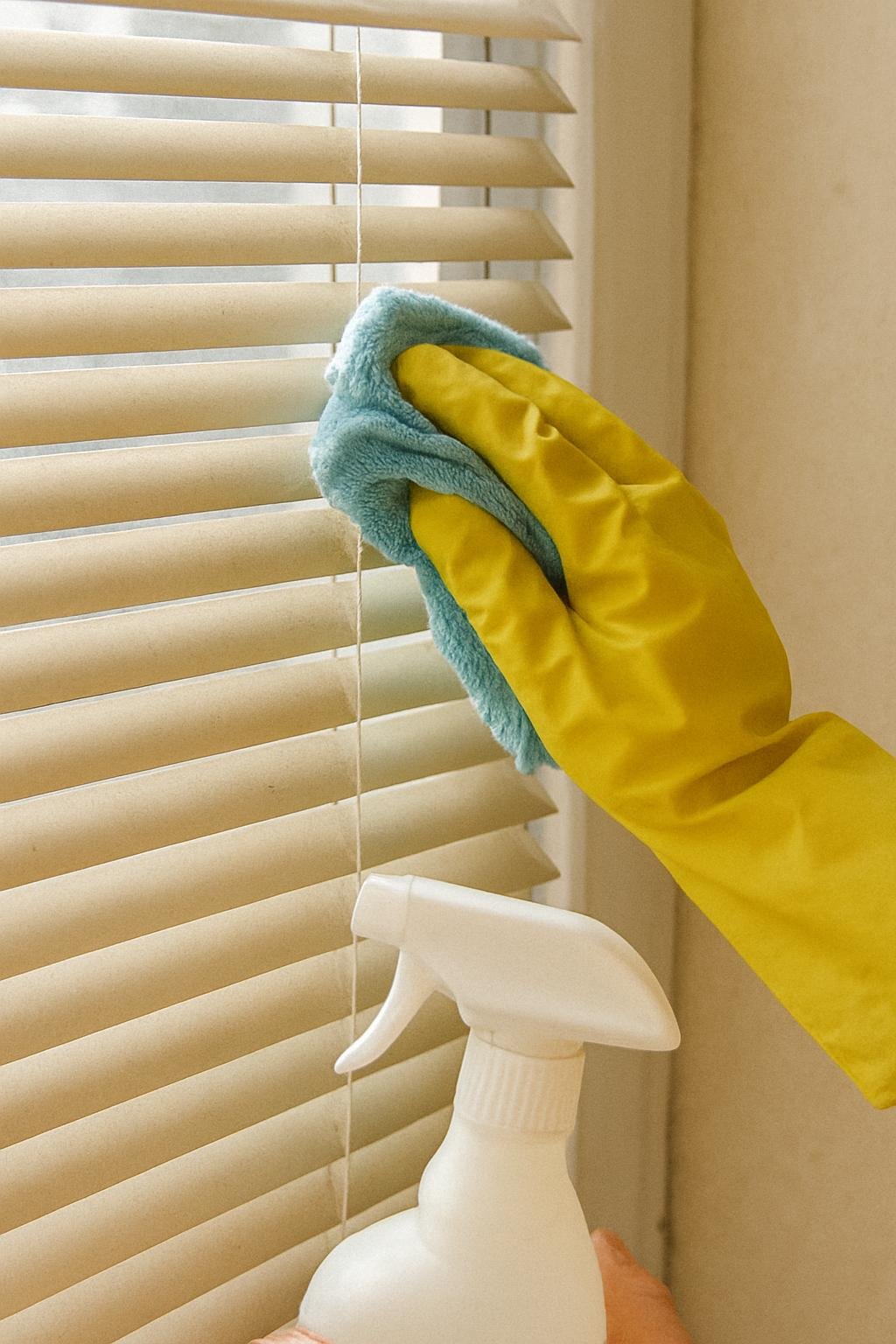
- For grime or fingerprints, dip a cloth in the soapy water, wring it out until it’s just barely damp, and wipe each slat individually. The cloth should feel cool and slightly moist, not wet enough to drip.
- Dry each slat immediately with a dry towel if you’re working on wood or faux-wood blinds. This step matters most for wood, where lingering moisture is the main cause of warping.
- For fabric or cellular shades, skip the damp cloth and instead vacuum gently with a brush attachment, working from top to bottom in short passes.
- Wipe the headrail and bottom bar last, since dust tends to collect there and can fall onto freshly cleaned slats if you do it first.
Cleaning Mistakes That Cause Damage
A few habits cause most of the damage people run into when cleaning blinds without taking them down:
- Soaking wood blinds with a wet cloth instead of a barely damp one. Even light warping is usually permanent.
- Scrubbing fabric shades hard enough to push soap or water into the fibers, which can leave a visible ring once it dries.
- Using glass cleaner or all-purpose spray directly on slats. These can strip finishes on wood or faux wood and leave streaking on aluminum.
- Cleaning with the slats open instead of closed, which means you’re wiping a narrow edge instead of a full flat surface, so dust gets pushed around rather than removed.
- Forgetting the ladder tape and cords, which trap dust and can transfer it right back onto clean slats the next time the blinds move.
How Often to Clean Blinds Without Taking Them Down
Light dusting every one to two weeks keeps buildup from settling into a sticky film, especially in kitchens and bathrooms where grease and steam settle on horizontal surfaces. A more thorough damp-cloth cleaning every one to three months is usually enough for most households, though homes with pets, smokers, or high humidity may need it more often.
When In-Place Cleaning Isn’t Enough
Some situations call for taking blinds down rather than fighting stains in place:
- Heavy grease buildup in a kitchen that a damp cloth can’t cut through
- Visible mold or mildew spots, which need more than surface wiping to address safely
- Fabric shades with deep-set stains that spot-cleaning hasn’t improved
- Slats that are bent, cracked, or separating from the ladder tape, which is a sign of wear rather than dirt
If you notice mold or a persistent musty smell, that’s a situation better handled with guidance specific to mold remediation rather than general cleaning steps, since improper handling can spread spores rather than remove them.
Once your blinds are clean, the windows around them often show the dust and streaks most clearly. If you want a quick way to bring the glass up to the same standard, cleaning your windows without leaving streaks is a natural next step, and you don’t need a squeegee to get a clear result if you’d rather skip that tool, as covered in cleaning windows without a squeegee.
Everything Mentioned Above
Before you leave, grab the tools you need to get the job done right the first time:
*As an Amazon Associate, TidyFormula earns from qualifying purchases.