How to Clean Ceiling Fan without Dust Falling Everywhere
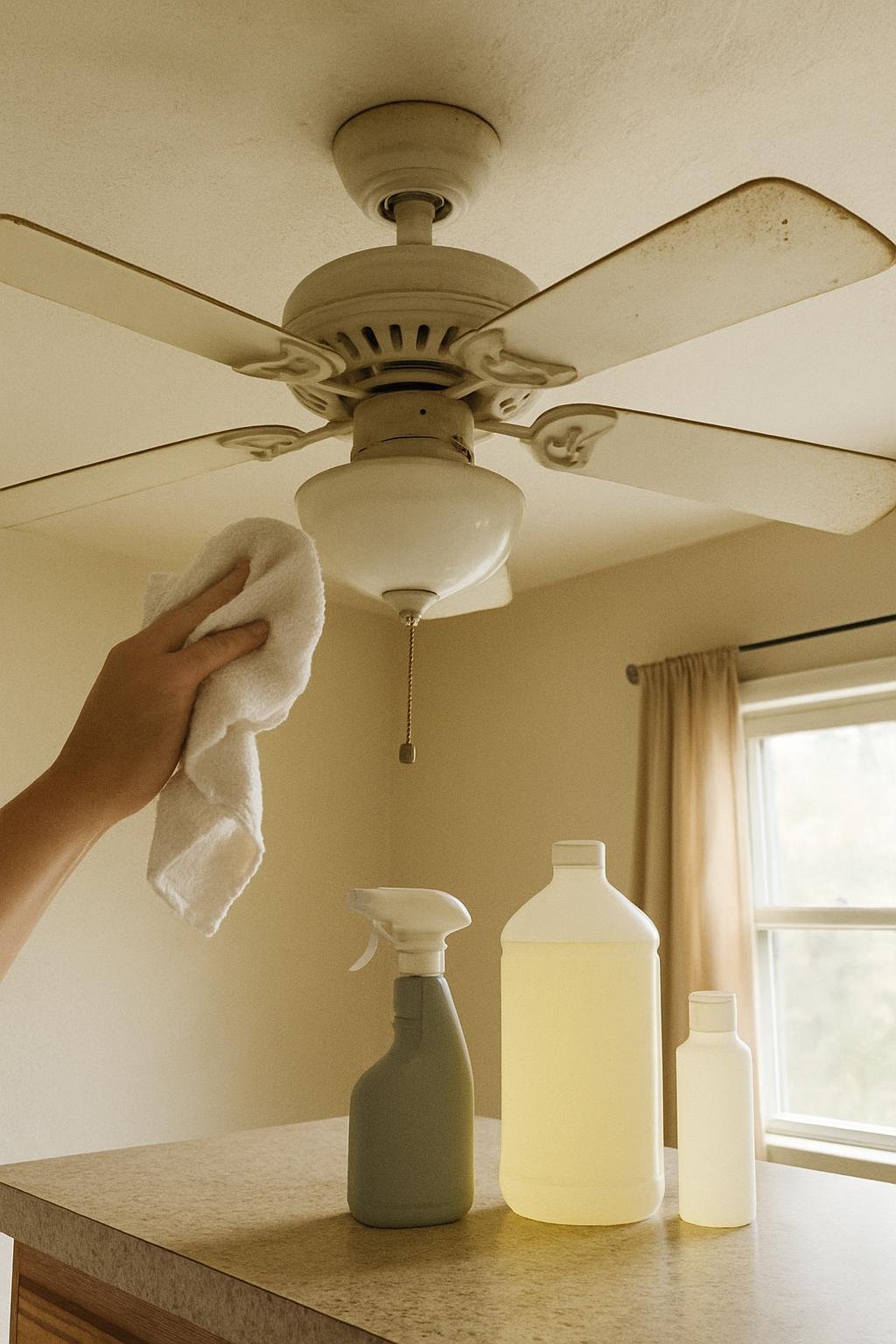
The trick to cleaning a ceiling fan without dust falling everywhere is catching the dust before it drops, not just wiping it off the blade. Use a pillowcase, a damp microfiber cloth, or an extendable duster held slightly beneath each blade, working from the outer edge inward so debris falls into the cloth instead of onto your furniture or floor.
This gets trickier if your fan has been neglected for months or sits above a bed, couch, or dining table where falling dust is especially annoying to clean up twice.
⚡ The TidyFormula™ Quick Decision
Best approach: Slide an old pillowcase over each blade or hold a damp microfiber cloth cupped underneath it, then wipe toward the outer tip so dust collects in the fabric instead of falling.
Use caution with: Painted, wood-veneer, or unfinished wood blades, which can be damaged by excess moisture or harsh cleaners, and with fans mounted higher than a stable ladder can safely reach.
Stop and reassess if: The fan wobbles, the blades feel loose, you notice frayed wiring, or you cannot reach the blades without standing on unstable furniture.
What I Use For This Job
Using the right tools saves time and protects your belongings. Here are my exact recommendations:
*As an Amazon Associate, TidyFormula earns from qualifying purchases.
Why Ceiling Fan Dust Falls Everywhere in the First Place
Ceiling fan blades collect dust on top, where it’s out of sight, and along the edges, where it’s loosely packed. When you wipe the top of a dusty blade with a dry cloth or duster, you’re pushing built-up dust off the edge rather than lifting it away. It drifts down onto whatever is below, which is why timing and technique matter more than the cleaning product you choose.
Before You Start
Turn the fan off and let the blades come to a complete stop before you touch them. If your fan has a light kit, switch that off too, and avoid spraying any liquid near the light fixture, motor housing, or wiring. If you’re working on a fan with a pull chain or wall switch you rarely use, double-check it’s actually off rather than just running on low.
Move or cover anything directly beneath the fan. A bed, dresser, or dining table is the most common casualty of ceiling fan dust, so pulling furniture aside or laying down an old sheet gives you a safety net even if some dust escapes your cloth.
What You’ll Need
- An old pillowcase, or a microfiber cloth (dry or lightly dampened)
- A sturdy step stool or ladder tall enough that you’re not stretching or standing on tiptoe
- An extendable duster with a bendable head, if your fan is mounted high or over furniture you can’t move
- A drop sheet or old bedsheet for the floor or furniture below
The Pillowcase Method
This is the most reliable way to keep dust from raining down, especially on fans that haven’t been cleaned in a while.
- Slide an old pillowcase over one blade completely, so the blade sits inside the fabric.
- Press gently on the top of the pillowcase where it covers the blade, then pull the pillowcase toward you and off the tip of the blade in one motion.
- The dust gets trapped inside the pillowcase instead of falling into the air or onto the floor.
- Turn the pillowcase inside out over a trash can or outside before moving to the next blade, so you’re not just relocating the same dust.
- Repeat for each blade.
This method works well because the fabric fully encloses the blade before any dust is disturbed. It’s a good choice if your fan is heavily coated in dust or if you’re cleaning above something you can’t move, like a bed frame or fixed furniture.
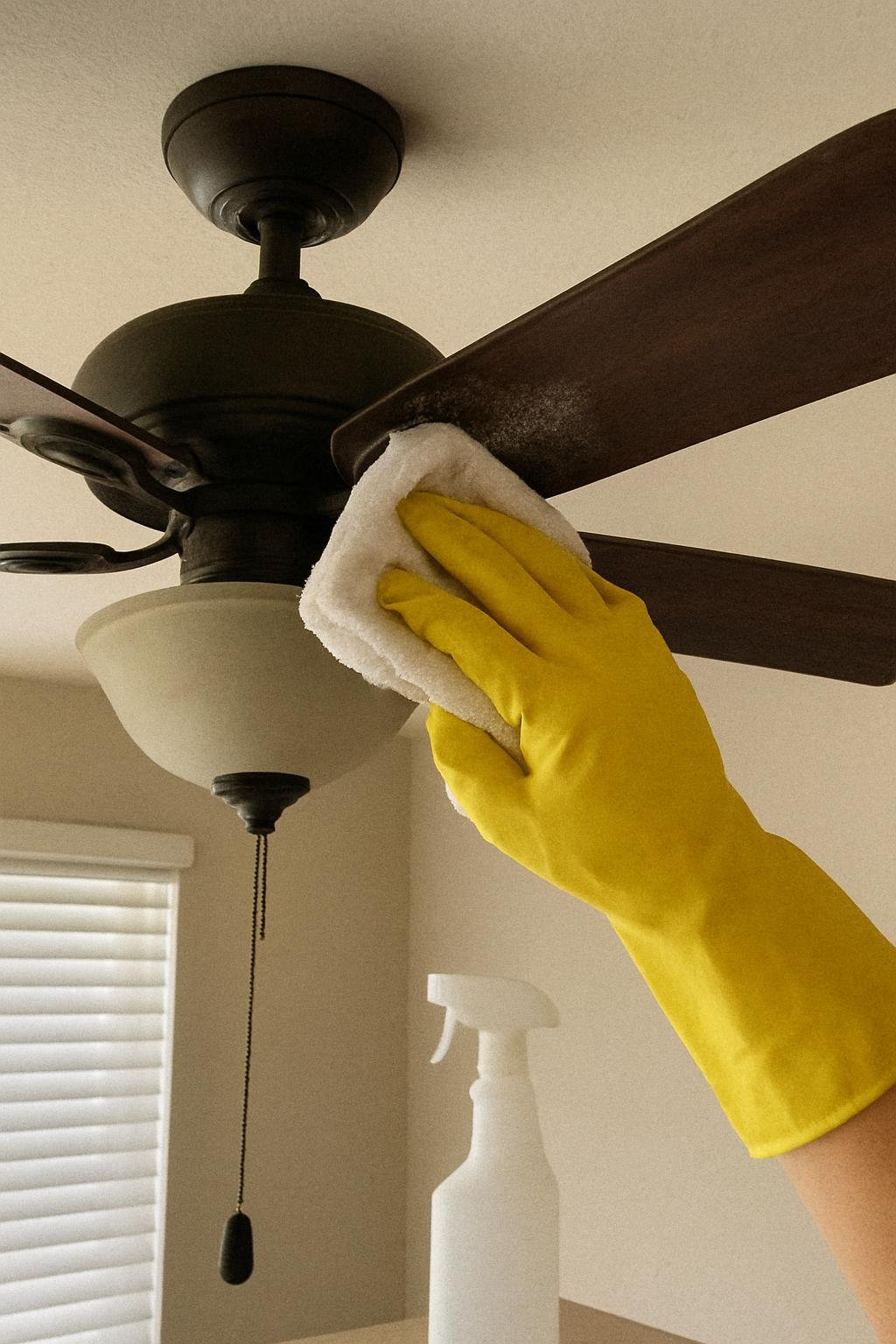
The Damp Microfiber Cloth Method
If your fan only needs a light cleaning, a barely damp microfiber cloth works well and avoids the slight awkwardness of maneuvering a pillowcase.
- Lightly dampen a microfiber cloth with water, wringing it out well so it isn’t dripping. Excess moisture can seep into blade seams or, on painted wood blades, cause spotting.
- Fold the cloth over the top of the blade so one side rests on top and the other cups underneath.
- Wipe from the base of the blade toward the outer tip, keeping the underside of the cloth in place to catch dust as it’s lifted.
- Refold to a clean section of the cloth as it picks up dust, and rinse it out periodically if you’re cleaning multiple fans.
Choose this method when your fan just needs routine upkeep rather than a deep clean, or when you don’t have a spare pillowcase handy.
What to Avoid
A few common habits are what actually cause the “dust everywhere” problem in the first place:
- Dry dusting with a feather duster or dry cloth alone. Without something to catch the dust as it’s dislodged, gravity takes over.
- Spraying cleaner directly onto the blade while it’s still mounted. Overspray can drip onto the motor housing or light fixture, and excess liquid isn’t necessary for routine dust removal.
- Using a step stool that doesn’t give you a stable, comfortable reach. Reaching too far or standing on tiptoe increases the odds of an unsteady stroke that flings dust sideways instead of catching it.
- Skipping the top of the blade because you can’t see it well. That’s exactly where the heaviest dust accumulates, so a rushed pass often misses most of the problem.
If your blades have a heavy, caked-on layer of dust and grease, such as in a kitchen or a home with pets, a slightly damp cloth may need a second pass rather than more pressure. Check your fan’s care instructions if you’re unsure whether the blade finish tolerates any moisture at all; some painted or laminate finishes are more sensitive than solid wood.
How Often to Clean a Ceiling Fan
For most homes, wiping ceiling fan blades every two to four weeks keeps dust from building up to the point where it falls in visible clumps. Homes with pets, forced-air heating, or nearby construction may need it closer to every two weeks. If you notice dust falling on its own when the fan runs, even at low speed, that’s a sign you’ve gone too long between cleanings.
When the Fan Itself Needs More Than Dusting
If the blades wobble, make noise, or feel loose when you clean them, that’s a mechanical issue rather than a dust problem, and no cleaning method will fix it. Loose blade brackets or an unbalanced fan should be checked against the manufacturer’s manual or by someone qualified to service it, since continuing to run a wobbling fan can worsen the problem over time.
Once your ceiling fan is handled, you may find other overlooked spots in the room need attention too. If dust or debris has settled into a nearby rug, a method that doesn’t require hauling out a carpet cleaner can help, as covered in how to clean a rug without a carpet cleaner.
Everything Mentioned Above
Before you leave, grab the tools you need to get the job done right the first time:
*As an Amazon Associate, TidyFormula earns from qualifying purchases.