How to Clean Baseboards without Bending Over
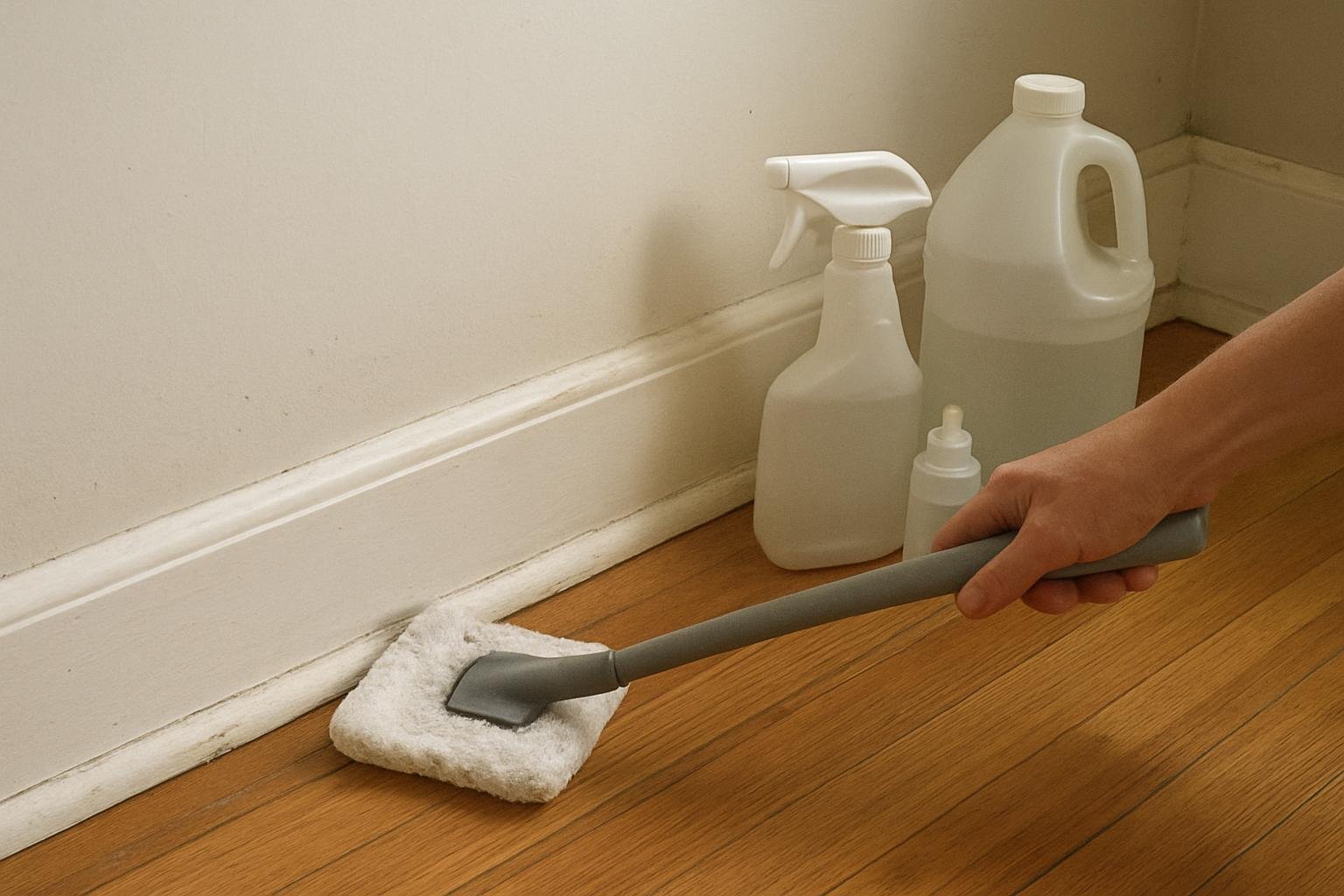
The easiest way to clean baseboards without bending over is to use a long-handled tool, such as an extendable microfiber duster, a flat mop with a washable pad, or a swivel-head brush, paired with a lightly dampened cloth attachment. This keeps you upright while still removing dust, hair, and light grime. Heavily caked-on buildup or sticky residue may still need a closer, hands-on pass in spots.
If your baseboards run behind furniture, along stair edges, or in a room with pets that shed, dust and hair tend to build up faster in those low corners than most people expect.
⚡ The TidyFormula™ Quick Decision
Best approach: Use an extendable microfiber duster or a flat mop with a damp (not wet) pad, working in one direction along the top edge of the baseboard first, then the face.
Use caution with: Unpainted wood, unsealed trim, and MDF baseboards, which can swell or stain if they stay damp too long or if you use a soaked cloth instead of a lightly misted one.
Stop and reassess if: You notice paint lifting, wood softening, discoloration, or if grime doesn’t loosen with light pressure, since that usually means it needs a targeted, closer cleaning session rather than more scrubbing with a long-handled tool.
What I Use For This Job
Using the right tools saves time and protects your belongings. Here are my exact recommendations:
*As an Amazon Associate, TidyFormula earns from qualifying purchases.
Check the Baseboard Material First
Baseboards aren’t all built the same, and the material affects how much moisture and pressure they can handle.
- Painted wood or MDF baseboards hold up well to a barely damp microfiber cloth but can swell, warp, or show water spots if you use too much liquid, especially at seams and corners.
- Bare or stained wood is more sensitive to moisture and generally does best with dry or nearly dry dusting rather than any wet cleaner.
- Vinyl or PVC baseboards tolerate damp cleaning better than wood and are usually the most forgiving option for a long-handled mop pad.
- If your baseboards are part of an electric baseboard heater unit rather than plain trim, keep cleaning tools dry near vents and openings, and check the manufacturer’s instructions before using any liquid near it.
When you’re not sure what your baseboards are made of, test your cleaner or damp cloth on a small hidden section first and wait a few minutes to check for discoloration or softening before continuing along the whole room.
Tools That Let You Skip the Bending
A few tool choices make the biggest difference here, more than any specific cleaning product:
- Extendable microfiber duster with a flexible or angled head, good for quick dust removal without any liquid.
- Flat mop with a washable microfiber pad, useful for baseboards with light grease film, scuffs, or pet hair buildup.
- Long-handled soft-bristle brush, helpful for textured or grooved baseboard profiles where flat pads miss the detail lines.
- Vacuum with a crevice or brush attachment on an extension wand, best for loose dust, hair, and debris before any wiping.
Vacuuming first, then following with a damp pad, generally works better than going straight to a damp cloth on dusty baseboards, since dry dust can turn into a gritty paste once it gets wet.
Step-by-Step Method
- Vacuum or dry-dust the baseboard run using your extension wand or duster, moving along the top edge first, then the face of the board, to lift loose dust and hair.
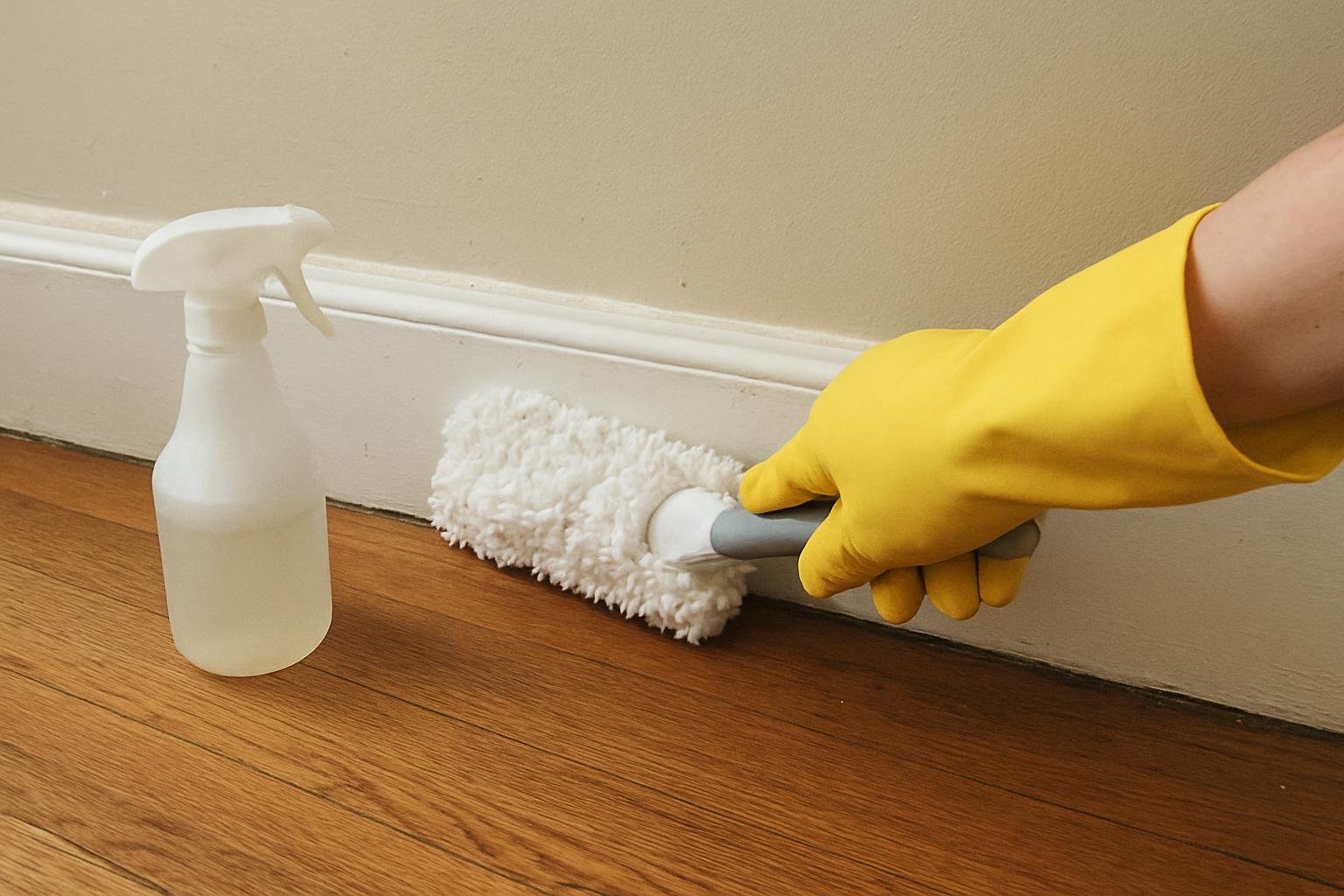
- Lightly dampen your mop pad or cloth rather than soaking it. It should feel barely moist to the touch, with no dripping.
- Wipe in one direction along the length of the baseboard, rather than scrubbing back and forth, which helps you see missed spots and avoids pushing grime into corners.
- Check corners and seams separately, since these areas often trap more dust and may need a slightly firmer pass with the same tool.
- Go over any lingering marks a second time with a clean section of the pad rather than pressing harder, especially on painted surfaces where extra pressure can burnish or dull the finish.
- Let the baseboard air dry for a few minutes before moving furniture back against it, particularly with wood or MDF trim.
Choosing a Safe Cleaner for Baseboards
For most painted or vinyl baseboards, plain water on a microfiber pad handles everyday dust and light grime without any added product. If you want a mild cleaner for scuffs or sticky residue, a small amount of gentle, all-purpose cleaner diluted according to its label directions is usually enough, applied to the cloth or pad rather than sprayed directly on the baseboard. Avoid abrasive powders or strong solvents, which can scratch paint or strip a wood finish. If your baseboards have a specific manufacturer finish or warranty, check the product label or manufacturer instructions before introducing a new cleaner.
Mistakes That Waste Effort or Cause Damage
- Using a soaking-wet pad, which can seep into seams and cause swelling on wood or MDF baseboards over time.
- Skipping the dry-dust step, which turns fine dust into smeared grime once it meets a damp cloth.
- Scrubbing hard on painted trim instead of using light, repeated passes, which can wear down the paint sheen in that spot.
- Ignoring furniture-blocked sections, since dust and pet hair tend to build up heaviest exactly where the duster can’t easily reach without moving something first.
How Often You Actually Need to Clean Baseboards
In most households, a quick pass with an extendable duster every one to two weeks keeps dust and hair from building up enough to need scrubbing. Homes with pets, allergies, or forced-air heating that stirs up dust may need a light pass weekly, with a more thorough damp wipe-down monthly or as visible grime appears. If you’re also working through other no-bend or low-effort cleaning routines around the house, a similar rhythm often works well for baseboards, vents, and other low, easy-to-forget spots.
When Bending Over Is Still Necessary
Long-handled tools handle the majority of baseboard maintenance, but stubborn buildup, deep scuff marks, or grime packed into decorative grooves usually respond better to a closer, hands-on pass with a smaller brush or cloth. If you notice paint damage, persistent discoloration, or softening wood after cleaning, stop using that method on the affected section and address it individually rather than continuing the same routine over the whole room.
Everything Mentioned Above
Before you leave, grab the tools you need to get the job done right the first time:
*As an Amazon Associate, TidyFormula earns from qualifying purchases.