Can You Put Memory Foam Pillows in the Washing Machine? (Expert Guide)
No — you should not put a solid memory foam pillow in the washing machine. The drum’s agitation and spin cycle can tear, crumble, and warp the foam, permanently reducing its support. Remove and machine-wash the pillow’s cover if its care label allows, but clean the foam itself by spot cleaning, deodorizing, and air drying.
Even a single machine wash can turn a good pillow into a lumpy, uneven mess. The only possible exception is a shredded memory foam pillow whose manufacturer explicitly says the entire pillow is washable.
Check the Pillow Before Cleaning
Before applying water or detergent:
- Read the care label. Follow any manufacturer-specific cleaning and drying instructions.
- Remove the pillowcase and zippered protector. Wash these separately according to their labels.
- Determine whether the pillow is solid or shredded foam.
- A solid pillow keeps one molded shape and does not feel loose inside.
- A shredded pillow contains small, movable pieces and may have a removable inner liner.
- Inspect the foam. Look for tears, crumbling, deep stains, damp areas, or visible mold before continuing.
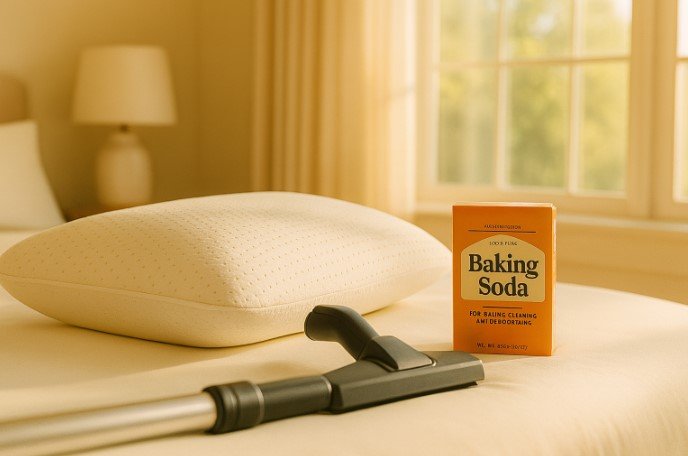
- Vacuum loose debris. Use an upholstery attachment with light suction, taking care not to pull or tear the foam.
If the pillow has a cooling-gel layer, contoured surface, or bonded sections, avoid bending, twisting, or peeling those areas. Unless the label states otherwise, clean these pillows as you would any other solid memory foam pillow.
Why Washing Machines Ruin Memory Foam
Memory foam is a dense, flexible material with an open cellular structure. In a washing machine:
What I Use For This Job
Using the right tools saves time and protects your belongings. Here are my exact recommendations:
*As an Amazon Associate, TidyFormula earns from qualifying purchases.
- The agitation and spinning twist and compress the foam far more than normal use.
- Foam cells can rip and break, causing:
- Crumbling or chunks coming off
- Permanent dents or flattened areas
- Loss of support and comfort
- The pillow may absorb a large amount of water, making it heavy, difficult to handle, and slow to dry.
- A foam pillow that remains damp inside can develop persistent odors or mildew.
Warning: If your pillow is one solid piece of memory foam, keep it out of both the washer and the dryer. Do not soak or wring it unless its care label specifically provides a safe method.
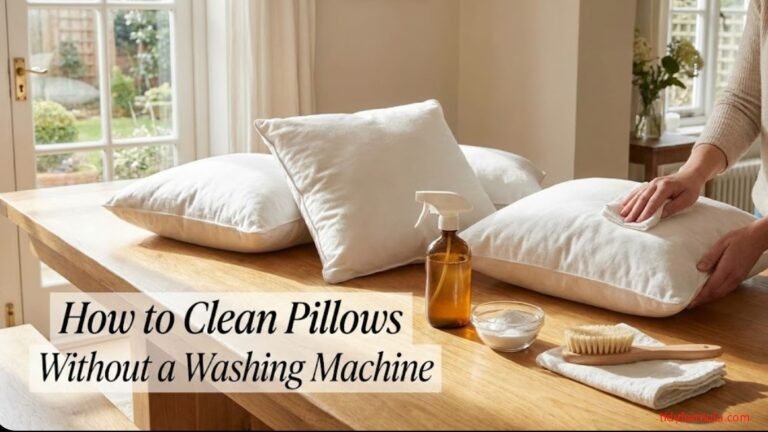
How to Clean a Memory Foam Pillow Without Washing It
Choose the least-wet method that solves the problem. Vacuuming and baking soda are suitable for routine freshening, while localized stains require careful spot cleaning.
1. Spot Clean Stains (Warm Water + Mild Detergent)
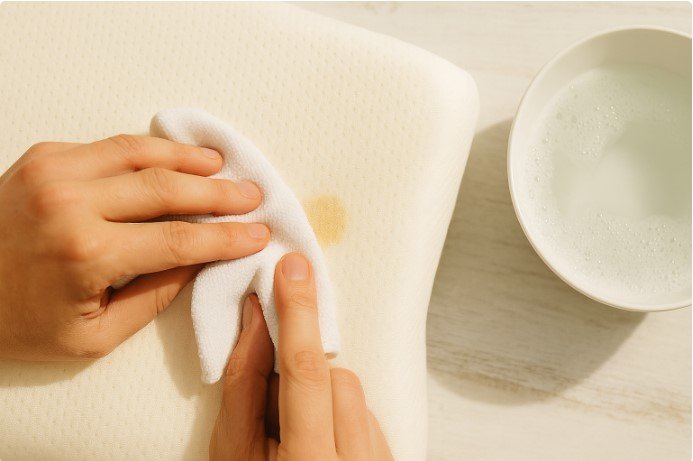
Use this for sweat marks, drool stains, or small spills.
- Blot fresh liquid first
- Press clean, dry towels against the spill. Do not rub, twist, or squeeze the pillow.
- Mix a solution
- Combine warm water with a few drops of mild liquid detergent. Do not use bleach or harsh cleaners.
- Test a hidden area
- Apply a small amount to an inconspicuous edge and stop if the foam discolors, becomes sticky, or starts to deteriorate.
- Dampen a cloth or sponge
- Don’t soak the pillow. The cloth should be damp, not dripping.
- Blot the stain gently
- Work from the outside of the stain toward the center. Press and dab; avoid aggressive scrubbing, which can damage the foam surface.
- Rinse the area
- Use a second cloth lightly dampened with clean water to blot away soap residue.
- Remove excess moisture
- Press with a dry towel to absorb as much water as possible. Do not wring or fold the pillow.
- Air dry completely
- Lay the pillow flat on a drying rack or another clean, breathable surface. Keep it uncovered until the center is fully dry.
For a deep or large spill, repeat gentle blotting rather than pouring cleaner into the foam. If the liquid has soaked through the entire pillow and cannot be removed or dried thoroughly, replacement may be safer than repeatedly saturating it.
2. Deodorize with Baking Soda
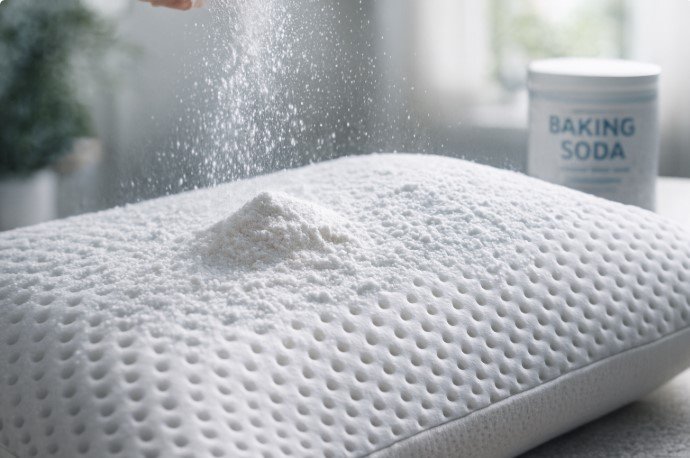
For general freshness and light odor removal:
- Remove the pillowcase and any protective covers and wash those according to their care labels.
- Make sure the foam is dry before applying baking soda.
- Sprinkle an even layer of baking soda directly over the pillow surface.
- Let it sit for 30–60 minutes, or longer for a persistent odor.
- Vacuum the baking soda
- Use a handheld vacuum or upholstery attachment with light suction to remove all residue.
Repeat on the other side if needed. If an odor remains after airing and deodorizing, inspect the pillow for hidden moisture, mold, or deteriorating foam rather than masking the smell with fragrance.
3. Air It Out: Fresh Air and Limited Sun
Air circulation is one of the best ways to keep memory foam fresh.
- Outdoor airing:
- Place the pillow in a clean, shaded or lightly sunny spot on a dry, breezy day.
- A short period in indirect or mild sun for 30–60 minutes can help reduce stale odors and surface moisture.
- Keep the pillow off damp grass, dirty furniture, and dusty surfaces.
- Indoor airing:
- Lay the pillow on a drying rack or stand it on its side near an open window or fan.
- Rotate it periodically so air reaches every side.
Avoid: Prolonged harsh sun, radiators, heated drying racks, hair dryers, or other high heat. Heat can weaken, harden, or warp the foam over time.
The Exception: Shredded Memory Foam Pillows
Not all “memory foam pillows” are the same. Some are filled with shredded foam pieces inside a fabric shell.
- Solid memory foam pillow: One single block of foam → never machine wash.
- Shredded memory foam pillow: Loose foam pieces inside a cover → sometimes machine washable.
What You Must Check
Always read the care label:
- If it says “cover only” is washable:
- Remove the shredded foam filling or the filled inner liner as directed.
- Wash just the outer and/or inner cover in the machine.
- Keep loose foam away from children, pets, fans, and open containers.
- Fluff the foam by hand and air it out.
- Allow the washed cover to dry completely before replacing the filling.
- If it clearly states the entire pillow is machine washable:
- Follow the label’s water temperature and cycle instructions.
- If no more specific directions are provided, use cold water and a gentle cycle, ideally in a front-loader.
- Place the pillow in a large mesh bag for extra protection.
- Use only a small amount of mild detergent so residue does not remain in the filling.
- Air dry the foam completely unless the label explicitly allows another method.
When in doubt, treat shredded memory foam the same as solid foam: spot clean, deodorize, and air out instead of fully washing.
How to Reassemble a Shredded Foam Pillow
Once every component is completely dry:
- Break apart any clumps gently with clean, dry hands.
- Return the foam to the inner liner without overstuffing one area.
- Close the inner liner fully so pieces cannot escape.
- Fluff and redistribute the filling before replacing the outer cover and pillowcase.
FAQ: Can I Put a Memory Foam Pillow in the Dryer?
No. Do not put memory foam in the dryer unless the pillow’s manufacturer explicitly permits it.
- Dryer heat can soften, warp, or otherwise damage the foam.
- Even on “low” or “delicate,” the repeated tumbling and warm air can:
- Break down the foam cells
- Cause the pillow to lose shape
- Create hard or collapsed areas
How to Dry a Memory Foam Pillow Safely
- After spot cleaning, press gently with towels to remove excess moisture.
- Lay the pillow flat on a clean, breathable surface, such as a drying rack.
- Place it in a well-ventilated area and use a fan to improve airflow if needed.
- Rotate the pillow occasionally without twisting or folding it.
- Make sure it is completely dry before using it or putting a cover back on to prevent mildew.
Drying may take a day or longer depending on how much water entered the foam, the pillow’s thickness, and room conditions. Do not judge dryness from the surface alone. Press a clean, dry towel firmly against several areas and check for transferred moisture, cool damp spots, or a musty odor.
What to Do If You Already Machine-Washed the Pillow
If a solid memory foam pillow has accidentally gone through the washer:
- Stop the cycle if it is safe to do so. Follow the machine’s instructions for draining and unlocking the door.
- Support the wet pillow with both hands. Waterlogged foam can tear under its own weight.
- Do not wring, twist, or hang it from one end.
- Press it between dry towels to remove surface water without crushing the foam.
- Lay it flat on a drying rack with strong room-temperature airflow. Rotate it carefully as it dries.
- Inspect it after drying. Replace the pillow if it remains lumpy, split, crumbly, misshapen, or unable to return to its original form.
Do not use the pillow while any part feels damp. A persistent musty smell after thorough drying can indicate trapped moisture.
When a Memory Foam Pillow Should Be Replaced
Cleaning cannot restore damaged or deteriorated foam. Consider replacing the pillow if:
- The foam has visible mold or an ongoing musty odor.
- It is crumbling, cracking, sticky, or shedding pieces.
- It stays flattened or does not regain its normal shape.
- A deep spill has saturated the core and the pillow cannot be dried completely.
- Stains or odors remain after appropriate spot cleaning and airing.
Avoid trying to remove visible mold by soaking the pillow or applying bleach. Porous foam is difficult to clean beneath the surface, and harsh products can further damage it.
How to Keep a Memory Foam Pillow Cleaner
- Use a removable, washable pillow protector beneath the pillowcase.
- Wash the pillowcase and protector regularly according to their labels.
- Let skin and hair products dry before going to bed.
- Blot spills promptly so liquid does not reach the foam core.
- Air the pillow periodically in a dry, ventilated space.
- Store it only when fully dry, lying flat or in a position that does not compress or sharply fold the foam.
- Avoid sealing the pillow in plastic for long-term storage if any moisture may be present.
Additional FAQs
Can You Soak a Memory Foam Pillow in a Bathtub?
Generally, no. Solid memory foam absorbs water and can become difficult to rinse, lift, and dry without tearing. Spot clean it instead unless the care label specifically provides hand-washing or soaking instructions.
Can You Steam-Clean a Memory Foam Pillow?
Do not use a garment steamer, upholstery steam cleaner, or other high-heat cleaning tool unless the manufacturer allows it. Heat and excess moisture can damage the foam, while steam may push moisture deep into the pillow.
Can You Use Bleach or Fabric Softener on Memory Foam?
No. Bleach and other harsh cleaners can discolor or weaken the foam, and fabric softener can leave residue. Use a small amount of mild liquid detergent diluted in water for spot cleaning.
Why Is My Memory Foam Pillow Turning Yellow?
Yellowing can develop gradually from age, oxidation, perspiration, skin oils, or exposure to light. Light surface discoloration does not always mean the pillow is dirty, but sticky, brittle, crumbling, or foul-smelling foam should be replaced.
Quick Recap
- NO — do not put solid memory foam pillows in the washing machine. Machine agitation can destroy the foam structure.
- Remove and wash the pillowcase or protective cover separately when its label allows.
- Clean the foam by:
- Spot cleaning with warm water and mild detergent
- Deodorizing with baking soda and vacuuming
- Airing out with good airflow and brief, gentle sun
- Shredded memory foam pillows are different. Some can be machine washed, but only if the care label explicitly says so.
- Do not put memory foam in the dryer unless the manufacturer expressly permits it. Heat and tumbling can warp and damage the foam.
- Keep the pillow uncovered until the surface and core are completely dry.
Everything Mentioned Above
Before you leave, grab the tools you need to get the job done right the first time:
*As an Amazon Associate, TidyFormula earns from qualifying purchases.