How to Clean Hardwood Floors Naturally: Safe and Effective Methods
Wash hardwood floors naturally by sweeping or vacuuming first, then mopping with a barely damp microfiber mop using warm water mixed with a small amount of pH-neutral soap or diluted white vinegar, depending on the floor’s finish. Avoid soaking the wood, and dry the surface right away with a soft cloth or towel to protect the finish underneath. For tips on preventing streaks when the floor dries, see How to Clean Hardwood Floors without Streaks.
The TidyFormula Quick Decision
Best approach: Dry-mop or vacuum loose dirt first, then damp-mop with a microfiber mop lightly moistened in warm water and a few drops of mild dish soap or diluted white vinegar.
Use caution with: Unfinished, oiled, or waxed hardwood, older floors with worn finish, and any vinegar-based solution, since acidity can dull certain finishes over repeated use.
Stop and reassess if: Water pools instead of wiping up quickly, boards feel soft or spongy, or the finish looks cloudy, streaky, or lifted after cleaning.
What I Use For This Job
Using the right tools saves time and protects your belongings. Here are my exact recommendations:
*As an Amazon Associate, TidyFormula earns from qualifying purchases.
What Washing Hardwood Floors Naturally Really Means
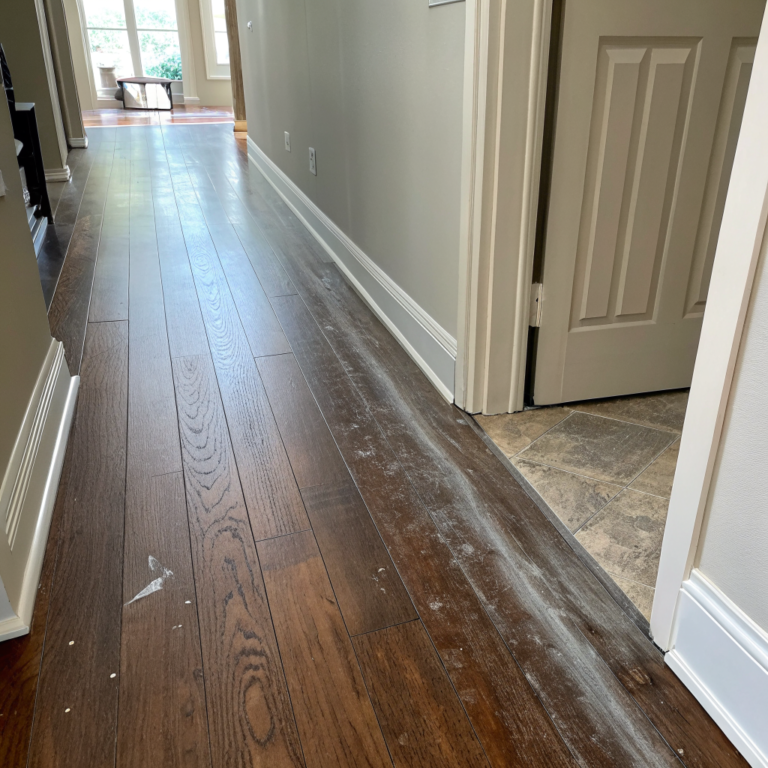
Washing hardwood floors naturally usually means relying on water, mild soap, or diluted vinegar instead of heavily scented commercial floor cleaners. It does not mean flooding the floor with liquid. Hardwood is a water-sensitive material, so the goal is to lift dust, tracked-in soil, and light grime with as little moisture as the job allows. For guidance on gentle, plant-based, and low-residue options you can use across the house, check our natural cleaning products for every room guide.
Natural cleaning still needs to match the floor’s finish. A polyurethane-sealed floor tolerates a damp mop far better than a floor finished with oil or wax, which can be dulled or stripped by water and certain natural acids if used too often.
Checking Your Floor’s Finish Before You Start
Look at how your floor was originally finished before choosing a cleaning method, since this changes what “safe” means. Most modern hardwood has a surface finish like polyurethane, which creates a protective layer over the wood itself.
Older or specialty floors may be finished with penetrating oil or wax instead. These finishes sit inside the wood grain rather than on top of it, so they are more sensitive to water and acidic cleaners. If you are unsure which type you have, check any flooring documentation you may have kept, or test an inconspicuous area first. Also review our checklist of surfaces you should never clean with vinegar to confirm whether a vinegar-based approach is safe for your finish, and see how to care for other wood surfaces like a countertop in how to clean butcher block countertops safely.
Step-by-Step Natural Washing Method
This method is written for sealed, finished hardwood in typical residential condition. Adjust it if your floor is unfinished, heavily worn, or has visible damage.
- Sweep or vacuum the floor with a soft-brush attachment to remove loose dirt, hair, and grit that could scratch the surface once it’s wet.
- Fill a bucket with warm water and add a small amount of pH-neutral dish soap, or use plain warm water with a splash of white vinegar if your finish tolerates mild acidity.
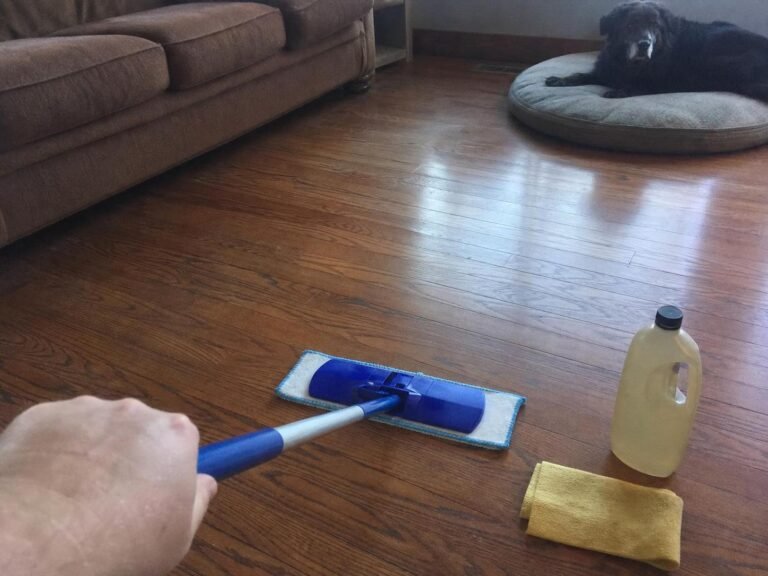
- Dip a microfiber mop into the solution and wring it out until it feels only slightly damp, not wet.
- Mop in the direction of the wood grain, working in small sections so no area sits wet for long.
- Go over each section again with a dry microfiber cloth or a second dry mop head to remove excess moisture immediately.
- Check corners, edges near baseboards, and areas around furniture legs, since moisture tends to collect there.
Spot test any cleaning solution, including diluted vinegar, on a small hidden area first if you have not used it on that floor before. This helps confirm it will not dull, discolor, or streak the finish.
TidyFormula Tip
Change your mop water once it looks cloudy or gritty, since re-dipping a dirty mop can drag grit across the floor and create fine scratches over time.
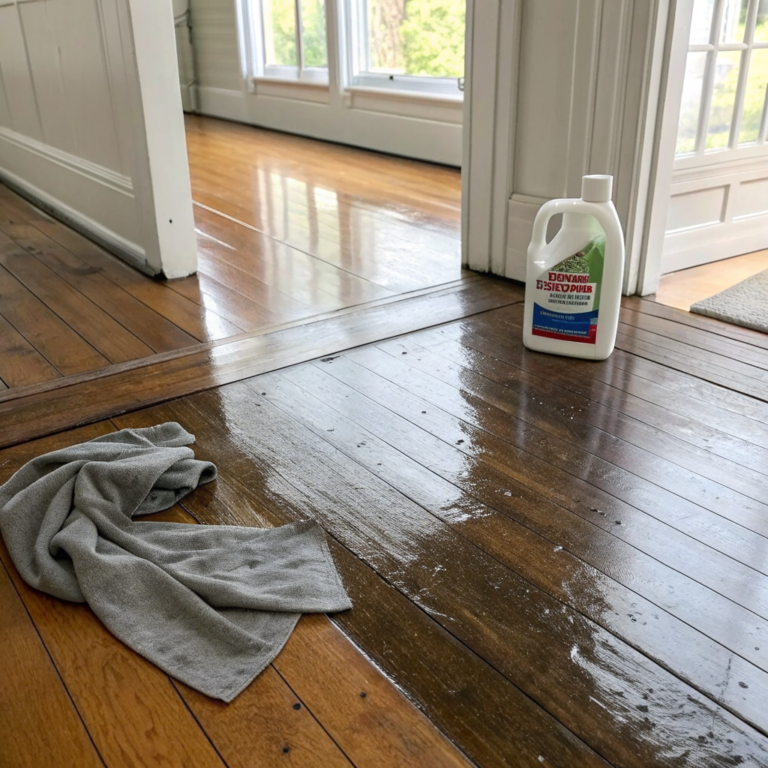
Vinegar Versus Mild Soap for Natural Cleaning
Both mild soap and diluted vinegar are common natural choices, but they don’t behave identically on every finish. Mild pH-neutral soap is generally gentler and works well as a routine cleaner across most sealed hardwood. Vinegar can help cut through light grease and grime, but its acidity may gradually dull certain polyurethane finishes if used frequently, and it is usually not recommended for oiled or waxed wood.
If you have pets, consider looking into a pet-safe floor cleaner for hardwood floors to ensure any product you use is labeled safe around animals and won’t leave harmful residues where pets walk or lie down.
| Cleaner | Best for | Use with caution on |
|---|---|---|
| Mild pH-neutral soap in water | Routine cleaning of sealed, finished hardwood | Unsealed or raw wood, since soap residue can build up |
| Diluted white vinegar | Occasional grease-cutting on sealed finishes | Oiled, waxed, or older worn finishes |
| Plain warm water | Light dust and daily surface refresh | Floors with standing spills or sticky residue, where it may not fully lift grime |
What to Avoid When Cleaning Hardwood Floors Naturally
Several common habits cause more long-term damage than the original dirt would have. Avoiding these protects the finish and the wood underneath.
- Do not use a soaking wet mop or pour water directly onto the floor, since standing moisture can seep between boards and cause warping or discoloration.
- Do not use steam mops on hardwood unless the manufacturer specifically states it is safe, since heat and moisture together can damage many wood finishes.
- Do not use vinegar as a daily cleaner on a finish you have not tested, since repeated exposure can dull the surface over time.
- Do not scrub stuck-on spots with abrasive scouring pads, which can scratch through the finish layer.
- Never combine vinegar with bleach or other household cleaning chemicals; cleaning agents that should not be mixed must not be mixed, and this includes casual combinations in a mop bucket.
Drying and Aftercare
Dry the floor immediately after washing rather than letting it air-dry on its own. A dry microfiber cloth, a clean dry mop head, or even ceiling fans and open windows can speed this along. The faster the surface dries, the less chance moisture has to affect the wood or dull the finish.
Avoid walking on the floor in socks or bare feet while it is still damp, since this can leave marks or introduce more moisture into any low spots. Once the floor is fully dry, it should look consistent, with no dull patches, streaking, or cloudiness.
Frequently Asked Questions
Can I use a steam cleaner on hardwood floors instead?
Steam cleaners are generally not recommended for hardwood unless the manufacturer specifically approves it, since the combination of heat and moisture can affect many wood finishes. A lightly damp microfiber mop is usually a safer natural option.
How often should hardwood floors be washed?
Most hardwood floors benefit from dry sweeping or vacuuming several times a week and a damp mop cleaning every one to two weeks, depending on foot traffic. High-traffic areas may need more frequent dry cleaning between washes. For a broader, gentle schedule that covers the whole home, see our non-toxic cleaning routine for the whole house.
What if vinegar leaves my floor looking dull?
Switch to plain warm water or a pH-neutral soap solution going forward, and consider having a flooring professional assess the finish if dullness persists. Some finishes are more sensitive to acidity than others, and repeated exposure can gradually change their appearance.
Is baking soda safe for hardwood floors?
Baking soda can be mildly abrasive, so it is generally not recommended directly on hardwood finishes, since it may create fine scratches. A soft microfiber mop with mild soap is usually a gentler natural alternative for everyday grime.
What should I do about sticky spots that mopping doesn’t remove?
Try a slightly damp microfiber cloth pressed gently on the spot rather than scrubbing with pressure, and dry the area immediately afterward. If the spot remains, consult the flooring manufacturer’s care instructions before trying a stronger approach.
Everything Mentioned Above
Before you leave, grab the tools you need to get the job done right the first time:
*As an Amazon Associate, TidyFormula earns from qualifying purchases.