How to Clean Rubber Shoe Soles without Yellowing
The best way to clean rubber shoe soles without yellowing is to skip bleach, alcohol-heavy cleaners, and direct sun-drying, and instead use a mild dish soap solution with a soft-bristle brush. Yellowing usually comes from oxidation caused by UV exposure or harsh chemicals reacting with the rubber compound, not from soap and water itself.
If your soles have already started turning yellow, a gentler cleaning routine can slow further discoloration, though it typically will not fully reverse oxidation that has already set in.
⚡ The TidyFormula™ Quick Decision
Best approach: Clean with a mild dish soap and warm water solution using a soft-bristle brush, then air-dry away from direct sunlight or heat sources.
Use caution with: Bleach, high-alcohol cleaners, magic erasers on soft or textured rubber, and heat from dryers, radiators, or car dashboards.
Stop and reassess if: The rubber feels sticky, tacky, or brittle, or if scrubbing causes the surface to pit or crumble. This may indicate the rubber itself is breaking down rather than just being dirty.
What I Use For This Job
Using the right tools saves time and protects your belongings. Here are my exact recommendations:
*As an Amazon Associate, TidyFormula earns from qualifying purchases.
Why Rubber Soles Turn Yellow
Rubber soles yellow mainly through oxidation, a slow chemical change in the rubber compound that speeds up with UV light exposure, heat, and certain harsh cleaning agents. White and light-colored rubber shows this discoloration far more visibly than darker soles, which is why the problem tends to stand out on sneakers and casual shoes rather than dark work boots.
Cleaning habits can accelerate or slow this process, but they cannot fully stop it. Even shoes that are never cleaned can yellow over time simply from sun exposure or age. Knowing this helps set realistic expectations: your goal is prevention and gentle upkeep, not a permanent fix.
What to Check Before You Clean
Look closely at the sole material before choosing a cleaning method. Solid rubber outsoles tolerate scrubbing better than soles with painted logos, glued overlays, or foam midsoles bonded to the rubber. If your shoes have a care label or came with manufacturer cleaning instructions, follow those first, since some synthetic soles are blended with materials that react differently to soap, solvents, or abrasion.
Also check whether the yellowing is surface grime or actual discoloration in the rubber itself. Dirt and grime often wipe away with basic cleaning. True oxidation yellowing sits within the rubber and will not fully lift no matter how much you scrub.
How to Clean Rubber Soles Without Causing Yellowing
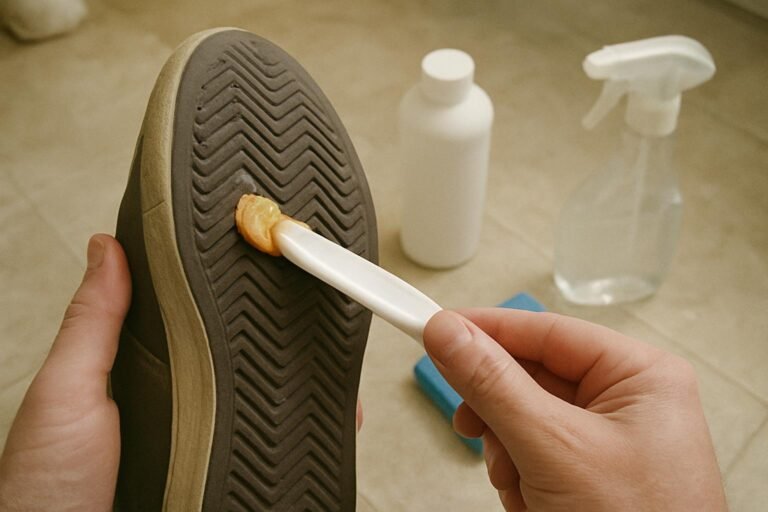
- Remove loose debris first. Tap the soles together or use a dry brush to knock off dirt, grit, and grass before adding any liquid. This prevents you from grinding debris into the rubber texture.
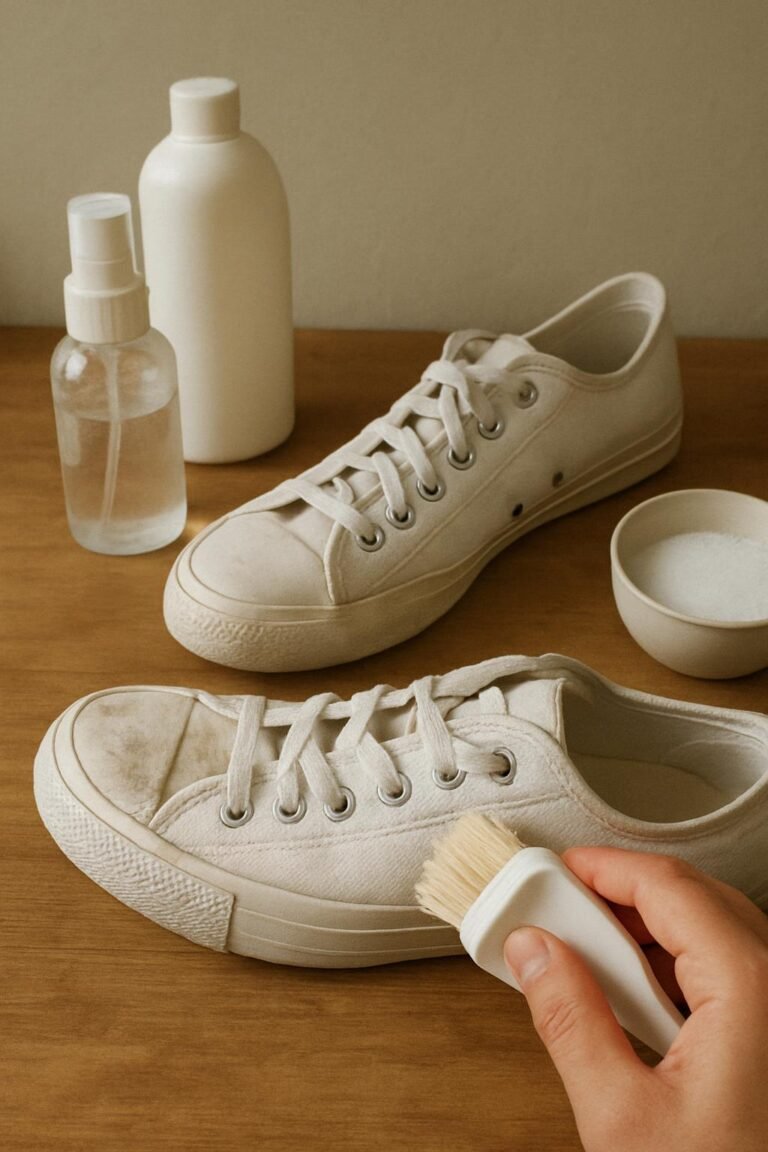
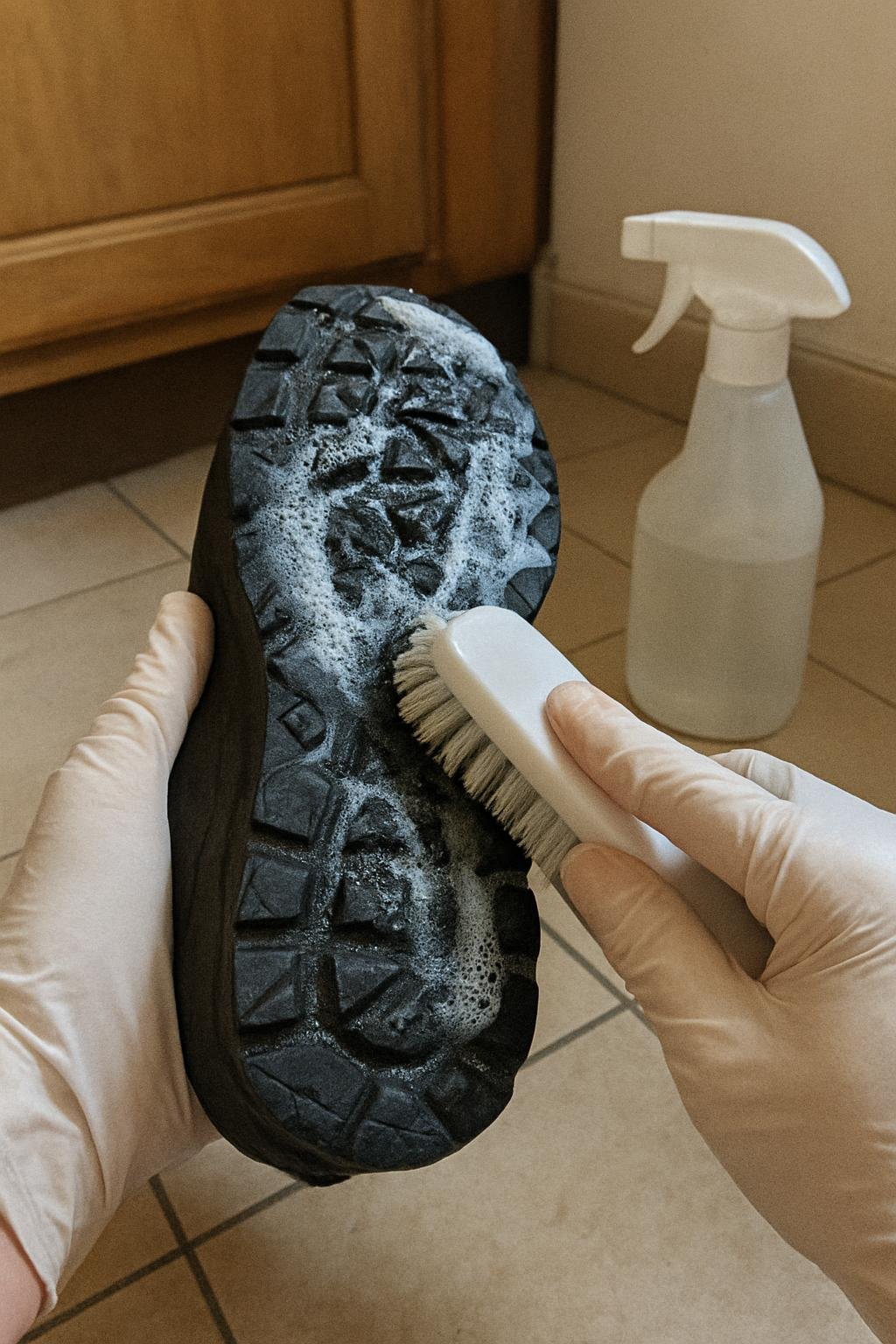
- Mix a mild soap solution. Combine a small amount of dish soap with warm water in a bowl. Avoid strong degreasers, bleach-based cleaners, or high-percentage rubbing alcohol, since these can dry out or discolor rubber over repeated use.
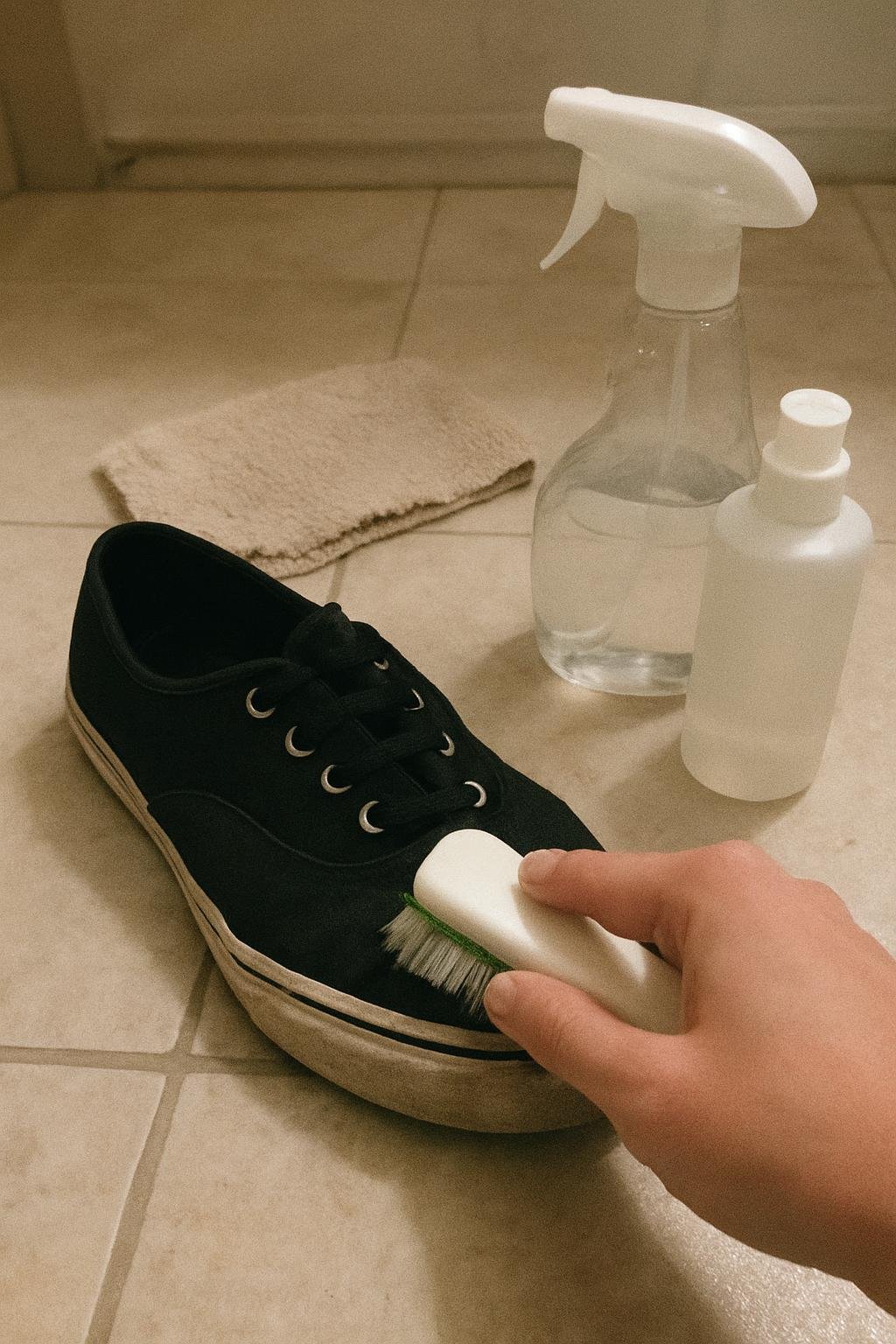
- Scrub gently with a soft-bristle brush. An old toothbrush or soft nail brush works well for grooves and treads. Use light, even pressure rather than aggressive scrubbing, which can wear down the rubber surface and make it more porous to future staining.
- Wipe away soap residue. Use a clean, damp cloth to remove soap thoroughly. Leftover soap film can attract dirt and contribute to a dull, yellow-tinged appearance over time.
- Air-dry away from direct heat or sunlight. Set shoes in a well-ventilated area indoors rather than on a windowsill, porch, or car dashboard. UV light and heat are two of the most reliable ways to speed up yellowing, so this step matters as much as the cleaning itself.
Treating Existing Yellow Stains
If soap and water alone do not lift existing yellowing, some people turn to gentle abrasive erasers made for sneakers. These can help with surface scuffs, but use light pressure and test a small, inconspicuous area first, since aggressive use can thin the rubber’s outer layer and make future yellowing more noticeable rather than less.
Avoid combining multiple cleaning products in an attempt to boost results. Mixing household cleaners, especially bleach with other agents, is not safe and will not improve your outcome. If the yellowing is deep and consistent across the sole, it is likely oxidation baked into the material, and no cleaning method will fully restore the original white color.
Cleaning Mistakes That Make Yellowing Worse
- Drying shoes in direct sunlight. This is one of the most common ways people unintentionally accelerate yellowing while trying to speed up drying time.
- Using bleach on white rubber. Bleach can react with the rubber compound and cause a yellow or amber tint rather than restoring brightness, particularly with repeated use.
- Scrubbing too aggressively. Heavy pressure can create micro-abrasions that trap dirt and oxidize faster than smooth, undamaged rubber.
- Storing shoes near heat sources. Radiators, car trunks in summer, and enclosed hot closets can all contribute to gradual discoloration even without active cleaning.
How Often You Should Clean Rubber Soles
For shoes worn several times a week, a light cleaning every one to two weeks is usually enough to prevent grime buildup without over-handling the rubber. Shoes worn occasionally can go longer between cleanings. Cleaning more frequently than necessary, especially with harsh products, tends to do more harm than the dirt itself, so there is little benefit to scrubbing soles daily or after every single wear.
When Cleaning Will Not Bring the Sole Back to White
If the rubber has yellowed evenly across the entire sole, feels stiff or slightly brittle, or shows fine surface cracking, you are likely looking at age-related oxidation rather than dirt. At that point, continued scrubbing is unlikely to help and may wear the rubber further. Some people choose specialty rubber-restoring products at that stage, but results vary by rubber type and age, so treat any such product with realistic expectations rather than assuming a full restoration.
Everything Mentioned Above
Before you leave, grab the tools you need to get the job done right the first time:
*As an Amazon Associate, TidyFormula earns from qualifying purchases.