How to Remove Urine Scale from Toilet Bowl
The fastest way to remove urine scale from a toilet bowl is with a strong acidic toilet-bowl cleaner or a pumice cleaning stone made for toilets, applied to the dry mineral buildup below the waterline and worked in with light pressure. Heavy or old scale often needs more than one treatment, and porcelain glaze can scratch if you use the wrong tool.
If a previous owner or renter let the ring build up for months, plain scrubbing with a toilet brush usually barely touches it. That’s normal. Urine scale is mineral deposit, not surface dirt, so it responds to a different approach than everyday bowl cleaning.
⚡ The TidyFormula™ Quick Decision
Best approach: Lower the water level, apply an acidic toilet-bowl cleaner directly to the dry scale, let it sit, then scrub with a toilet brush or a toilet-safe pumice stone.
Use caution with: Colored, patterned, or older porcelain, and any toilet with visible glaze wear, hairline cracks, or a septic system, since some acidic cleaners carry septic-safety warnings on the label.
Stop and reassess if: The scale won’t budge after two treatments, you see scratches forming, or the stain sits below the glaze rather than on top of it, which may mean permanent etching rather than removable buildup.
What I Use For This Job
Using the right tools saves time and protects your belongings. Here are my exact recommendations:
*As an Amazon Associate, TidyFormula earns from qualifying purchases.
Why Urine Scale Is Different From an Ordinary Toilet Ring
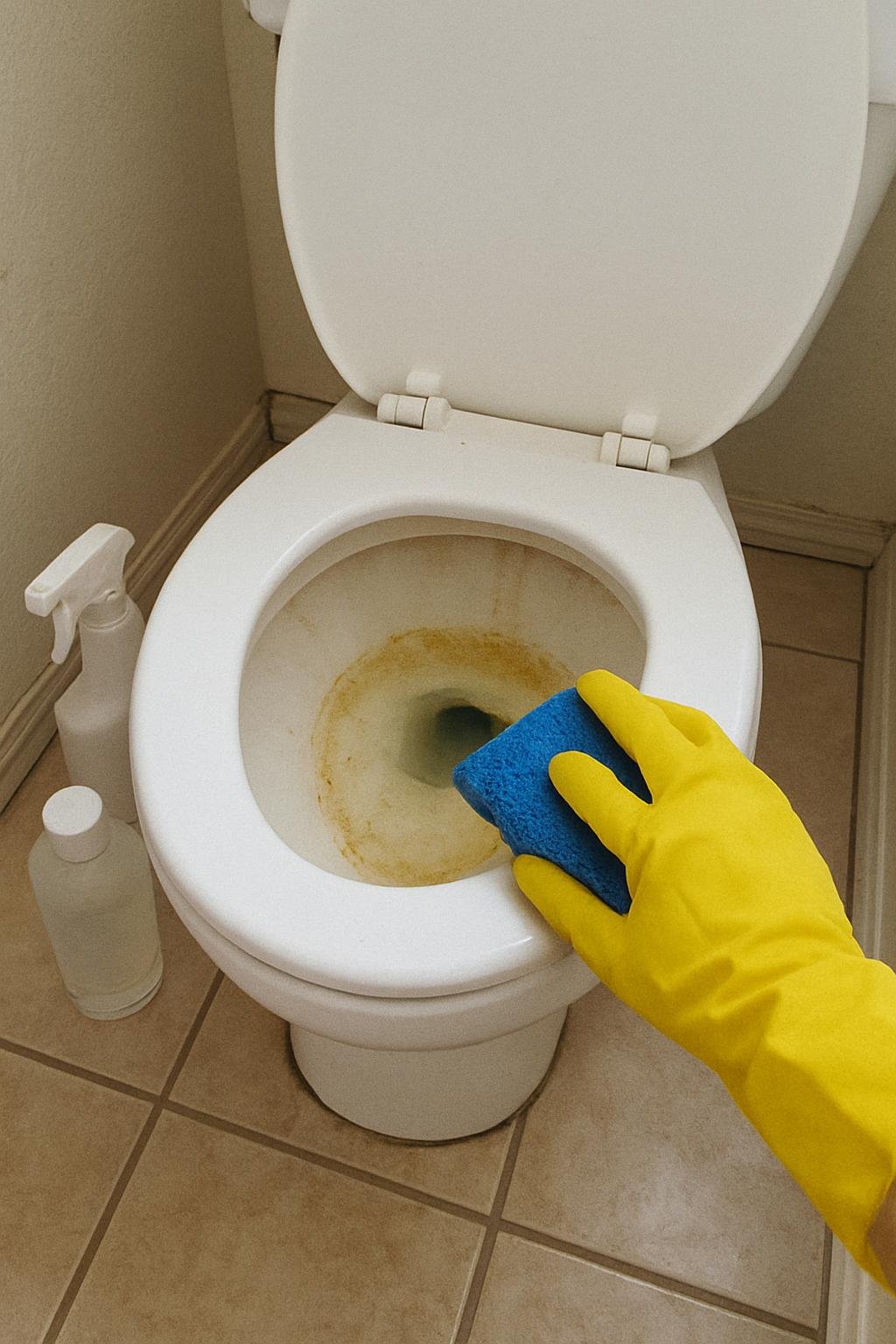
Urine scale forms when mineral content in urine and hard water combines with limescale buildup along the waterline and below it. Over time this creates a crusty, often yellow-brown or gray ring that feels rough or bumpy rather than smooth. Ordinary bowl cleaners and brushes are designed for soap scum and surface staining, not mineral deposits, which is why routine cleaning often fails to touch established scale.
Because the deposit is mineral-based, an acidic cleaner works better than a bleach-based or general-purpose cleaner. Acid breaks down mineral buildup; bleach mainly addresses staining and organic residue. This distinction matters most for scale that has been building for weeks or months rather than a few days.
What to Check Before You Start
- Porcelain condition: Look closely at the glaze. Chips, cracks, or dull worn spots make the surface more vulnerable to scratching from abrasive tools.
- Toilet age and color: Older colored fixtures sometimes have thinner or more delicate glaze than standard white porcelain.
- Cleaner label warnings: Some acidic toilet cleaners include septic-system cautions or ventilation instructions. Follow the product label exactly, since formulas vary by brand.
- Existing chemical residue: If another cleaner was used recently, rinse the bowl first. Never add a new cleaner on top of unknown chemical residue, and never combine an acidic bowl cleaner with bleach or ammonia-based products.
Step-by-Step: Removing Urine Scale From the Bowl
- Lower the water level. Turn off the water supply valve behind the toilet, then flush to drain most of the water from the bowl. This exposes the scale so the cleaner contacts it directly instead of diluting in standing water.
- Apply the acidic cleaner directly to the scale. Squeeze it along the waterline and any visibly crusted areas below it. Use only the product as labeled, and avoid mixing it with any other cleaner.
- Let it sit. Follow the dwell time listed on the product label. Longer isn’t always safer, since some acidic formulas can affect fixtures or seals if left far beyond the recommended time.
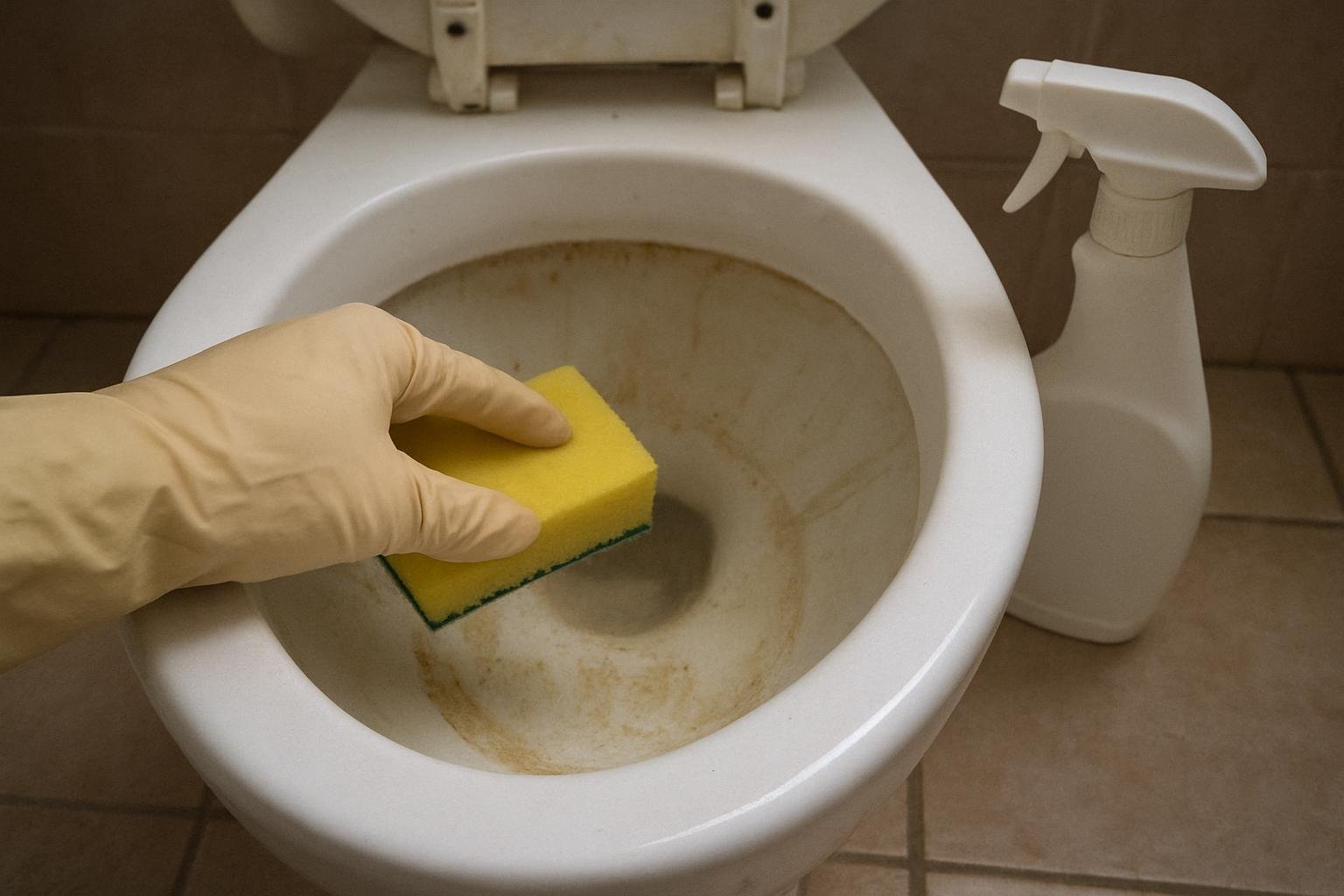
- Scrub with the right tool. A stiff toilet brush works for light-to-moderate scale. For thicker, crusted buildup, a pumice stone made specifically for toilet cleaning can lift mineral deposits without harming glazed porcelain, as long as you keep the stone and the bowl wet while you work and use light, even pressure.
- Rinse and inspect. Turn the water supply back on, flush, and check the area under good lighting. Mineral scale often needs a second treatment, especially in bowls that haven’t been descaled in a long time.
- Repeat only if needed. If scale remains after two applications, stop scrubbing harder and reassess rather than switching to a stronger or different chemical, especially one not labeled for toilet bowls.
Removing Urine Scale Without Damaging the Bowl
Damage usually comes from the tool, not the mineral deposit itself. Metal scrapers, steel wool, and abrasive scouring pads can scratch porcelain glaze, and once the glaze is scratched, new scale and staining will collect in those grooves faster than before. A toilet-safe pumice stone is designed to be softer than porcelain when used wet, which is why it’s a common recommendation for scale removal, but it can still scratch a compromised or already-worn glaze.
Test any pumice stone or abrasive tool on a small, less visible area first if the porcelain shows any wear. If you notice fine scratches forming, switch to a longer acid dwell time with a soft brush instead of continued scrubbing pressure.
Cleaning Mistakes That Make Urine Scale Worse
- Mixing cleaners. Combining an acidic toilet cleaner with bleach or ammonia-based products can create a serious safety hazard. Use one product at a time and rinse thoroughly between different cleaners.
- Scrubbing before the cleaner has time to work. Scrubbing dry, untreated scale mainly polishes the surface rather than removing the deposit, and increases the risk of scratching.
- Using generic all-purpose cleaner on heavy scale. These products are formulated for soap scum and light staining, not mineral buildup, so they tend to underperform on established scale.
- Ignoring the underside of the rim. Scale frequently builds under the rim where water flows in. A small angled brush reaches this area better than a standard bowl brush.
Preventing Urine Scale From Coming Back
Regular cleaning is the main defense, since mineral scale builds up gradually and becomes harder to remove the longer it sits. A quick weekly brush-and-cleaner routine, rather than waiting for visible buildup, keeps deposits from hardening into a stubborn ring. Households with hard water tend to see scale form faster, so more frequent light cleaning may be necessary compared with homes on softened water.
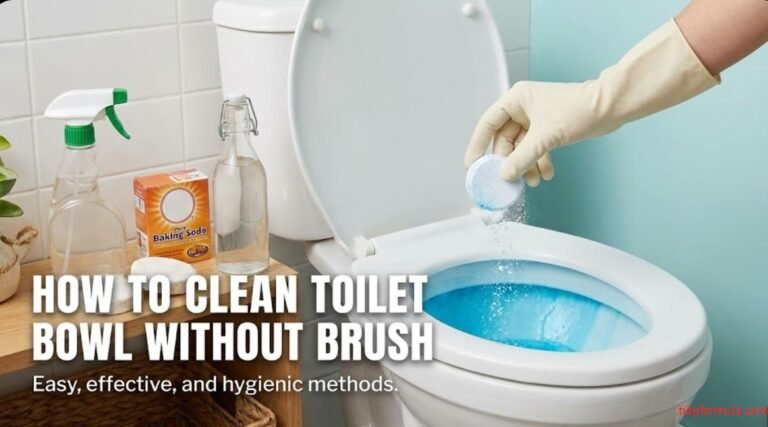
If your toilet bowl seems to develop grime quickly between cleanings, a broader look at your routine can help. This guide to cleaning a toilet bowl without a brush covers alternative tools that can complement scale removal for day-to-day maintenance.
When to Call a Professional
If scale has etched into the porcelain rather than sitting on top of it, cleaning products won’t reverse that damage, since etching affects the glaze itself. Persistent gray or brown discoloration that survives repeated acid treatments and gentle pumice work, especially with visible pitting or roughness you can feel by hand, is a sign to stop treating it as a cleaning problem. At that point, a plumber or bathroom-fixture specialist can tell you whether refinishing or replacement makes more sense than continued scrubbing.
Everything Mentioned Above
Before you leave, grab the tools you need to get the job done right the first time:
*As an Amazon Associate, TidyFormula earns from qualifying purchases.