
Can You Put Silicone Utensils in the Dishwasher? (Safe Use Guide)
Yes you can put most food-grade silicone utensils in the dishwasher without melting, smells, or damage, as long as they’re genuine silicone, placed away from the heating element, and not attached to wood or low-quality plastic handles that can warp, crack, or harbor moisture.
If you’ve ever stared at a silicone spatula wondering, “Is this going to melt, get chalky, or smell like old garlic forever?” — you’re not alone. Let’s walk through exactly when silicone is dishwasher-safe, what can go wrong, and how to wash it the safest way.
The Science: Why Silicone Utensils Are (Usually) Dishwasher Safe
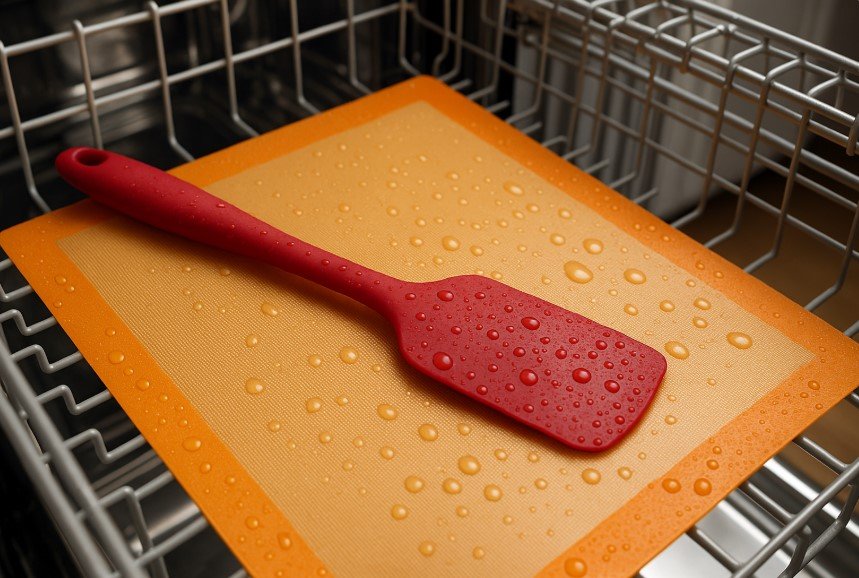
Silicone is a synthetic rubber made from silica (sand) that’s been transformed into a flexible, heat-resistant material. That combo makes it one of the most dishwasher-friendly materials in your kitchen — when it’s high-quality and used correctly.
Here’s what matters:
What I Use For This Job
Using the right tools saves time and protects your belongings. Here are my exact recommendations:
*As an Amazon Associate, TidyFormula earns from qualifying purchases.
1. Heat resistance
Most kitchen-grade silicone is rated to around 220–260°C (428–500°F). A residential dishwasher typically runs between 49–71°C (120–160°F), even on a hot or sanitize cycle.
So under normal conditions, silicone shouldn’t melt or deform in the dishwasher.
2. Detergent & alkalinity
Dishwasher detergents are highly alkaline and powerful degreasers. That’s great for cutting through oil that clings to silicone, but:
- Cheap silicone with fillers can dry out, become chalky, or discolor over time.
- Bold colors may fade or cloud with repeated hot, high-detergent cycles.
If you see white streaks when you bend the utensil, or it feels stiff instead of springy, it may contain fillers and be less durable in the dishwasher.
3. Mechanical action (spray & rattling)
The dishwasher bombards your utensils with strong water jets. For silicone, this usually isn’t a problem — unless:
- The utensil has a metal core that can rust where the silicone is thin or damaged.
- It’s paired with other materials (wood, ABS plastic) that are less dishwasher-safe.
- It’s light and gets pushed onto the heating element in a bottom-rack placement.
In those cases, small design flaws — not the silicone itself — cause the damage.
💡 Good rule: Pure, one-piece silicone utensils are the safest bets for dishwasher use.
The “Top Rack” Rule for Silicone Utensils
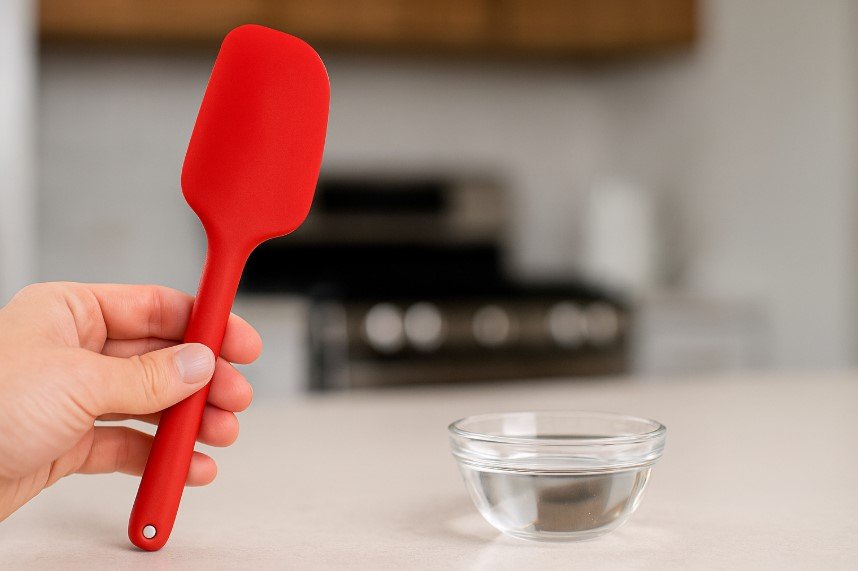
Even though silicone tolerates heat well, top rack is still the safest place for most silicone utensils, mainly because of where the heating element and hottest water are.
Why the top rack is safer
- Farther from the heating element
Many dishwashers have an exposed heating coil at the bottom. Anything lightweight that falls or leans down near it can partially scorch, discolor, or warp — even silicone. - Gentler water pressure
The top rack usually gets slightly gentler spray, which reduces rattling and banging that can tear or nick thinner silicone edges (like spatula blades).
Special cases: Handles & mixed materials
Pay attention to what’s inside or attached to your silicone utensil:
- Silicone with wooden handles:
The silicone head is fine, but the wood is not. Wood can crack, split, and harbor mold. Treat these as hand-wash only. - Silicone with plastic handles:
Many plastics are not as heat-tolerant as silicone. Use top rack only, and avoid extra-hot cycles or heated dry. - Silicone with metal cores or handles:
Usually okay in the dishwasher, but if the silicone coating is thin or torn, water can reach the metal and cause rust from the inside.
Step-by-Step Washing Guide (Safe Method)
Follow this method to keep your silicone utensils clean without ruining their texture or color.
1. Check the manufacturer’s instructions
Look for symbols or words like “Dishwasher Safe” or “Top Rack Only” on:
- The handle
- The packaging
- The product listing (if you still have it bookmarked)
If it’s unbranded or unclear, default to top rack and standard heat.
2. Pre-rinse greasy or colored residue
Silicone is famous for hanging onto oil and strong colors (tomato sauce, turmeric, curry).
- Rinse off chunks of food.
- If it’s very greasy, give it a quick hand wash with dish soap first. This helps prevent a lingering oily film after the cycle.
3. Load on the top rack correctly
- Place spatulas and spoons flat on the top rack or in the utensil basket handle-down if stable.
- Make sure nothing can fall through and land near the bottom heating element.
- Keep them away from sharp knives that can nick the silicone.
4. Choose the right cycle
- Normal/auto cycle: Safe for almost all silicone utensils.
- Avoid:
- High-heat “sanitize” or “steam blast” cycles for very thin or older silicone.
- Extra-long heated dry if the utensil also has plastic or wooden parts.
5. Dry thoroughly
After the cycle:
- Check for water trapped where the silicone meets a handle.
- Let utensils air dry fully before storing, especially if there are seams or caps where mold could develop.
What Could Go Wrong with Silicone in the Dishwasher?
Silicone is tough, but not invincible. Here’s exactly what can go wrong — and why.
1. Warping or misshaping
Most silicone won’t warp, but cheap or thin silicone — especially with fillers — might:
- If it falls onto the heating element
- If it’s exposed to repeated sanitize / extra-hot cycles
- If it’s stretched or wedged between heavy items and bent while hot
You may notice:
- A spatula edge that no longer sits flat in the pan
- Slight twists or bends in spoon heads
2. Sticky or greasy feel after washing
If your silicone feels sticky or tacky even straight from the dishwasher:
- Oils may have polymerized (baked onto the surface) from high heat.
- Hard water plus detergent can leave mineral or soap film on the silicone.
This is a cleaning, not a safety, issue — but it’s annoying.
3. Discoloration & staining
Brightly colored or white silicone can:
- Turn slightly yellow or orange from tomato sauces or curry
- Become cloudy or dull from repeated exposure to hot alkaline detergent
- Develop white stress marks if bent or stretched (often a sign of fillers)
4. Odor retention
Silicone can absorb and trap smells like:
- Garlic
- Onion
- Spicy sauces
- Dishwashing detergents with heavy fragrance
The dishwasher may not fully remove these, especially at lower temperatures or in crowded loads.
5. Damage to non-silicone parts
Even if the silicone survives, attached materials may not:
- Wood: Cracks, swells, and may grow mold.
- Low-grade plastic: Warps, softens, or becomes brittle.
- Printed designs / logos: May fade or peel.
Alternatives: How to Hand Wash Silicone Utensils
If you want your silicone utensils to last longer, or they’re combined with wood or delicate plastic, hand washing is the safest option.
1. Basic hand-wash method
- Fill the sink or a bowl with hot water and a few drops of degreasing dish soap.
- Soak utensils for 5–10 minutes if they’re very greasy.
- Use a soft sponge or dish brush to scrub all surfaces, especially around seams.
- Rinse with hot water.
- Dry completely with a clean towel or air dry on a rack.
2. For sticky, greasy, or smelly silicone
If your silicone still feels tacky or smells after washing:
Baking soda scrub:
- Sprinkle baking soda on the utensil.
- Add a few drops of water to form a paste.
- Gently scrub with a sponge or brush.
- Rinse thoroughly and dry.
Vinegar deodorizing soak:
- Mix 1 part white vinegar to 3 parts hot water.
- Soak utensils for 15–20 minutes.
- Rinse with hot water and dry.
3. Deep clean for old buildup
For very old, sticky silicone:
- Bring a pot of water to a gentle simmer (not a rolling boil).
- Add a tablespoon of baking soda.
- Submerge the silicone part only (avoid wood/plastic handles).
- Simmer for 5–10 minutes, then carefully remove, rinse, and dry.
FAQ: Silicone Utensils & Dishwasher Safety
1. Can silicone utensils melt in the dishwasher?
Highly unlikely with genuine food-grade silicone. Household dishwashers don’t reach the temperatures needed to melt quality silicone. However, thin or low-quality silicone with fillers may warp or degrade if it falls onto the heating element or is exposed to repeated sanitize cycles.
2. Why do my silicone spatulas feel sticky after the dishwasher?
A sticky feel usually means:
- Oil residue has baked onto the surface, or
- Hard water and detergent left a film on the silicone.
Scrub with baking soda and dish soap, or soak in hot water with vinegar, then rinse thoroughly. This often restores the smooth finish.
3. Are silicone utensils safer than plastic in the dishwasher?
Generally, yes. Most plastics have a lower heat tolerance and can warp, leach chemicals, or degrade faster in the dishwasher. High-quality silicone is more stable at typical dishwasher temperatures and doesn’t rely on plasticizers. Just be cautious with mixed-material handles (wood or cheap plastic).
Everything Mentioned Above
Before you leave, grab the tools you need to get the job done right the first time:
*As an Amazon Associate, TidyFormula earns from qualifying purchases.