How to Clean Mattress From Urine: The Science of Breaking the Bond
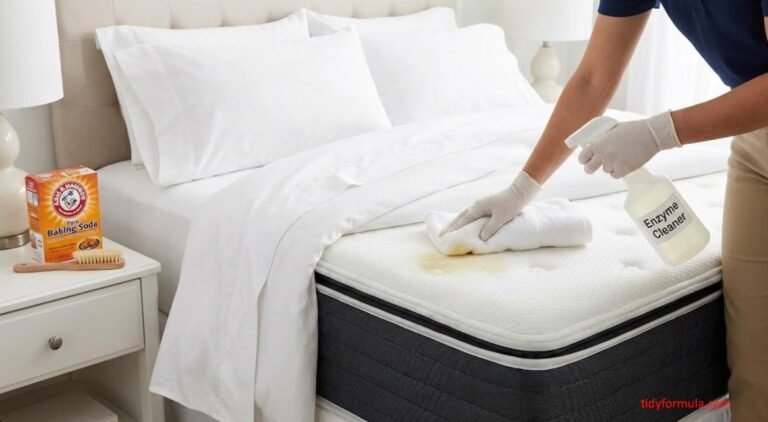
Blot up fresh urine immediately, then treat the spot with an enzyme cleaner labeled for mattresses or upholstery. Use as little liquid as possible, never combine cleaning products, and dry the mattress completely with airflow before replacing the bedding.
Urine can leave both a visible stain and odor-causing residue inside a mattress. Once it dries, the residue becomes more difficult to remove with water alone—especially from absorbent materials such as memory foam and thick pillow tops.
The safest approach is to extract as much liquid as possible, choose one compatible treatment, and give the mattress enough time to dry. Avoid soaking, scrubbing, steam, and high heat.
⚡ The TidyFormula™ Quick Answer
The preferred method:
- Fresh urine: Blot firmly with dry towels until little moisture transfers.
- Odor: Apply an enzyme cleaner labeled for urine and upholstery, following its directions exactly.
- Yellow stain: If the mattress label permits it, spot-test 3% hydrogen peroxide and use it separately.
- Drying: Run a fan and leave the mattress uncovered until the treated area is dry throughout.
What to Check Before Cleaning
Remove the sheets, mattress pad, and protector. Launder those items according to their care labels, keeping urine-stained items out of the dryer until the stain and odor are gone. Dryer heat can make remaining discoloration harder to remove.
What I Use For This Job
Using the right tools saves time and protects your belongings. Here are my exact recommendations:
*As an Amazon Associate, TidyFormula earns from qualifying purchases.
Next, check the mattress care label and warranty instructions. Some manufacturers restrict liquid cleaners, peroxide, upholstery machines, or vacuum attachments.
Gather the following:
- Several clean white or colorfast towels
- Disposable gloves
- An enzyme urine remover labeled for mattresses or upholstery
- A fan or dehumidifier
- A vacuum with a clean upholstery attachment
- Optional baking soda for use only after the primary treatment is complete
Test any cleaner on a hidden area first. Stop if the fabric transfers color, develops a pale patch, puckers, or feels unusually stiff.
How to Clean Fresh Urine From a Mattress
Fresh urine is easier to remove because more of the liquid is still near the surface. Work from the outside of the wet area toward the center so you do not spread it.
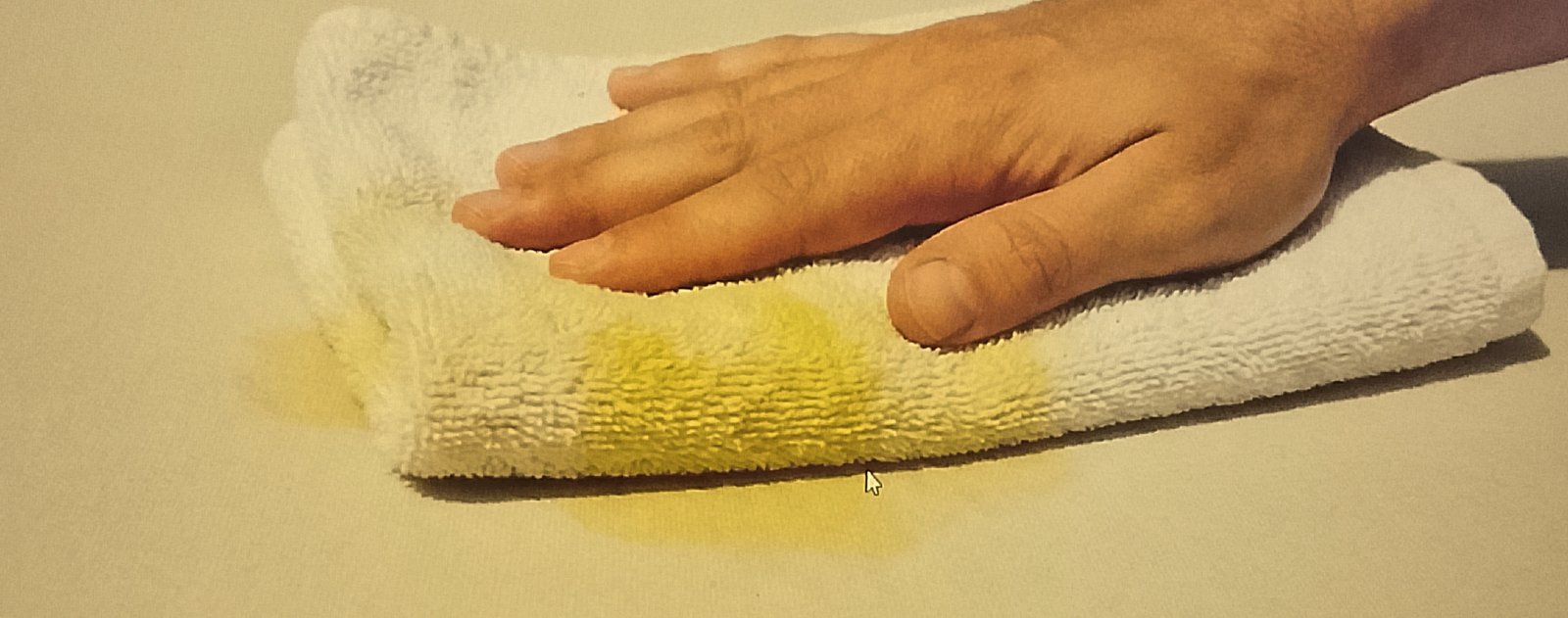
Step 1: Blot Without Rubbing
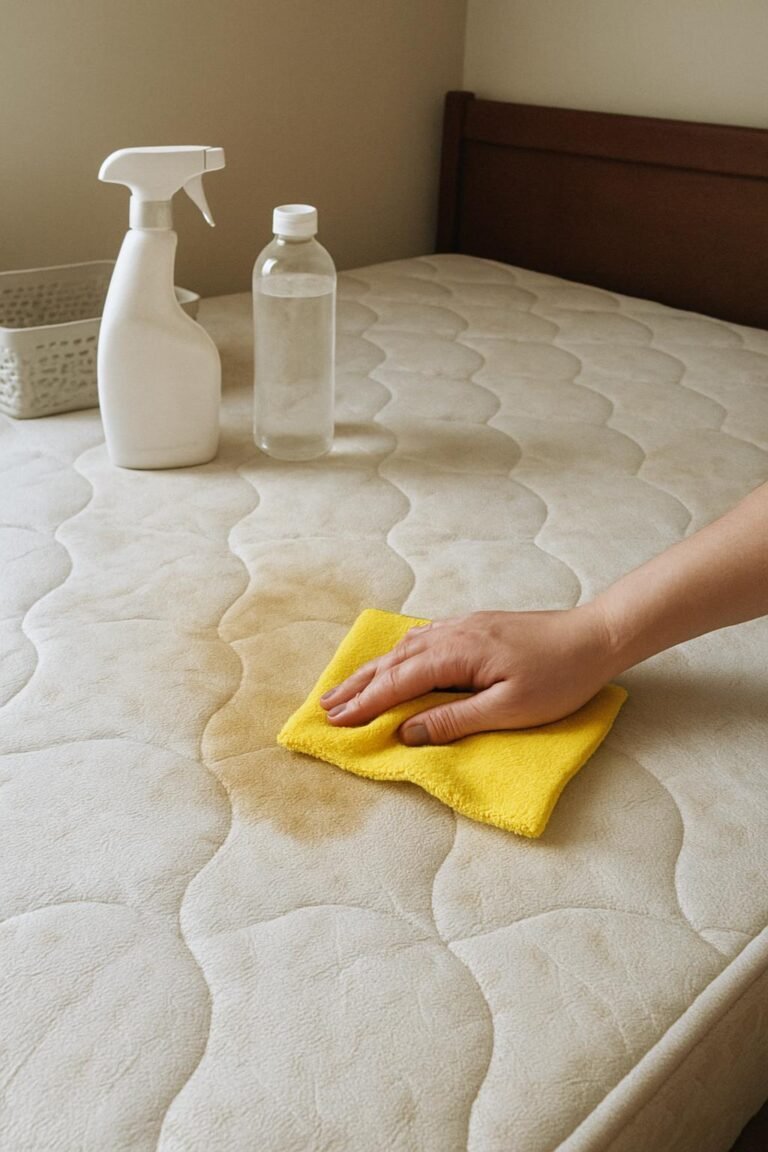
Place a folded towel over the wet spot and press down firmly with your hands or body weight. Replace the towel as soon as it becomes damp, then repeat until very little moisture transfers.
Do not scrub. Scrubbing spreads liquid through the cover and can push it farther into foam or padding. If you have a clean wet/dry vacuum approved for upholstery, you can use the extraction-only function after blotting. Do not use a standard household vacuum on a wet mattress.
Step 2: Choose One Odor Treatment
For most urine accidents, an enzyme cleaner labeled for urine and upholstery is the best first choice. These products are formulated to break down odor-causing organic residue. Follow the product’s coverage, dwell-time, ventilation, and extraction instructions rather than improvising a stronger concentration.
Apply enough to reach the affected fabric without flooding the mattress. A fine spray is usually safer than pouring. Blot away excess product when the label directs you to do so.
Alternative for Fresh Human Urine
If you do not have an enzyme cleaner and the mattress manufacturer permits a mild acidic solution, use equal parts distilled white vinegar and cold water. Apply it lightly, wait several minutes, and blot thoroughly with clean towels.
Vinegar can reduce some ammonia-like odor, but it may not remove deeply dried urine residue or a yellow stain. Do not use it immediately before or after hydrogen peroxide, bleach, or an enzyme product.
🧪 Why Water Alone Often Fails
Blotting removes liquid, but dried urine leaves concentrated residue in the mattress fibers and foam. Rewetting the area with plain water can temporarily dilute the odor without removing its source. Extraction and a urine-specific cleaner are more effective than repeatedly soaking the surface.
Step 3: Dry the Mattress Completely
Press the treated area with dry towels one final time. Stand the mattress on its side if the construction and manufacturer allow it, then aim a fan across both the treated surface and the mattress edge. A dehumidifier can help in a humid room.
Do not remake the bed while the area feels cool or damp. Drying may take overnight or longer, depending on the amount of liquid, room humidity, and mattress construction. Do not use a hot hair dryer, space heater, iron, or steam cleaner.
How to Remove a Yellow Urine Stain
Odor removal and stain removal are separate jobs. A mattress can smell clean while still showing a yellow mark.
If the care label allows peroxide, spot-test plain 3% hydrogen peroxide in an inconspicuous area. It can lighten urine discoloration, but it can also bleach colored fabric and damage or discolor certain fibers and foams.
Apply a small amount to a clean white cloth and dab the stain from its outer edge toward the center. Do not pour it onto the mattress. Blot with a second cloth, then let the area dry completely before deciding whether another application is needed.
Do not add baking soda, dish soap, vinegar, or any other cleaner to the peroxide. Avoid peroxide on wool, natural latex, colored covers, or specialty materials unless the manufacturer specifically approves it.
Heat and excess moisture can drive contamination farther into mattress padding, affect adhesives and foam, and make some stains more difficult to remove. Steam also leaves the mattress wet internally, where drying is slow.
How to Clean Old Urine Stains From a Mattress
An old stain usually needs more dwell time than a fresh accident, but it does not need aggressive scrubbing or flooding.
- Vacuum first: Remove loose dust and debris with a dry upholstery attachment.
- Locate the full area: Treat the visible stain plus its immediate edges. Odor may extend beyond the yellow mark.
- Apply one suitable enzyme cleaner: Choose a product labeled for dried urine and upholstery. Follow its directions for dwell time and extraction.
- Blot thoroughly: Use clean towels to remove as much solution and loosened residue as possible.
- Dry with airflow: Let the mattress dry completely before checking the result.
- Repeat only if permitted: If odor remains after drying, repeat the same labeled treatment rather than layering a different chemical over it.
Avoid using a toothbrush or stiff brush on a mattress cover. Brushing can fray the fabric, spread the stain, or force liquid into deeper layers.
Using Baking Soda for Residual Odor
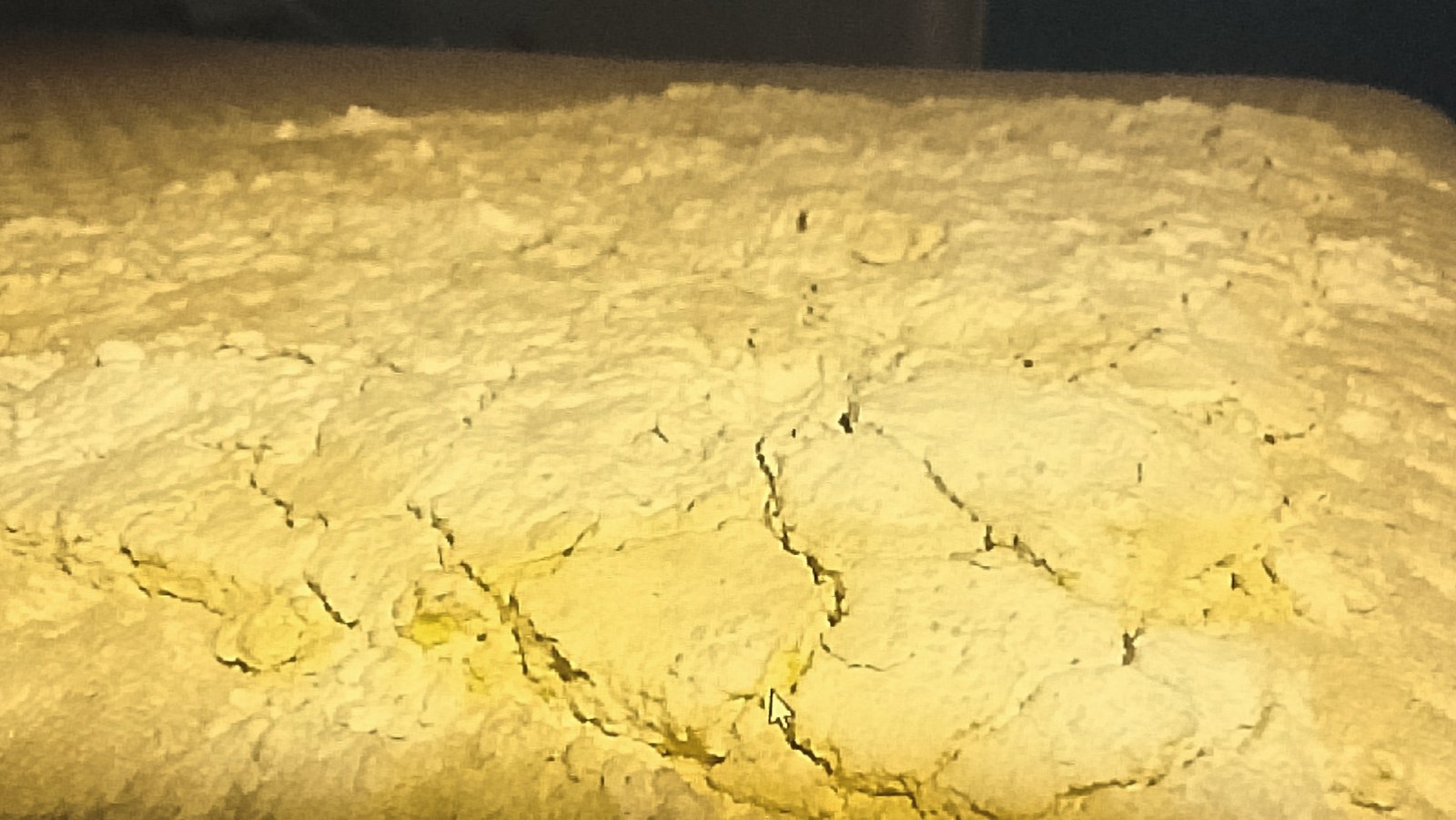
Baking soda can help with mild residual odor at the surface, but it does not remove urine trapped deep inside foam.
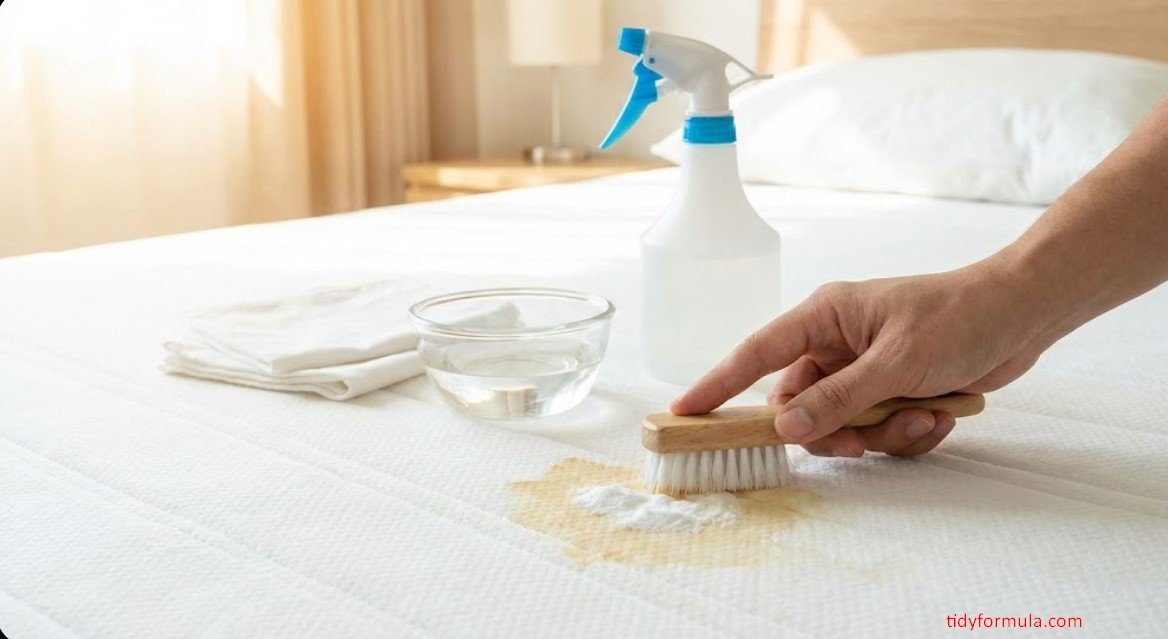
Use it only after the cleaning treatment has been blotted away and the mattress is dry. Sprinkle a thin, even layer over the area, leave it for several hours, and vacuum it up with a dry upholstery attachment. Never vacuum damp baking soda with an ordinary vacuum.
Adjust the Method for Your Mattress Material
Memory Foam
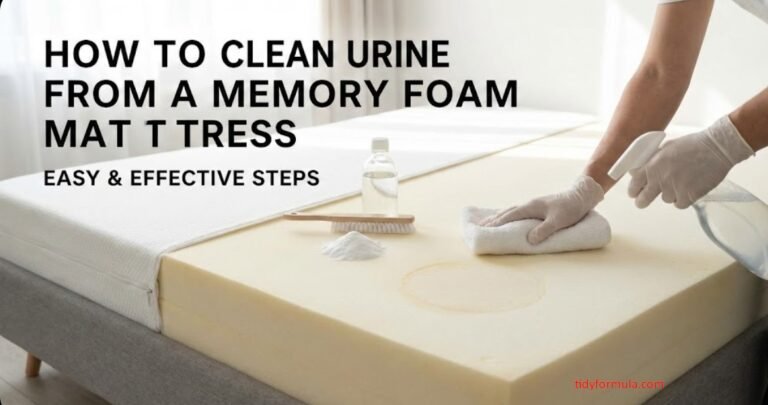
Memory foam absorbs liquid quickly and dries slowly. Blot repeatedly, apply cleaner sparingly, and avoid saturating the foam. Use a fan for as long as necessary, and do not replace the bedding until the foam is dry below the surface.
For a heavily soaked mattress, see the deep cleaning guide before adding more liquid.
Latex Foam
Use minimal moisture and follow the manufacturer’s instructions. Avoid hydrogen peroxide, bleach, solvents, high heat, and prolonged direct sunlight unless specifically approved, because they may discolor or degrade latex.
Innerspring and Hybrid Mattresses
Prevent liquid from reaching seams, tufting, and side panels, where it can travel into deeper padding. Blot from the perimeter toward the center. Hybrid mattresses may contain memory foam or latex, so follow the restrictions for the most sensitive layer.
Pillow-Top Mattresses
A thick pillow top can hold more liquid than a flat woven cover. Use repeated towel pressure rather than extra cleaner. Allow additional drying time and check the sides of the tufted area for moisture.
Removable Mattress Covers
A zipper does not always mean the cover is washable. Check the care label before removing it because some covers contain fiberglass barriers or are not intended to be opened. If removal is permitted, wash and dry the cover exactly as directed.
How to Clean Urine From a Sleep Number Mattress
Sleep Number beds and similar adjustable air beds contain separate cover, foam, air-chamber, hose, and pump components. Unplug the system before inspecting it, and prevent liquid from reaching electrical connections.
- Check the care instructions: Confirm whether the top cover may be removed and machine-washed.
- Separate approved removable layers: Do not open or dismantle components beyond what the manufacturer allows.
- Blot the foam: Use firm towel pressure and minimal cleaner. Do not soak through to the air chamber or pump connections.
- Wipe nonporous components: If the care instructions permit it, wipe the air chamber with a cloth lightly dampened with mild soapy water, then wipe again with plain water.
- Dry before reassembly: Leave every layer open to airflow until no moisture remains.
Do not apply a wet paste, pour cleaner into the foam, or reconnect power while any component is damp.
This can release dangerous chloramine gases that irritate the eyes and lungs. Keep bleach away from urine-contaminated bedding and mattresses.
How to Remove a Lingering Urine Smell
If odor returns after the mattress dries, urine likely reached beyond the area that was treated.
- Repeat the same enzyme treatment: Follow the label and cover the full affected area without flooding the mattress.
- Check the bed base: Inspect the mattress protector, box spring, upholstered frame, slats, carpet, and nearby wall. Odor may be coming from another surface.
- Improve drying conditions: Use a fan and dehumidifier. A mattress that remains damp can develop a musty odor unrelated to the original stain.
- Avoid fragrance sprays: They may mask urine temporarily without removing the residue.
For pet urine, use a product specifically labeled for that animal and surface. Cats and dogs may return to an area if odor remains, so clean the bed frame and floor as well as the mattress.
Signs You Should Stop Cleaning
Stop adding liquid and reassess if:
- The mattress remains damp after extended airflow.
- The cover is fading, puckering, or transferring color.
- Foam becomes crumbly, sticky, unusually firm, or misshapen.
- Liquid reached electrical parts or an adjustable-bed pump.
- A musty odor or visible mold appears.
- Urine repeatedly soaked through several internal layers.
A deeply saturated mattress may not be practical to clean because the inner layers cannot be rinsed or inspected. Contact the manufacturer or a professional upholstery cleaner familiar with mattresses. Replacement may be the safer practical option if the mattress cannot dry completely or visible mold is present.
Aftercare and Prevention
Once the mattress is completely dry, vacuum away any remaining powder and inspect the surface under good light. Reassemble removable layers only when they and the mattress core are dry.
Use a washable waterproof mattress protector that covers the entire sleep surface. For frequent accidents, keep a second protector available so the bed can be remade while the first one is being washed.
Wash urine-stained bedding promptly and check it before machine drying. If odor remains, repeat the label-approved wash treatment rather than using dryer heat.
FAQ: Cleaning Urine From a Mattress
Can I use a steam cleaner on a urine stain?
No. Steam introduces heat and substantial moisture into a surface that is difficult to rinse and dry. It can also affect foam, adhesives, and mattress construction.
Is cleaning children’s urine different from cleaning pet urine?
The blotting and drying steps are similar. For pet accidents, choose an enzyme cleaner specifically labeled for pet urine and upholstery. Treat the surrounding bed frame or flooring if urine reached those surfaces.
Can I clean urine from a mattress without baking soda?
Yes. Baking soda is optional and mainly helps with mild surface odor. Thorough blotting, a compatible urine-specific cleaner, and complete drying are more important.
Can a years-old urine stain be removed?
An old odor may improve after repeated applications of the same enzyme cleaner, provided the mattress can be treated without oversaturation. Yellow discoloration may remain permanent, especially on delicate, colored, or oxidized fabric.
How do I know when the mattress is dry enough to use?
Press a dry towel firmly against the treated area and check for moisture transfer. The mattress should not feel cool or damp compared with the surrounding surface. If you are unsure, continue using airflow and leave the bedding off longer.
References: To understand the residue involved, read about the chemical properties of Uric Acid on Wikipedia.
Everything Mentioned Above
Before you leave, grab the tools you need to get the job done right the first time:
*As an Amazon Associate, TidyFormula earns from qualifying purchases.