How to Prevent Hard Water Stains in the Shower
To prevent hard water stains in the shower, remove water from glass, tile, fixtures, and the shower floor before it dries. A quick squeegee-and-dry routine after each shower is the best method, followed by regular gentle cleaning. Avoid acidic cleaners on natural stone, damaged finishes, or any surface the manufacturer says requires a neutral cleaner.
Hard water marks are mineral residue left behind as shower water evaporates. The longer droplets sit on glass doors, chrome fixtures, grout, and tile, the more noticeable that residue becomes.
⚡ The TidyFormula™ Quick Decision
Best approach: Squeegee shower glass and smooth walls after use, then dry fixtures and ledges with a clean microfiber cloth.
Use caution with: Do not use vinegar or other acidic cleaners on natural stone, unsealed stone, delicate metal finishes, or surfaces with manufacturer instructions requiring a neutral cleaner.
Check your shower surfaces before choosing a cleaner
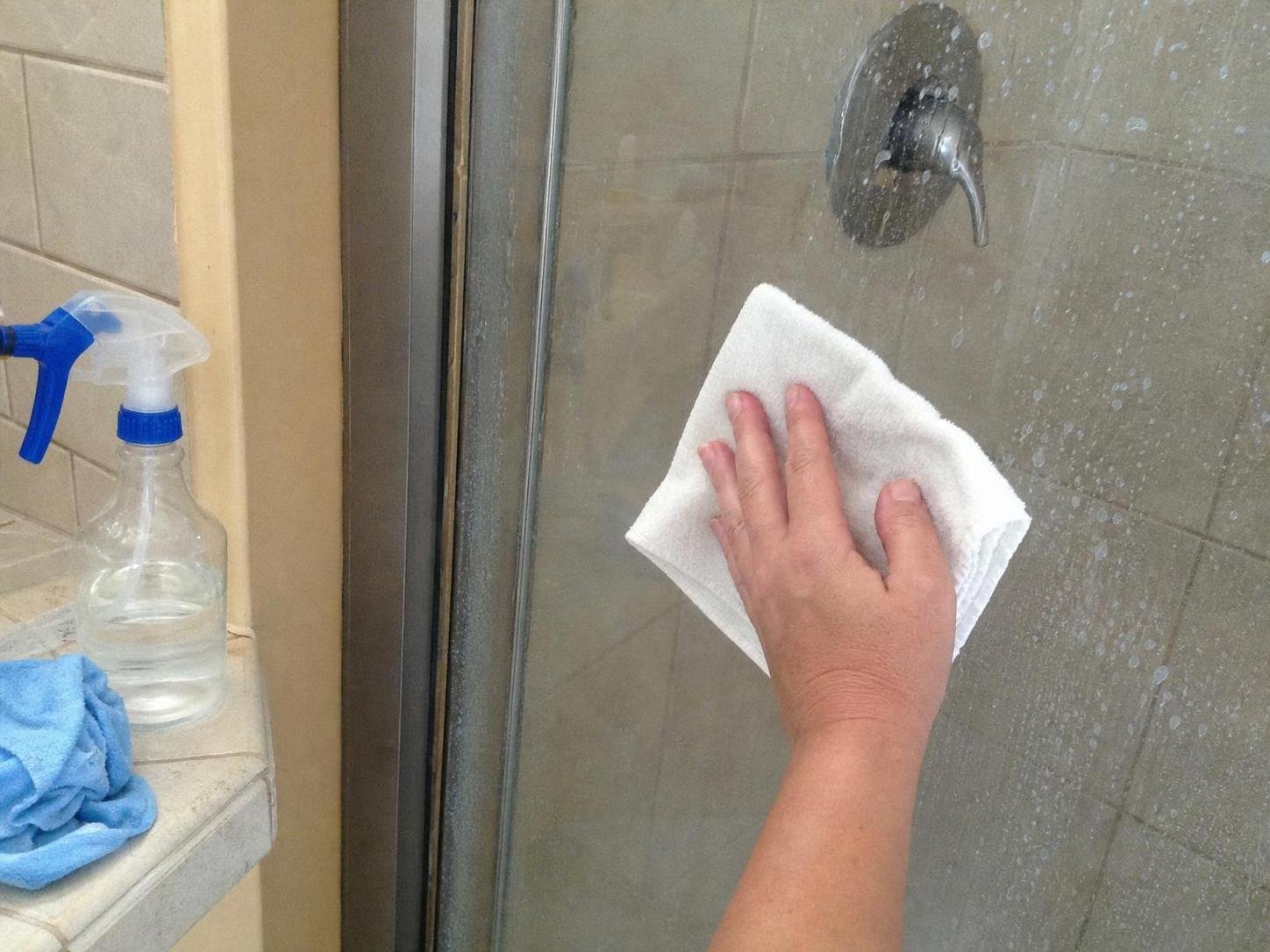
Your daily drying routine is safe for nearly every shower surface, but deeper maintenance cleaning depends on the material. Glass, glazed ceramic tile, porcelain tile, and many standard chrome fixtures usually tolerate a mild bathroom cleaner used according to its label. Natural stone, specialty coatings, painted surfaces, and aging fixture finishes need more care.
What I Use For This Job
Using the right tools saves time and protects your belongings. Here are my exact recommendations:
*As an Amazon Associate, TidyFormula earns from qualifying purchases.
- Glass doors and panels: A squeegee and microfiber cloth are usually the simplest prevention tools. Check for factory coatings and follow the door manufacturer’s care instructions.
- Ceramic or porcelain tile: Remove water from the tile and grout lines after showering. Use a non-abrasive cleaner for regular maintenance.
- Natural stone: Use only a stone-safe, neutral cleaner if cleaning is needed. Avoid vinegar, lemon juice, and other acidic products unless the stone manufacturer specifically permits them.
- Metal fixtures: Dry them rather than letting droplets evaporate. Abrasive powders, scouring pads, and strong acids can dull or damage some finishes.
- Grout and caulk: Keep them as dry as practical, especially along horizontal ledges and corners where water collects. Replace cracked or missing caulk rather than repeatedly soaking the gap with cleaner.
Build a simple after-shower routine
The most effective prevention routine takes only a few minutes because it stops mineral-heavy water from drying on the surface. Focus first on glass, horizontal ledges, fixture bases, and the bottom edge of shower doors, where water tends to linger.
- Squeegee the glass and smooth walls. Start at the top of the shower door, glass panel, or tile wall and pull water downward in overlapping passes. Wipe the squeegee blade when it begins leaving streaks.
- Dry fixtures and flat surfaces. Use a clean, dry microfiber cloth to wipe the faucet, handles, showerhead exterior, door frame, shelves, niches, and corners. Pay attention to the base of fixtures, where small water pools often leave rings.
- Leave the shower open to vent. Open the door or curtain after use and run the bathroom exhaust fan if you have one. Better airflow helps remaining moisture evaporate instead of collecting in corners and on glass.
- Hang cloths and bath items so they can dry. Do not leave washcloths, bottles, razors, or bath toys sitting in puddles on a shower ledge. Move them enough to let the surface underneath dry.
- Clean lightly before buildup becomes visible. Once a week, wipe the shower with a suitable non-abrasive cleaner and rinse or wipe away any remaining product as directed by its label. Dry the surface afterward.
🧪 Why This Works
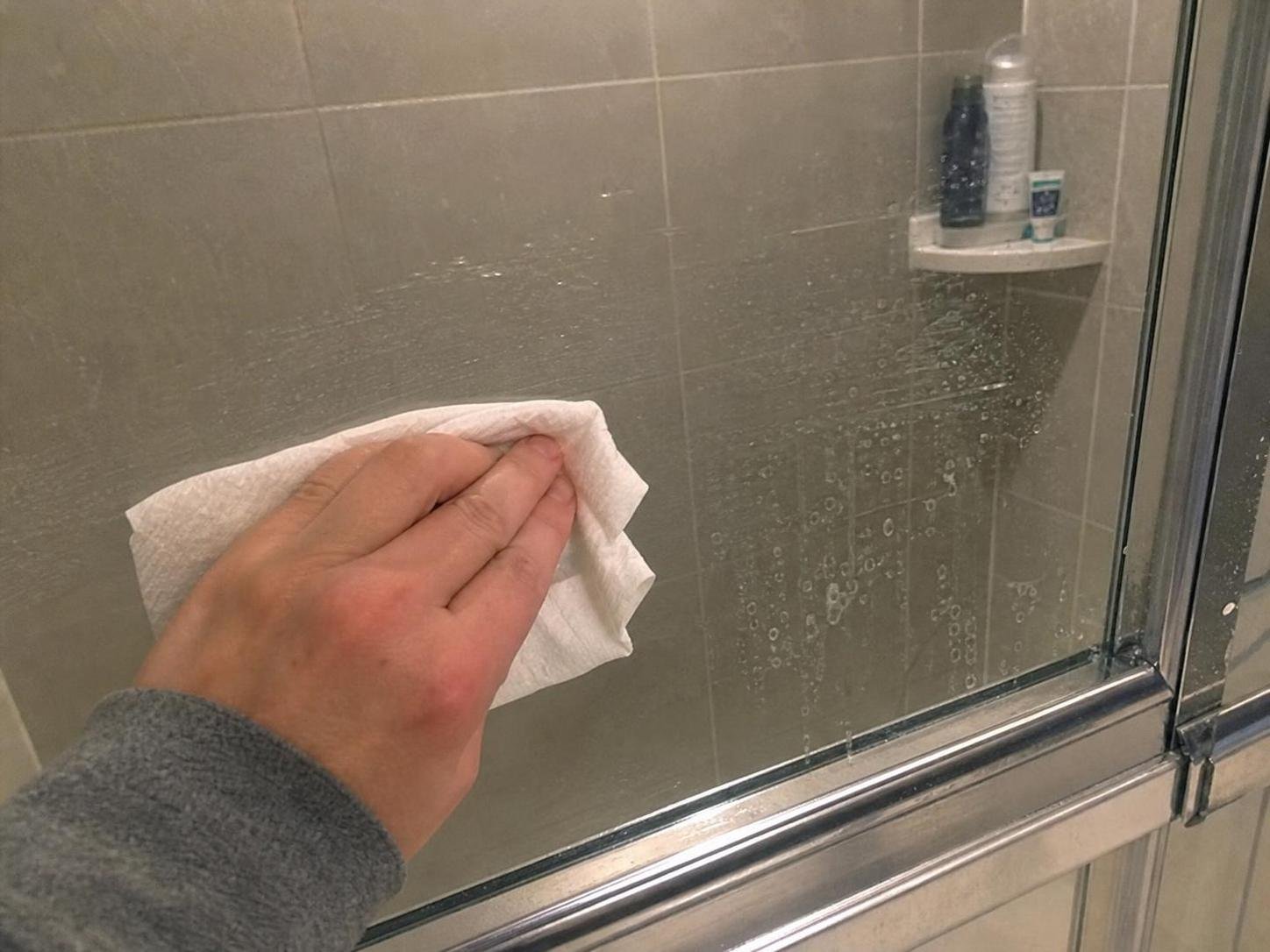
Hard water stains form when water evaporates and leaves dissolved minerals behind. Removing droplets before they dry leaves far less residue on glass, tile, and fixtures. Regular light maintenance is usually easier on shower surfaces than waiting until mineral deposits become thick and require more aggressive cleaning.
Choose the right maintenance level
A daily wipe-down prevents most visible spotting, but it does not replace occasional cleaning. Use a gentle routine for fresh water marks and step up only when you can see a dull film, white spotting, or crusty mineral buildup.
| Situation | Best response |
|---|---|
| Fresh droplets after a shower | Squeegee glass and walls, then dry fixtures and ledges with microfiber. |
| Light haze or faint spots | Use a suitable non-abrasive shower cleaner according to its label, then rinse or wipe clean and dry the surface. |
| White crust around fixtures or door tracks | Use a cleaner approved for that material. Work gently and avoid scratching or soaking seams, caulk, and damaged finishes. |
| Repeated stains throughout the bathroom | Keep up the drying routine and consider asking a qualified water-treatment professional about your household water options if mineral buildup is widespread. |
Prevent stains in the places people miss
Glass panels get the most attention, but hard water residue often becomes noticeable first in small, low areas. Include these spots in your regular routine:
- The lower track of a sliding shower door, where water and residue settle.
- The top edge of a frameless glass panel and the gasket around its base.
- Shampoo shelves, recessed niches, soap dishes, and tile ledges.
- The showerhead exterior, especially around nozzles and connection points.
- The faucet base, handle joints, drain cover, and overflow plate.
- The shower curtain rod and the outer edge of a tub surround.
For a sliding door track, wipe out standing water after showering instead of allowing it to evaporate in place. If the track already holds grime or mineral residue, clean it with a product appropriate for the door material, remove cleaner residue, and dry it thoroughly.
Common mistakes that make hard water stains worse
Using a dirty or damp cloth to dry the glass
A cloth already carrying mineral residue can smear the surface and leave streaks behind. Switch to a clean, dry microfiber cloth when it stops absorbing well, and wash reusable cloths without leaving fabric-softener residue on them.
Skipping the bottom edge of the shower door
Water naturally runs downward, so the lower edge, track, and corners collect the most residue. If spots keep returning near the bottom of the door, squeegee the whole panel but finish by drying the frame and track with a cloth.
Using abrasive scrubbers on glass or fixture finishes
Scratchy pads and powders can leave fine marks that make glass look cloudy or allow residue to cling more visibly. Use a soft microfiber cloth, non-scratch sponge, or tool recommended by the surface manufacturer instead.
Using vinegar on every shower material
Vinegar is often used for mineral residue, but it is not a universal shower cleaner. It can be unsuitable for natural stone and may not be appropriate for every metal coating, grout condition, or specialty finish. Check the shower, tile, fixture, and cleaner instructions before using an acidic product.
Applying cleaner and leaving it to dry
Dried cleaner can create its own film or streaking. Follow the product label, do not let the product dry on the surface unless its directions say otherwise, and remove residue with water or a damp cloth as appropriate before drying.
If hard water spots keep coming back
Recurring marks usually mean water is remaining on the shower after use, not that the weekly cleaner is ineffective. Make the routine easier by keeping a squeegee inside the shower and a microfiber cloth within reach outside it.
If glass still looks cloudy immediately after drying, inspect it in natural light. A removable film may need a material-appropriate cleaner, while permanent etching, scratches, or worn coating may not improve fully with routine cleaning. Stop using stronger products if the surface becomes duller, rougher, discolored, or shows peeling finish.
Check the showerhead, door seals, and plumbing fixtures for drips as well. A slow drip can create a concentrated mineral ring even when the rest of the shower is dried regularly. Repair or maintenance needs should be addressed according to the fixture manufacturer’s instructions or by a qualified repair professional when appropriate.
Keep the shower easier to maintain
Store a squeegee where it will be used, but allow it to dry between showers. Keep microfiber cloths clean and replace them when they no longer absorb water well. Avoid leaving bottles and accessories in the same wet spot all the time, since trapped water can leave rings beneath them.
If you rent, focus on reversible habits first: drying the shower, cleaning gently, improving ventilation, and reporting persistent leaks. If mineral deposits are heavy throughout your home, a household water-treatment decision may be worth discussing with a qualified professional, but daily water removal will still help protect shower surfaces from visible spotting.
Prevent hard water stains by removing water before it dries. Squeegee the glass, dry fixtures and ledges with microfiber, ventilate the shower, and use only cleaners suited to your specific tile, stone, glass, and fixture finishes.
Everything Mentioned Above
Before you leave, grab the tools you need to get the job done right the first time:
*As an Amazon Associate, TidyFormula earns from qualifying purchases.