How to Clean Backsplash Grout behind Stove
The best way to clean backsplash grout behind the stove is to loosen baked-on grease first with a gentle, grease-cutting solution, then work it into the grout lines with a soft brush before rinsing. Skip anything abrasive on decorative or natural stone tile, and always let the stove cool and cut off before you pull it away from the wall.
Grout behind a stove usually isn’t just dusty. It collects a sticky layer of cooking grease, spatter, and heat-baked residue that regular bathroom or kitchen counter cleaning methods don’t fully address, which is why this spot often needs its own approach.
⚡ The TidyFormula™ Quick Decision
Best approach: Use a warm water and grease-cutting dish soap solution with a soft-bristle brush to break down baked-on residue in the grout lines, then a baking soda paste for stubborn spots.
Use caution with: Natural stone tile (marble, travertine, slate) and any grout that’s stained, cracked, or unsealed, since acidic or abrasive products can etch or wear these surfaces.
Stop and reassess if: Grout is crumbling, discolored in a way that won’t lift, or pulling away from the tile, since cleaning alone won’t fix damaged grout at that point.
What I Use For This Job
Using the right tools saves time and protects your belongings. Here are my exact recommendations:
*As an Amazon Associate, TidyFormula earns from qualifying purchases.
Why This Grout Gets Dirtier Than Other Kitchen Grout
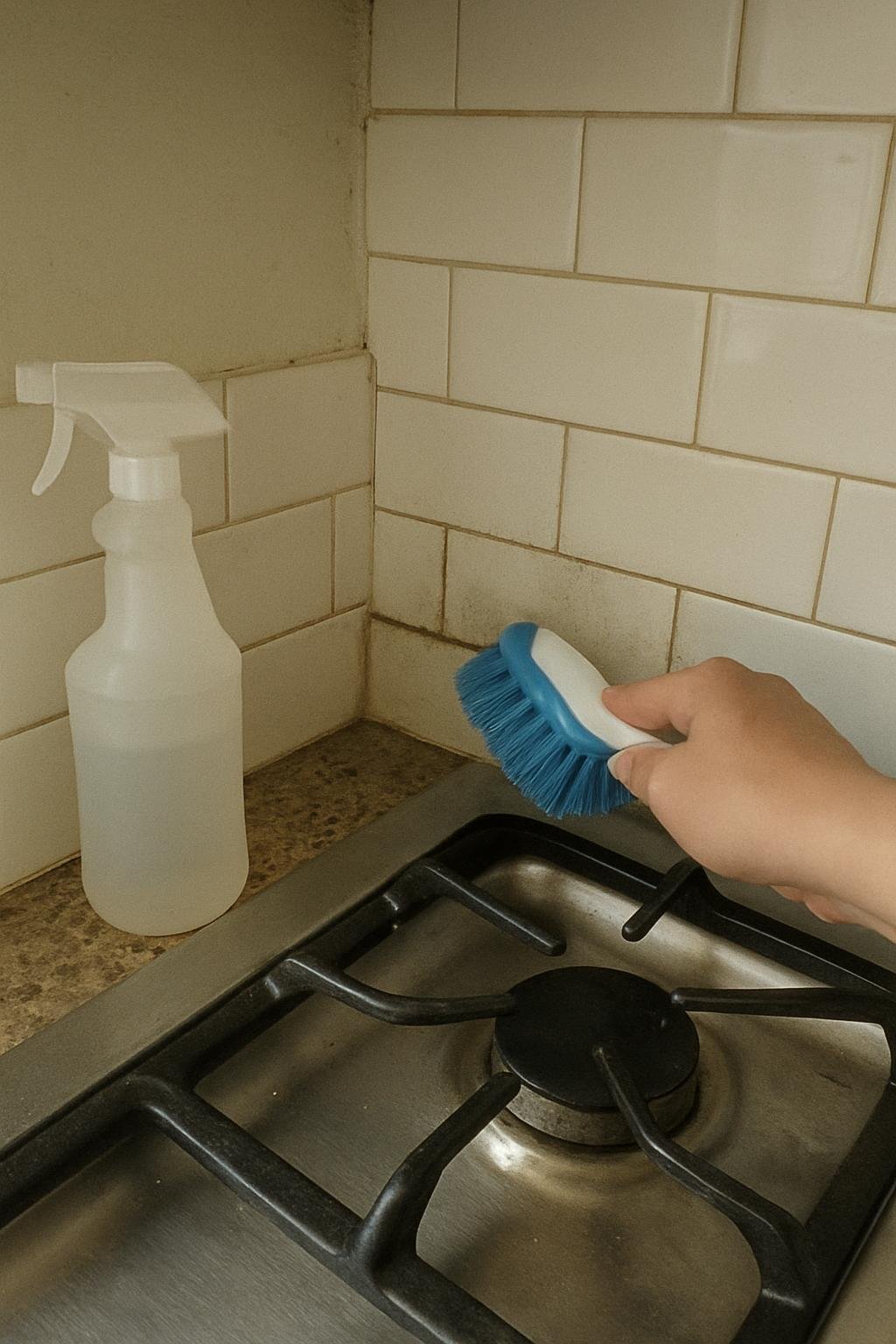
Grout behind a stove sits in the direct path of steam, oil splatter, and rising heat every time you cook. Over time, that combination bakes grease into the porous grout surface, where it hardens and darkens instead of wiping away easily. This is different from grout on a bathroom wall or a kitchen island backsplash, where you’re mainly dealing with water spots or soap residue rather than baked-on oil.
Before You Start
- Turn off the stove and let it cool completely. Never clean directly behind or near a stove while it’s on or still warm.
- If you need to pull the stove away from the wall for better access, unplug an electric range or, for a gas range, turn off the gas supply valve first. If you’re not confident doing this safely, clean what you can reach without moving the appliance, or ask someone experienced to help you move it.
- Check whether your backsplash tile is glazed ceramic, porcelain, glass, or natural stone. Natural stone changes what’s safe to use on the grout lines running through it.
What You’ll Need
- Warm water
- A grease-cutting dish soap
- Baking soda
- A soft-bristle brush or an old toothbrush
- Microfiber cloths
- A spray bottle (optional)
Step-by-Step: Cleaning Grease and Grime from the Grout
- Wipe away loose debris first. Dry crumbs, dust, and grease flakes will just turn into paste if you skip this step, so brush or vacuum them off before adding any liquid.
- Mix warm water with a few drops of grease-cutting dish soap. Apply it to the grout lines with a soft brush, working in small circular motions rather than scrubbing hard in one direction.
- Let the solution sit for a minute or two on greasy sections. This gives the soap time to break down baked-on residue instead of just pushing it around.
- For stubborn buildup, make a paste of baking soda and a small amount of water. Apply it directly to the grout, let it sit for several minutes, then work it in gently with the brush. Baking soda offers mild abrasion without being as harsh as scouring powder.
- Wipe everything down with a damp cloth to lift the loosened grease and paste residue, then follow with a dry microfiber cloth so moisture doesn’t sit in the grout lines.
- Repeat on heavily soiled spots rather than reaching for a stronger product right away. Grease buildup usually responds better to repeated gentle passes than to one aggressive treatment.
When Grease Buildup Is Heavier Than Usual
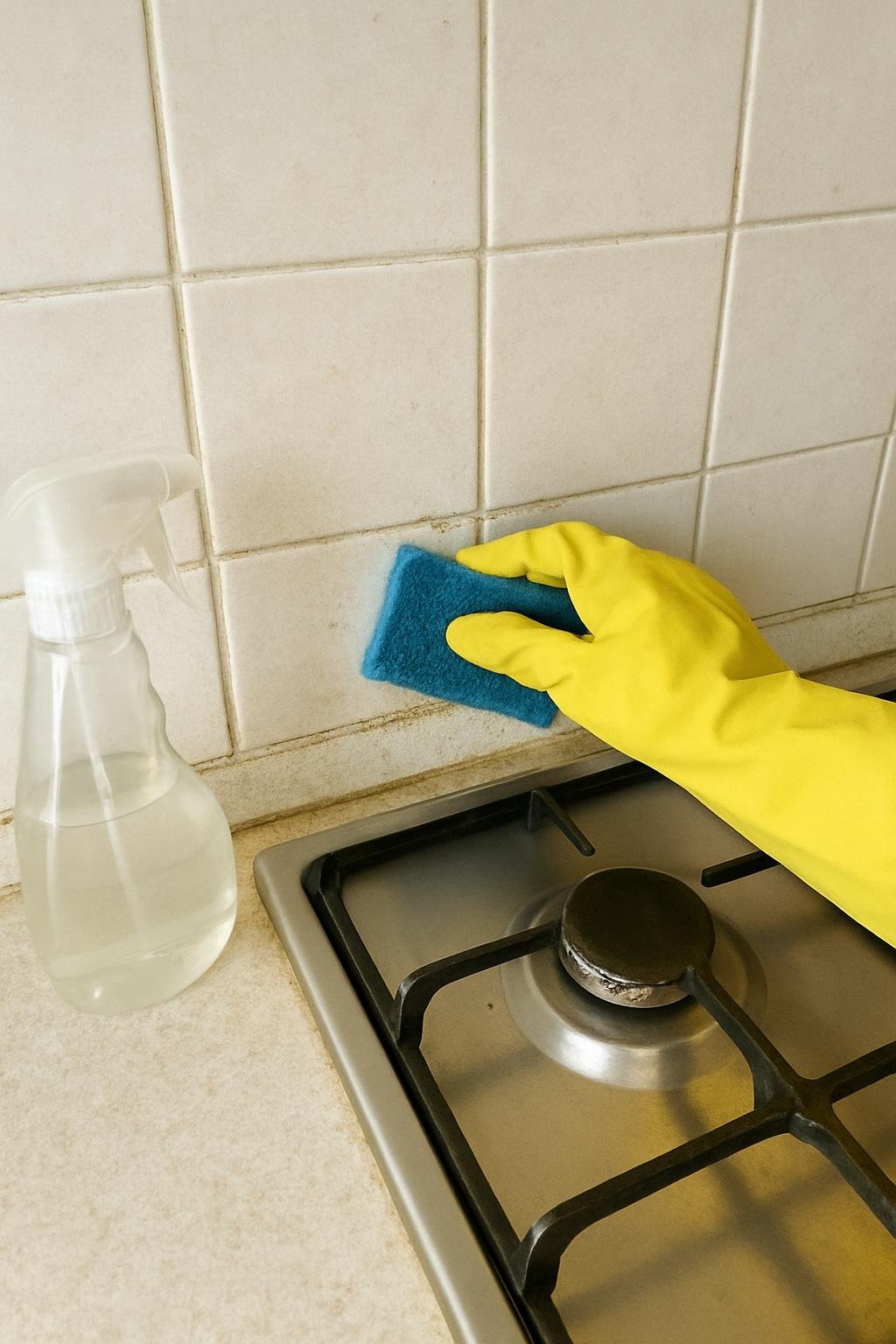
If it’s been months since this area was cleaned, or you cook with a lot of oil, you may be dealing with layered grease rather than a single spill. In that case, apply the soap solution, let it sit slightly longer than usual, and go over the area twice rather than increasing the concentration or switching to a stronger chemical cleaner. Working gradually protects the grout and reduces the chance of pushing grease deeper into porous grout instead of lifting it out.
Cleaning Mistakes That Cause Problems Behind the Stove
- Using vinegar or other acidic cleaners on natural stone tile or unsealed grout. Acid can etch stone and wear down grout over repeated use. If you’re not certain about your tile material, choose the dish soap and baking soda method instead.
- Scrubbing with metal brushes, steel wool, or abrasive scouring pads. These can scratch glazed tile and roughen grout, which actually makes it collect grease faster afterward.
- Cleaning while the stove is warm. Heat can make fumes from cleaning products more noticeable and increases the risk of an accidental burn in a tight space.
- Soaking the grout heavily with water. Excess moisture can seep into grout lines and, over time, contribute to loosening if the grout is already cracked or aging.
How Often to Clean This Area
For most households, checking and wiping down the grout behind the stove every one to two months is enough to prevent heavy grease buildup, though households that cook frequently with oil or fry often may need to do it monthly. If you notice grease starting to look dark or feel sticky sooner than that, clean it as soon as you notice it rather than waiting, since fresh residue comes off far more easily than grease that’s had weeks to bake on.
When Cleaning Isn’t Enough
If the grout stays discolored after cleaning, feels soft, is crumbling out of the joints, or has visible cracks, you’re likely looking at a repair or regrouting situation rather than a cleaning one. Continuing to scrub damaged grout usually just wears it down further. For grout that’s structurally fine but simply dirty, methods similar to those used on bathtub grout without heavy scrubbing can work well, since the gentle-first approach applies to grout in most rooms of the house.
If grease has also crept onto the stove itself, particularly around knobs, vents, or the oven door, addressing that separately can prevent it from spreading back onto the backsplash. A method like the one described in cleaning an oven without chemicals can help you tackle the appliance and the wall behind it as part of the same overall cleanup.
Everything Mentioned Above
Before you leave, grab the tools you need to get the job done right the first time:
*As an Amazon Associate, TidyFormula earns from qualifying purchases.