How to Remove Salt Stains from Leather Shoes
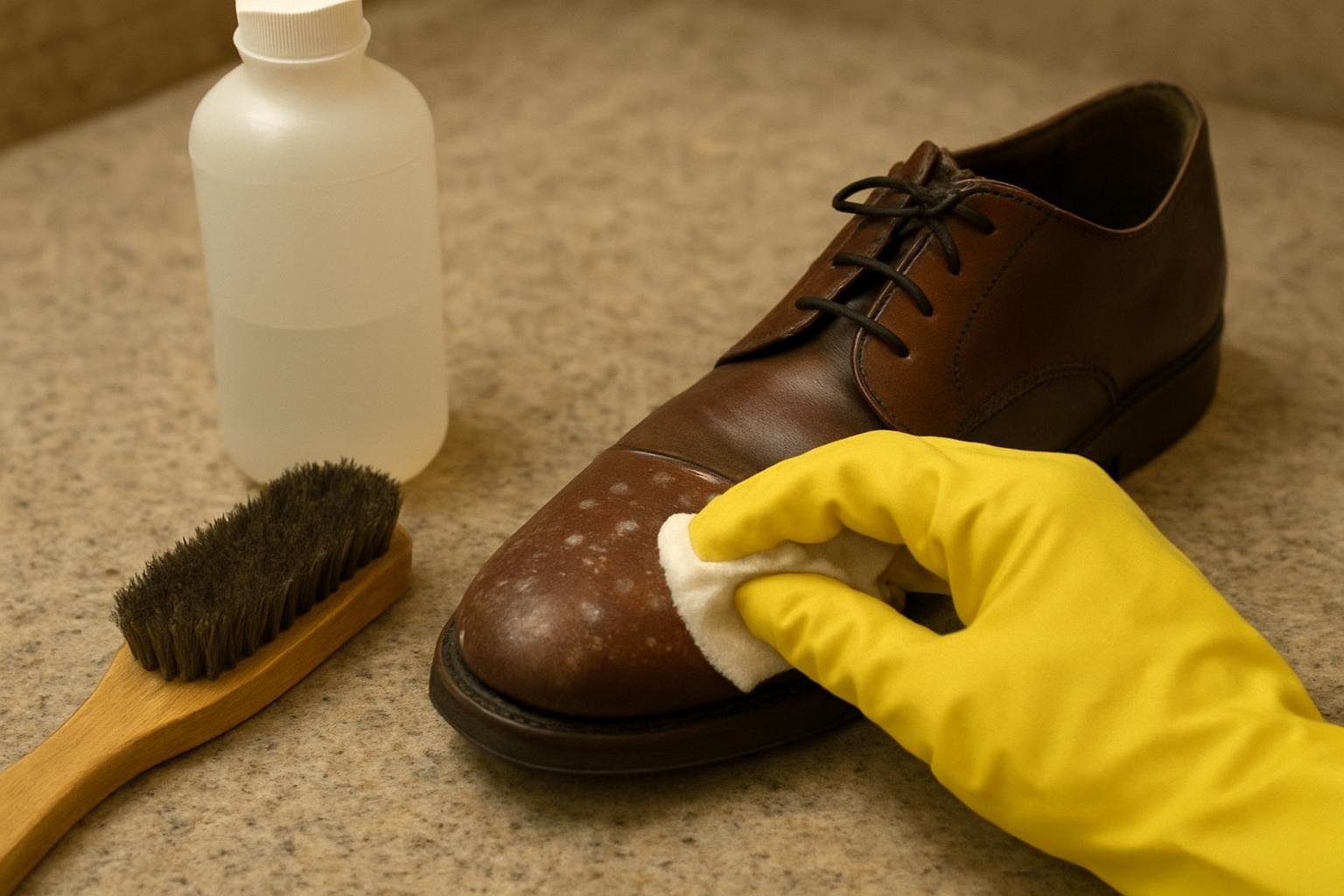
The best way to remove salt stains from leather leather shoes is to wipe the affected area with a cloth dampened in a mild solution of water and a few drops of leather-safe cleaner or a 50/50 mix of water and white vinegar, then condition the leather once it dries. This works well on most smooth leather, but suede, nubuck, and delicate or unfinished leather need a different, drier approach to avoid permanent water spotting or discoloration.
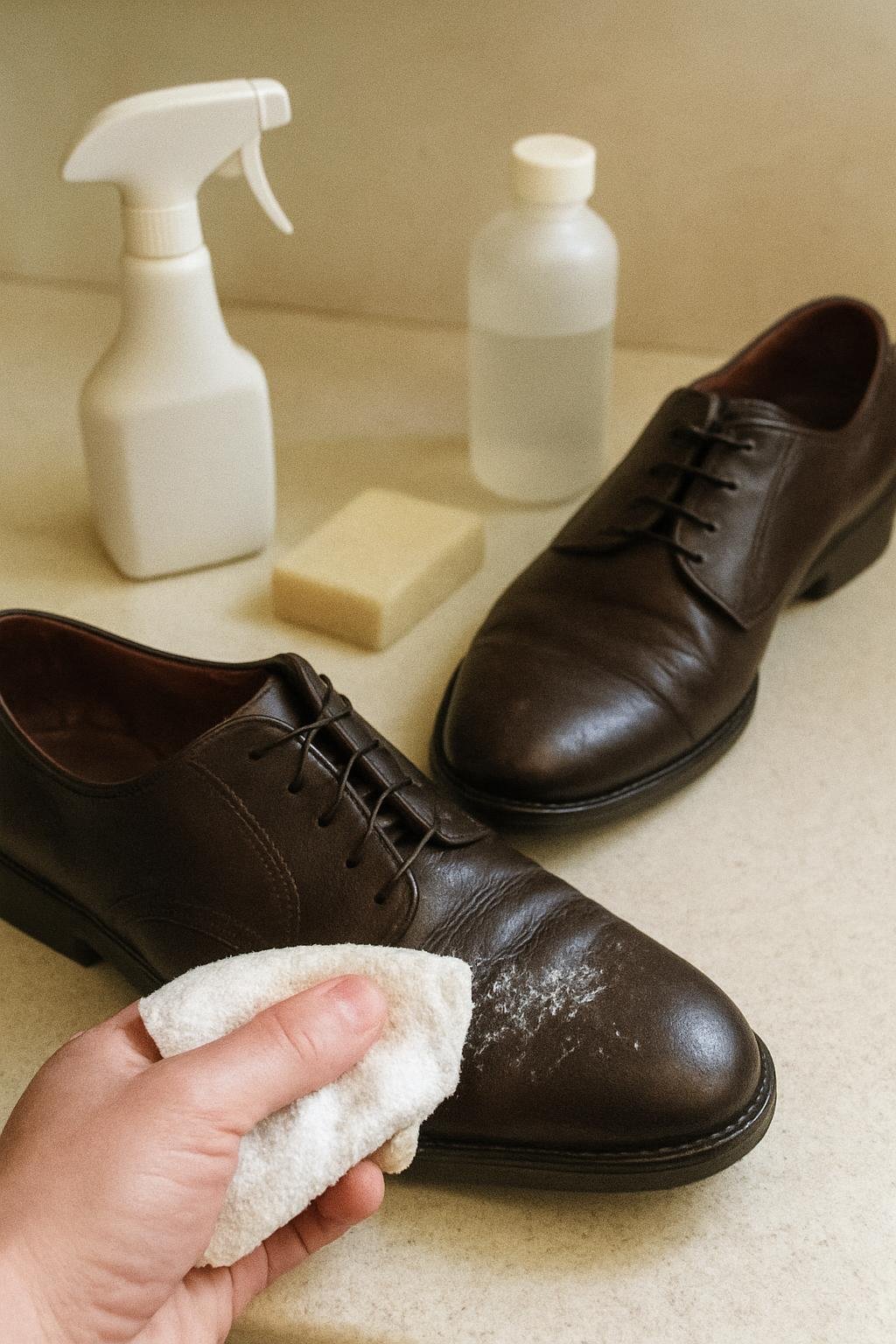
Salt stains often show up as a chalky white ring near the sole or crease of the shoe, usually after walking through slush or a freshly salted sidewalk. The mark itself isn’t just dirt — it’s residue left behind as moisture evaporates, and it can sit on the surface or work slightly into the leather depending on how long it was left untreated.
⚡ The TidyFormula™ Quick Decision
Best approach: For smooth, finished leather, wipe the stain with a cloth barely dampened in a diluted water-and-vinegar solution, let it air dry, then apply a leather conditioner.
Use caution with: Suede, nubuck, exotic leather, or shoes with a care label that says “dry clean” or “no water” — these need a dry brushing method instead of any liquid.
Stop and reassess if: The leather darkens, feels stiff, starts cracking, or the stain reappears after cleaning and drying, since that usually means the salt worked deeper into the material or the leather needs professional attention.
What I Use For This Job
Using the right tools saves time and protects your belongings. Here are my exact recommendations:
*As an Amazon Associate, TidyFormula earns from qualifying purchases.
Check the Leather Type Before You Clean
Not all leather shoes respond to the same treatment. Smooth, finished leather can usually tolerate a lightly damp cloth without lasting harm. Suede and nubuck are a different story — both are more porous and can water-spot or mat down if you apply liquid, so they call for a dry brush and, if needed, a suede-specific eraser instead of any wet method. If your shoes have a manufacturer care label or came with specific cleaning instructions, follow those over any general method, since some finishes and exotic leathers are more sensitive than standard cowhide.
If you’re not sure what you’re dealing with, test any cleaning solution on a small, hidden spot first, such as the inside of the tongue or the back of the heel. Let it dry fully before deciding whether to treat the visible stain the same way.
What You’ll Need for Smooth Leather
- A soft, lint-free cloth
- Distilled or plain tap water
- White vinegar (for smooth, finished leather only)
- A leather conditioner or cream made for your shoe type
- A soft-bristle brush for loosening dried salt before wiping
Removing Salt Stains from Smooth Leather
- Brush off loose salt first. Use a soft brush or dry cloth to knock away any dried salt crystals before introducing moisture, since wiping wet salt around can spread the residue instead of lifting it.
- Mix a mild solution. Combine equal parts water and white vinegar in a small bowl. Dampen your cloth lightly — it should feel barely moist, not wet, since standing water is what causes leather to stiffen, crack, or spot.
- Wipe in small sections. Gently rub the stained area, working from the outer edge of the stain toward the center so you don’t spread it further onto clean leather.
- Wipe again with a clean, water-only cloth. This removes any leftover vinegar residue that could dull the finish if left to dry on the surface.
- Air dry away from direct heat. Keep shoes away from radiators, heating vents, or direct sunlight. Fast, forced drying is one of the more common ways leather ends up cracked after a stain treatment, so let it dry at room temperature instead, which usually takes several hours depending on humidity and how saturated the leather got.
- Condition once fully dry. Apply a leather conditioner in a thin, even layer to restore flexibility and replace any natural oils the cleaning step lifted out. Skipping this step is one reason leather can feel dry or stiff after cleaning even when the stain is gone.
Removing Salt Stains from Suede or Nubuck
Skip liquid entirely on suede and nubuck unless the manufacturer specifically says otherwise. Instead:
- Let any wet salt residue dry completely before touching it.
- Brush the dried stain with a suede brush, using short strokes in one direction to lift the salt out of the nap.
- For stubborn marks, go over the area with a suede eraser or a clean pencil eraser, which can lift residue without wetting the material.
- Finish by brushing the nap back into place in one consistent direction.
If the stain persists after dry treatment, that’s a sign the salt has set into the fibers, and a professional suede cleaning service is a safer next step than experimenting with liquid cleaners on your own.
Cleaning Mistakes That Make Salt Stains Worse
- Soaking the leather. Using a dripping wet cloth or holding shoes under running water pushes moisture into the material and can cause warping or stiffness once dry.
- Skipping the conditioner step. Any water-based cleaning, even a light wipe, can leave leather feeling dry. Conditioning afterward helps prevent new cracks from forming.
- Using undiluted vinegar or unknown household cleaners. Straight vinegar or products not made for leather can strip color or dull the finish. Stick to a diluted solution and avoid mixing cleaning products together.
- Drying near heat. A blow dryer, radiator, or direct sun speeds up moisture loss unevenly, which is a common cause of visible cracking after a stain has already been treated.
Preventing Salt Stains Going Forward
Applying a leather protectant spray or waterproofing wax before the winter season creates a barrier that makes salt and moisture easier to wipe off before they set in. Wiping shoes down as soon as you get inside, rather than letting salt residue dry on the leather overnight, also makes a noticeable difference in how much scrubbing you need later. If you keep a rotating list of seasonal home tasks, adding a quick shoe check to your household cleaning checklist can help you catch salt buildup before it turns into a stubborn stain.
Rotating between two pairs of shoes during salty, slushy weeks also gives leather time to fully dry and recover between wears, which matters more than most people expect, since leather that stays damp for extended periods is more prone to both staining and long-term wear.
Everything Mentioned Above
Before you leave, grab the tools you need to get the job done right the first time:
*As an Amazon Associate, TidyFormula earns from qualifying purchases.