
How to Clean a Stained Bathtub: A Gentle Step-by-Step Guide
Clean a stained bathtub by identifying whether the marks are hard water and soap scum, rust, or general grime, then working from a mild baking-soda paste up to a stronger tub-safe cleaner only if needed. Most bathtub stains respond to gentle abrasion and patience rather than harsh scrubbing, and the right approach depends heavily on whether your tub is porcelain, enamel, acrylic, or fiberglass.
The TidyFormula Quick Decision
Best approach: Make a paste of baking soda and a small amount of water, apply it to the stain with a soft sponge or nylon brush, let it sit briefly, then scrub gently and rinse thoroughly.
Use caution with: Acrylic and fiberglass tubs, colored or textured surfaces, and any tub with visible cracks, chips, or worn glaze, since abrasive powders and strong acids can dull or scratch these finishes.
Stop and reassess if: The finish looks scratched, the color starts to change, the stain sits below the surface rather than on top of it, or the tub has metal fixtures or hardware that a cleaner could corrode.
What I Use For This Job
Using the right tools saves time and protects your belongings. Here are my exact recommendations:
*As an Amazon Associate, TidyFormula earns from qualifying purchases.
What Causes Bathtub Stains
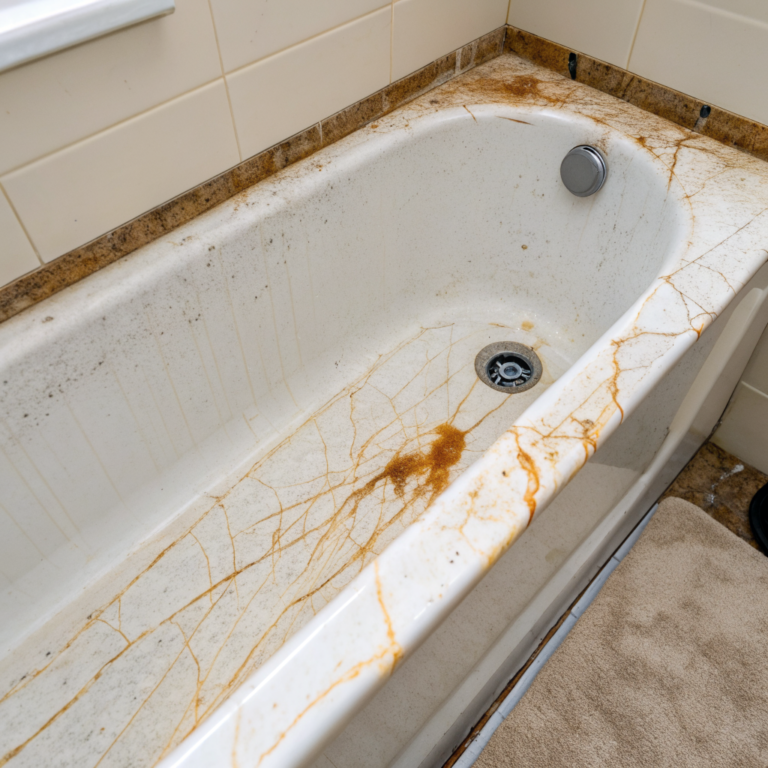
Bathtub stains usually come from one of three sources: mineral buildup from hard water, soap scum that traps dirt and body oils, or rust from an aging fixture, showerhead, or well water supply. Each type looks and behaves differently, and knowing which one you’re dealing with helps you choose a method that works without damaging the surface.
Hard water and mineral stains often appear as chalky white or gray film, sometimes with a faint yellow or brown tint. Soap scum tends to look filmy and slightly greasy, clinging around the waterline and drain. Rust stains are usually orange or reddish-brown and often start near a faucet, drain, or any metal object that has been sitting on the tub surface. For targeted cleaning methods, read how to remove rust stains from a bathtub.
If mineral buildup also affects fixtures in the same room, learn how to clean a shower head with hard water buildup so you address the source as well as the surface stain.
How to Clean a Stained Bathtub
The general method for how to clean a stained bathtub starts with the gentlest option and only escalates if the stain resists. Working this way protects the tub’s finish while still giving you room to use a stronger product if the first attempt does not fully lift the stain.
- Rinse the tub with warm water to remove loose debris and soften any surface film.
- Mix baking soda with a small amount of water to form a thick paste and spread it over the stained areas.
- Let the paste sit for a short time, then scrub gently with a soft sponge, cloth, or nylon-bristle brush, moving in circular motions.
- Rinse thoroughly with warm water and check the result before deciding whether to repeat or try a stronger approach.
- If mineral or soap scum residue remains, a tub-safe commercial cleaner labeled for your tub’s material can be used according to its label instructions.
Always rinse the tub completely after any cleaning step so no cleaner residue is left behind, since leftover product can make the surface slippery or attract new grime faster. If you prefer lower-effort approaches for tub and grout, try how to clean a bathtub & grout without scrubbing for methods that minimize aggressive work.
Removing Hard Water and Mineral Stains
Hard water and mineral stains usually respond well to a mild acid, since minerals like calcium and lime dissolve more easily in acidic conditions than in plain soap and water. On porcelain, enamel, and most fiberglass tubs, a diluted white vinegar solution applied with a cloth or sponge and left to sit briefly before scrubbing can help loosen the buildup.
On textured glass or scummed surfaces, methods from how to remove soap scum from textured shower glass can often be adapted to tubs; test first and avoid abrasive pads on delicate finishes. Acrylic tubs can be more sensitive to acids over repeated use, so check the manufacturer’s care instructions if you have them, and always spot test in an inconspicuous area first. If vinegar alone does not fully clear the stain, a paste of baking soda over the vinegar-treated area adds mild abrasive action without introducing a second harsh chemical.
Removing Rust Stains
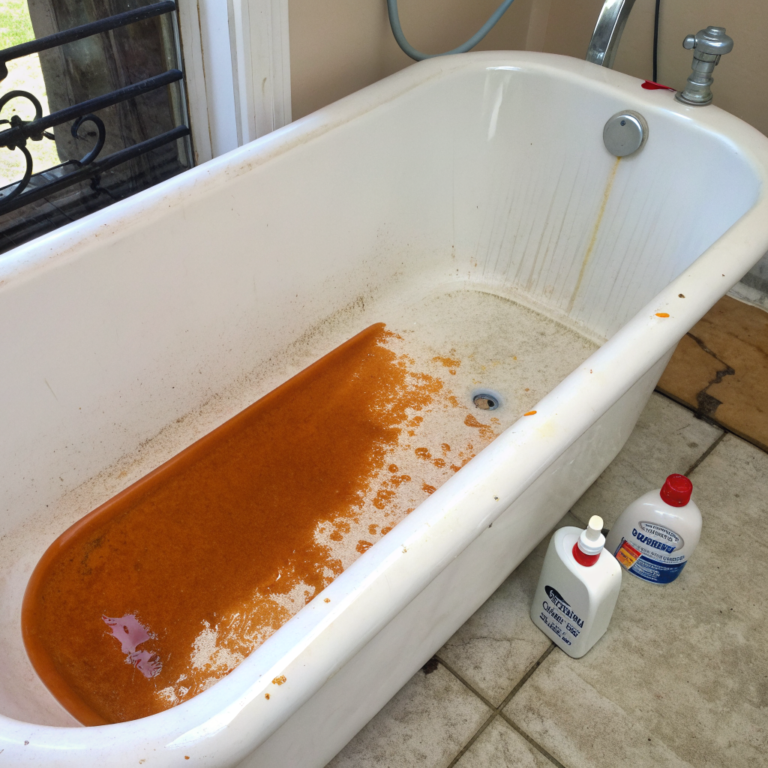
Rust stains are often the most stubborn type because the discoloration can sit slightly below the glossy top layer of an older porcelain or enamel finish. A paste of baking soda combined with a small amount of lemon juice can sometimes help lift light rust, but treat this as a mild option rather than a guaranteed fix.
For rust that does not respond to gentle methods, a product specifically labeled for rust removal on bathroom surfaces is generally a safer next step than trying multiple household ingredients together. Never combine bleach-based cleaners with acidic products like vinegar or lemon juice, since mixing these can produce harmful fumes. For guidance on rust and soap scum on small metal accessories, see how to clean rust and soap scum from a shower caddy. If the rust keeps returning in the same spot, the source is often a corroding fixture or pipe, which may need a plumber’s attention rather than repeated scrubbing.
What to Avoid When Cleaning a Stained Bathtub
Avoid harsh abrasive powders, steel wool, or metal scrubbers on acrylic, fiberglass, or any glossy enamel finish, since these can create fine scratches that trap dirt and make future staining worse. Scratches also give bacteria more surface area to cling to, which is a separate concern from the original stain.
- Do not mix bleach with vinegar, ammonia, or other acidic or ammonia-based cleaners.
- Avoid leaving any cleaner sitting on the surface longer than needed, since prolonged contact can dull certain finishes.
- Skip colored or dyed cleaning products on light-colored acrylic tubs, as some can leave faint tinting behind.
- Do not scrub aggressively at a stain that reappears in the exact same spot repeatedly, since this often signals an underlying fixture or plumbing issue rather than a cleaning problem.
TidyFormula Tip
Wipe the tub dry with a towel after each use if hard water staining is a recurring issue, since standing water left to evaporate is what leaves mineral deposits behind in the first place. Also clean nearby items regularly—for example, learn how to clean a rubber bath mat without mold so mats don’t recontaminate the tub.
Preventing Future Stains
Rinsing the tub after each use and drying the surface with a towel or squeegee reduces the mineral and soap film that leads to visible staining over time. A light weekly wipe with a mild cleaner keeps buildup from settling into a harder, more stubborn layer.
If your home has hard water, a water softener can reduce mineral staining throughout the bathroom, not just in the tub. Homeowners dealing with related bathroom buildup, such as discoloration in grout lines near the tub or shower, may also find it useful to review how to remove pink mold from shower grout, since grout and tub staining often share the same moisture-related causes. For more general prevention strategies, see how to prevent hard water stains in the shower.
Frequently Asked Questions
Can I use bleach to clean a stained bathtub?
Diluted bleach can be used on many porcelain or enamel tubs if the label allows it, but never combine it with vinegar, ammonia, or other cleaners. Always rinse thoroughly afterward and check that your tub’s material and finish are compatible with bleach before applying it.
Why does my bathtub stain come back after cleaning?
Stains that return quickly in the same spot are often caused by an ongoing water source, such as a slow leak, mineral-heavy water supply, or a corroding fixture. Cleaning removes the visible residue, but the underlying cause may need a plumber’s evaluation if it keeps recurring.
Is it safe to use a magic eraser on a stained tub?
Melamine sponges can help with light surface grime on porcelain and enamel, but they act as a mild abrasive and can dull glossy or colored finishes with repeated use. Spot test in a small area first, and avoid them on acrylic or fiberglass unless the manufacturer confirms they are safe.
How often should I deep clean my bathtub?
A weekly light cleaning is usually enough to prevent heavy staining, with a more thorough deep clean every few weeks depending on water hardness and how often the tub is used. Homes with hard water often need more frequent attention to stay ahead of mineral buildup.
What should I do if the stain won’t come off at all?
If gentle methods and a tub-safe commercial cleaner do not improve the stain, the discoloration may be etched into the finish rather than sitting on top of it. At that point, a professional refinishing service can evaluate whether the surface can be restored or needs replacement.
Everything Mentioned Above
Before you leave, grab the tools you need to get the job done right the first time:
*As an Amazon Associate, TidyFormula earns from qualifying purchases.