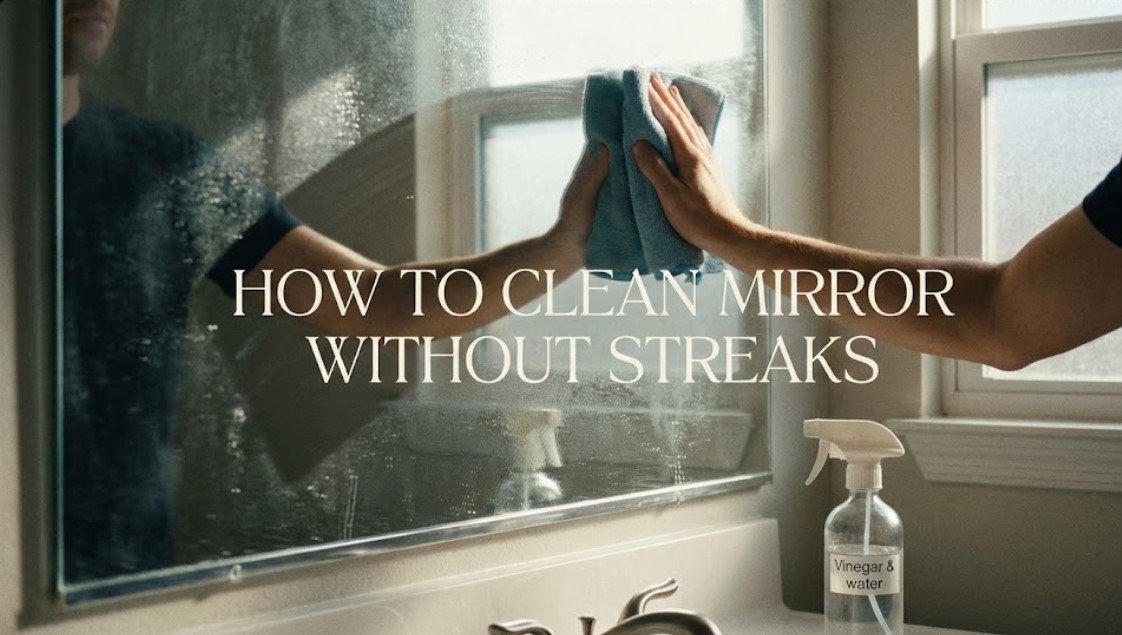
How to Clean Mirror Without Streaks (The Method That Finally Stops the Smears)
If your mirror looks “clean” until the light hits it and suddenly you’re staring at streaks, smudges, and that weird cloudy haze, yeah… you’re not alone.
I always notice mirror streaks when I’m already late. I’ll do one quick wipe, step back, and the mirror looks worse. Hazy patches. Skinny lines. That annoying rainbow smear that shows up only when the light hits it.
And the smell? Half the time it’s sharp chemical “blue spray” smell mixed with whatever was already on the glass. Lovely.
So if you’re trying to figure out how to clean mirror without streaks, here’s the way we do it at TidyFormula—after a lot of “why does it look like that” testing.
⚡ The TidyFormula™ Quick Answer
The Recommendation: Use a low-residue spray (water + alcohol is easiest), mist the cloth—not the mirror—and finish with a dry buff in a second pass.
What I Use For This Job
Using the right tools saves time and protects your belongings. Here are my exact recommendations:
*As an Amazon Associate, TidyFormula earns from qualifying purchases.
- The Mix: 1 cup water + 1/4 cup isopropyl alcohol (70%).
- Tools: Two lint-free cloths (or coffee filters).
- Time: 2–5 minutes.
- Effectiveness: High (unless your mirror has a damaged coating).
The Streak-Free Mirror Method (The “Two-Pass” Routine)
What you’ll need
- Two cloths (one damp-ish, one dry).
- Spray bottle.
- Isopropyl alcohol (70%).
- Water (distilled is nicer, but tap is fine for most homes).
- Optional: a tiny drop of dish soap (only if your mirror has greasy film).
I jokingly call this the “Two-Pass Professional Mirror Ceremony.” It sounds fancy. It’s literally just “wipe, then buff.” That’s it.
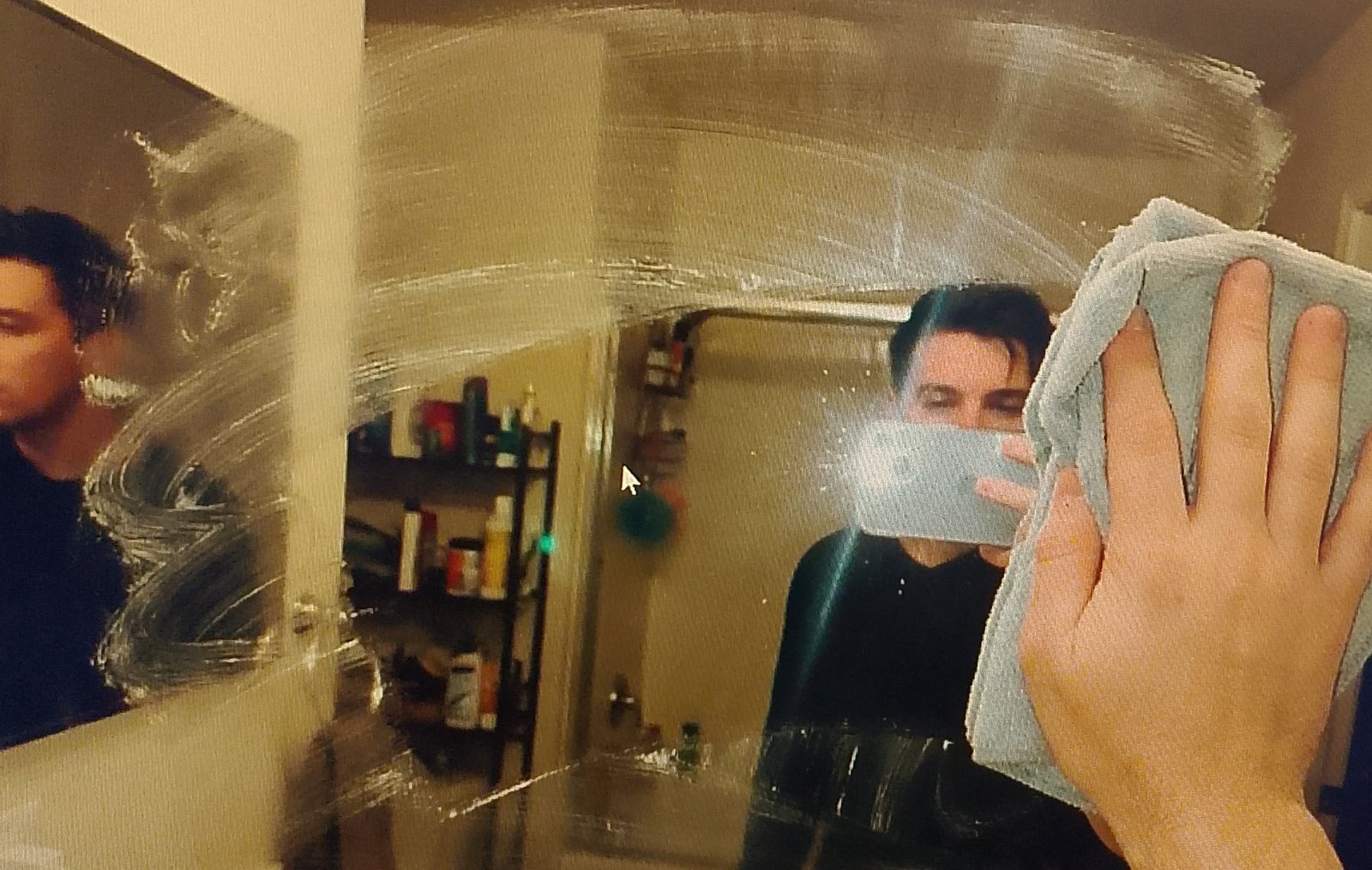
Step 1: Dust first (yes, really)
If there’s dust on the mirror, wiping with a wet cloth turns it into gritty paste. You’ll feel it drag. Like sand on glass. Not fun. Do a quick dry wipe first. Or use a dry cloth to grab the dust at the corners.
Step 2: Mix the no-streak spray
In a spray bottle, mix 1 cup water + 1/4 cup isopropyl alcohol (70%).
That’s it. It smells a little “medicinal” for about 10 seconds, then it disappears fast.
Step 3: Mist the cloth, not the mirror
If you spray the mirror directly, it runs down the glass, pools at the bottom edge, and can sneak behind the frame and make a weird line later. So: mist the cloth lightly. You want it damp, not wet.
Step 4: Wipe in one direction, then flip
Wipe the mirror left-to-right in long strokes. Then flip your cloth to a dry side and do one more pass. You’ll actually hear the sound change. First pass: soft “shhhh.” Second pass: drier “slick” sound.
Step 5: Buff with the second cloth
Use your dry cloth to buff in a different direction (up-down works well). This catches the invisible residue that becomes streaks later. Done.
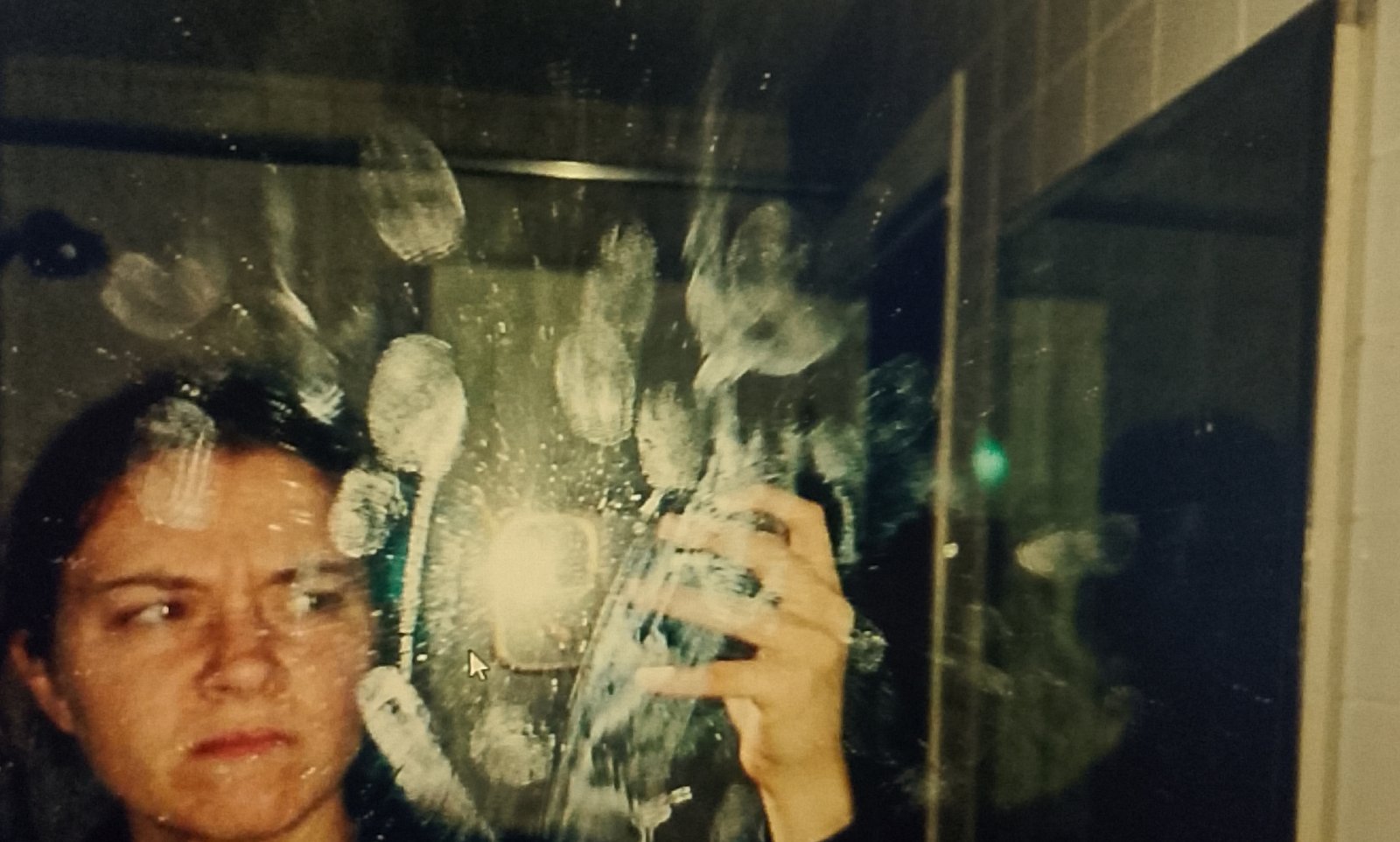
How to Clean Mirrors Without Glass Cleaner (DIY Solutions)
If you’re out of glass cleaner—or you just hate the scent—DIY works great if you keep it low-residue.
Option A: Alcohol mix (my go-to)
- 1 cup water + 1/4 cup isopropyl alcohol.
- Fast drying. Minimal streaking. Smell fades quickly.
Option B: Vinegar mix (works, but smells)
- 1 cup water + 1/4 cup white vinegar.
- Vinegar can cut light mineral spots, but the smell hangs around longer. If you’re cleaning a bathroom mirror and the room is warm and steamy, the vinegar smell can feel extra strong. Open a window.
If the mirror has greasy film: Add one tiny drop of dish soap to either mix. Tiny. If you add too much, you’ll leave a slick residue that turns into streaks the second it dries.
How to Clean Mirrors Without Microfiber Cloth
Microfiber is great. But sometimes you don’t have it. Or it’s been washed with fabric softener and now it just smears everything (I hate that). Here are the best alternatives:
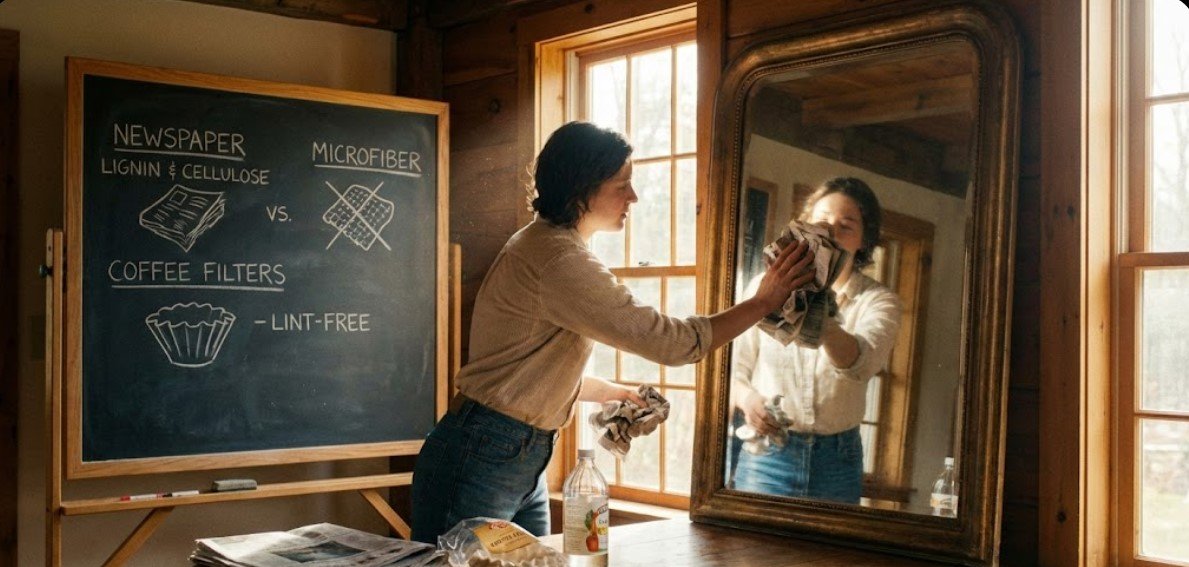
- Coffee filters (surprisingly excellent): Lint-free and absorbent. They feel slightly papery and grabby, which is perfect for buffing. Use one for wiping, one for buffing.
- Newspaper (works… with caveats): Old-school newspaper acts like a mild polish. But ink can transfer to hands or frames. Use it mostly for the final dry buff.
- Plain cotton t-shirt: Only if it’s truly lint-free. If it sheds fuzz, you’ll regret it.
🧪 The Science: Why It Works
Streaks are usually leftover residue, not “dirt.” Many cleaners contain surfactants (soap-like ingredients) that lift grime, but if you don’t fully remove them, they dry into a thin film. Alcohol helps because it evaporates quickly and doesn’t leave much behind. The two-pass wipe/buff physically removes the last bit of film before it dries in place.
Why Windex Causes Streaks on Certain Coatings
This one frustrates people because they think they’re doing everything “right.” You spray. You wipe. And it still streaks. Here’s why:
- Coatings: Anti-fog treatments and decorative coatings can react weirdly with blue formulas.
- Too much product: If the liquid is running down the mirror, it’s too much.
- Your cloth: If your microfiber has fabric softener residue, it leaves a slick film. You’ll feel it—like the cloth glides too much and never “grips” the glass.
Reality Check: When “Streak-Free” Isn’t Possible
Sometimes the mirror itself is the problem: old mirrors with damaged backing (desilvering), etched spots from harsh cleaners, or scratches. You can make it look better, but you won’t make a beat-up mirror look brand new. And that’s fine.
FAQ (Real Questions)
1. What’s the best way to clean a mirror without streaks fast?
Alcohol + water spray, mist the cloth, one wipe pass, then a dry buff pass. Two minutes.
2. Can I use vinegar on mirrors every day?
You can, but the smell can linger and some coated mirrors streak more with vinegar. Alcohol is usually calmer.
3. Why do I get streaks even with microfiber?
Your microfiber might have detergent or fabric softener residue. Try coffee filters for the final buff.
4. How do I clean bathroom mirrors with toothpaste spots?
Use a slightly damp cloth with the alcohol mix, wipe the spots, then buff dry. Toothpaste dries chalky, so don’t just smear it around.
5. Is it better to clean mirrors in circles or straight lines?
Straight lines. It’s easier to troubleshoot. If you see a streak, you can tell which direction it came from and fix it.
Everything Mentioned Above
Before you leave, grab the tools you need to get the job done right the first time:
*As an Amazon Associate, TidyFormula earns from qualifying purchases.