How to Clean Glasses Without a Microfiber Cloth
You can clean glasses safely without a microfiber cloth by rinsing away grit with lukewarm water, washing the lenses with one tiny drop of mild, lotion-free dish soap, and rinsing thoroughly. Shake off the water and let the glasses air-dry, or gently blot remaining droplets with a clean, lint-free cotton cloth. Never dry-rub dusty lenses — that’s what causes fine scratches.
The Quick Answer
The Recommendation: Rinse the lenses with lukewarm water, use one tiny drop of lotion-free dish soap, rinse again, then gently shake off the water. If you still need to dry them, use a clean, lint-free cotton cloth only to blot — not to scrub.
- The Mix: Lukewarm water + 1 tiny drop of lotion-free dish soap.
- Time: 2–3 minutes.
- Effectiveness: High for oil, fingerprints, and daily grime.

Before you start: check the glasses and your supplies
Work over a clean sink or a folded towel so the glasses are less likely to be damaged if you drop them. Check that your dish soap is plain, mild, and free from lotion or moisturizing additives. You’ll also need clean hands and, if you plan to blot the lenses afterward, a freshly washed lint-free cotton cloth.
Inspect the lenses under good light before cleaning. If you see loose sand, metal particles, dried mud, or other gritty debris, rinse longer and do not rub until it has washed away.
If the frames contain electronics or are made with leather, unfinished wood, or another water-sensitive material, do not place the entire pair under running water. Check the frame manufacturer’s care instructions, or ask an optician how to clean them safely.
What I Use For This Job
Using the right tools saves time and protects your belongings. Here are my exact recommendations:
*As an Amazon Associate, TidyFormula earns from qualifying purchases.
The safest method when you don’t have a microfiber cloth
This method avoids the biggest cleaning mistake: rubbing lenses while they’re still dry. Dust and grit trapped between a cloth and the lens can leave fine scratches, especially on coated lenses.
Step 1: Wash your hands first
Before touching the lenses, wash your hands with plain soap and rinse well. Dry them with a towel that doesn’t leave lint. If your fingers have lotion, sunscreen, cooking oil, or grease on them, you’ll just transfer that residue onto the glasses.
Step 2: Rinse off dust and grit
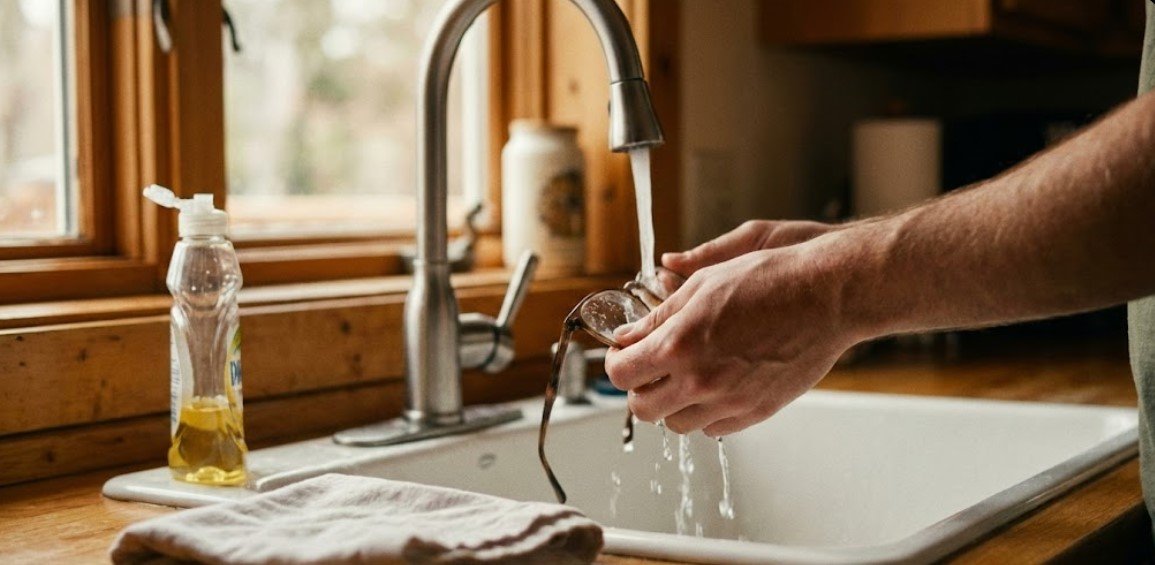
Hold the glasses under a gentle stream of lukewarm water — not hot, not icy. Rinse both sides of each lens, including the edges near the frame. This removes grit that could scratch lens coatings if you start wiping too soon.
Avoid sudden temperature changes. If the glasses have been sitting in a hot car or outside in freezing weather, let them return closer to room temperature before washing them.
Step 3: Add one tiny drop of dish soap
Put a very small drop of mild, lotion-free dish soap on your fingertips. Gently rub both sides of the lenses, then the nose pads, hinges, bridge, and temples. Use the pads of your fingers rather than your fingernails.
If the soap says “moisturizing,” “antibacterial,” “citrus degreaser,” or anything fancy, skip it. Added lotions, fragrances, and degreasing ingredients can leave residue or may be unsuitable for some coatings.
Do not press hard on the lenses, particularly with rimless or semi-rimless glasses. Support the frame at the bridge or rim instead of flexing the temples or pushing against the lens mounts.
Step 4: Rinse thoroughly
Rinse until there’s no slippery feeling left. Move the glasses around so water reaches the lens edges, nose pads, and any spot where soap can collect. Leftover soap is one of the fastest ways to end up with smeary lenses that look worse than before.
Step 5: Shake, then blot if needed
Give the glasses a gentle shake over the sink, holding them securely by the bridge or frame rather than by a wet temple tip. In many cases, shaking off the water and letting the glasses air-dry is enough.
If a few drops remain, use a clean, lint-free cotton cloth to touch and lift the water away. Don’t scrub — just let the cloth absorb the droplets. Pay attention to water trapped around nose pads and hinges, but don’t force fabric into small gaps.
Why this works
Most smudges on glasses are skin oils, not just dust. Water alone doesn’t remove oil well. Dish soap loosens that oily film so it rinses away instead of getting smeared around by dry wiping. Rinsing first also carries away loose particles before a cloth ever touches the lenses.
What can I use instead of a microfiber cloth?
Not every “soft” fabric is safe to use on lenses. Here’s a safe order to consider:
- Best backup: A clean, lint-free cotton cloth.
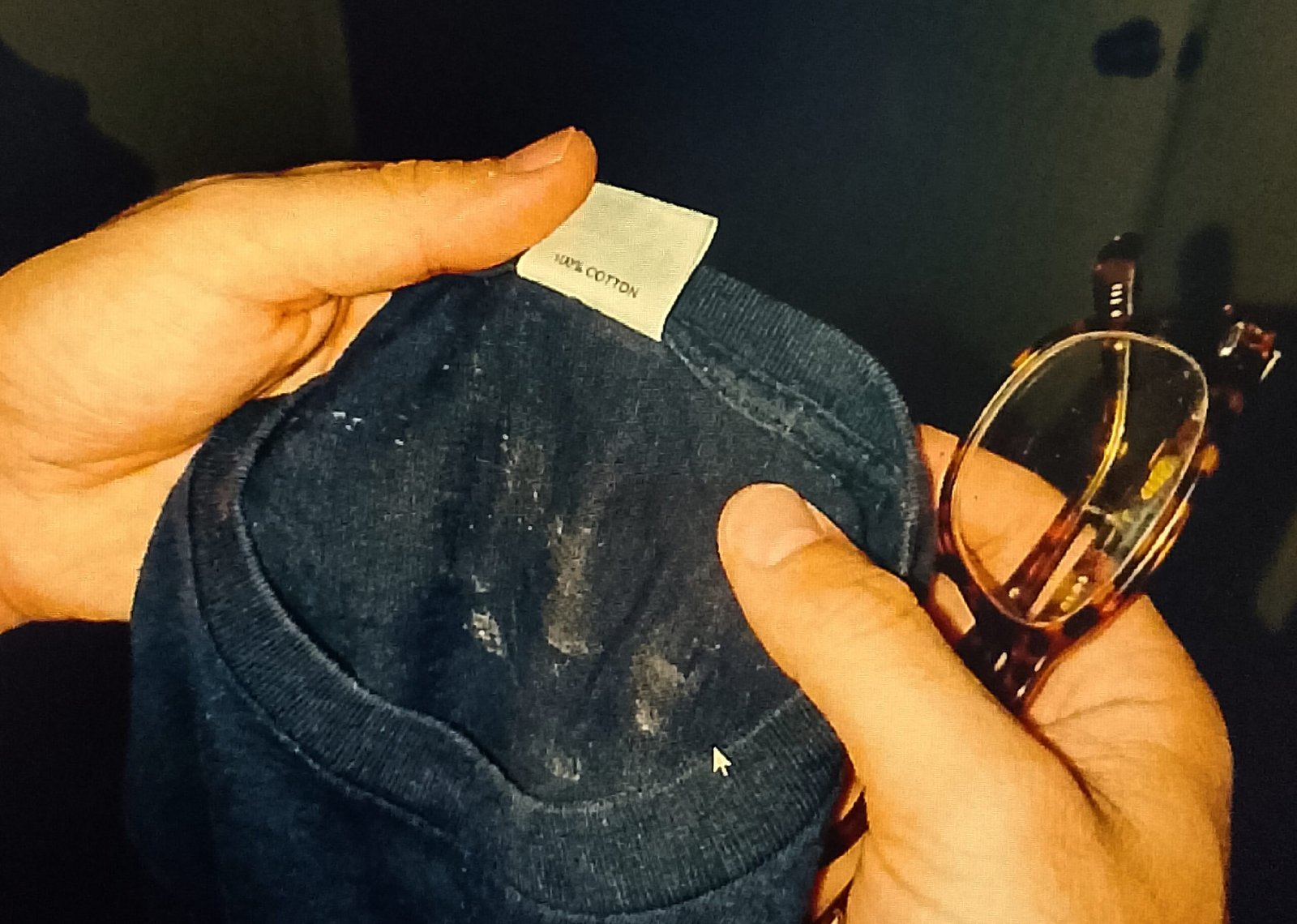
- Good in a pinch: A very clean 100% cotton t-shirt or cotton handkerchief, but only after rinsing the glasses first.
- Also useful: The microfiber pouch many glasses come with — turned inside out if the outside is dusty.
- No cloth at all: Shake off the water and let the glasses air-dry in a clean place.
Backup cloths are for blotting or very light finishing only. They are not permission to dry-rub dusty lenses.
Avoid any cotton item that feels rough, has a printed design, contains a stiff seam, or was exposed to fabric softener, dryer sheets, lotion, hair products, or household cleaners. Those residues can create new streaks even when the fabric looks clean.
Guidance for coated lenses and delicate frames
The rinse-and-soap method works for most everyday prescription glasses and sunglasses, including lenses with common anti-reflective coatings. That said, always follow the care instructions supplied with your specific glasses if they conflict with the general guidance below.
- Anti-reflective, mirror, blue-light, or anti-fog coatings: Use only lukewarm water, mild lotion-free soap, and light handling. Avoid household glass cleaner and alcohol unless the manufacturer specifically approves it.
- Rimless and semi-rimless glasses: Support the frame and avoid twisting or pressing near the drilled mounting points.
- Metal frames: Blot water around hinges, screws, and nose-pad hardware after rinsing.
- Acetate or plastic frames: Avoid hot water, which can affect the frame’s shape or finish.
- Smart glasses and electronic frames: Don’t rinse them under a faucet unless the manufacturer’s care instructions explicitly say you can.
If a coating already looks cracked, cloudy, rainbow-like, bubbled, or peeled, repeated cleaning will not repair it. Stop scrubbing and have an optician inspect the lenses.
What not to use
- Paper towels, tissues, napkins, and toilet paper: Can scratch coatings and leave lint behind.
- Your shirt sleeve or gym shirt: Clothing often holds dust, detergent residue, sweat, and fibers that smear or scratch.
- Window cleaner, ammonia sprays, acetone, or household cleaners: Can damage coatings and some frame materials.
- Hot water: Heat can stress or damage anti-reflective coatings and may affect some frames.
- Saliva: Doesn’t rinse away grit or reliably remove oily residue, and commonly leaves new streaks.
- Vinegar, baking soda, toothpaste, or abrasive cleaners: Unnecessary and may damage lenses, coatings, or frames.
- Compressed-air cans: Can release propellant or extremely cold liquid onto lenses if held incorrectly.
No sink? Here’s the least-bad emergency method
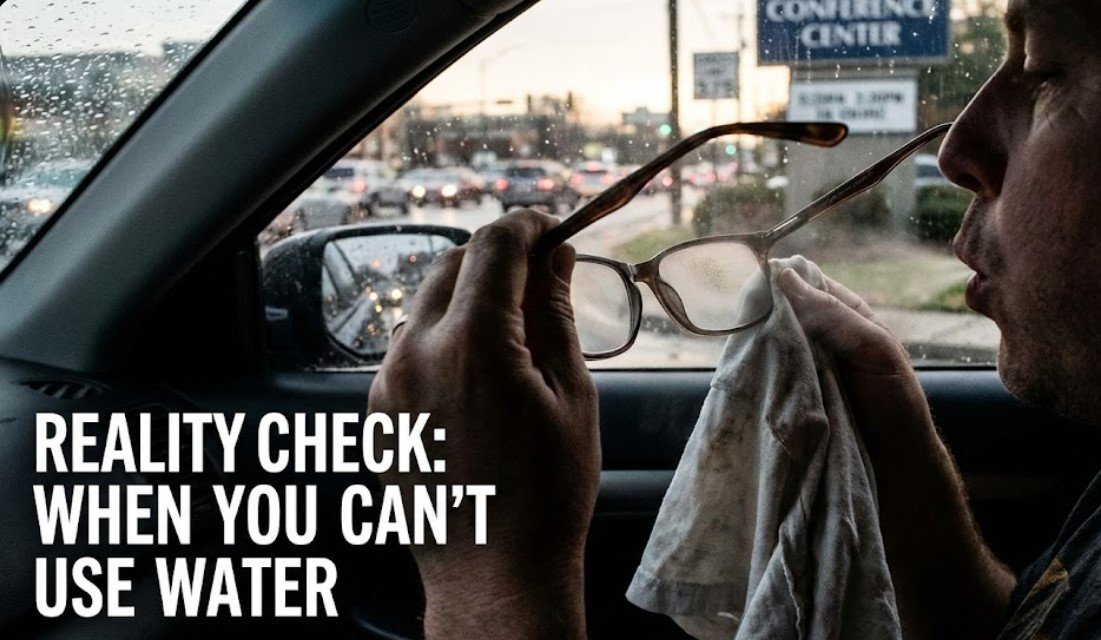
If you have a sealed, premoistened eyeglass wipe labeled as safe for your type of coated lens, use that before resorting to a dry fabric. Use a fresh wipe and discard it afterward so trapped grit isn’t transferred back to the lenses.
A lens cleaner approved for coated glasses is another option. Apply enough to wet both sides of the lenses before touching them with a clean cloth. Don’t substitute an unknown household spray.
If you have none of those options and need to improve the lenses quickly:
- Check for visible sand, grit, or dried debris. If you see any, wait until you can rinse the glasses.
- Gently blow off loose dust without touching the lenses.
- Fog the lenses lightly with your breath only as a last resort.
- Use the cleanest available lint-free cotton or the glasses pouch.
- Wipe with almost no pressure in one direction. Stop if you feel or hear grit moving under the fabric.
This is a backup plan, not the ideal cleaning method. As soon as you’re near a sink, do the full rinse-and-soap method.
How to fix streaks, spots, and grime around the frame
If the lenses look greasy after washing
Wash your hands again and repeat the process with less soap. Grease may be coming from your fingertips, a dirty drying cloth, or residue left around the lens edges and nose pads.
If you see a cloudy film
Rinse longer. A cloudy film that changes when wet is often soap or cloth residue. If the haze remains in exactly the same place after a careful wash and dry, it may be coating damage rather than dirt.
If water spots remain after air-drying
Minerals in tap water can leave spots. For the final rinse, you can use distilled water, or blot the droplets before they dry with a clean lint-free cloth. Don’t scrub away hardened spots while the lens is dry.
If grease collects around the lens edges
Use clean fingertips and a tiny amount of soap to work around the rim during washing. Don’t use toothpicks, pins, knives, or other sharp objects to dig into the gap between the lens and frame.
If the nose pads are still dirty
Clean around them gently with soapy fingertips and rinse well. If dirt is trapped underneath loose, yellowed, or damaged nose pads, an optician can clean or replace them without risking the frame.
Aftercare and storage
Once the glasses are dry, check the hinges and nose pads for trapped water. Open and close the temples gently, then blot any droplets that appear.
Store the glasses in a clean, rigid case with the lenses facing upward. Avoid setting them lens-side down or leaving them unprotected in a pocket, handbag, or car cup holder. Rinse them promptly after exposure to beach sand, salt spray, or pool water rather than letting residue dry on the lenses.
Wash any reusable cotton backup cloth separately from greasy towels. Skip fabric softener and dryer sheets, since they can coat the fibers and cause smearing. Keep the dry cloth in a clean bag or case instead of carrying it loose in a dusty pocket.
If you’re tempted to deep-clean your glasses with kitchen shortcuts, don’t miss our guide on can you put eyeglasses in the dishwasher. The short answer is no — heat and detergent are rough on coatings.
FAQ
Can I use a cotton shirt to clean my glasses?
Only as a backup, and only if it’s clean, lint-free, and used after rinsing the glasses first. Choose an unprinted area away from seams and use it for light blotting, not dry rubbing. Don’t use a shirt contaminated with sweat, lotion, fabric softener, or dust.
What if I only have tissues?
It’s safer to rinse the glasses and shake them dry than to rub them hard with tissue. Paper products can leave lint and may cause fine scratches, particularly when dust is trapped on the lenses. If you can’t rinse away visible grit, wait until you have safer supplies.
Can I air dry my glasses?
Yes. Shaking off most of the water first is often safer than over-wiping. Place the glasses in a clean, secure spot with the lenses facing upward. If your tap water leaves spots, blot the last few droplets with a clean lint-free cloth or use distilled water for the final rinse.
Can I use hand soap instead of dish soap?
Only if it’s plain and lotion-free. Creamy, moisturizing, exfoliating, or heavily fragranced hand soaps often leave residue and smear the lenses. If you’re unsure what a soap contains, stick to water until you can get a mild lens-safe cleaner or lotion-free dish soap.
Why do my glasses still look smeary after washing?
Usually one of three reasons: leftover soap, hard-water spots, or a dirty cloth. Rinse more thoroughly, clean the lens edges and nose pads, and avoid using too much soap. If the same cloudy or rainbow-like patch remains after repeated gentle washing, stop cleaning and have the coating checked by an optician.
Everything Mentioned Above
Before you leave, grab the tools you need to get the job done right the first time:
*As an Amazon Associate, TidyFormula earns from qualifying purchases.