How to Clean Up Broken Glass Without a Broom (And Save Your Feet)
It always happens at the worst possible moment—one slip, one sharp CRASH, and suddenly your kitchen turns into a tiny minefield.
One second you’re holding a glass or a plate; the next you’re frozen, staring at a glittery splash zone of jagged shards that somehow spreads farther than physics should allow. The sound is unmistakable—sharp, violent, and echoing—then comes that brief, awful silence while your brain does the math.
And of course, the broom is nowhere. Maybe it’s in the garage. Maybe it’s buried behind clutter. Meanwhile you’re barefoot on clean tile, stuck on a little “safe island,” surrounded by invisible razors.
I’ve been there—recently. A mason jar slipped right out of my hand and exploded on the floor. No broom in sight. Panic? A little. But here’s the surprise: you don’t actually need a broom. In fact, brooms can flick micro-shards into the air or grind them into grout lines where they hide for days.
Here’s exactly How to Clean Up Broken Glass Without a Broom, using a few simple things you almost definitely already have in your kitchen drawers.
What I Use For This Job
Using the right tools saves time and protects your belongings. Here are my exact recommendations:
*As an Amazon Associate, TidyFormula earns from qualifying purchases.
⚡ The TidyFormula™ Quick Answer
The Recommendation: Use a slice of soft bread or duct tape to pick up shards after carefully removing large pieces by hand (while wearing protection).
- The Mix: Heavy duty gloves + Cardboard + Soft Bread (or Duct Tape).
- Time: 10–15 Minutes.
- Effectiveness: High (Better than a broom for micro-shards).
Step 1: Freeze and Assess (The “Statue” Phase)
Don’t move. Seriously.
If you are barefoot, do not take a step until you have assessed the blast radius. Glass shatters in weird physics-defying ways. I’ve found shards ten feet away from the impact zone.
- Protect your feet: If your shoes are out of reach, wrap your feet in a towel or a thick sweatshirt if you have to step out of the circle. Ideally, shout for someone to bring you shoes.
- Protect your hands: Grab the thickest gloves you own. Garden gloves, leather work gloves, or even those thick yellow dishwashing gloves. Skin is soft; glass is not.
Step 2: The Big Pick-Up (Cardboard Scoop)
Forget the dustpan. If you don’t have a broom, you probably don’t have a dustpan handy either.
Grab a piece of stiff cardboard (a cereal box flap works perfectly) or a sturdy magazine you don’t care about.
The Process:
Use the cardboard to scoop the large, visible jagged pieces into a pile. Do not use your hands to “sweep,” even with gloves on. Use the cardboard as the scraper.
- Sensory Note: You’ll hear that sickening scritch-scratch of glass dragging on the floor. It’s annoying, but it means it’s working.
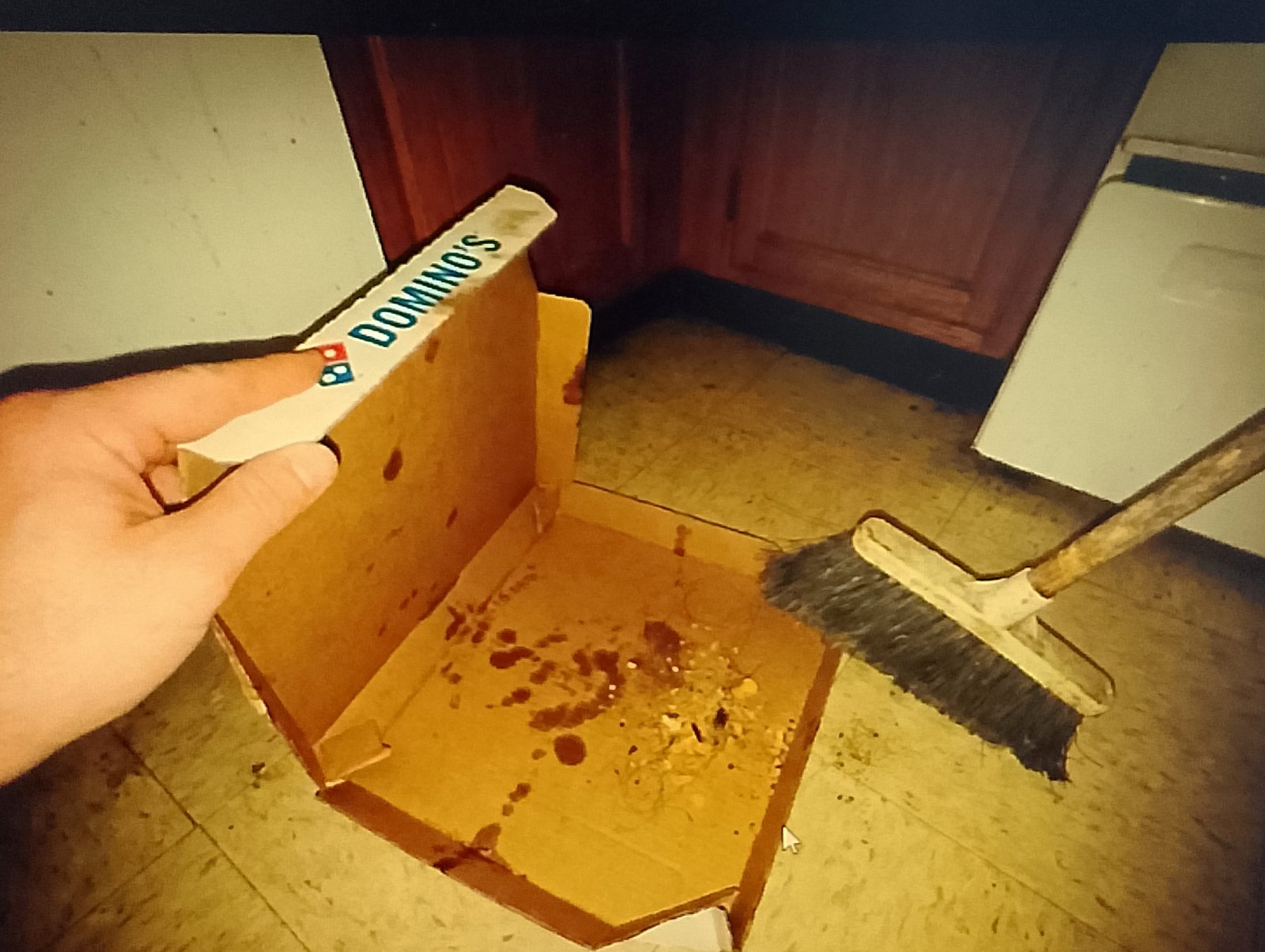
- The Container: Do NOT put these shards directly into a plastic trash bag. They will slice right through it and cut your leg later when you take the trash out. Put them inside an empty cardboard box or a thick paper bag.
The “Bread Slice” Technique for Micro-Shards
This sounds like a weird old wives’ tale, but at TidyFormula, we’ve tested this extensively. It is weirdly effective for those invisible “dust” shards that act like glitter.
Why bread?
Brooms often flick tiny shards up into the air. A vacuum can sometimes blow them out the exhaust if the filter isn’t perfect (plus, glass ruins vacuum hoses). Bread is soft, moist, and porous.
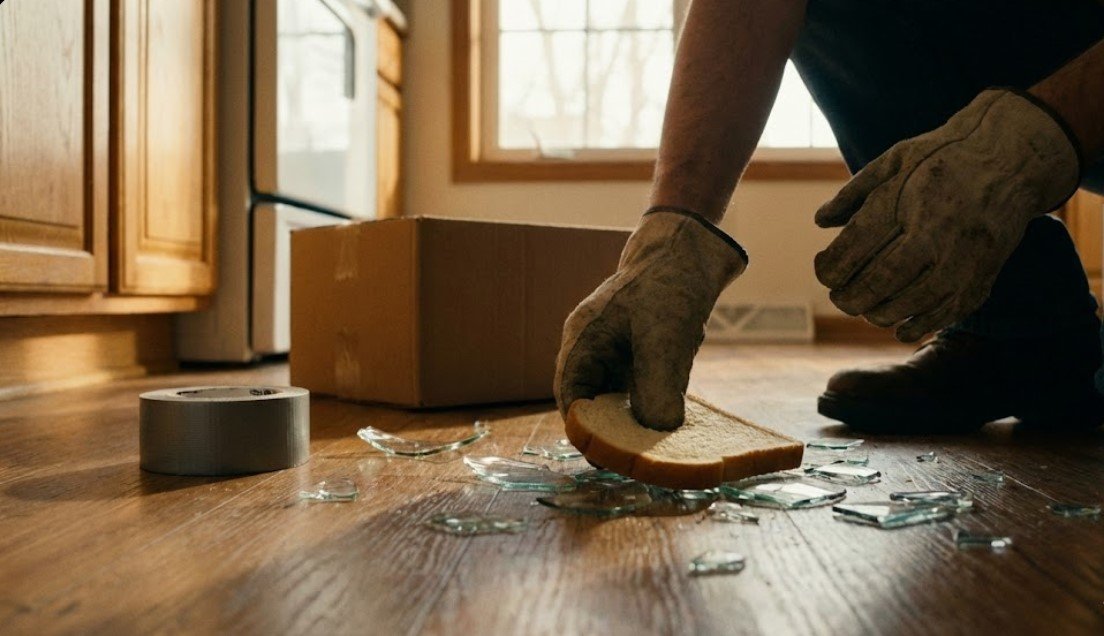
- Get the Bread: Take a slice of the softest, cheapest white bread you have. Stale artisan sourdough won’t work here; you need the spongy, processed stuff.
- The Press: Lay the bread flat on the area where the glass shattered. Press down gently. Do not wipe! Wiping drags the glass across the floor and can scratch wood or tile. Just press.
- The Lift: Peel the bread up. You will likely see a glittery layer of glass embedded in the white dough. It looks terrifying and satisfying at the same time.
- Repeat: Use a fresh slice for the next section.
🧪 The Science: Why It Works
Glass micro-shards are jagged and irregular. Soft matrices like bread gluten or potato starch deform around the sharp edges, “locking” the glass into the material. It works on the same principle as stepping in mud—the material yields to the hard object and traps it.
Using Tape for Invisible Splinters
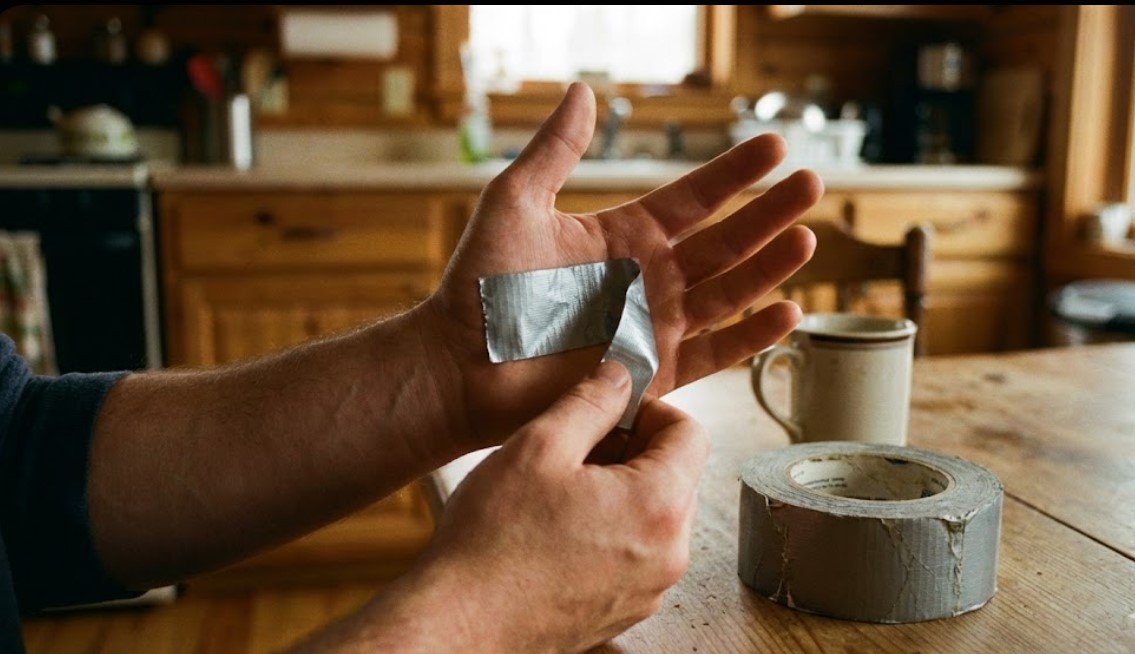
If you are out of bread, or just feel weird mopping your floor with a sandwich, tape is the next best hero. I prefer Duct Tape or wide Packing Tape. Scotch tape is too thin and weak for this.
The Method:
- Wrap a loop of tape around your gloved hand, sticky side out.
- Pat the floor. Rhythmically. Tap, tap, tap.
- Focus on the grout lines if you have tile. Glass loves to hide in those low spots.
- Check the tape often. Once it loses its stickiness (usually from dust or dog hair), swap it out.
The “Flashlight Test” (Crucial Step):
Turn off the overhead lights. Grab your phone flashlight. Lay it flat on the floor, shining the beam horizontally across the surface. This creates long shadows. Any remaining glass shard will sparkle like a frantic disco ball. If you see a sparkle, hit it with the tape.
Safety Protocol for Disposal
You’ve cleaned the floor. Now you have a pile of glass, some forbidden crunchy bread, and balls of tape. Do not be the person who just throws this loose into the kitchen bin. That is a booby trap for your future self.
- The Box Method: As mentioned earlier, put everything (glass, bread, tape, paper towels used for final wipe) into a small cardboard box. A cereal box, a shoebox, or even an Amazon delivery box.
- Tape it Shut: Seal the box aggressively.
- Label It: Grab a marker and write “BROKEN GLASS” on it. It seems overkill, but sanitation workers appreciate it, and it stops your spouse from trying to recycle the box.
Final Thoughts: The Wet Paper Towel Finish
Once the bread and tape have done the heavy lifting, do a damp paper towel or a disposable damp cloth. Fold it into a square, wipe once, and check it. If you feel grit or hear scratching, there is still glass.
If the towel comes up looking just like wet paper with no sparkles? You’re safe.
Cleaning glass without a broom is annoying. It takes longer. But honestly? It’s often cleaner than using a broom because you aren’t sweeping the danger into the air. Stay safe, and maybe switch to plastic cups for a few days. I won’t judge.
Frequently Asked Questions
Can I use a potato instead of bread?
Yes! A potato cut in half works exactly like the bread. The moisture and starch grab the glass. I just usually have bread closer to hand than a raw potato.
Will the vacuum cleaner get ruined by glass?
It can. Large shards can cut the hose or damage the impeller fan. That screeching noise a vacuum makes when it sucks up a penny? Imagine that, but sharper. Only vacuum after you’ve picked up the big pieces by hand.
What if I stepped on glass?
If it’s a tiny splinter, the “tape” method works on skin too (gently). If it’s deep or bleeding heavily, stop reading a cleaning blog and go to urgent care. Seriously.
How far does glass travel when it breaks?
Farther than you think. I once found a piece of a shattered pyrex dish in the living room, 15 feet away from the kitchen drop zone. Widen your search area.
Is it safe to mop afterwards?
Only after you are 100% sure the glass is gone. If you mop while shards are still there, you’re just scrubbing the floor with sandpaper and ruining your mop head.
Everything Mentioned Above
Before you leave, grab the tools you need to get the job done right the first time:
*As an Amazon Associate, TidyFormula earns from qualifying purchases.