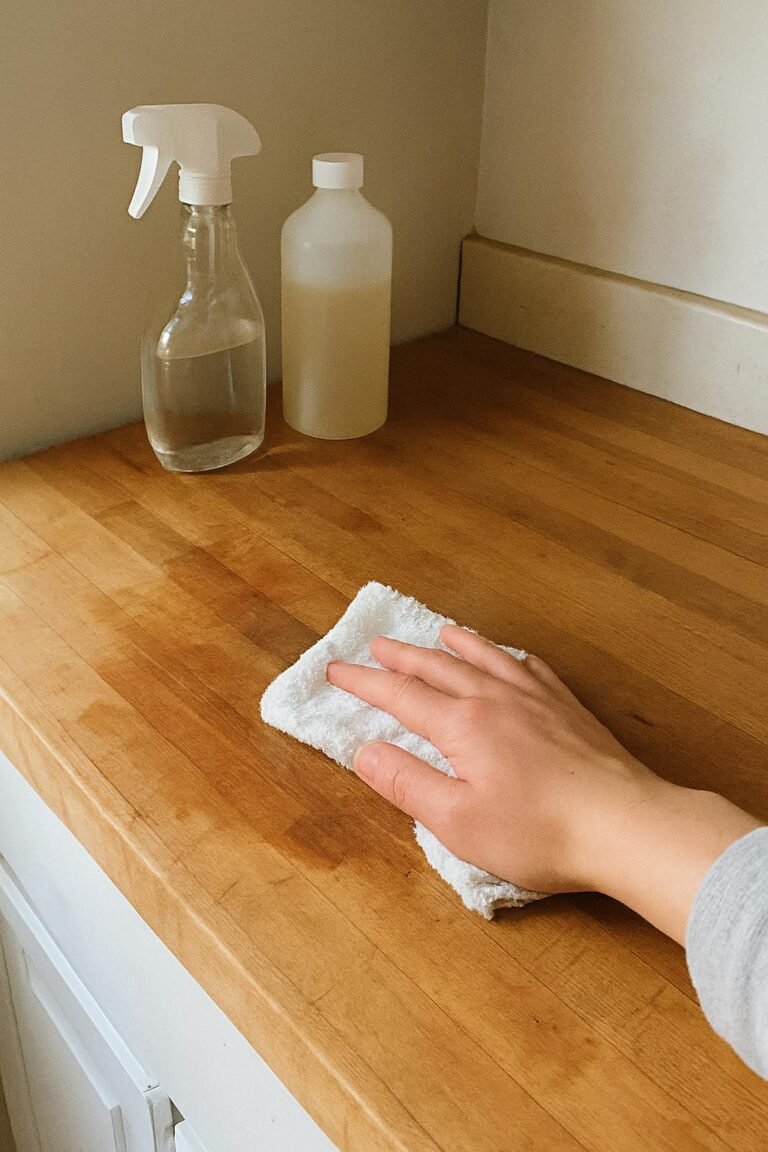
How to Clean a Glass Stove Top Safely and Easily
The safest way to clean a glass stove top is to wipe away loose debris first, then use a gentle cleaner labeled safe for glass or ceramic cooktops along with a non-abrasive cloth or sponge. For stuck-on residue, a plastic scraper made specifically for glass cooktops can help lift it without scratching the surface. Always check your appliance manual, since some manufacturers recommend specific cleaning products or methods.
⚡ The TidyFormula™ Quick Decision
Best approach: Let the cooktop cool completely, wipe with a soft cloth and a cleaner formulated for glass or ceramic surfaces, and use a dedicated cooktop scraper held at a low angle for stubborn spots.
Use caution with: Abrasive scrub pads, steel wool, or powdered cleaners, which can scratch glass cooktops; also be cautious with excess liquid pooling near control panels or seams.
Stop and reassess if: You notice cracks, chips, or discoloration in the glass, or if a stain won’t lift after reasonable effort—these situations may call for a different approach or professional evaluation rather than continued scrubbing.
Why Glass Stove Tops Need Special Care
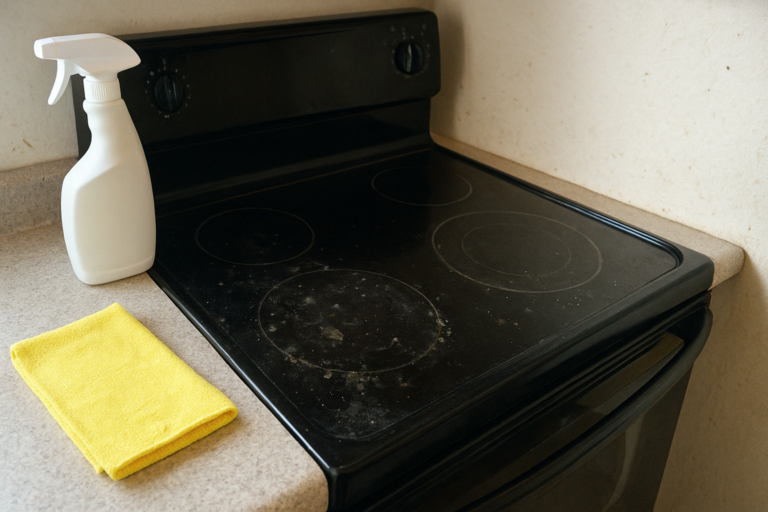
Glass and glass-ceramic cooktops have a smooth, non-porous surface that shows fingerprints, grease splatters, and burned-on food more easily than other stove types. While this surface is generally easy to wipe clean, it can also scratch if you use the wrong tools. Manufacturers typically advise against abrasive pads, harsh powders, or anything that isn’t specifically designed for glass cooktops, so checking your owner’s manual before choosing a cleaning product is a reasonable first step. For heavier kitchen grease that transfers beyond the cooktop, see our guide on removing grease from kitchen walls.
What I Use For This Job
Using the right tools saves time and protects your belongings. Here are my exact recommendations:
*As an Amazon Associate, TidyFormula earns from qualifying purchases.
What You’ll Likely Need
- A soft microfiber cloth or non-abrasive sponge
- A cleaner labeled safe for glass or ceramic cooktops
- A cooktop-specific scraper with a retractable or replaceable blade
- Paper towels or a lint-free cloth for drying
Avoid using generic all-purpose cleaners unless the label confirms they’re safe for glass cooktop surfaces, since some formulas can leave residue or streaking. If your cooktop sits next to quartz counters, follow quartz-safe cleaner guidance for the adjacent surface—see how to clean quartz countertops without dulling. Don’t forget to keep vents and filters clean—here’s how to clean a range hood filter.
Step-by-Step: Everyday Cleaning
- Turn off and let cool. Never clean a stove top while it’s warm or in use. Wait until it’s completely cool to the touch.
- Remove loose debris. Brush away crumbs or dry food particles with a dry cloth before applying any liquid.
- Apply the cleaner. Spray or apply a small amount of cooktop-safe cleaner directly onto the surface, following the product label’s instructions.
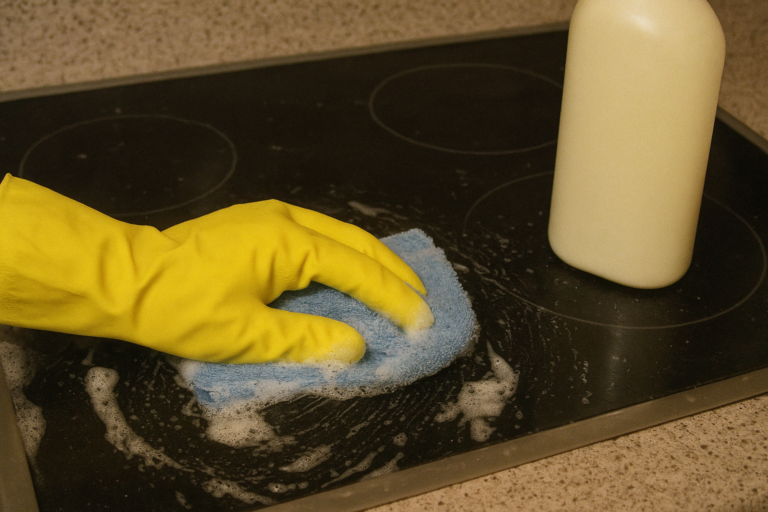
- Wipe gently in circular motions. Use a soft cloth or non-abrasive sponge, working in sections rather than pressing hard in one spot.
- Dry with a clean cloth. Buffing the surface dry helps reduce streaking and gives you a chance to spot any remaining residue.
Dealing With Stubborn, Burned-On Spots
For food that has baked onto the surface, a cooktop scraper can help lift it without digging into the glass. Hold the blade at a low, shallow angle—closer to flat against the glass than upright—and gently push under the residue rather than scraping downward. Work slowly, and stop if you feel resistance that suggests you might be pressing too hard. Some people find it helpful to apply a bit of cleaner first and let it sit briefly to loosen debris before scraping, though how long to wait can depend on the type and thickness of the residue.
If a spot still won’t budge after reasonable effort, repeated aggressive scraping isn’t a good solution—it increases the risk of scratching. In that case, consider trying a specialized cooktop cleaning paste designed for tougher residue, always checking that it’s labeled appropriate for glass or ceramic surfaces, or—for heavily baked-on residue elsewhere—review methods to clean an oven without harsh chemicals before escalating your approach.
What to Avoid
- Abrasive scrub pads or steel wool: These can create fine scratches that dull the glass over time, even if they don’t cause obvious damage right away.
- Metal scrapers not designed for cooktops: Only use a scraper specifically made for glass or ceramic stove tops, and check that the blade is in good condition without nicks.
- Using cleaning products on a hot surface: Some cleaners aren’t intended for use on heated surfaces. Always confirm the surface has cooled and check the product label for any temperature guidance.
- Mixing cleaning products: Never combine different household cleaners in an attempt to boost cleaning power. Stick to one product at a time and rinse thoroughly if you switch products.
Sugar-Based Spills and Melted Plastic
Sugary spills or melted plastic wrap can sometimes fuse to a hot cooktop. Manufacturer guidance for these situations can vary, and some brands recommend specific tools or timing for removal while the surface is still warm (though not hot) versus fully cooled. Because this varies by model, check your appliance’s manual for guidance specific to your cooktop before attempting removal, since acting incorrectly on a very hot surface could pose a burn risk. If the spill leaves an odor that spreads beyond the kitchen, see our tips to remove cooking smells from the house fast.
Streaks, Haze, and Cloudy Residue
If your glass cooktop develops a persistent haze or cloudy look even after cleaning, this may be residue buildup from cleaning products, cooking oils, or hard water spots, depending on your household. Try switching to a different cooktop-safe cleaner or wiping with a clean, slightly damp microfiber cloth followed by a dry one. If haziness persists across multiple cleaning attempts, it’s possible the surface has developed fine scratching from past cleaning methods, which generally can’t be reversed with additional cleaning.
Preventing Future Buildup
- Wipe up spills soon after they happen and once the surface has cooled enough to touch safely, rather than letting them bake on during future use.
- Use cookware with flat, smooth bottoms, since rough or warped pans can contribute to scratching over time.
- Avoid sliding heavy or textured cookware across the surface; lift and place pans instead.
- Wipe the cooktop down after each use once cooled, even with just a dry cloth, to prevent minor spills from setting. Also, clean backsplash grout behind the stove periodically to prevent trapped grease from becoming a long-term issue: clean backsplash grout behind the stove.
When to Consider Professional Help or Replacement
Minor scratches or light haze are usually cosmetic and don’t necessarily affect how the stove functions, though this can vary depending on the manufacturer and model. However, if you notice cracks, chips, or the surface feels uneven or damaged in a way that seems structural, it’s worth having the appliance checked by a qualified technician rather than continuing to use it as normal. A cracked cooktop surface is a different concern from surface staining and generally isn’t something a cleaning approach can resolve.
Final Thoughts
Keeping a glass stove top looking clear usually comes down to using the right tools, cleaning spills before they set, and avoiding anything abrasive. Because cooktop materials and manufacturer guidance can differ, it’s worth reviewing your specific appliance manual whenever you’re uncertain about a product or method, especially for tougher stains or unusual residue. For related kitchen-care tasks—vent cleaning, grout, and grease control—see the linked guides above for more detail on keeping the whole cooking zone working and smelling clean.
Everything Mentioned Above
Before you leave, grab the tools you need to get the job done right the first time:
*As an Amazon Associate, TidyFormula earns from qualifying purchases.