How to Clean Sheer Curtains without Yellowing
The best way to wash sheer curtains without yellowing is to use cool-to-lukewarm water, a mild liquid detergent, and a gentle wash cycle (or hand washing for delicate lace), then air dry out of direct sunlight. Skip chlorine bleach and skip the dryer’s heat setting, since both can worsen yellowing on synthetic sheers rather than fix it.
If your sheers have already turned yellow or dingy, some discoloration comes from years of sun exposure, cooking residue, or dust buildup that a normal wash can improve but not always fully reverse.
⚡ The TidyFormula™ Quick Decision
Best approach: Hand wash or machine wash on the gentle/delicate cycle in cool-to-lukewarm water with a mild liquid detergent, then air dry away from direct sun.
Use caution with: Chlorine bleach on polyester or nylon sheers, hot water, and high-heat dryer settings — all three can push yellowing further instead of removing it.
Stop and reassess if: The fabric feels brittle, thins out, or tears when handled, or yellowing stays after a proper wash. That usually points to sun or age damage that cleaning alone can’t undo.
What I Use For This Job
Using the right tools saves time and protects your belongings. Here are my exact recommendations:
*As an Amazon Associate, TidyFormula earns from qualifying purchases.
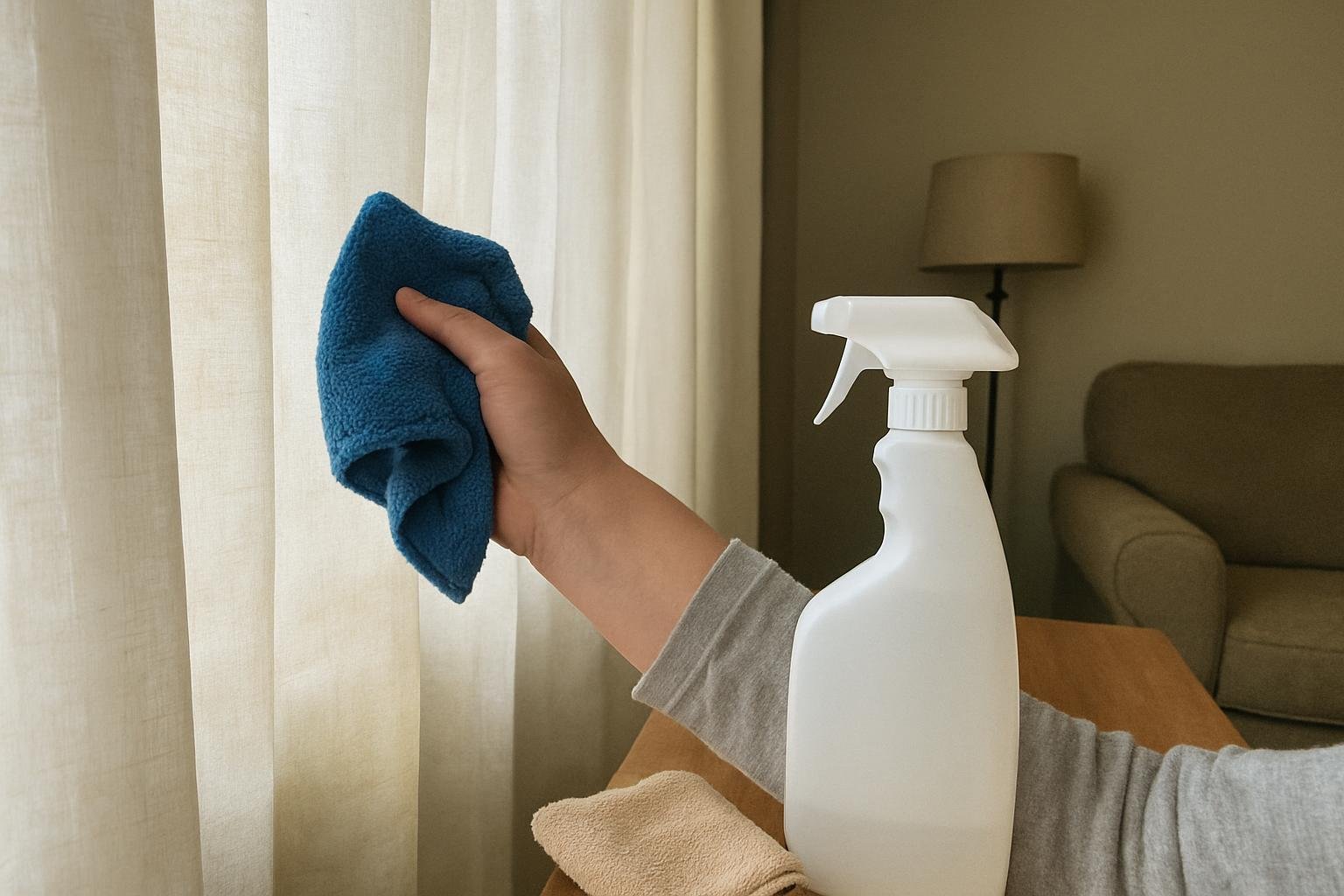
Check the Care Label First
Sheer curtains are made from several different materials, and the safest cleaning method depends on which one you have. Most everyday sheers are polyester or a poly-blend voile, which generally tolerates machine washing on a gentle cycle. Nylon sheers are also common and behave similarly, but they can be more sensitive to heat. Lace or crochet-style sheers, especially older or heirloom panels, are often more delicate and may do better with hand washing or a mesh laundry bag on the lowest agitation setting.
If the care tag says “dry clean only” or specifies a particular water temperature, follow that instruction rather than a general method, since manufacturers vary in how they finish and treat these fabrics.
What Actually Causes Yellowing
Yellowing on sheer curtains usually builds up gradually rather than appearing overnight. Common contributors include prolonged sun exposure (UV light can break down and discolor synthetic fibers over time), airborne grease from nearby cooking, cigarette or fireplace smoke, and mineral deposits from hard water used during washing. Detergent residue that isn’t fully rinsed out can also leave a dull, yellow-tinted film after repeated washes.
Chlorine bleach deserves a specific mention here: on polyester and nylon, it can react with the fibers and cause a yellow tint instead of whitening the fabric, which is the opposite of what most people intend when they reach for it.
The Safest Way to Wash Sheer Curtains
- Shake out loose dust outdoors or over a trash bag before washing, so you’re not just redistributing dirt into the wash water.
- Check for tears or weak seams along the top hem and rod pocket, since machine agitation can widen small holes in older fabric.
- Choose your method based on the label. For machine-safe polyester or nylon sheers, place them in a mesh laundry bag and wash on the gentle or delicate cycle in cool-to-lukewarm water. For lace or fragile panels, hand wash in a clean basin instead.
- Use a small amount of mild liquid detergent. Too much detergent can leave residue that dulls the fabric over repeated washes, so less is generally better for sheers.
- Skip chlorine bleach. If you want extra brightening and the care label allows it, a color-safe oxygen-based bleach alternative is a gentler option than chlorine, though you should still test it on an inside seam first and follow the product label’s instructions.
- Rinse thoroughly. An extra rinse cycle helps remove detergent residue that can contribute to a dingy or yellow-tinted look over time.
Drying Without Causing New Yellowing
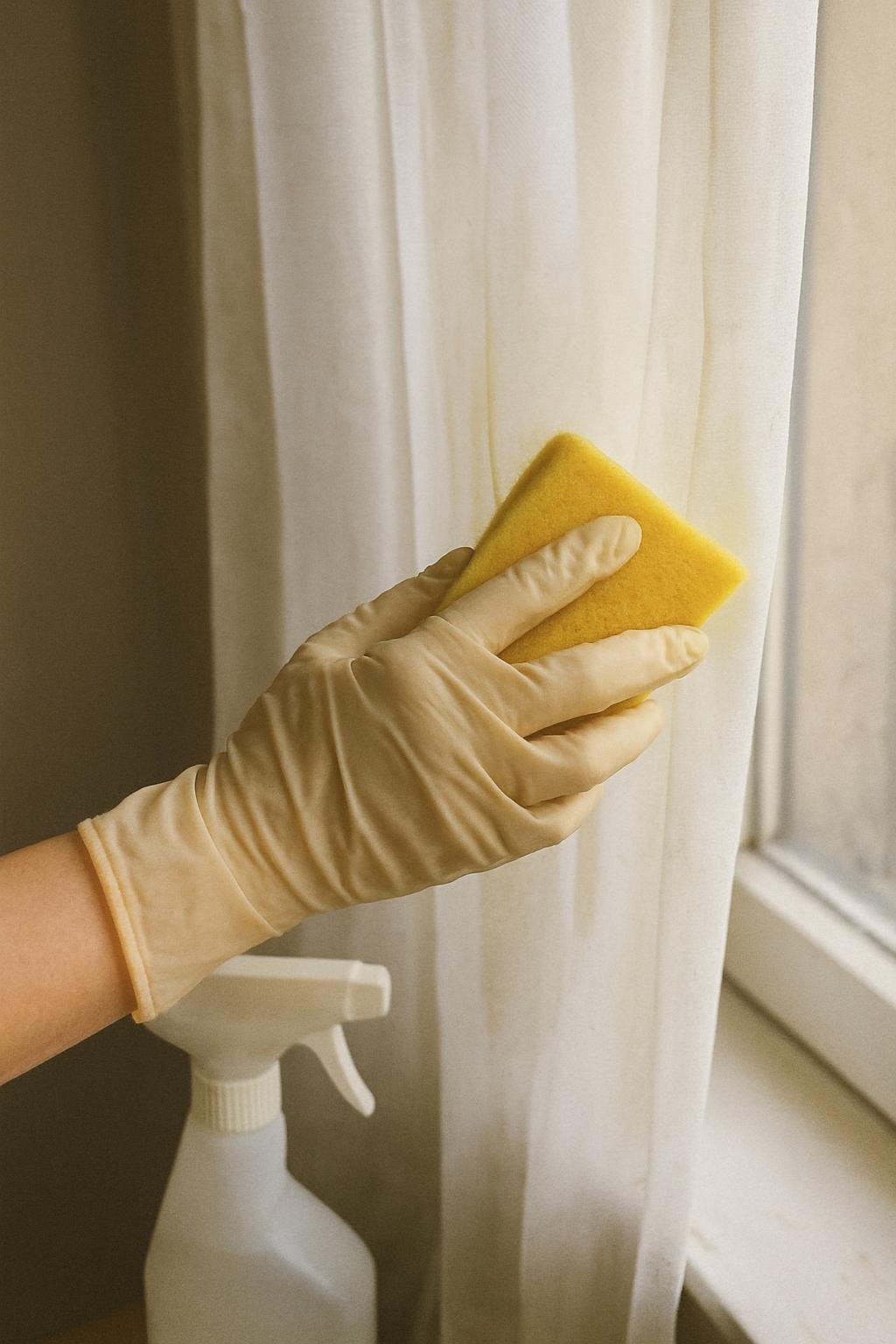
Heat is one of the more overlooked causes of yellowing on sheer curtains. High dryer temperatures can set in existing stains and, on some synthetic blends, contribute to a yellowish cast over repeated cycles. Air drying is the safer route for most sheers: hang them on a curtain rod, a drying rack, or a clothesline indoors or in shade.
Avoid drying sheers in direct, intense sunlight while they’re still damp, since wet fabric is more prone to UV-related discoloration than dry fabric. If you use a dryer, choose the lowest heat or “air fluff” setting if your machine has one, and remove the curtains while still slightly damp to rehang and finish air drying.
While the curtains are down, it’s also a convenient time to clean the windows behind them, and doing it without leaving streaks means your freshly washed sheers won’t be hanging in front of a smudged pane. If you’d rather skip the squeegee altogether, there’s also a method for cleaning windows without a squeegee that works well for this kind of once-in-a-while deep clean.
Cleaning Mistakes That Cause or Worsen Yellowing
- Using chlorine bleach on synthetic sheers — this is one of the most common reasons polyester or nylon curtains yellow instead of whiten.
- Overloading the washer — sheers need room to move freely in the water, or detergent and soil won’t rinse out evenly.
- Skipping the mesh laundry bag — unprotected sheers can snag on the washer drum or other laundry, leading to thinning that shows up as uneven, patchy discoloration.
- High-heat drying — this can set existing stains and stress synthetic fibers, making future yellowing more noticeable.
- Ignoring hard water buildup — if your water supply is hard, mineral deposits can accumulate in fabric over repeated washes and contribute to a dull, yellow-gray tone.
How Often to Wash Sheer Curtains
For most homes, washing sheer curtains every 6 to 8 weeks is enough to prevent dust and residue from building up to the point of noticeable yellowing. If your sheers hang in a kitchen, near a smoker, or in a room with heavy dust or pet hair, washing every 4 weeks may work better. Curtains in low-traffic guest rooms can often go longer between washes, closer to every 3 months, since they collect less airborne residue.
When Yellowing Won’t Come Out
If you’ve washed the curtains correctly and the yellow tint remains, it’s likely due to long-term UV exposure or age-related fiber breakdown rather than surface dirt, and that kind of discoloration usually isn’t reversible with washing. Rehanging curtains with a liner, or moving them slightly away from the most intense direct sun exposure, can slow future yellowing on a replacement set. If the fabric also feels thin, brittle, or tears easily when handled, that’s a sign the material has degraded and replacement is a more practical option than continued cleaning.
Everything Mentioned Above
Before you leave, grab the tools you need to get the job done right the first time:
*As an Amazon Associate, TidyFormula earns from qualifying purchases.