How to Clean Mold Off Luggage (And Kill the Musty Smell)
You drag your favorite suitcase out of the basement for a trip, and it hits you instantly. That sharp, sour, damp-earth smell. And then you see the fuzzy green and white patches spreading across the fabric. So, you have a localized biohazard on your hands. Or maybe just a slightly damp bag that sat in the dark too long, leaving you desperately searching for exactly how to clean mold off luggage.
My first instinct used to be tossing the whole thing into the bathtub with hot water and soap. But here is the harsh truth about suitcases: underneath that fabric lining is usually just cheap cardboard and glue. Soak it, and you destroy the structural integrity of the bag forever. (I actually warped a beautiful vintage carry-on in 2019 by hosing it down—the cardboard turned to mush, and lesson learned the hard way).
If you are trying to figure out how to clean moldy luggage, you need to rely on chemistry, not water volume. You need to kill the spores at the cellular level with minimal liquid.
⚡ The TidyFormula™ Quick Answer
The Verdict: Spot treat the fungus using an acid or alcohol to destroy the spores, followed by dry brushing and UV light.
What I Use For This Job
Using the right tools saves time and protects your belongings. Here are my exact recommendations:
*As an Amazon Associate, TidyFormula earns from qualifying purchases.
- The Mix: 1 part white vinegar to 1 part water (for cloth) OR Isopropyl alcohol (for vinyl/hard shells).
- Time: 20 minutes of active work, plus 24 hours of drying.
- Effectiveness: 8.5/10. It won’t look fresh out of the factory, and faint stains might remain, but it will be safe to pack your clothes in again.
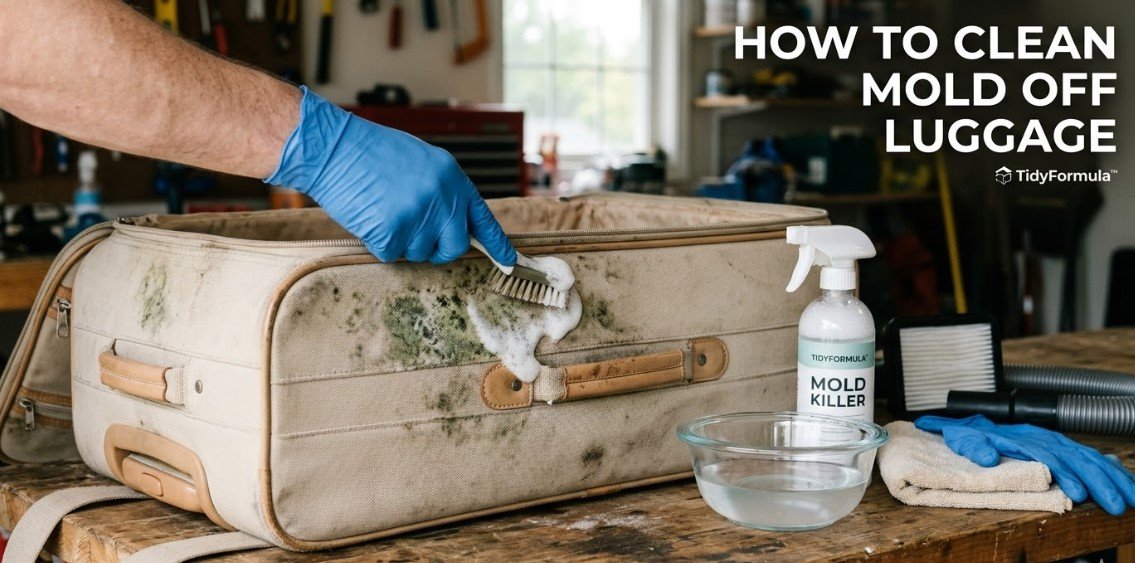
The Setup: What You Need
We are going to wage a micro-war. And for that, we need the right chemicals. Skip the heavy bleach; it can discolor fabrics and doesn’t actually kill mold on porous surfaces very well anyway.
- Distilled White Vinegar: The mild acid disrupts the mold’s growth.
- Isopropyl Alcohol (70%): Great for hard surfaces and vinyl.
- A HEPA Vacuum: To suck up loose spores.
- Soft Bristle Brush: An old toothbrush works fine.
- Microfiber Cloths: To lift the dead spores.
The Attack Plan: Step-by-Step
Learning how to clean mildew off luggage is really just about isolating the problem and neutralizing it without spreading it around.
Step 1: The Dry Evacuation
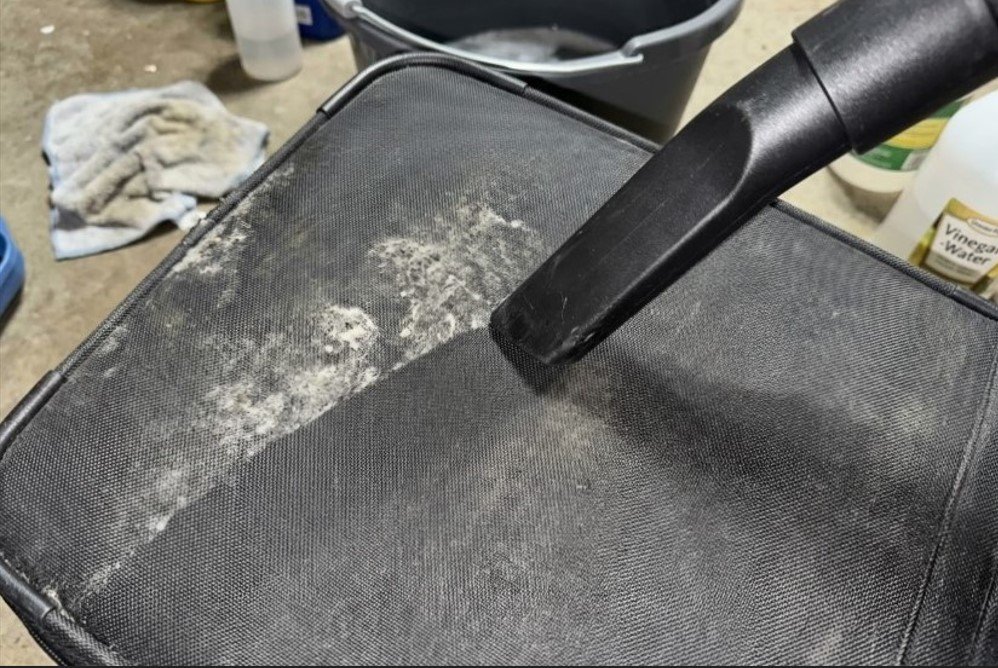
First, take the bag outside. Use the hose attachment on your vacuum (make sure it has a HEPA filter) and suck up the loose, dry fuzz. Do not scrub yet. Scrubbing dry mold just forces the spores deeper into the weave of the fabric. You want to hear that satisfying whining sound of the vacuum pulling the heavy dust away.
Step 2: The Chemical Strike
This is where the approach splits depending on your bag.
If you need to know how to clean mold off cloth luggage: Mix equal parts white vinegar and water in a spray bottle. Lightly mist the affected area. Do not drench it! You just want the surface damp.
If you are figuring out how to clean mould from vinyl luggage bag: Skip the vinegar. Wipe the surface down with a cloth dampened with isopropyl alcohol. Vinyl is non-porous, so the alcohol evaporates incredibly fast while destroying the cell walls on contact.
🧪 The Science: Why It Works
Mold is essentially a tiny living plant with a cell wall. Vinegar contains acetic acid (usually around 5%). This mild acid is strong enough to penetrate the fungal cell wall and disrupt its internal pH. It’s like throwing a wrench into an engine. The mold literally starves and breaks down at a molecular level. Alcohol does something similar to vinyl by dissolving the lipid (fat) layers of the cell, causing the mold to pop like a microscopic balloon.
Step 3: The Scrub and Lift
Let the vinegar sit for about 10 minutes. (My cat absolutely hates the sharp, acrid smell of spraying vinegar, so she always leaves the yard when I do this). Take your soft brush and gently work it into the fabric. You will hear a soft, scratching sound as the bristles lift the grime.
Immediately wipe the area with a clean, slightly damp microfiber cloth to pick up the debris. And keep rotating the cloth. You do not want to wipe dead mold back onto a clean spot.
Step 4: Sun and Air
Leave the suitcase open in direct sunlight for an afternoon. But why the sun? UV rays are a natural, powerful fungicide. Plus, the fresh air dries out the remaining moisture. The smell of vinegar will dissipate entirely once it dries, leaving behind a neutral, slightly “baked” scent.
The Reality Check: When to Give Up
Look, if the mold has eaten through the fabric and reached the structural foam or cardboard underneath, you are fighting a losing battle. And honestly, it might be time to toss it. You can’t clean what you can’t reach.
If you have some lingering dark stains on light-colored fabric after cleaning, that is normal. The mold is dead, but it left pigment behind. It’s 90% better and perfectly safe to use. Just pack your clothes in packing cubes if you are paranoid.
If you want to dive deeper into bag maintenance, check out our guides on how to deodorize a musty suitcase or how to clean a backpack without washing it.
Frequently Asked Questions
Can I just put my suitcase in the washing machine?
No. Never. The agitation will tear the zippers, and the water will dissolve the internal cardboard stiffeners. You will be left with a lumpy, useless sack. For softer bags, read our guide on removing stains from nylon bags safely.
Is it safe to use bleach to clean mold off luggage?
I don’t recommend it for cloth. Bleach only kills surface mold on non-porous materials. On fabric, it just bleaches the mold white, so you can’t see it, but the roots remain. Stick to vinegar. (You can read more about mold properties from the CDC’s mold info page).
How do I get the mildew smell out after cleaning?
Once the bag is totally dry, throw a few activated charcoal bags or some baking soda inside, zip it up, and let it sit for a week. The smell should absorb.
What if the mold is on leather details?
Leather requires totally different chemistry. Vinegar can dry it out severely. Check out our specific breakdown on how to clean leather bags to handle those accents safely.
How do I prevent mold on my luggage in the first place?
Store it somewhere dry. And never store it in a basement or attic wrapped in a plastic garbage bag. Plastic traps condensation. Use a breathable cotton dust cover instead.
Everything Mentioned Above
Before you leave, grab the tools you need to get the job done right the first time:
*As an Amazon Associate, TidyFormula earns from qualifying purchases.