How to Clean a Mattress Topper without Washing Machine
You can clean a mattress topper without a washing machine by spot-treating stains with a mild detergent solution, sprinkling on baking soda to lift odors, vacuuming thoroughly, and air-drying it completely before use. This works well for foam, fiberfill, and most synthetic toppers, but always check the care label first since some materials react poorly to excess moisture.
If your topper has a slow-drying dense foam core or a wool or down fill, moisture management matters even more, since trapped dampness inside the material can lead to a musty smell that’s hard to reverse.
⚡ The TidyFormula™ Quick Decision
Best approach: Spot-clean with a mild dish soap or upholstery cleaner solution, blot rather than soak, then deodorize with baking soda and vacuum before full air-drying.
Use caution with: Memory foam and latex toppers, which absorb moisture slowly and can develop mildew if not dried completely; down or feather-filled toppers, which clump and lose loft when wet.
Stop and reassess if: The topper still feels damp after 24 hours, you notice a sour or musty smell developing, or the foam feels mushy or is breaking apart at the treated spot.
What I Use For This Job
Using the right tools saves time and protects your belongings. Here are my exact recommendations:
*As an Amazon Associate, TidyFormula earns from qualifying purchases.
Check the Care Label Before You Start
Every mattress topper has a slightly different tolerance for moisture, and the care label is your best source of truth. Look for a “spot clean only” instruction, which almost always means the manufacturer does not want the topper soaked or submerged, even by hand. If the label says “dry clean only,” treat that as a real restriction rather than a suggestion, since home wet-cleaning on those materials can void a warranty or cause shrinkage and fiber damage.
If the tag is missing or unreadable, assume a moisture-cautious approach. Foam and latex toppers are generally safe for light spot-cleaning as long as you avoid saturating the core. Wool, down, and feather-filled toppers need the gentlest handling of all, since these materials clump and lose their insulating loft when they get too wet.
What You’ll Need
- A mild dish soap or a gentle upholstery cleaner labeled safe for foam or fabric
- Cool or lukewarm water
- Clean white cloths or towels for blotting
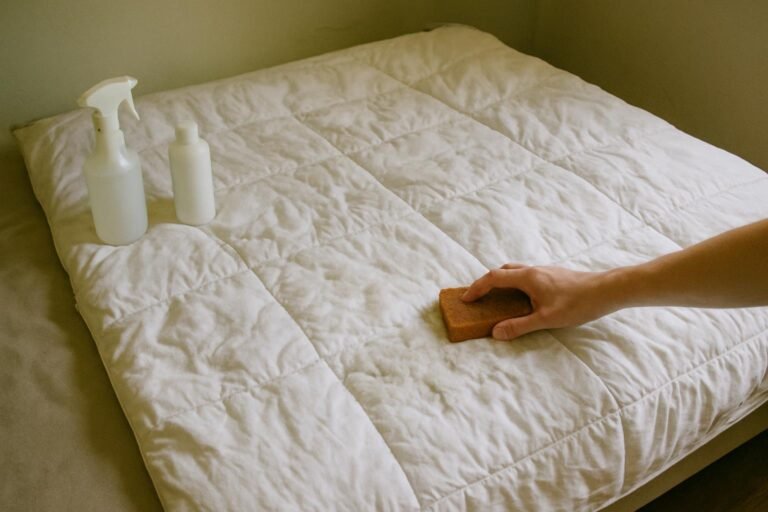
- A soft-bristle brush for light scrubbing on tougher spots
- Baking soda for deodorizing
- A vacuum with an upholstery attachment
Avoid reaching for bleach, ammonia, or strong solvents. These products are too harsh for most topper fabrics and foam, and mixing cleaning chemicals is never a safe shortcut, even if a stain seems stubborn.
Step-by-Step: Spot-Cleaning a Mattress Topper by Hand
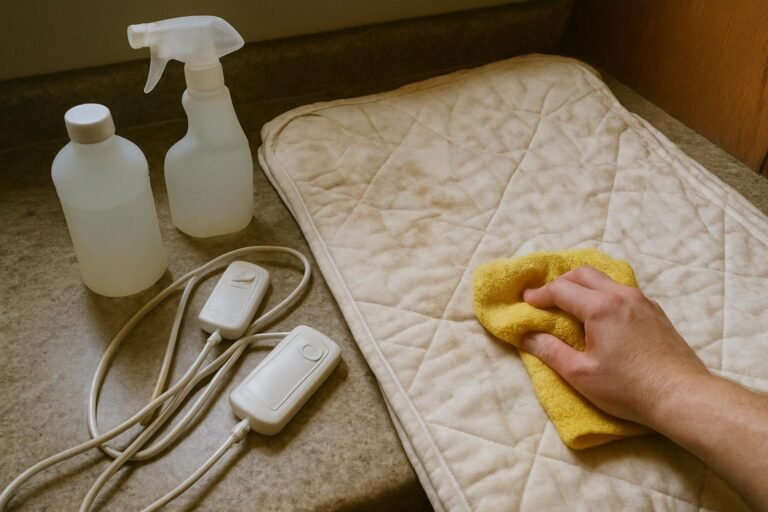
- Vacuum first. Run a vacuum with an upholstery attachment over the entire surface to remove loose dust, hair, and debris. This keeps you from grinding dry particles into the fabric once it’s damp.
- Mix a mild cleaning solution. Combine a small amount of dish soap with cool water in a bowl until it’s just slightly soapy, not foamy. A weak solution is safer for both the fabric cover and any foam underneath.
- Test an inconspicuous area first. Dab a small amount on a hidden corner and wait a few minutes to check for color change or texture damage before treating a visible stain.
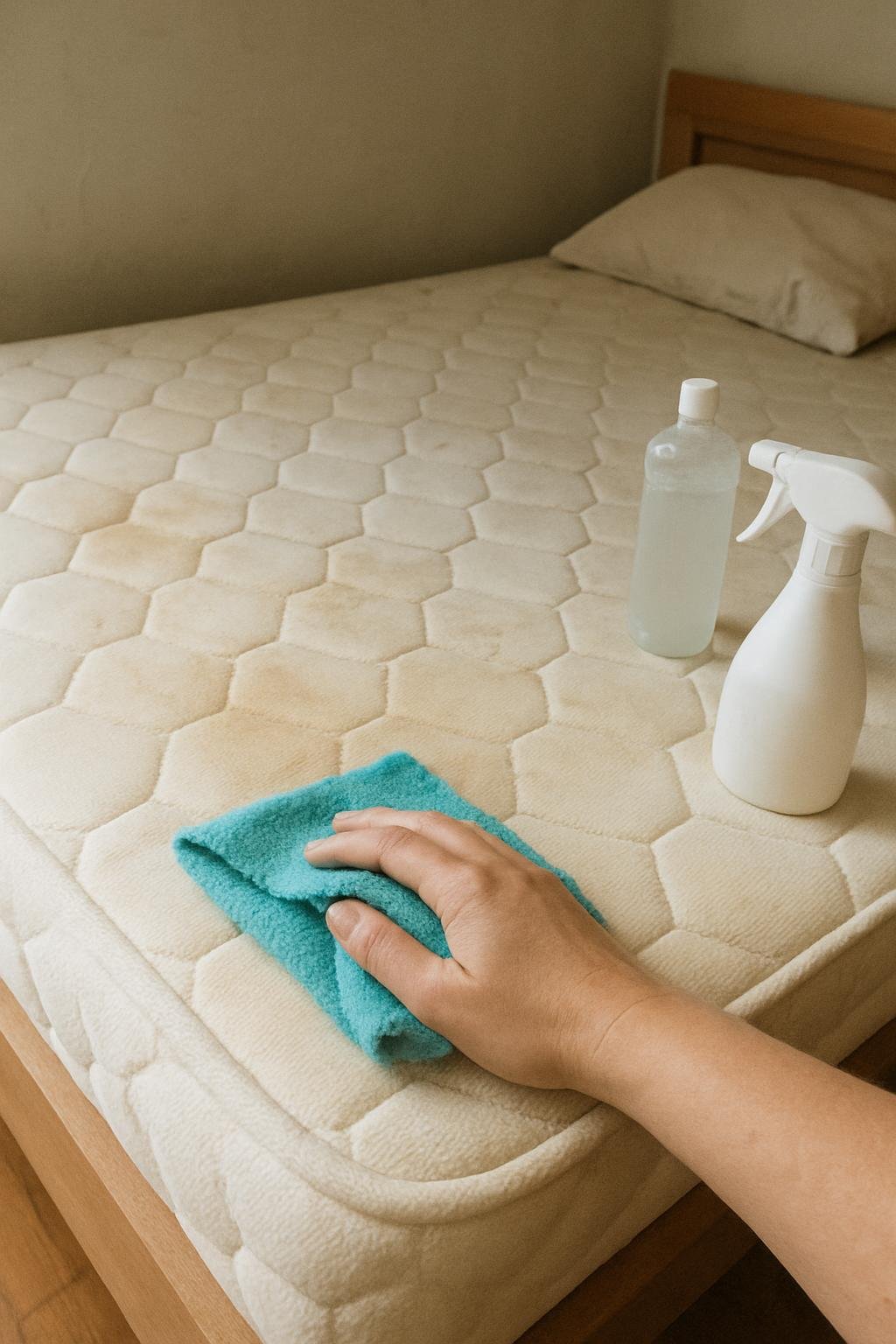
- Blot, don’t soak, the stained area. Dip a clean cloth in the solution, wring it out well, and blot the stain from the outside in. Avoid pouring liquid directly onto the topper, especially over foam, since foam absorbs moisture slowly and holds it for a long time.
- Rinse with a damp cloth. Use a second cloth dampened with plain water to blot away soap residue. Leftover soap can attract dirt later and leave a stiff feel once dry.
- Press out excess moisture. Lay a dry towel over the treated area and press down firmly to pull out as much water as possible before drying.
Deodorizing Without Water
Odor often lingers even after a stain is gone, and baking soda is a practical, low-risk option for pulling smells out of fabric and foam. Sprinkle a generous, even layer over the entire topper, let it sit for several hours (some people leave it overnight if the smell is strong), then vacuum it up thoroughly. This step works independently of wet cleaning, so you can do it on its own between deeper cleanings or use it after spot-treating a stain once the area is fully dry.
Drying: The Step Most People Rush
Incomplete drying is the most common reason a home-cleaned topper ends up smelling worse than before. Set the topper somewhere with good airflow, ideally outdoors in shade or in a room with a fan and open windows. Direct sun can help speed drying but may fade or weaken fabric covers over time on some materials, so check the label if UV exposure is a concern.
Foam and latex toppers dry slowly from the inside out. Flip the topper periodically and press gently with a dry towel to check for lingering dampness in the core, not just the surface. Depending on humidity, thickness, and material, drying can take considerably longer than a fabric-only item, so plan for a spare sleeping surface if needed rather than putting a still-damp topper back on the bed.
Treating Specific Stains and Sources
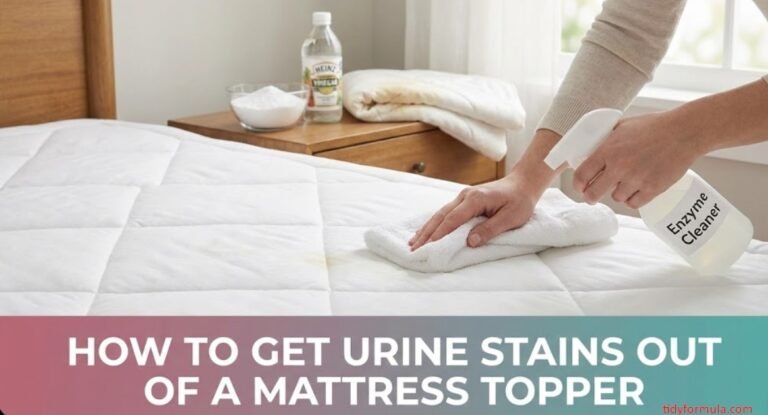
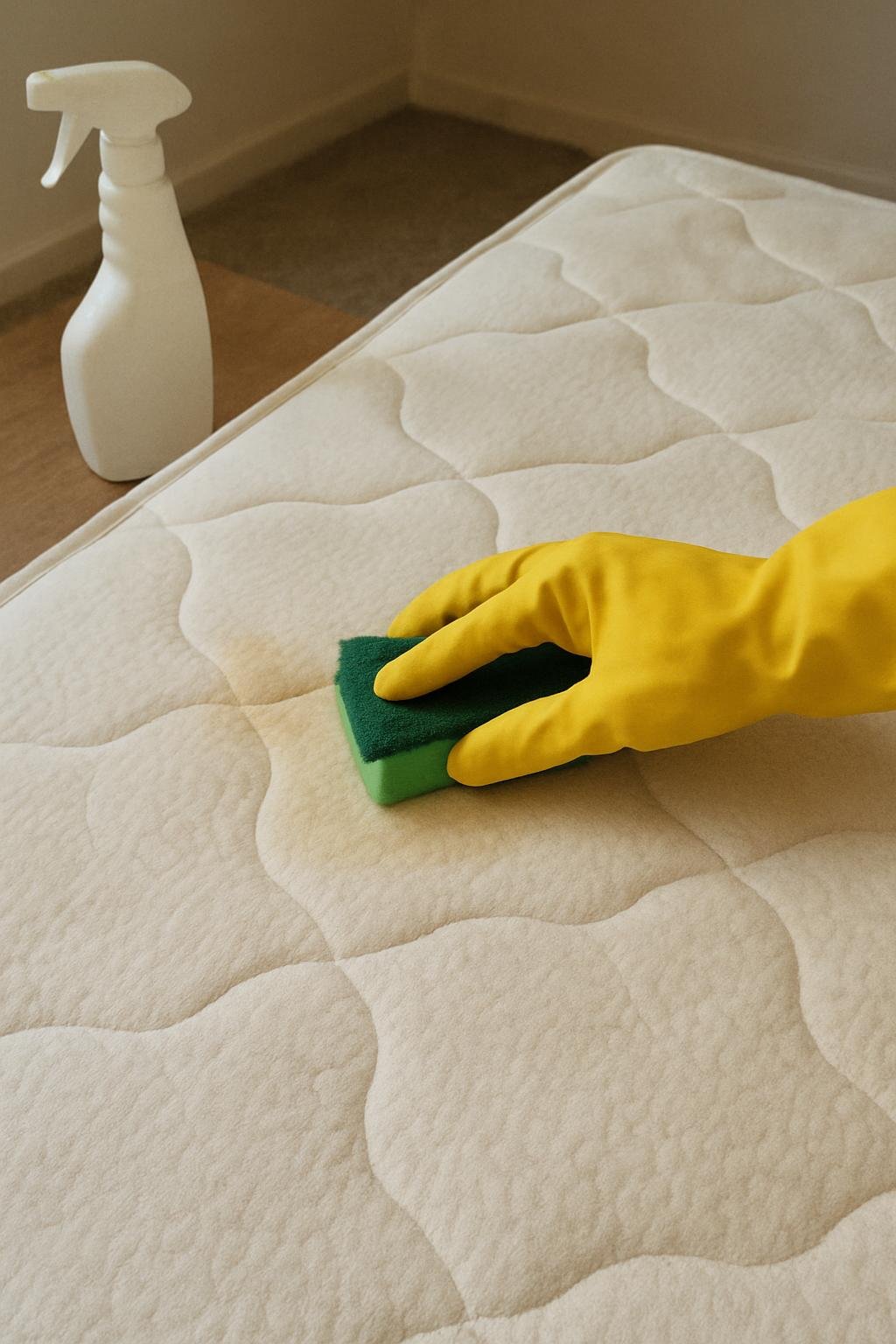
General spot-cleaning works for everyday spills and light soiling, but some stains need a more targeted approach. Urine, in particular, needs treatment aimed at the source of the odor rather than just the visible mark, since surface cleaning alone often leaves the smell behind. If you’re dealing with a urine stain specifically, see how to get a urine stain out of a mattress topper for a more detailed treatment method.
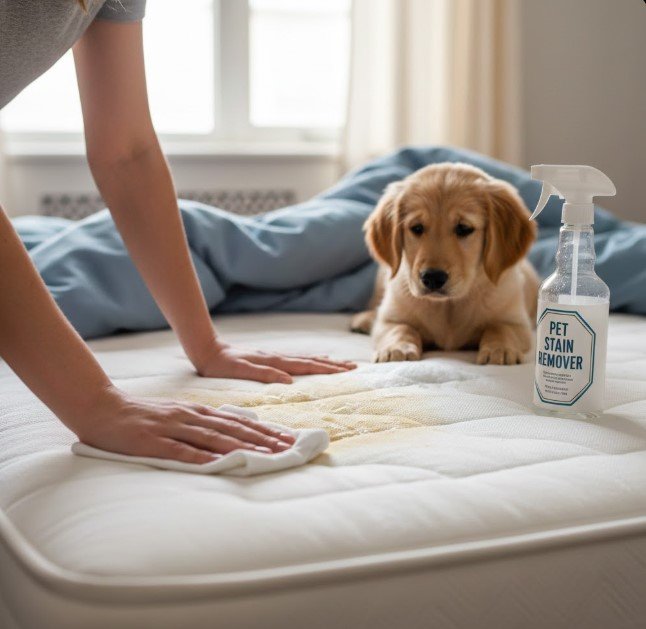
If the odor is from a pet accident rather than a human one, treatment differs depending on the animal. Dog urine and cat urine both benefit from an enzyme-based approach rather than soap alone, since enzymes break down the specific compounds that cause the lingering smell. You can find dedicated guidance in how to clean dog urine from a mattress and how to clean cat urine on a mattress with the enzyme method, both of which apply to toppers as well as mattresses.
Mistakes That Cause Damage or Bad Smells
- Soaking instead of blotting. Pouring or spraying too much liquid onto foam pushes moisture deep into the core, where it dries slowly and can develop a musty smell.
- Skipping the drying check. Putting a topper back into use while the inside is still damp is one of the most common reasons odor returns after cleaning.
- Using strong or scented cleaners. Harsh degreasers or heavily scented sprays can break down foam over time or leave residue that irritates skin during sleep.
- Scrubbing aggressively. Hard scrubbing can tear delicate fabric covers or break down the surface of memory foam. A soft brush and gentle pressure are usually enough.
- Folding a damp topper for storage. This traps moisture in the folds and can lead to uneven drying or mildew smell in memory foam and latex especially.
How Often to Clean a Mattress Topper Without a Washing Machine
A full spot-clean and deodorize is generally enough every few months for most households, though this depends heavily on use. Toppers used by children, pets, or anyone prone to night sweats may need attention more often. Between deeper cleanings, a light vacuum every couple of weeks and a baking soda treatment every month or so can keep odor and dust from building up without exposing the topper to unnecessary moisture.
When Spot-Cleaning Isn’t Enough
If a stain has set in deeply, if odor persists after a full clean-and-dry cycle, or if you notice the foam breaking down, crumbling, or developing dark spots that don’t lift with cleaning, spot-cleaning at home has likely reached its limit. At that point, a professional upholstery or mattress cleaning service may be a better option than repeated home treatments, and if the topper is showing structural wear rather than just soiling, replacement may be the more practical choice. If your main concern is the mattress underneath rather than the topper itself, how to clean a mattress without a vacuum covers a manual approach for that surface.
Everything Mentioned Above
Before you leave, grab the tools you need to get the job done right the first time:
*As an Amazon Associate, TidyFormula earns from qualifying purchases.