How to Remove Yellow Sweat Stains from Pillowcases
The most reliable way to remove yellow sweat stains from pillowcases is to pretreat them with a mix of liquid dish soap and hydrogen peroxide (or an oxygen-based stain remover), let the mixture sit on the stain for 15–30 minutes, then wash in the warmest water your care label allows. Cotton and poly-cotton blends usually tolerate this well, but silk, satin, and some synthetic weaves need a gentler approach to avoid discoloration or fiber damage.
If the stains have built up over months or years, one wash cycle may lighten them without fully removing them, and that’s a normal outcome rather than a sign you did something wrong.
⚡ The TidyFormula™ Quick Decision
Best approach: Pretreat with dish soap and hydrogen peroxide (or an oxygen-based stain remover), let it sit, then wash in the warmest water the care label allows.
Use caution with: Silk, satin, rayon, and any pillowcase labeled “dry clean only” or “cold wash only” — hydrogen peroxide and warm water can dull sheen or weaken these fibers.
Stop and reassess if: The fabric changes texture, color bleeds during pretreatment, or the stain is decades-old and set into synthetic fill rather than the fabric surface.
What I Use For This Job
Using the right tools saves time and protects your belongings. Here are my exact recommendations:
*As an Amazon Associate, TidyFormula earns from qualifying purchases.
Check the Fabric Before You Start
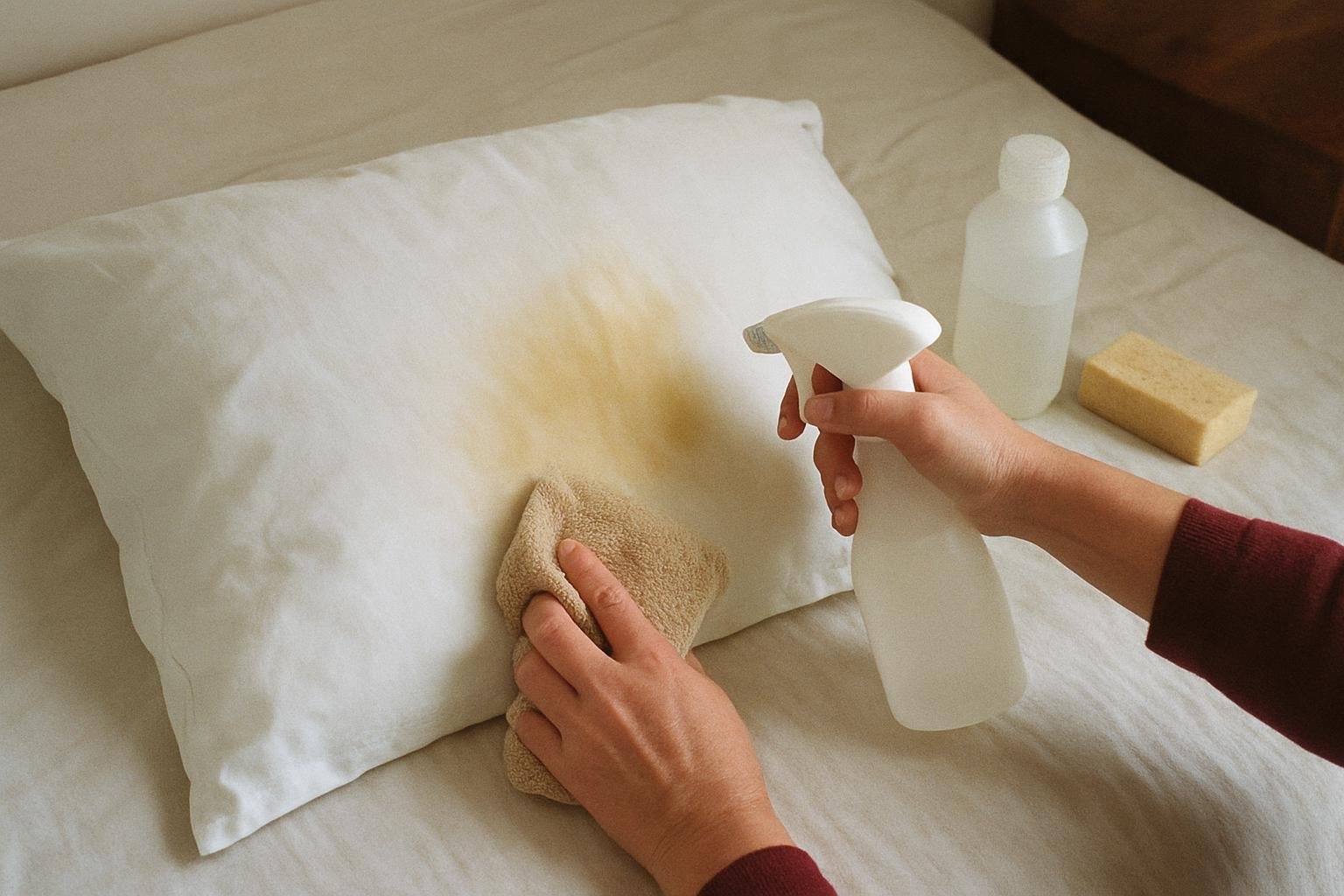
Yellow sweat stains form where body oils, sweat, and skincare or hair products soak into fabric over repeated nights of sleep. The right removal method depends heavily on what the pillowcase is made of, so check the care label before you reach for any stain remover.
- Cotton and poly-cotton blends — Generally durable and machine washable in warm water. These respond well to hydrogen peroxide and dish soap pretreatment.
- Silk and satin — Prone to water spotting, dulling, and fiber weakening from peroxide or hot water. These need a milder, cooler approach and a spot test first.
- Synthetic microfiber or novelty prints — Usually machine washable, but printed designs can fade with aggressive stain removers. Check the label for any special washing instructions.
If the tag says “dry clean only,” home stain removal isn’t a safe bet — take the pillowcase to a professional cleaner rather than risk the fabric.
Step-by-Step: Removing Yellow Stains from Washable Pillowcases
This method works for cotton, poly-cotton, and most machine-washable synthetic pillowcases without a “dry clean only” label.
- Mix the pretreatment. Combine equal parts liquid dish soap and hydrogen peroxide in a small bowl. Dish soap breaks down the oily residue in the stain while hydrogen peroxide helps lift the yellow discoloration.
- Apply directly to the stain. Work the mixture into the yellowed area with an old toothbrush or your fingers, covering the stain completely without soaking the entire pillowcase.
- Let it sit. Leave the mixture on the fabric for 15–30 minutes. Older, more set-in stains may benefit from sitting closer to the 30-minute mark, but avoid letting it dry out completely on the fabric.
- Wash immediately. Launder the pillowcase in the warmest water the care label allows, using your regular detergent. Washing right after pretreatment keeps the loosened residue from resettling into the fibers.
- Check before drying. Inspect the stain while the fabric is still wet. If it’s faded but not gone, repeat the pretreatment and wash again before running it through the dryer — heat can set any remaining stain permanently.
- Air-dry if uncertain. If you’re not sure the stain is fully gone, hang the pillowcase to air-dry instead of using heat, so you can retreat it if needed.
A Gentler Method for Silk, Satin, and Delicate Fabrics
Hydrogen peroxide and warm water aren’t a safe default for silk or satin pillowcases. Instead:
- Mix a small amount of mild, pH-neutral detergent (the kind made for delicates) with cool water.
- Test the mixture on a hidden seam or corner first and check for color change or texture damage before treating the stain itself.
- Dab the solution onto the stain with a soft cloth rather than scrubbing, and blot rather than rub.
- Rinse with cool water and lay the pillowcase flat to air-dry.
Delicate fabrics often need more than one gentle treatment to fully lift a stain, and some deep, set-in yellowing may not come out completely without professional cleaning.
Mistakes That Make Yellow Stains Worse
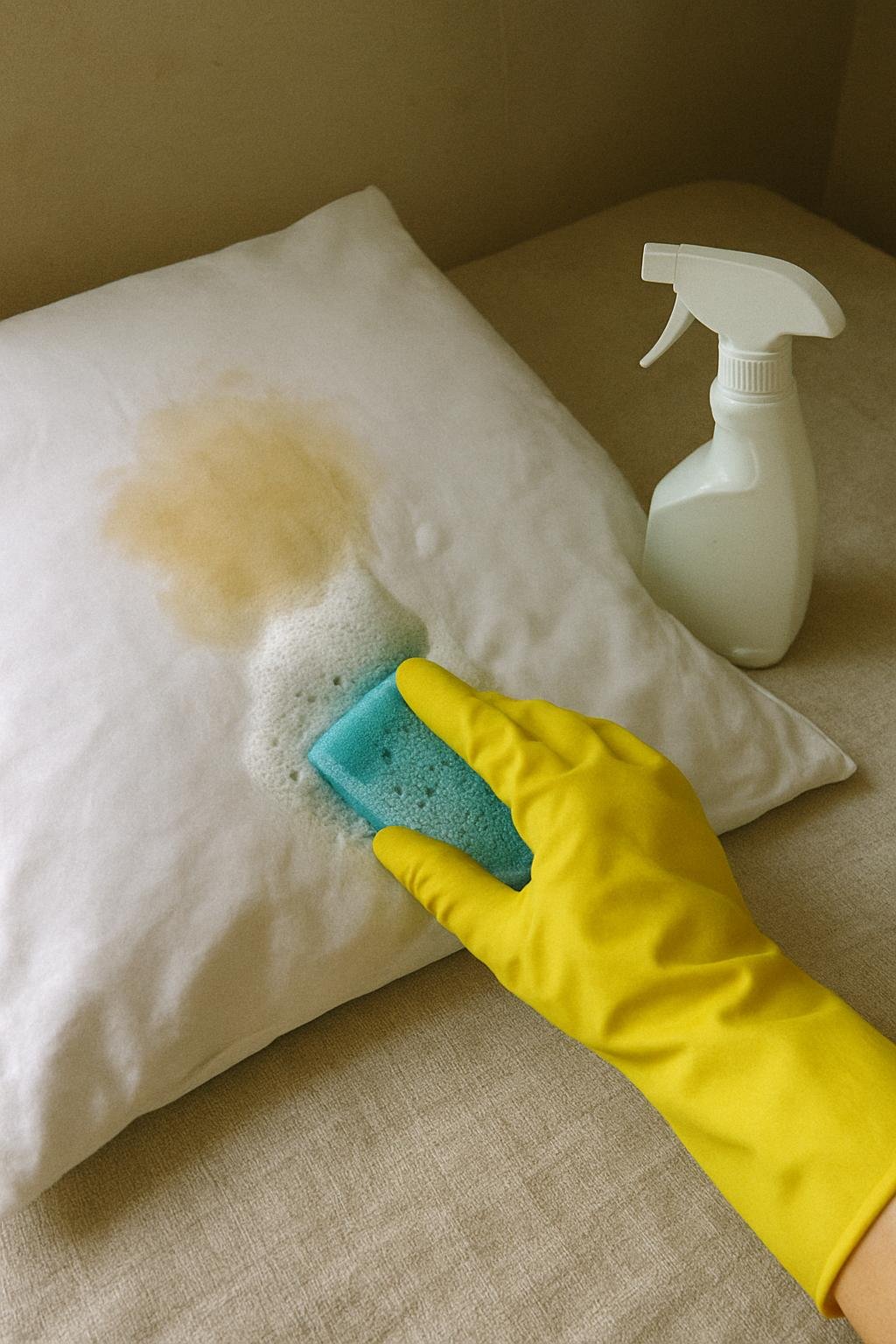
- Using hot water on synthetic fill or delicate weaves. Heat can set protein and oil-based stains permanently instead of loosening them.
- Skipping the pretreatment soak time. Rinsing the mixture off too quickly doesn’t give the dish soap and peroxide enough contact time to break down the residue.
- Drying before confirming the stain is gone. Dryer heat is one of the most common reasons a faint stain becomes a permanent one.
- Treating only the pillowcase when the pillow underneath is also yellowed. If the pillow itself has absorbed sweat and oils, a clean pillowcase will look dingy again within a few nights. If the pillow can’t go in a washing machine, a method like the one in how to clean pillows without a washing machine may be worth addressing at the same time.
Preventing Yellow Sweat Stains from Coming Back
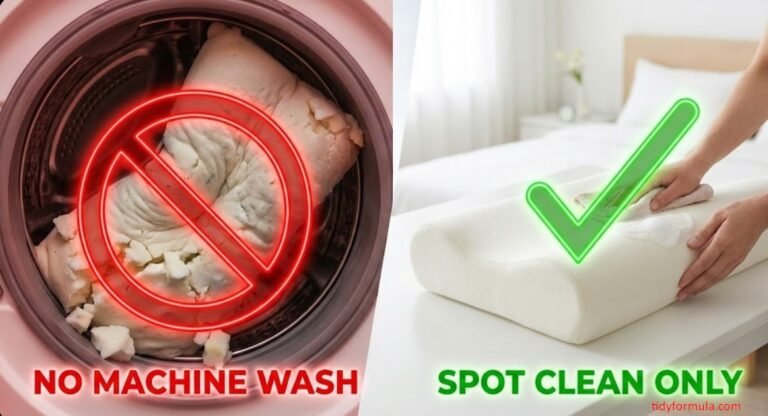
Washing pillowcases weekly, using a breathable pillow protector underneath, and avoiding heavy nighttime lotions or hair products near the pillow area all reduce how quickly new staining builds up. If you regularly use a memory foam pillow, keep in mind that many memory foam cores can’t tolerate a washing machine, even though the case itself usually can — checking whether your memory foam pillow can go in the washing machine before you toss the whole set in together can save you an unnecessary repair or replacement.
When to Choose Professional Cleaning Instead
If the pillowcase is labeled dry clean only, if pretreatment causes any color change during a spot test, or if the stain has been set for years across a delicate fabric, a professional cleaner is a safer bet than repeated home treatments. Continuing to scrub or soak a fabric that’s already showing signs of damage usually makes the wear worse without meaningfully improving the stain.
Everything Mentioned Above
Before you leave, grab the tools you need to get the job done right the first time:
*As an Amazon Associate, TidyFormula earns from qualifying purchases.