How to Remove Toothpaste Stains from Bathroom Sink
The fastest way to remove toothpaste stains from a bathroom sink is to wipe up residue while it’s still damp, then treat any dried-on film with a soft cloth and a mild dish soap solution or a baking soda paste. Toothpaste contains mild abrasives that can dull certain finishes if scrubbed too hard, so the right method depends on whether your sink is porcelain, enamel, acrylic, stainless steel, or natural stone.
If the toothpaste has already dried into a chalky ring around the drain or splashed onto the counter edge, it can look worse than it actually is. In most cases, that white film is surface residue rather than a permanent stain, and it usually lifts with the right gentle approach instead of a harsh scouring pad.
⚡ The TidyFormula™ Quick Decision
Best approach: Wipe fresh toothpaste immediately with a damp microfiber cloth, then use a soft-bristle brush or sponge with mild dish soap and, if needed, a light baking soda paste for dried residue.
Use caution with: Abrasive scouring pads, powdered cleansers, or vinegar on cultured marble, acrylic, fiberglass, or natural stone sinks, since these surfaces scratch or etch more easily than porcelain or enamel.
Stop and reassess if: The area looks dull, scratched, or discolored after cleaning, or if the sink has a gel coat, gold-tone finish, or stone surface that the care instructions specifically warn against scrubbing.
What I Use For This Job
Using the right tools saves time and protects your belongings. Here are my exact recommendations:
*As an Amazon Associate, TidyFormula earns from qualifying purchases.
Why Toothpaste Leaves a Film on Sinks
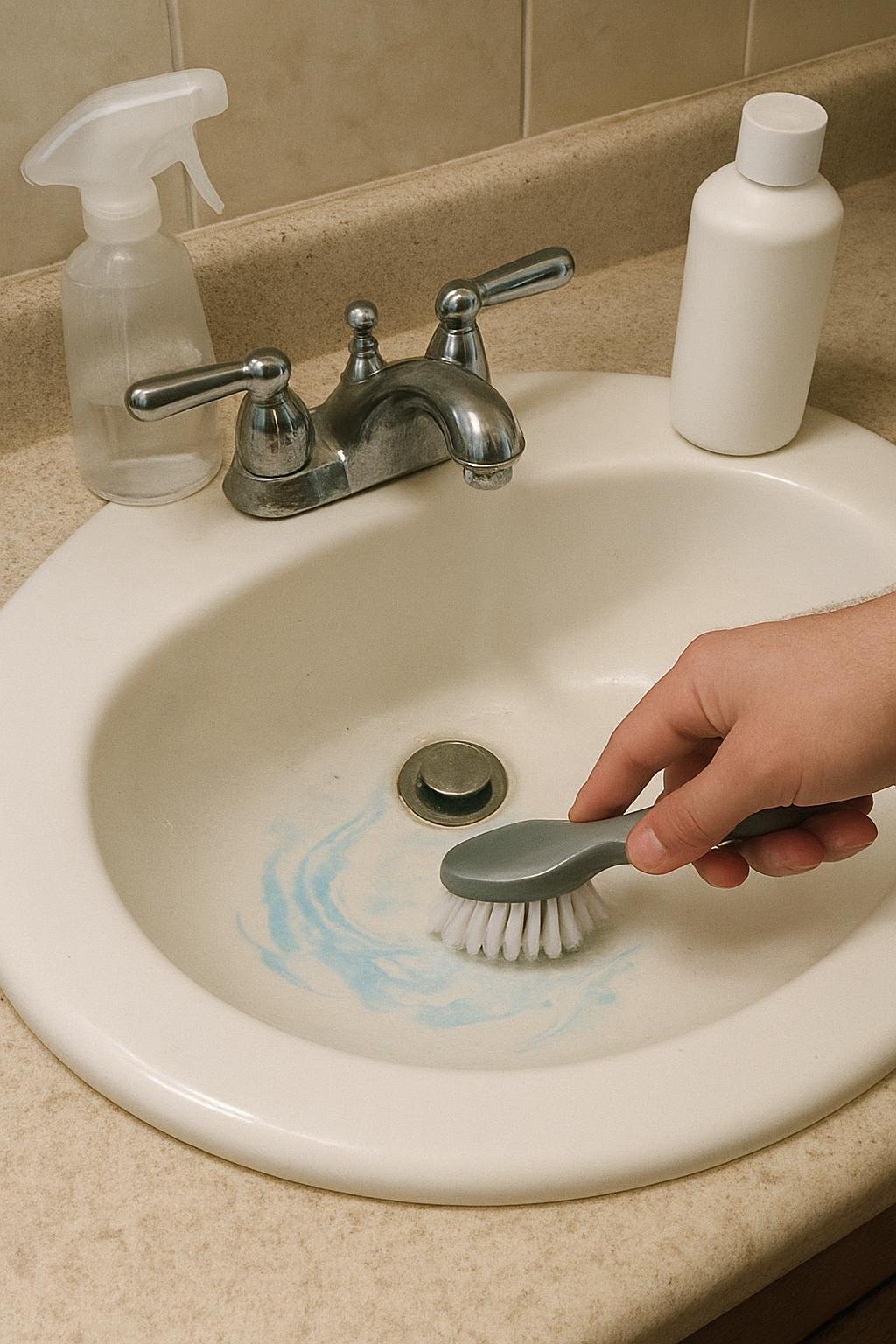
Most toothpaste formulas include mild abrasives, such as silica or baking soda, along with whitening agents and thickeners. When toothpaste dries on a sink surface, those ingredients can leave a chalky, slightly gritty film that clings to the bowl, faucet base, or countertop edge. On smooth, sealed surfaces this residue usually sits on top of the material rather than soaking into it, which is why gentle cleaning is often enough.
Check Your Sink Material Before You Clean
The safest cleaning method depends heavily on what your sink is made of. Treating every surface the same way is one of the most common ways homeowners accidentally dull or scratch a sink while trying to remove toothpaste residue.
- Porcelain or enamel-coated sinks: Generally durable, but the glossy coating can still scratch with abrasive powders or stiff scrub brushes over time.
- Acrylic or fiberglass sinks: Softer than porcelain and more prone to fine scratches, so stick with soft cloths and non-abrasive cleaners.
- Cultured marble or gel-coat sinks: Sensitive to both abrasive scrubbing and acidic cleaners; check the manufacturer’s care instructions before using anything beyond mild soap.
- Natural stone sinks (marble, travertine, granite): Acidic cleaners like vinegar can etch these surfaces, so avoid them and use a stone-safe cleaner if the basic method doesn’t work.
- Stainless steel sinks: Handle mild abrasives reasonably well, but always wipe in the direction of the brushed finish to avoid visible scratch patterns.
Step-by-Step: Removing Toothpaste Stains Safely
- Rinse the area with warm water first. This softens fresh toothpaste and often removes a good portion of it without any scrubbing at all.
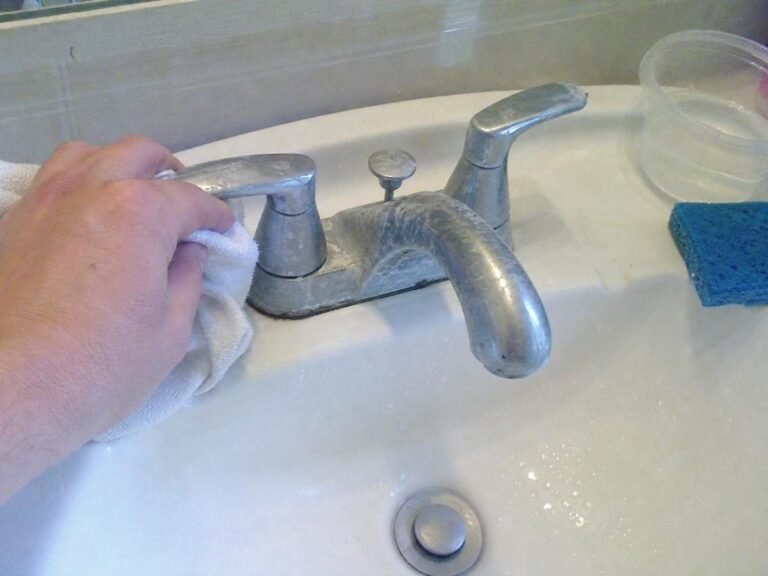
- Apply a small amount of mild dish soap to a soft cloth or non-abrasive sponge. Wipe in gentle circular motions over the residue rather than pressing hard.
- For dried-on film, make a light paste with baking soda and a small amount of water. Apply it directly to the residue and let it sit for a minute or two before wiping with a soft cloth. Avoid this step on natural stone or gel-coat surfaces unless the care instructions confirm it’s safe.
- Rinse thoroughly with clean water. Leftover soap or baking soda residue can attract new grime and make the sink look streaky once it dries.
- Dry the sink with a clean towel. This helps you spot any remaining dull areas or missed residue while the surface is still easy to see clearly.
If the Stain Won’t Fully Lift
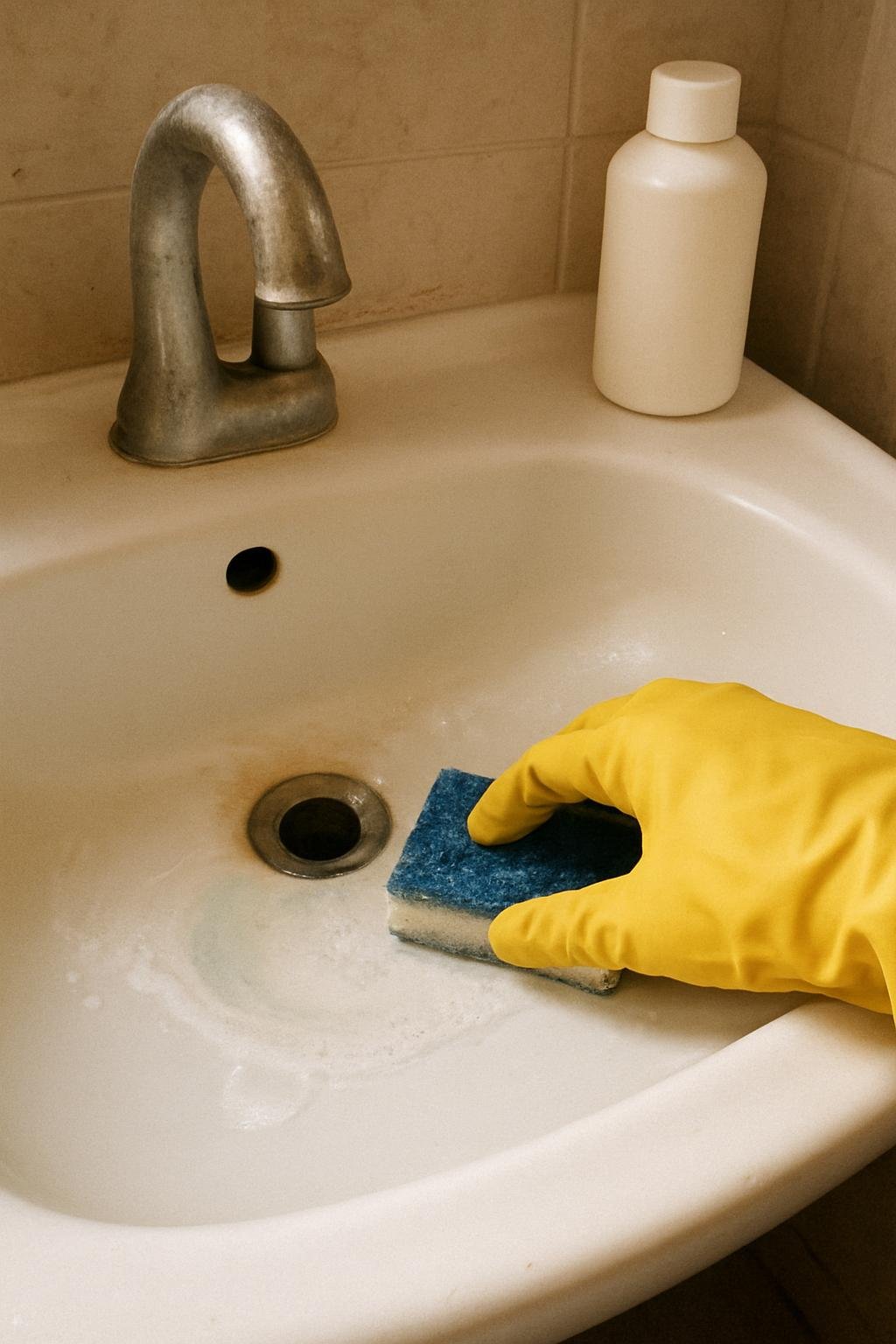
If toothpaste residue has been building up for a while, especially around the drain or faucet base, a single pass with soap and water may not fully remove it. Repeat the baking soda paste step, focusing only on the affected spot rather than scrubbing the entire sink. If you’re dealing with grime that has also worked its way into grout lines near the sink or into the drain opening itself, a targeted approach works better than a general cleaner. For drain-area buildup specifically, this guide on cleaning a sink drain without chemicals covers a gentler method that avoids harsh products near plumbing.
Avoid reaching for bleach, ammonia-based cleaners, or vinegar mixed with other household products to speed up the process. Combining cleaning chemicals can create unsafe fumes, and none of that mixing is necessary for toothpaste residue, which almost always responds to basic soap and gentle mechanical action.
Cleaning Mistakes That Make Toothpaste Stains Worse
- Scrubbing with a stiff brush or steel wool: This can create fine scratches, especially on acrylic, fiberglass, or gel-coat sinks, and scratched areas tend to trap residue more easily afterward.
- Letting toothpaste dry for days before cleaning: Fresh residue wipes away easily, while long-dried film requires more repeated gentle passes.
- Using vinegar on stone or cultured marble: The acidity can dull or etch these surfaces, even if the toothpaste stain itself comes off.
- Skipping the rinse step: Soap or baking soda left behind can dry into its own faint film, which looks similar to the original toothpaste residue.
Preventing Toothpaste Stains Going Forward
A quick rinse after brushing your teeth is the simplest way to prevent buildup, since toothpaste residue is far easier to remove when it’s still wet. Keeping a small squeegee or soft cloth near the sink makes this a fast habit rather than an extra chore. If you’re setting up a regular bathroom routine, a general household cleaning checklist can help you fit a quick sink wipe-down into your existing schedule without adding a separate task to remember.
For sinks with sensitive finishes, avoid setting toothpaste tubes or brushes directly on the basin, since dripped toothpaste that sits undisturbed is more likely to dry and require the baking soda step. A quick daily rinse, paired with the gentle weekly cleaning method above, keeps most sinks looking clear without ever needing an abrasive scrub.
Everything Mentioned Above
Before you leave, grab the tools you need to get the job done right the first time:
*As an Amazon Associate, TidyFormula earns from qualifying purchases.