under Sink Organization for Cleaning Supplies
The best way to organize cleaning supplies under your sink is to group products by category, add stackable bins or a tiered riser to use vertical space, and keep anything corrosive or hazardous upright and away from paper labels or pipes that sweat. A simple caddy or lazy Susan for frequently used items keeps everything visible instead of buried behind the U-bend.
If your under-sink cabinet is small, has a garbage disposal, or has pipes that take up most of the usable space, you may need to rethink storage rather than just adding more bins.
⚡ The TidyFormula™ Quick Decision
Best approach: Sort supplies into categories, use a tiered shelf or stackable bins to work around the plumbing, and store heavier or leak-prone bottles in a lined tray at the bottom.
Use caution with: Bleach, ammonia-based cleaners, and drain products stored near each other. Keep them separated and upright so they can’t mix if a container leaks.
Stop and reassess if: You notice moisture, a musty smell, or swelling on the cabinet floor. That points to a plumbing or condensation issue that needs attention before you reorganize anything.
What I Use For This Job
Using the right tools saves time and protects your belongings. Here are my exact recommendations:
*As an Amazon Associate, TidyFormula earns from qualifying purchases.
Check the Space Before You Buy Organizers
Under-sink cabinets vary a lot depending on the home. Some have a single center pipe and plenty of open floor space. Others have a garbage disposal, a P-trap, and a shutoff valve that eat up most of the usable area. Measure the height, width, and depth on both sides of the pipes before buying bins, risers, or a pull-out drawer system. A riser that fits under one kitchen sink may not clear the disposal unit under another.
Also check for existing moisture, warping, or a musty smell in the cabinet floor. If you find any of these, address the plumbing issue first. Organizing over an active leak just hides the problem and can damage whatever you store there.
Step-by-Step Under-Sink Organization
- Empty the cabinet completely. Take everything out, including old rags, forgotten sponges, and empty bottles. This is the easiest time to check for water stains or a sagging cabinet floor.
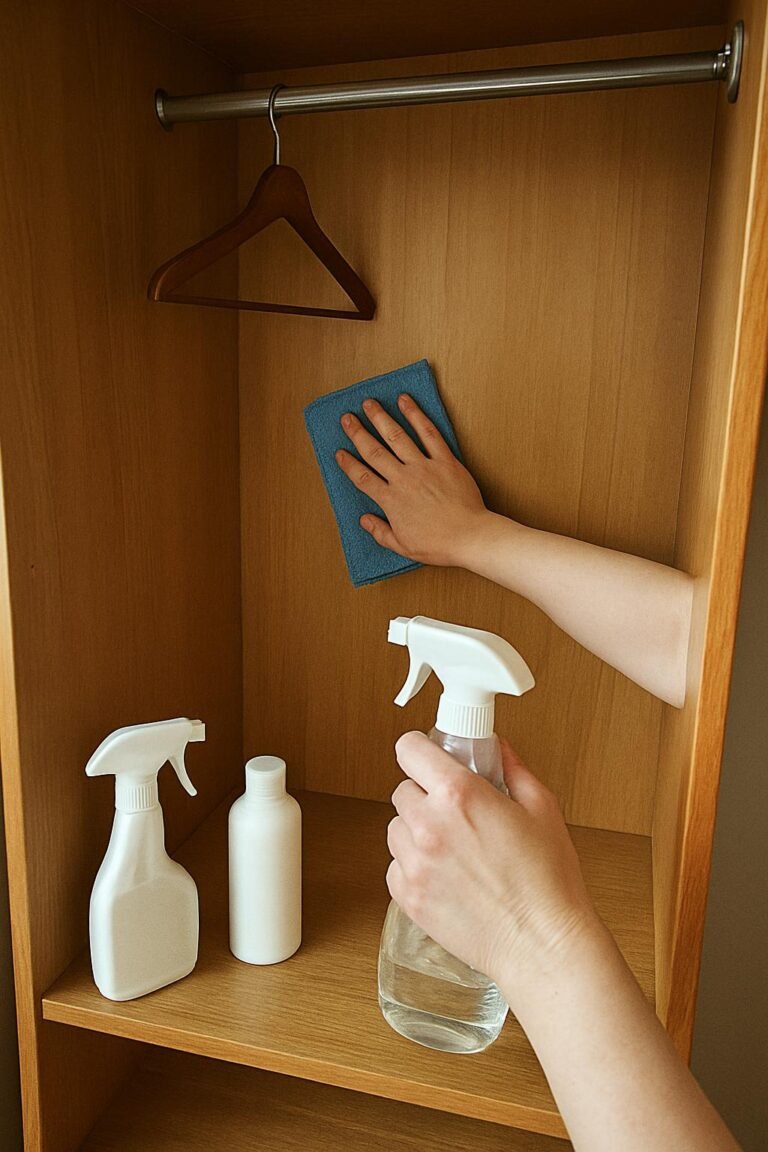
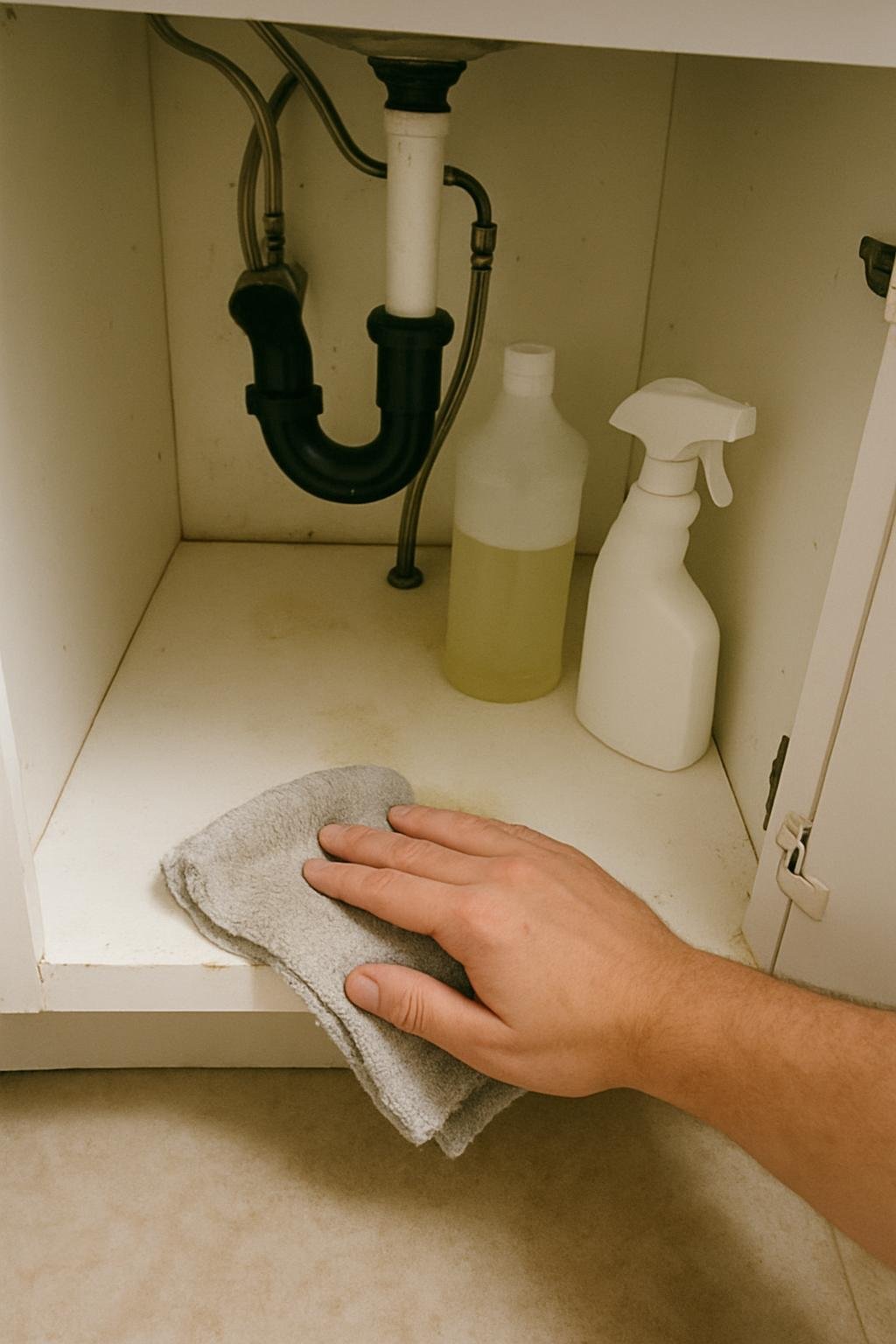
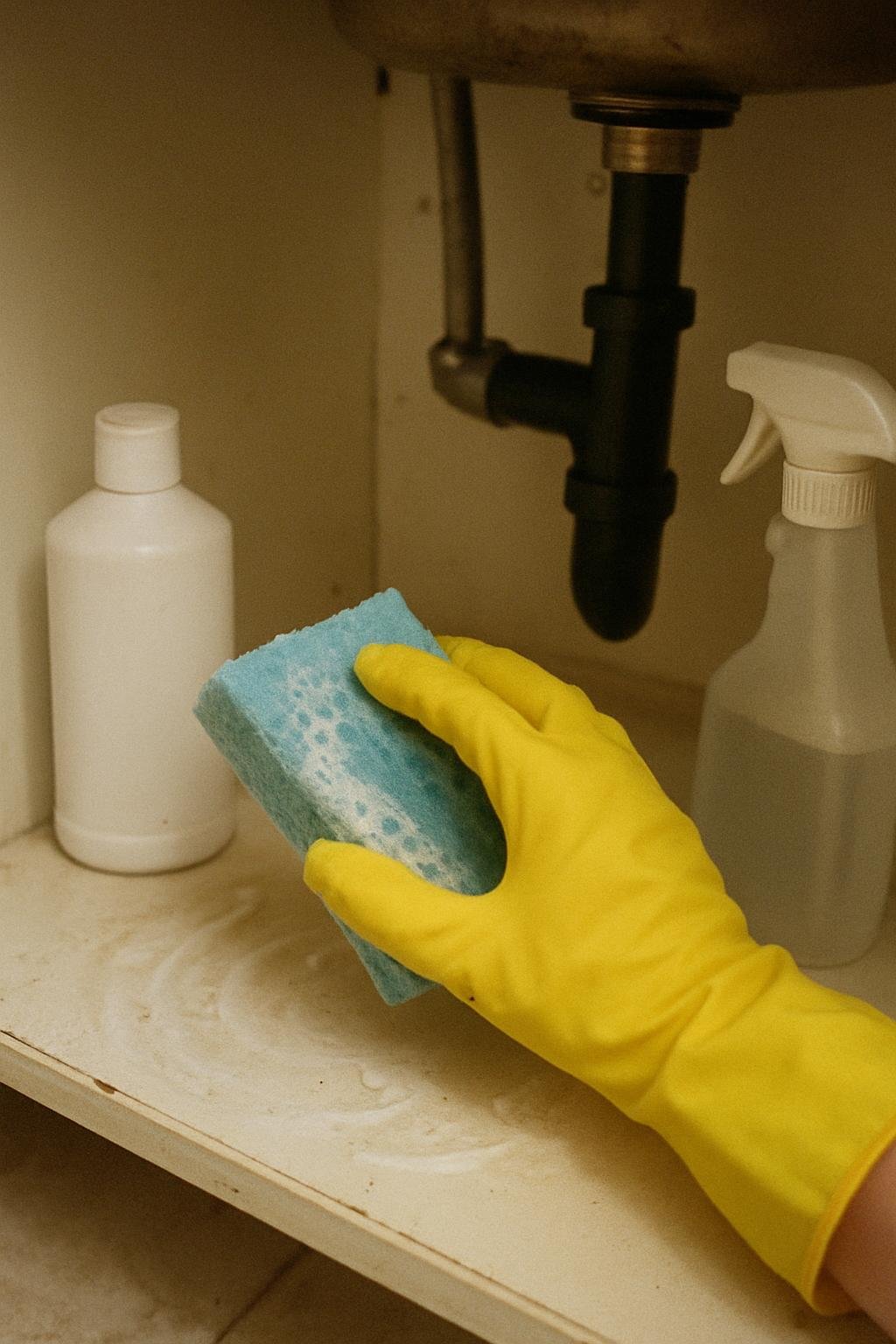
- Wipe down the interior. Dust and grime build up in this spot since it’s rarely emptied. A damp cloth and a mild cleaner suited to the cabinet’s finish work fine for a quick wipe-down.
- Sort supplies into categories. Group by purpose: daily cleaners, occasional-use products, tools like brushes and gloves, and trash bags or liners. This makes it obvious what you actually use and what’s expired or duplicated.
- Measure and add a tiered shelf or riser. A two-tier riser lets you use the vertical space above and around the pipes instead of stacking bottles directly on top of each other.
- Use bins or caddies for grouped items. A shallow bin for daily-use sprays near the front, a deeper bin for backup supplies toward the back. A portable caddy works well if you carry supplies from room to room.
- Add a lined tray or mat at the bottom. This catches minor drips or leaks before they reach the cabinet floor and makes cleanup faster if a bottle does leak.
- Store hazardous or corrosive products upright. Keep bleach, ammonia-based cleaners, and drain openers in their own space, away from each other, with lids fully closed. Never store bleach and ammonia-based products where a leak could let them mix.
- Label bins or shelves if multiple household members share the space. This keeps the system consistent instead of drifting back into clutter after a few weeks.
Under-Sink Organization for Small Spaces
When the cabinet is tight, prioritize vertical storage over horizontal spread. A slim door-mounted rack can hold spray bottles without taking up floor space at all. Over-the-pipe shelves are built specifically to straddle plumbing and add a usable shelf where there would otherwise be dead space.
If floor space is minimal, consider keeping only your most-used supplies under the sink and storing backups or bulk items elsewhere, such as a hall closet or laundry area. Under-sink storage doesn’t have to hold everything you own, just what you reach for regularly.
Mistakes to Avoid
- Stacking bottles directly on top of each other. This makes it hard to see what you have, and it’s easy to knock over the stack when grabbing something from the bottom.
- Ignoring the pipes when choosing organizers. A bin or riser that doesn’t account for the disposal unit or P-trap will either not fit or will block access to the plumbing if you ever need a repair.
- Storing chemicals within reach of small children or pets without a barrier. A childproof latch on the cabinet door is a reasonable addition if young kids or curious pets have access to that space.
- Skipping the leak-check step. Reorganizing without checking for moisture first means you might be storing supplies on top of a slow leak you haven’t noticed yet.
- Mixing categories in one bin. Throwing sponges, chemical sprays, and spare trash bags into a single container defeats the purpose of organizing and makes it harder to find things quickly.
Maintenance Tips
Do a quick check every month or two. Wipe up any dust, confirm bottle caps are tight, and toss anything expired or empty. This is also a good time to glance at the cabinet floor for early signs of moisture. If you notice a slow drip near the drain, a related guide on how to clean a sink drain without chemicals can help you address minor drain issues before they turn into a bigger problem.
If your under-sink setup is part of a larger cleaning routine, pairing it with a household cleaning checklist can help you remember to restock and reorganize on a regular schedule instead of only when the cabinet becomes unmanageable.
When Organizing Isn’t Enough
If you’ve sorted, contained, and labeled everything but the cabinet still feels cramped or chaotic, the issue may be too many duplicate products or supplies you no longer use. Go through each bottle and ask whether you’ve used it in the last few months. If not, consider whether you actually need it under the sink at all. Keeping a rotating cleaning chores checklist nearby can also help you match your supply on hand to what you actually clean on a regular basis, rather than storing products for chores you rarely do.
Everything Mentioned Above
Before you leave, grab the tools you need to get the job done right the first time:
*As an Amazon Associate, TidyFormula earns from qualifying purchases.