Entryway Reset Routine
A good entryway reset takes 10 to 15 minutes and works best when you follow the same order every time: clear clutter first, deal with floor debris second, wipe surfaces third, and reset baskets or hooks last. Doing it in this order keeps you from re-dirtying a surface you already cleaned, which is the most common reason a “quick reset” ends up taking twice as long.
If your entryway doubles as a mudroom, drop zone, or the only path in from the garage, dirt and moisture build up faster, and the reset routine needs a slightly different rhythm than a small apartment landing that just holds shoes and a coat.
⚡ The TidyFormula™ Quick Decision
Best approach: Clear and sort items first, sweep or vacuum debris, wipe hard surfaces, then reset storage so everything has a landing spot.
Use caution with: Unsealed wood floors, natural fiber rugs, and leather or suede shoes, which need drier cleaning methods than tile, vinyl, or sealed floors.
Stop and reassess if: A rug or mat stays damp for more than a day, wood flooring shows dark spots near the door, or the entryway keeps re-cluttering within 24 hours despite a daily reset.
What I Use For This Job
Using the right tools saves time and protects your belongings. Here are my exact recommendations:
*As an Amazon Associate, TidyFormula earns from qualifying purchases.
What to Check Before You Start
Look at what’s actually on the floor and surfaces before grabbing any tools. Dry dirt, gravel, and pet hair need a broom or vacuum first. Skip straight to wiping and you’ll just grind grit into the flooring finish. If there’s mud, melted snow, or standing moisture, that changes your approach, especially on wood or laminate, where trapped moisture near a doorway can eventually cause warping or discoloration if it happens repeatedly.
Also check what the entry mat or rug is made of. A rubber-backed or synthetic mat can usually handle a quick shake-out and damp wipe. A natural fiber mat, like jute or sisal, holds moisture longer and can develop odor or mildew if it’s cleaned too wet or not dried fully afterward.
Entryway Reset Routine Step by Step
- Clear the surfaces first. Pull everything off the console table, bench, or floor: mail, shoes, bags, leashes. Sort into three quick piles as you go — put away, relocate, and trash/recycle. This step alone prevents the “wipe around the clutter” habit that makes resets feel ineffective.
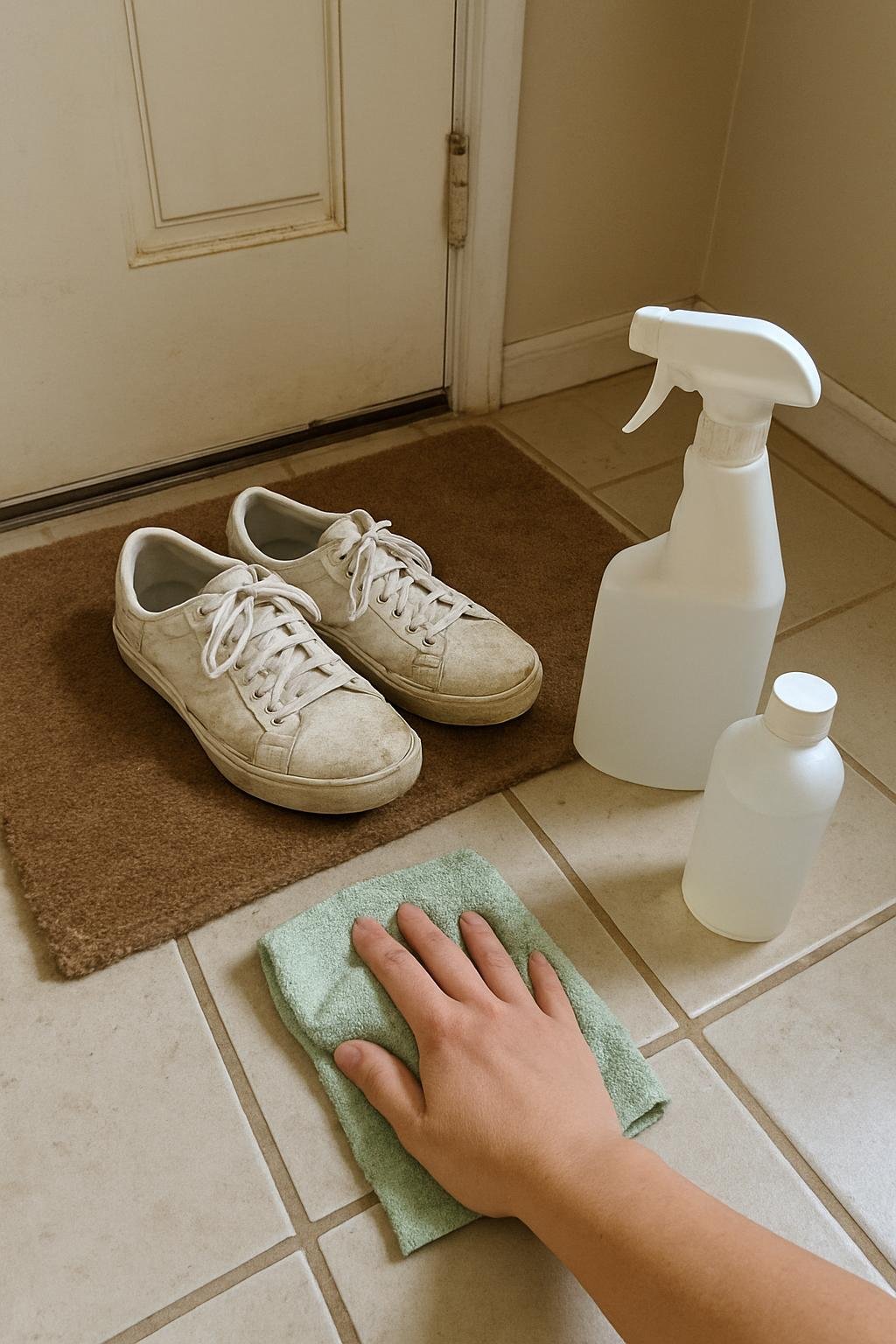
- Shake out or vacuum the mat and rug. Take mats outside and shake them if they’re small enough, or vacuum them in place. For rugs with fringe or a woven texture, vacuum in the direction of the fibers to avoid pulling threads loose.
- Sweep or vacuum the floor. Get corners and along the baseboards, where grit tends to collect. On hard flooring, a slightly damp microfiber mop works well after sweeping; avoid soaking wood floors, since standing water can seep into seams.
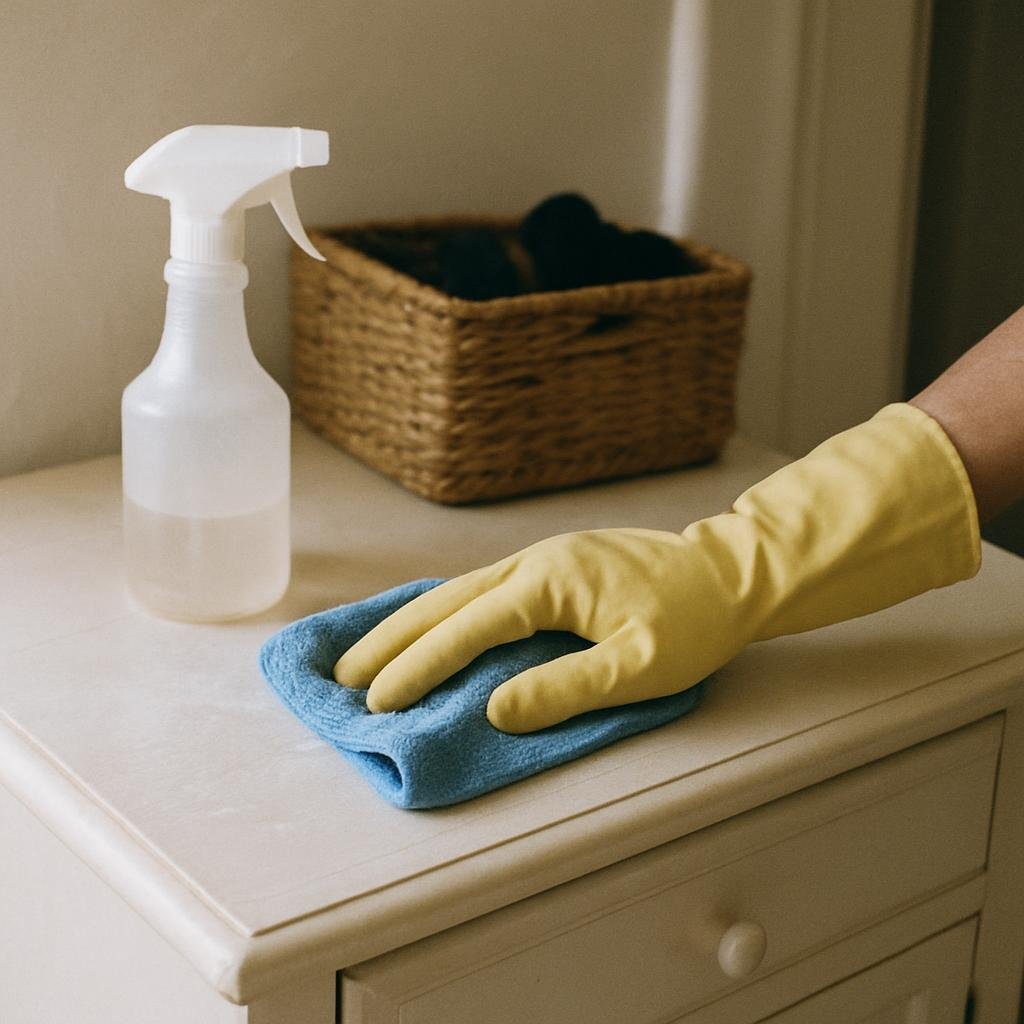
- Wipe hard surfaces. Console tables, shelves, and hooks get a quick wipe with a damp microfiber cloth. Use a cleaner appropriate for the surface finish — a sealed wood table and a painted metal shelf don’t necessarily tolerate the same product, so check the manufacturer’s care guidance if you’re unsure.
- Spot-treat shoes and bags if needed. Brush off dried mud before it gets worked into fabric or leather. Leather and suede should be treated with products made for those materials rather than an all-purpose cleaner, since the wrong product can dry out or discolor the surface.
- Reset the storage system. Hang coats, line up shoes, return keys and leashes to their hook or bowl. This is the step that determines whether tomorrow’s entryway looks like today’s clean version or reverts to clutter by evening.
Best Way to Handle a Small Entryway
In a small entryway, the reset routine matters more, not less, because there’s no room to let things pile up before it becomes unusable. Focus on vertical storage — wall hooks, a slim shoe rack, or a single tray by the door — so the reset is mostly about returning items to a fixed spot rather than finding space for them each time.
Skip large rugs in a tight space if they trap moisture against baseboards or a door threshold. A smaller, washable mat that you can toss in the laundry (if the care label allows machine washing) is easier to keep clean than a large rug you have to clean in place.
Mistakes That Undo the Reset
Wiping surfaces before sweeping is one of the most common issues, since it just moves grit into whatever cleaner you’re using instead of removing it. Another is using a soaking-wet mop on wood or laminate near an entry door, which can leave moisture sitting in seams longer than it takes to evaporate elsewhere in the house.
Skipping the “put away” step is the other big one. A reset that ends with a neat pile of stuff still sitting on the bench isn’t actually finished, it’s just relocated clutter, and it will feel undone again within a day.
Keeping the Entryway Reset Working Long-Term
A daily reset works best when it’s short and consistent rather than deep and occasional. Five minutes each evening — mat shake-out, quick surface wipe, items returned to their spot — usually prevents the kind of buildup that requires a longer deep clean later.
Plan a deeper clean every week or two depending on foot traffic, weather, and pets. That’s when you vacuum under the bench, wash a machine-safe mat if the label allows it, and check the floor near the door for any signs of trapped moisture or wear that a quick daily wipe wouldn’t catch.
If dried debris or tracked-in stains do end up on nearby carpet or rugs, treating them early makes a real difference; for dried, stuck-on messes like slime tracked in from outside, a guide like how to get dried slime out of carpet can help you avoid scrubbing it deeper into the fibers.
Everything Mentioned Above
Before you leave, grab the tools you need to get the job done right the first time:
*As an Amazon Associate, TidyFormula earns from qualifying purchases.