
Clean Stainless Steel with Vinegar: A Simple Guide to Shiny Appliances
Vinegar can be an effective, budget-friendly way to clean stainless steel appliances, sinks, and cookware because its mild acidity helps loosen grease, fingerprints, and water spots without leaving behind a heavy chemical residue. Diluted white vinegar works well for everyday cleaning, but it should always be used with a soft cloth, wiped in the direction of the grain, and followed by a light coat of oil to help reduce future streaking. For appliance-specific tips, see our guide to cleaning a stainless steel fridge.
⚡ The TidyFormula™ Quick Decision
Best approach: Spray diluted white vinegar onto a soft microfiber cloth, wipe with the grain of the steel, then dry and polish with a clean cloth to prevent streaking.
Use caution with: Colored or coated stainless finishes, textured surfaces, and any stainless steel with a manufacturer-applied protective coating, since vinegar’s acidity may dull certain finishes over time.
Stop and reassess if: You notice dulling, discoloration, or a change in finish after testing a small area, or if the manufacturer’s care instructions specifically advise against acidic cleaners.
Why Vinegar Works on Stainless Steel
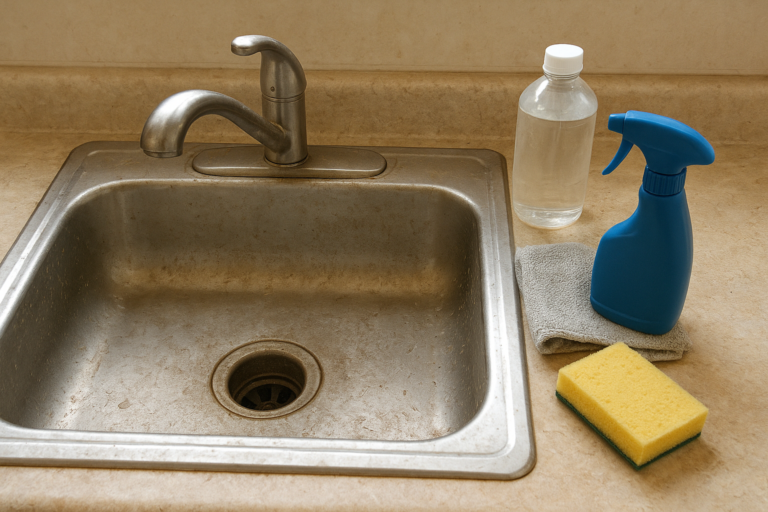
Stainless steel is prized for its resistance to rust and staining, but it still shows fingerprints, water spots, and light grease film. White vinegar’s mild acidity helps break down these surface deposits without the abrasiveness of scouring powders. Because it evaporates cleanly and doesn’t leave a heavy film, many people prefer it to some commercial glass or all-purpose cleaners for routine touch-ups.
What I Use For This Job
Using the right tools saves time and protects your belongings. Here are my exact recommendations:
*As an Amazon Associate, TidyFormula earns from qualifying purchases.
That said, vinegar is not a universal solution. Some stainless steel appliances have a special coating designed to resist fingerprints or add color, and acidic cleaners are not always compatible with those finishes — learn more about surfaces you should never clean with vinegar. Always check the manufacturer’s care instructions or the appliance manual before using vinegar regularly, especially on newer or specialty finishes.
What You’ll Need
- White vinegar (undiluted or diluted with water, depending on the level of grime)
- A spray bottle
- Soft microfiber cloths (at least two: one for cleaning, one for drying)
- A small amount of cooking oil or mineral oil (optional, for polishing)
If you prefer alternatives or want a broader set of safe at-home options, our roundup of homemade cleaning solutions that are actually safe is a helpful reference.
Step-by-Step: Cleaning Stainless Steel with Vinegar
- Test first. Apply a small amount of diluted vinegar to an inconspicuous area and wipe with a soft cloth. Check for any dulling or change in finish before treating the entire surface.
- Identify the grain. Most stainless steel appliances have a visible brushed pattern. Wiping in the same direction as this grain helps avoid streaks and won’t create new scratches.
- Spray lightly. Mist the vinegar directly onto a cloth rather than the appliance itself to avoid oversaturating seams, control panels, or edges where liquid could seep in.
- Wipe with the grain. Use light, even pressure to clean away fingerprints, smudges, and light grease. For stuck-on residue, let the vinegar sit for a short time before wiping again.
- Dry immediately. Use a second dry, clean cloth to buff the surface dry. Leaving moisture on stainless steel can encourage water spots, especially in humid kitchens.
- Optional polish. A few drops of cooking oil or mineral oil on a dry cloth, buffed lightly with the grain, can help reduce fingerprints and add a light sheen. Use sparingly—too much oil attracts dust and looks greasy.
Handling Tougher Spots
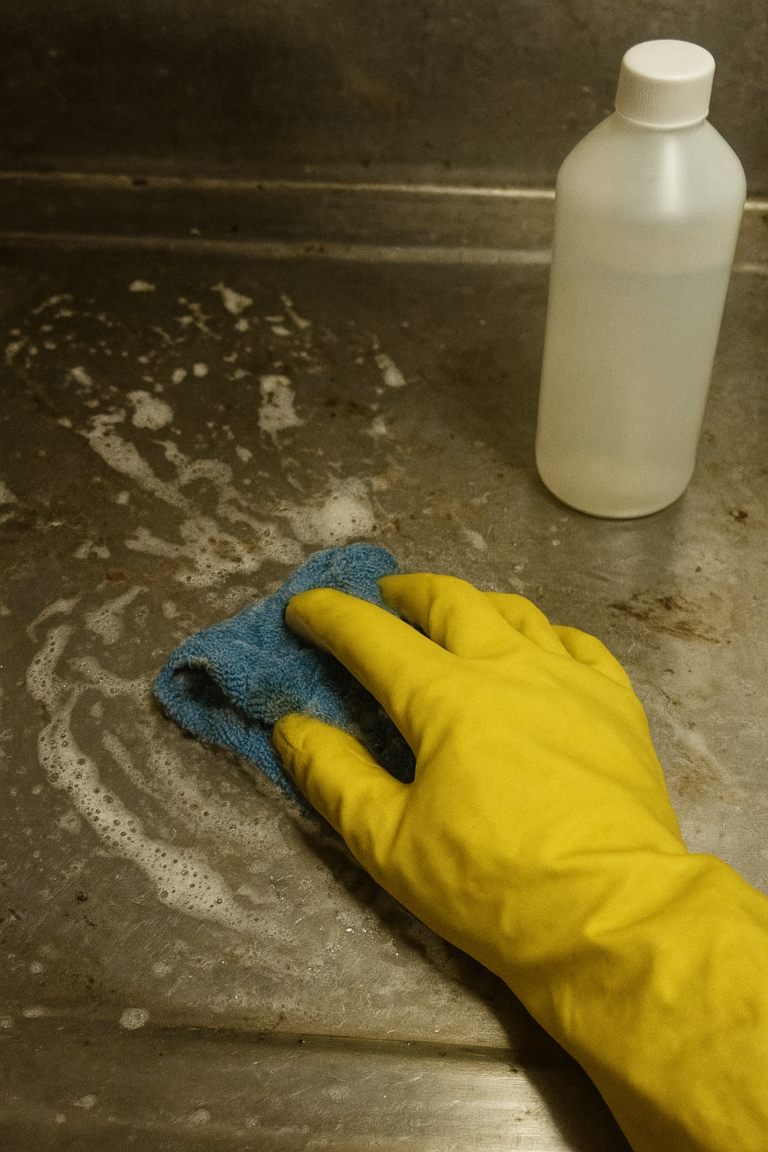
For dried-on food splatters or hard water spots, letting straight (undiluted) vinegar sit on the area for a few minutes before wiping can help loosen the residue. Avoid using metal scouring pads or abrasive powders, which can scratch the surface and create permanent dullness. If a spot doesn’t lift easily, repeat gentle wiping rather than scrubbing harder.
For heavily greasy areas near a cooktop, remove and degrease removable parts (for example, a range hood filter) separately rather than spraying the whole hood in place. That approach prevents oversaturation of internal components and concentrates stronger degreasing where it’s safe to do so.
Rust spots or pitting are a different issue. Vinegar is not a reliable solution for actual rust damage on stainless steel, and using it repeatedly on such areas is unlikely to help and could make the surface look worse. If you notice pitting, discoloration that won’t clean off, or actual rust, it may be worth consulting the appliance manufacturer or a professional about repair options rather than continuing to treat it as a routine cleaning issue.
Where to Be Extra Careful
- Colored or coated stainless steel: Some appliances use tinted or fingerprint-resistant coatings that may not tolerate acidic cleaners well. Check your owner’s manual first.
- Cookware with non-stick coatings: If a pan has a non-stick interior, avoid applying vinegar to that portion; it’s generally intended for the exterior stainless surface only, and even then, always check the manufacturer’s care instructions.
- Textured or matte finishes: These can show streaks differently than glossy brushed steel. Test a small area first.
- Electrical components: Never spray vinegar directly near control panels, vents, or seams where liquid could enter the appliance. For routine appliance maintenance beyond surface cleaning (fans, coils, or similar components), follow the manufacturer’s service guidance closely and consult maintenance guides such as cleaning refrigerator coils if needed.
Drying and Aftercare
Thorough drying is one of the most important steps when cleaning stainless steel, regardless of what cleaner you use. Water left to air-dry often leaves mineral spots, particularly in areas with hard water. Buffing dry with a soft, lint-free cloth immediately after cleaning gives the best chance of a streak-free finish.
If you choose to apply a light oil finish afterward, use it sparingly and reapply only occasionally—daily oiling isn’t necessary and can lead to a buildup that attracts dust and fingerprints more easily.
Preventing Future Buildup
- Wipe up spills and splatters promptly rather than letting them dry on the surface.
- Use a soft cloth for daily wipe-downs instead of paper towels, which can sometimes leave lint or minor scuffing on glossy finishes.
- Clean in the direction of the grain consistently to avoid a mismatched, streaky appearance over time.
- Keep a dedicated microfiber cloth near frequently touched appliances, like refrigerator doors, for quick fingerprint touch-ups between deeper cleanings.
For a regular maintenance plan that avoids harsh chemicals while keeping surfaces fresh, consider a non-toxic cleaning routine for the whole house that pairs routine vinegar touch-ups with other safe methods and spot tests.
When to Consider a Different Approach
If vinegar isn’t cutting through grease effectively, or if your appliance’s care instructions caution against acidic cleaners, a dedicated stainless steel cleaner formulated for appliances may be a better fit. These products are often designed with the manufacturer’s finish in mind and may perform more predictably on coated or specialty surfaces. As always, avoid combining any cleaning products, including vinegar, with other household chemicals, since mixing cleaners can create unpredictable and potentially hazardous reactions.
Final Thoughts
Vinegar remains a practical, low-cost option for maintaining the everyday shine of many stainless steel surfaces, especially for routine fingerprint and light grease removal. Just remember that finishes vary by manufacturer and model, so a quick spot test and a look at the care label can save you from unexpected dulling or streaking. When in doubt, especially with coated or specialty stainless finishes, checking manufacturer guidance is the safest first step before making vinegar part of your regular cleaning routine. For deeper appliance maintenance beyond surface cleaning, such as coils or mechanical parts, refer to the manufacturer’s instructions and specific maintenance guides like how to clean refrigerator coils.
Everything Mentioned Above
Before you leave, grab the tools you need to get the job done right the first time:
*As an Amazon Associate, TidyFormula earns from qualifying purchases.