How to Remove Pee Stains from a Mattress: Quick Stain Removal Tips
Getting rid of pee stains on a mattress usually comes down to acting fast, using a mild enzyme-based cleaner or a vinegar-and-water solution, blotting rather than scrubbing, and drying the area thoroughly. Fresh stains respond better than old, set-in ones, and the right approach can depend on your mattress cover, foam type, and how long the stain has been there.
⚡ The TidyFormula™ Quick Decision
Best approach: Blot up excess moisture right away, then treat the area with a diluted enzyme cleaner or a vinegar-and-water mixture, letting it sit briefly before blotting again and allowing the mattress to air dry completely.
Use caution with: Memory foam, which absorbs liquid differently than innerspring mattresses, and any mattress with a specific care label that restricts wet cleaning or certain chemicals.
Stop and reassess if: The stain is old, deeply set, or covers a large area, if odor persists after multiple treatments, or if the mattress shows signs of sagging or damage that a cleaning won’t fix.
Why Pee Stains Are Tricky to Remove
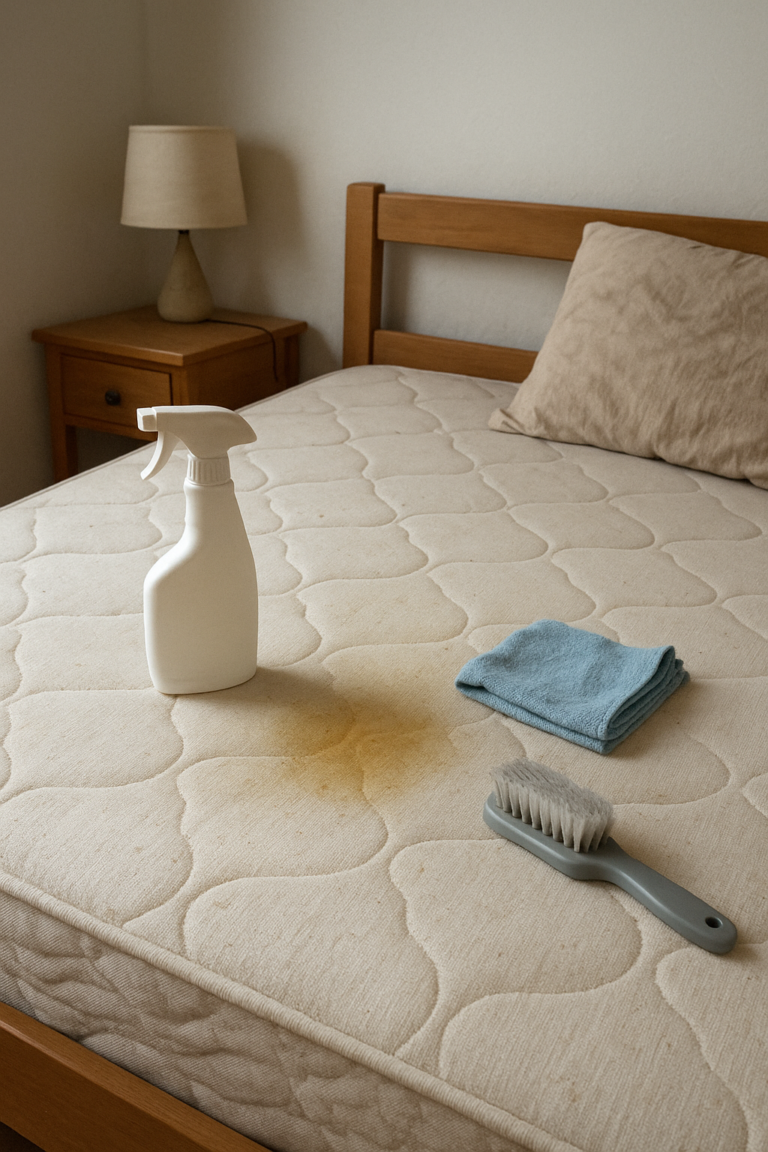
Urine soaks into mattress layers quickly, especially foam and quilted covers, which makes surface cleaning alone often insufficient. As the stain dries, it can become harder to lift, and any odor that develops tends to linger longer than the visible mark. This is why speed matters more than any specific product you choose.
What I Use For This Job
Using the right tools saves time and protects your belongings. Here are my exact recommendations:
*As an Amazon Associate, TidyFormula earns from qualifying purchases.
Before You Start: Check the Care Label
Mattress covers and construction vary quite a bit between manufacturers, so it’s worth checking any tags or manufacturer instructions before applying cleaners. Some covers are removable and machine washable, while others are attached and only spot-cleanable. Foam mattresses in particular can be sensitive to excess moisture, since foam dries much more slowly than the padding on an innerspring mattress.
Step-by-Step: Treating a Fresh Pee Stain
- Blot immediately. Use clean, absorbent towels or paper towels to soak up as much liquid as possible. Press firmly rather than rubbing, which can push the stain deeper into the mattress layers.
- Apply a cleaning solution. A mild enzyme-based cleaner made for organic stains, or a simple mixture of white vinegar and water, can help break down the stain. Apply it lightly with a spray bottle or damp cloth rather than pouring it directly onto the mattress.
- Let it sit briefly. Give the solution a short amount of time to work before blotting again. Avoid soaking the mattress, since oversaturation can lead to longer drying times and potential issues with the internal materials.
- Blot again with a dry towel. Continue blotting until the area feels only slightly damp rather than wet.
- Sprinkle baking soda (optional). Once the area is mostly dry, a light layer of baking soda left on the surface for a while and then vacuumed up can help with residual odor—see alternatives for how to deodorize a mattress without baking soda if you prefer not to use powder.
Treating Older or Set-In Stains
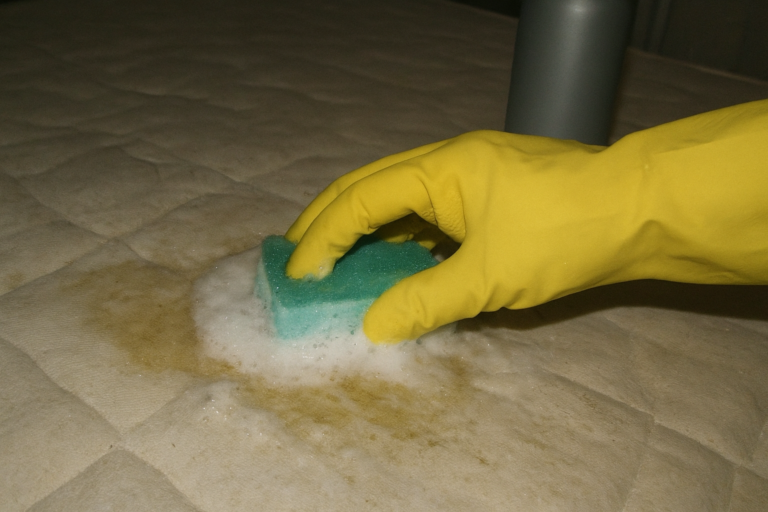
Dried or older stains often require more patience. Reapplying an enzyme cleaner in light layers, allowing each application to sit and then blotting thoroughly, may gradually lighten the mark. Repeated treatments are sometimes necessary, and it’s realistic to expect that some discoloration may remain even after odor is addressed, particularly on lighter-colored mattress covers. For hands-on, low-moisture options and manual techniques when you don’t have a vacuum, see this guide on how to clean a mattress without a vacuum.
What to Avoid
- Do not soak the mattress with large amounts of liquid, since excess moisture can be difficult to dry fully and may affect foam or padding over time.
- Do not mix different household cleaning chemicals together, as combining products can create unpredictable and potentially hazardous reactions.
- Avoid scrubbing aggressively, which can spread the stain or damage the mattress fabric.
- Skip harsh bleach-based products unless your specific mattress cover’s care instructions confirm they’re safe, since bleach can weaken or discolor many fabrics.
Drying the Mattress Thoroughly
After treatment, drying is just as important as the cleaning itself. Point a fan toward the damp area, open windows if possible, and allow several hours or longer for the mattress to dry completely before making the bed again. Standing the mattress on its side, if practical, can speed up airflow through the affected layer. Using the mattress while it’s still damp isn’t recommended, since trapped moisture in foam or padding can lead to lingering odor or other issues over time.
Managing Odor After Cleaning
Some odor may persist even after the visible stain is gone, particularly with older accidents. Enzyme cleaners are generally formulated to target the organic compounds that cause odor, but results can vary depending on how deeply the urine penetrated and how quickly it was treated. If odor remains noticeable after a few cleaning attempts and thorough drying, specialized pet-urine methods may be necessary—see this practical guide for cleaning dog urine from a mattress for more aggressive odor removal steps.
When to Consider Replacement
Not every stain is worth chasing indefinitely. If a mattress has multiple old stains, persistent odor that doesn’t improve with cleaning and drying, or visible sagging and wear, it may be more practical to look into a mattress protector for future use and consider whether replacement makes more sense than continued treatment. A mattress that’s several years old and already showing signs of wear may not be worth extensive cleaning effort compared to a newer one.
Preventing Future Stains
- A waterproof or water-resistant mattress protector can catch accidents before they reach the mattress itself, and most protectors are far easier to wash or replace than the mattress.
- For households with young children, pets, or anyone prone to nighttime accidents, layering a washable pad on top of a protector adds an extra buffer.
- Address any accidents as soon as they’re noticed rather than waiting, since fresh stains are consistently easier to manage than ones that have had time to set.
Final Thoughts
Removing pee stains from a mattress is usually manageable with prompt blotting, a gentle cleaning solution, and thorough drying, though results depend on the stain’s age, your mattress materials, and any care-label restrictions. When in doubt about a specific mattress type or cleaning product, checking the manufacturer’s instructions can help you avoid unnecessary damage while still tackling the stain effectively.
Everything Mentioned Above
Before you leave, grab the tools you need to get the job done right the first time:
*As an Amazon Associate, TidyFormula earns from qualifying purchases.