How to Clean Silver Plate: Safe Methods and Precautions
Silver plate cleans best with a gentle, low-abrasion approach: a soft cloth, mild dish soap and warm water for everyday grime, followed by a silver-specific polish only when tarnish appears. Because the silver layer is thin, avoid harsh rubbing, abrasive powders, or prolonged soaking, which can wear through the plating and expose the base metal underneath. (See how rust and soap scum respond to prolonged soaking on metal items for a metal-specific example.)
⚡ The TidyFormula™ Quick Decision
Best approach: Wash with mild dish soap and warm water using a soft cloth, dry immediately, and use a cream or liquid silver polish formulated for silver plate only when tarnish is visible.
Use caution with: Worn or thin plating, antique pieces with detailed engraving, and any item where the base metal is already showing through—these are more vulnerable to further wear.
Stop and reassess if: You notice copper or brass showing through the surface, the plating flakes or lifts, or the item has sentimental or antique value that might warrant a professional silver restorer instead of home cleaning.
Understanding Silver Plate Before You Clean It
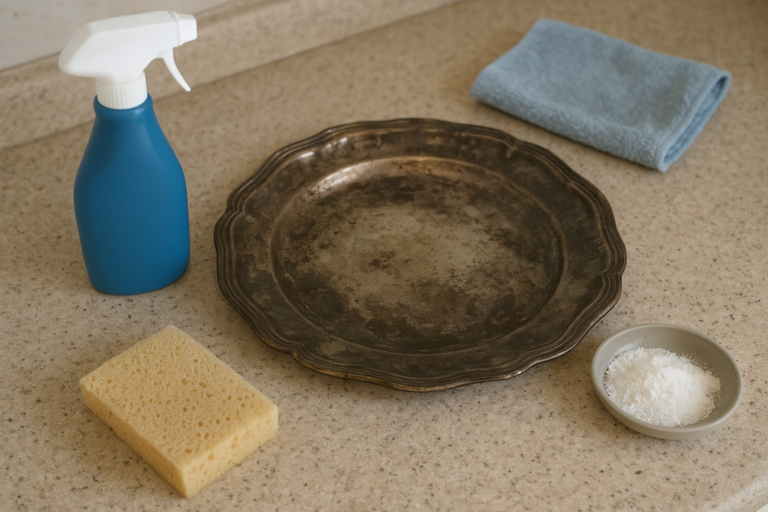
Silver plate is a base metal—often copper, brass, or nickel alloy—coated with a thin layer of actual silver. Unlike sterling silver, which is solid silver throughout, the silver layer on plated items can wear thin over time or with repeated aggressive cleaning. This matters because a cleaning method that’s perfectly safe for solid sterling could gradually strip the plating on a plated piece.
What I Use For This Job
Using the right tools saves time and protects your belongings. Here are my exact recommendations:
*As an Amazon Associate, TidyFormula earns from qualifying purchases.
Before cleaning, look closely at the item. Check the base or underside for stamps like “EPNS” (electroplated nickel silver), “silver plate,” or a manufacturer’s mark. If you’re unsure whether something is solid silver or plated, treating it with gentler methods like cleaning silver without polishing is the safer default.
Everyday Cleaning for Silver Plate
- Avoid the dishwasher. Fill a basin with warm water and a small amount of mild dish soap. Avoid the dishwasher (see our guide on gold-plated silverware and dishwashers), since heat, harsh detergents, and contact with other metals can accelerate tarnishing or damage the plating.
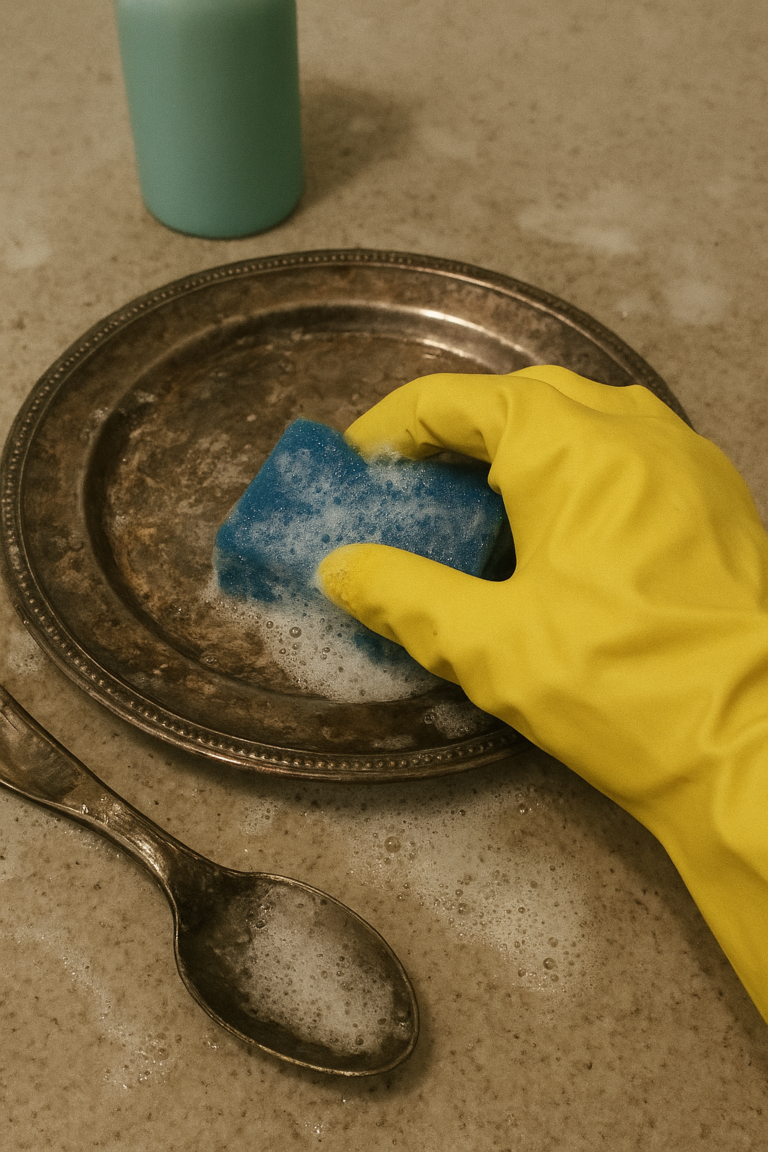
- Use a soft cloth or sponge. Gently wipe the surface, paying attention to crevices in decorative patterns where grime collects.
- Rinse thoroughly. Soap residue left on the surface can attract dust and contribute to spotting.
- Dry immediately and completely. Use a soft, lint-free cloth. Air-drying or letting moisture sit on the surface can encourage tarnish and water spots.
Removing Tarnish from Silver Plate
Tarnish is a natural surface reaction that dulls silver over time. When it appears, a silver polish made specifically for silverware or silver-plated items is generally the safer choice over generic metal polishes, since formulations vary in abrasiveness.
A few practical steps:
- Read the product label and check for any guidance about use on plated silver specifically, since some polishes are formulated with sterling silver in mind.
- Apply a small amount of polish to a soft cloth rather than directly onto the item.
- Rub gently in straight, light strokes rather than circular scrubbing motions, and avoid pressing hard on raised patterns or engraved areas where plating tends to be thinner.
- Wipe away polish residue with a clean, soft cloth.
- Rinse if the product label recommends it, then dry completely.
Avoid acidic home remedies on plated pieces—see our guide to surfaces you should never clean with vinegar for examples of finishes and materials that acids can damage.
If tarnish is heavy or the piece has intricate detailing, consider working in small sections and checking your progress often rather than applying continuous pressure in one spot.
What to Avoid
- Abrasive scrubbers or powders. Steel wool, scouring pads, or gritty cleaning powders can scratch through the thin silver layer.
- Prolonged soaking. Leaving silver plate submerged for extended periods can loosen handles, weaken glued elements on items like trophies or candlesticks, and increase tarnish risk on undried surfaces.
- Rubber bands, wool, and newspaper contact. Some materials can accelerate tarnishing when left in direct contact with silver for long periods.
- Mixing cleaning products. Never combine different household cleaners or polishes in an attempt to boost results; stick to one product used as labeled.
- High heat. Dishwashers, hot water soaks, and direct heat sources can stress the plating and any soldered joints. Excess heat and mineral exposure also accelerate deposits and finish damage on metal fixtures—see how to remove limescale from bathroom faucets for more on protecting plated finishes.
Troubleshooting Common Issues
Plating Looks Worn or Base Metal Is Showing
Once you see brass or copper coming through, cleaning products won’t restore the silver layer—that requires re-plating by a professional. At this point, gentle cleaning to remove surface grime is fine, but avoid polishing directly over the worn spot, since continued rubbing will only widen it.
Stubborn Tarnish in Crevices
A soft-bristled brush, such as one designed for delicate cleaning tasks, can help reach into decorative grooves. Use light pressure and check often to avoid over-polishing raised design elements, which tend to wear faster than flat surfaces.
Water Spots or Streaking
These usually result from air-drying instead of hand-drying. Rewashing and immediately towel-drying with a soft cloth typically resolves this.
Caring for Antique or Sentimental Silver Plate
Older silver-plated items—family heirlooms, antique trophies, or vintage serving pieces—may have thinner plating from age and prior cleanings, more fragile soldered joints, or decorative elements like ivory or wood handles that require different care than the metal itself. If a piece has significant sentimental, historical, or monetary value, or if you’re uncertain about its condition, consulting a professional silver or antiques restorer before attempting home cleaning is a reasonable precaution.
Preventing Tarnish Between Cleanings
- Store with anti-tarnish materials. Anti-tarnish cloths or strips designed for silver storage can slow the tarnishing process when items aren’t in regular use.
- Keep items dry and covered. Humidity and exposure to open air both contribute to tarnish buildup.
- Handle with clean, dry hands. Oils and residue from skin can transfer to the surface and contribute to spotting over time.
- Use regularly. Silver plate that’s used and lightly cleaned on a routine basis often tarnishes more slowly than pieces left untouched in storage for long stretches.
When to Consider Professional Help
If a silver-plated item is valuable, has visible wear through to the base metal, has loose or damaged parts, or simply hasn’t responded to gentle home cleaning, a professional silver restoration service can assess whether re-plating, repair, or specialized cleaning is the better path forward. For everyday flatware and serving pieces without significant damage, the routine care described above is generally sufficient to keep them looking presentable.
Everything Mentioned Above
Before you leave, grab the tools you need to get the job done right the first time:
*As an Amazon Associate, TidyFormula earns from qualifying purchases.