Dishwasher Not Cleaning Properly: Quick Troubleshooting and Fixes
If your dishwasher isn’t cleaning dishes well, the most common causes are clogged spray arms, a dirty filter, hard water buildup, overloading, using the wrong detergent, or water that isn’t getting hot enough. Working through these issues in order—starting with the filter and spray arms—resolves most cleaning problems without needing a repair technician.
⚡ The TidyFormula™ Quick Decision
Best approach: Start with the simplest, most common culprits: clean the filter, clear the spray arm holes, run an empty cycle with a dishwasher cleaner or plain white vinegar, and check that dishes aren’t blocking water spray. These steps fix the majority of cleaning complaints.
Use caution with: Hard water deposits, which may need repeated treatments rather than one cleaning cycle; older machines with worn seals or heating elements, which have physical limitations that cleaning alone won’t fix; and detergent packs or gels, which can behave differently depending on your machine’s age and water hardness.
Stop and reassess if: Dishes remain gritty or filmy after several cleaning attempts, water isn’t draining or filling properly, you hear unusual grinding noises, or the machine shows error codes—these point to a mechanical or plumbing issue that may need a professional or manufacturer support.
Why Your Dishwasher Isn’t Cleaning Properly
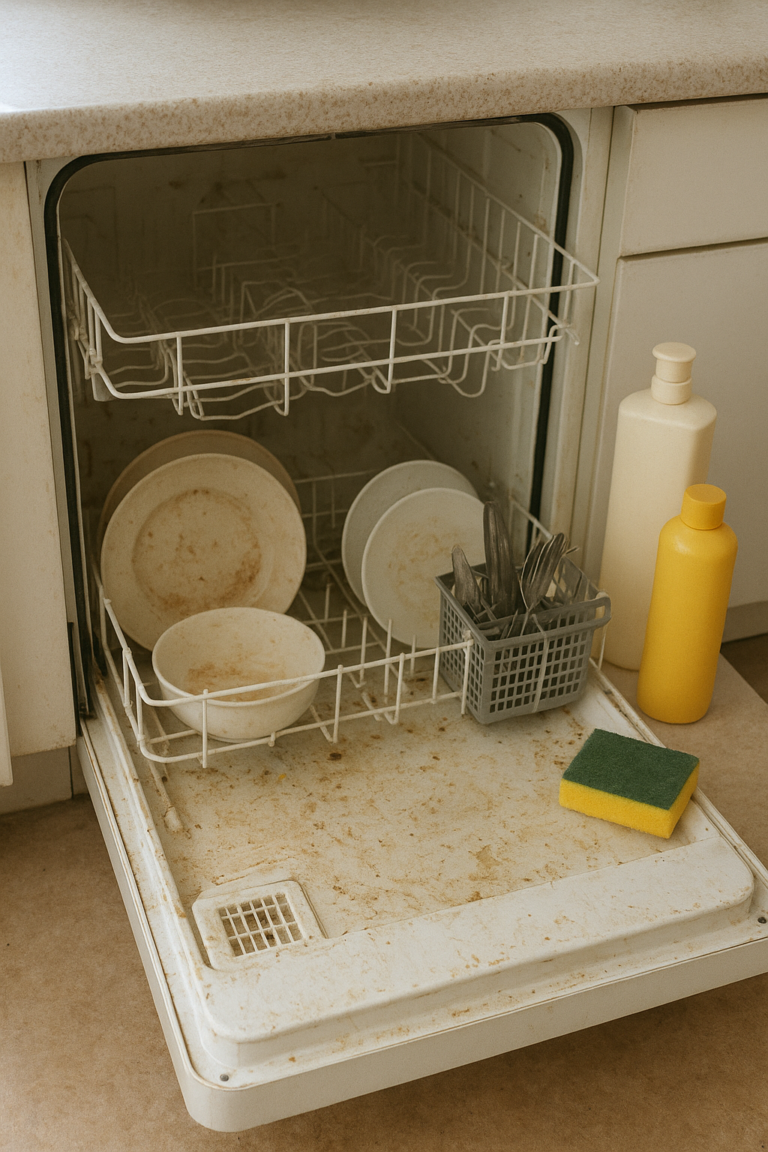
A dishwasher relies on hot water, water pressure through the spray arms, detergent, and a functioning filter to remove food residue. When any one of these elements is compromised, you’ll notice cloudy glasses, gritty plates, or leftover food particles even after a full cycle. Most issues trace back to maintenance rather than a broken machine, so it’s worth working through some basic troubleshooting before assuming you need a repair or replacement.
What I Use For This Job
Using the right tools saves time and protects your belongings. Here are my exact recommendations:
*As an Amazon Associate, TidyFormula earns from qualifying purchases.
Check and Clean the Filter First
Most modern dishwashers have a removable filter at the bottom of the tub, and it’s one of the most overlooked maintenance items. A clogged filter blocks water circulation and can leave food particles redepositing onto your dishes.
- Locate the filter assembly, usually found by twisting or lifting a cylindrical or flat component at the bottom of the dishwasher.
- Remove it according to your owner’s manual—some filters twist out, others lift straight up.
- Rinse it under running water and use a soft brush to remove trapped food debris, grease, or mineral buildup.
- Check the manual for whether your specific filter is dishwasher-safe or should only be hand-washed.
- Reinsert the filter securely; a loose or improperly seated filter can affect performance.
Filter designs vary significantly between brands and models, so consult your manufacturer’s instructions if you’re unsure how yours comes apart.
Inspect and Clear the Spray Arms
The spray arms distribute water and detergent throughout the dishwasher. Over time, mineral deposits or small food particles can clog the tiny holes, reducing water pressure to certain areas.
- Remove the spray arms if your model allows it (check your manual first, since not all are user-removable).
- Look for debris or hardened residue blocking the spray holes.
- Use a toothpick or thin wire to gently clear any blocked holes.
- Rinse the arms under water and reattach them, making sure they spin freely once reinstalled.
Address Hard Water and Mineral Buildup
If you notice a chalky film on dishes or the interior tub, hard water minerals may be interfering with cleaning performance. This is a common issue in areas with high mineral content in the water supply.
- Run an empty cycle with a dishwasher-specific cleaning product designed to address mineral buildup, following the product’s label instructions.
- Some homeowners use plain white vinegar in an empty dishwasher cycle as a rinse aid alternative, but check your appliance manual first, since some manufacturers advise against vinegar due to potential effects on internal seals or gaskets over repeated use.
- Consider a rinse aid, which helps water sheet off dishes rather than leaving spots, particularly useful in hard water areas.
If mineral buildup is a recurring problem, a whole-house water softener may offer a longer-term solution, though that’s a separate investment to weigh based on your water hardness and budget.

Loading Habits That Affect Cleaning
Even a perfectly functioning dishwasher won’t clean well if it’s overloaded or loaded incorrectly. Overcrowding blocks water spray patterns and prevents detergent from reaching all surfaces.
- Avoid nesting bowls or plates too tightly together.
- Face soiled surfaces toward the center where water pressure is strongest.
- Leave space between items so spray arms can rotate freely.
- Check that tall items like pots or serving dishes aren’t blocking the upper spray arm’s rotation.
Detergent and Water Temperature Issues
Old, clumped, or expired detergent won’t dissolve properly and can leave residue rather than lifting food away. Using too little detergent for heavily soiled loads, or using dish soap instead of dishwasher-specific detergent, can also cause poor results.
- Store detergent pods or powder in a dry, sealed container, since humidity can degrade their effectiveness over time.
- Check that your dishwasher’s water inlet temperature is adequate—most machines rely on your home’s hot water supply, and some have internal heating elements to boost it further.
- If your kitchen faucet takes a long time to run hot, try running the tap briefly before starting a wash cycle, allowing hot water to reach the dishwasher’s inlet more quickly.
If you’re seeing cloudy or spotted glass after a cycle, read more about why dishwashers leave white spots on glasses and how to adjust detergent and rinse aid to reduce those marks.
When to Consider a Repair or Professional Inspection
If you’ve cleaned the filter, cleared the spray arms, checked your detergent, and confirmed loading is correct, but dishes are still coming out dirty, the issue may be mechanical. Common culprits include a failing water inlet valve, a worn wash pump, or a malfunctioning heating element. These repairs typically require a qualified appliance technician, since diagnosing electrical or plumbing components without proper training can be unsafe and may void any remaining warranty.
Check your manufacturer’s documentation or warranty terms before attempting any internal repairs yourself, and consider your dishwasher’s age—for machines nearing the end of a typical service life, a technician can help you weigh repair costs against replacement.
Preventing Future Cleaning Problems
- Clean the filter on a regular schedule, referencing your owner’s manual for a suggested frequency.
- Scrape large food scraps off dishes before loading, even if your model claims to handle heavily soiled dishes.
- Run a maintenance or cleaning cycle periodically to reduce mineral and grease buildup in the tub and spray arms.
- Keep an eye on rinse aid levels if your machine uses a dedicated dispenser.
Consistent basic maintenance goes a long way toward keeping your dishwasher performing well and can help you catch small issues before they turn into larger repairs.
Everything Mentioned Above
Before you leave, grab the tools you need to get the job done right the first time:
*As an Amazon Associate, TidyFormula earns from qualifying purchases.