
Can Vinegar Help with Mold: What Vinegar Can and Can’t Do Against Mold
White distilled vinegar is mildly acidic and can help remove surface mold and the staining it leaves on hard, non-porous materials like glass, tile, or sealed countertops. However, its effectiveness against mold is not fully settled, and it does not reliably eliminate mold from porous materials such as drywall, wood, grout, or fabric, where roots can grow beneath the surface.
For a quick reference on materials that react poorly to acidic cleaners, see Surfaces You Should Never Clean with Vinegar.
⚡ The TidyFormula™ Quick Decision
Best approach: Use undiluted white vinegar on small patches of visible mold on hard, non-porous, water-safe surfaces, then wipe, rinse, and dry the area thoroughly.
Use caution with: Porous materials like drywall, unsealed wood, grout, carpet, or upholstery, where mold can grow beneath the surface and vinegar alone is unlikely to reach it.
Stop and reassess if: Mold covers a large area, keeps returning after cleaning, has spread behind walls or under flooring, or you notice a persistent musty odor—these situations may call for a professional mold assessment.
What I Use For This Job
Using the right tools saves time and protects your belongings. Here are my exact recommendations:
*As an Amazon Associate, TidyFormula earns from qualifying purchases.
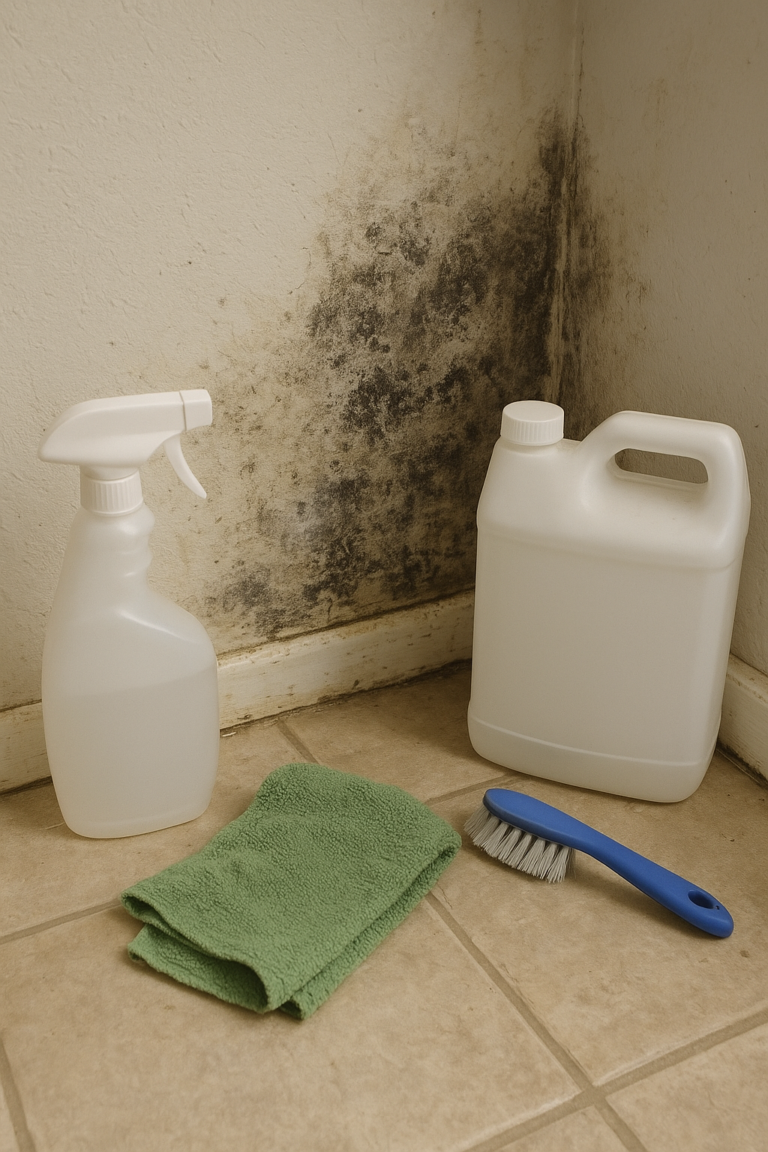
What Vinegar Can and Can’t Do Against Mold
Vinegar’s acidity can help break down some mold growth and the discoloration it leaves behind on hard surfaces. Some people find it useful as a lower-cost, lower-odor alternative to stronger commercial products for light, surface-level mold on tile, glass, or plastic. That said, research on how well vinegar performs against different mold species is limited and mixed, and no household product—including vinegar—should be assumed to fully eliminate mold from a surface, especially a porous one.
Mold often grows roots (hyphae) that extend into porous materials. Wiping the visible surface with vinegar may remove what you can see without addressing what’s underneath, which is one reason mold can reappear after a cleaning that looked successful.
Surfaces Where Vinegar May Be Worth Trying
- Glass and mirrors: Non-porous and generally tolerant of vinegar.
- Ceramic tile and sealed grout: Vinegar may help with light surface mold, though unsealed or damaged grout is more porous and less predictable. For grout-specific techniques and alternatives, see How to Remove Pink Mold from Shower Grout.
- Plastic shower curtains and liners: Often safe to wipe down, but check the care label or manufacturer guidance if one is available.
- Sealed countertops: Generally safe for occasional use, but confirm with the manufacturer since some sealants and stone finishes react differently to acidic cleaners.
Surfaces Where Vinegar Is Less Reliable
- Drywall and unsealed wood: These absorb moisture and mold spores, and vinegar is unlikely to reach mold growing beneath the surface.
- Carpet, upholstery, and fabric: Vinegar may lighten a stain but is not a dependable way to address mold growing within fibers or padding.
- Natural stone (marble, limestone, travertine): The acidity in vinegar can etch or dull these surfaces over time, so it’s best avoided unless the manufacturer specifically states otherwise.
For specific problems like mold trapped inside children’s bath toys—where soaking and rinsing require different steps—see How to Clean Mold inside Bath Toys, since vinegar alone often can’t reach internal cavities safely.
How to Clean Visible Mold on a Hard Surface
- Ventilate the area by opening a window or running a fan.
- Put on gloves and, if you’re sensitive to airborne particles, consider a mask.
- Apply undiluted white vinegar to the affected area with a cloth or spray bottle.
- Let it sit on the surface for a while before wiping.
- Scrub gently with a soft brush or sponge if needed.
- Wipe the area clean with a damp cloth and rinse if the surface allows it.
- Dry the area completely, since lingering moisture can encourage mold to return.

Never Mix Vinegar With Other Cleaning Products
Combining vinegar with bleach, ammonia, or other household chemicals can create dangerous reactions. Use vinegar on its own, and rinse a surface thoroughly before applying any other cleaning product to it.
For appliances and rubber gaskets—like the door seal in front-load washers—follow manufacturer guidance and consider specialized approaches rather than straight vinegar; see How to Clean Washing Machine Rubber Seal Mold for more on safe cleaning of washer gaskets.
Drying and Aftercare
Mold generally needs moisture to grow, so drying the area completely after cleaning is one of the more practical steps you can take. A fan, dehumidifier, or simply increased airflow can help. Check the space again over the following days and weeks to see whether mold returns, since regrowth is often a sign that moisture is still present or that the mold had spread beyond what was visible.
If your bathroom has no window, ventilation strategies differ—see How to Prevent Mold in a Bathroom without a Window for specific tips on removing humid air where natural ventilation isn’t available.
When to Consider Professional Help or Replacement
Vinegar and other household cleaning approaches are generally intended for small, visible, surface-level mold. If you’re dealing with a large affected area, mold that keeps coming back, water damage behind walls, or materials that can’t be effectively cleaned—like soaked drywall or carpet padding—it may be more practical to replace the material rather than repeatedly clean it. For extensive mold growth or concerns about a building’s structure or air quality, a qualified inspector or remediation professional can offer guidance suited to your specific situation.
Preventing Mold From Returning
- Address leaks, condensation, or humidity issues promptly, since mold relies on moisture to grow.
- Use exhaust fans in bathrooms and kitchens to reduce humidity during and after use.
- Wipe down damp surfaces, such as shower walls, after use when practical.
- Check under sinks, around window seals, and in other moisture-prone areas periodically.
- Consider a dehumidifier in consistently damp spaces like basements.
A Few Practical Notes
Always check care labels and manufacturer instructions before applying vinegar to a new surface, since finishes, sealants, and materials vary widely. If you’re uncertain whether a surface can tolerate an acidic cleaner, testing a small, hidden area first is a reasonable precaution. And if mold seems widespread or is affecting your comfort or living space in a way that concerns you, reaching out to a local professional is a sensible next step rather than relying solely on a household approach.
For targeted guidance on removing mold from window frames and their different materials, see How to Remove Mold from Window Frames.
Everything Mentioned Above
Before you leave, grab the tools you need to get the job done right the first time:
*As an Amazon Associate, TidyFormula earns from qualifying purchases.