Homemade Wood Floor Cleaner Recipe: Safe, Simple Solutions
A homemade wood floor cleaner recipe that works well on most sealed floors combines warm water with a small amount of pH-neutral dish soap, or a splash of white vinegar for finishes that can tolerate it, applied with a well-wrung mop so the wood never sits in standing liquid. The right mix depends on your floor’s finish, so check that before you clean.
The TidyFormula Quick Decision
Best approach: A damp microfiber mop with a mild solution of warm water and a small amount of pH-neutral dish soap, wrung out well before each pass over sealed hardwood.
Use caution with: Unsealed, oiled, or waxed wood, engineered wood with visible seams, and older floors with worn or unknown finishes.
Stop and reassess if: The finish looks cloudy, the wood swells, water beads oddly, or a spot test leaves a mark that does not disappear once dry.
What I Use For This Job
Using the right tools saves time and protects your belongings. Here are my exact recommendations:
*As an Amazon Associate, TidyFormula earns from qualifying purchases.
What’s the Best Homemade Wood Floor Cleaner Recipe?
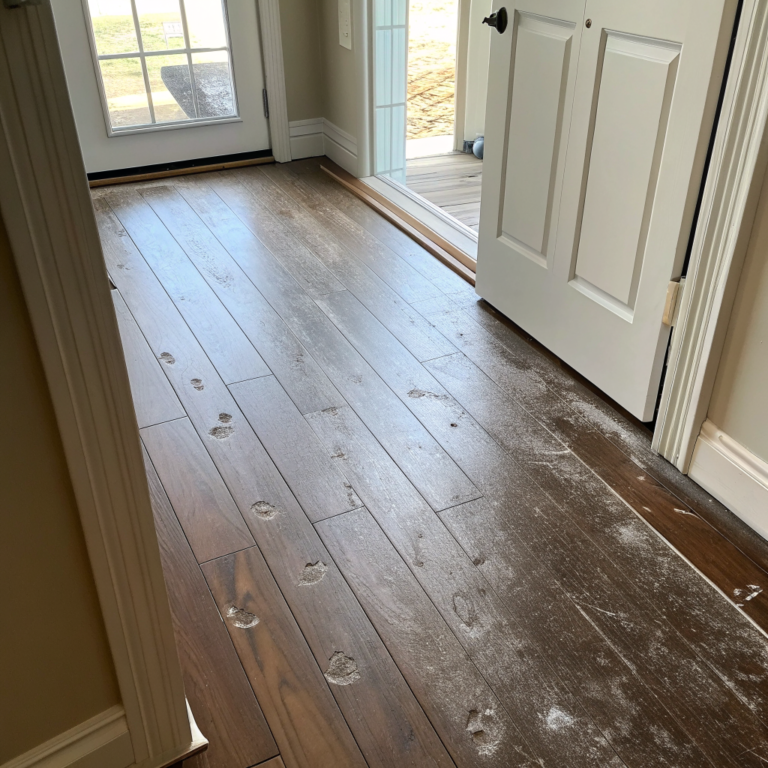
The most dependable homemade wood floor cleaner recipe for sealed hardwood or laminate is a mild dish soap solution: warm water with a small amount of pH-neutral, fragrance-light dish soap, mixed until just slightly soapy. This lifts everyday dust, foot traffic grime, and light spills without leaving a sticky film behind if you rinse the mop head often.
For floors with a sturdy polyurethane finish, some people add a splash of white vinegar to help cut through grease film. Vinegar is acidic, so it should only be used sparingly and never on waxed, oiled, or unfinished wood, where it can dull or damage the surface over time (see surfaces you should never clean with vinegar).
Know Your Floor Finish Before You Clean
Your floor’s finish determines which homemade cleaner is safe to use, so identify it before mixing anything. Most modern hardwood has a polyurethane or urethane surface coating that resists moisture reasonably well, while older floors may be finished with wax or penetrating oil that behaves very differently around water and acidic ingredients. For practical tips on maintaining finished wood and avoiding haze, consult how to clean hardwood floors without streaks.
If you are unsure, check your flooring documentation or ask the installer or manufacturer, since a wax or oil finish generally needs a specialty wood-floor product rather than a water-based homemade mix. Laminate and engineered wood also have seams that can swell if liquid sits on them, so treat those floors with extra care regardless of the finish type — and for guidance on keeping plank floors clean without leaving a film, see how to clean laminate floors without leaving film.
How to Mix and Use the Basic Recipe
Once you know your floor can tolerate a damp mopping approach, the process itself is straightforward. Work in small sections and always wring the mop head so it feels barely damp, not wet.
- Sweep or vacuum the floor first to remove loose dust and grit that could scratch the surface once you start mopping.
- Mix warm water with a small amount of pH-neutral dish soap in a bucket, stirring until just lightly foamy.
- Test the solution on a small, hidden area of the floor and let it dry fully to check for spotting, dulling, or color change.
- Dip a microfiber mop, wring it out well, and mop in the direction of the wood grain in manageable sections.
- Go over each section with a dry or barely damp cloth immediately afterward to remove excess moisture.
- Allow the floor to air dry completely before walking on it in socks or letting pets back into the room.
TidyFormula Tip
Change your rinse water as soon as it looks cloudy, since dirty mop water just redistributes grime instead of removing it.
Vinegar-Free Alternative for Sensitive Finishes
If your floor’s finish reacts poorly to acidic ingredients, or you would simply rather avoid vinegar, a plain warm-water and mild-soap solution alone is usually enough for routine cleaning. Most everyday dust, dry soil, and light footprints respond well to this gentler approach without needing an added acid.
For sticky spots or light grease film, a slightly stronger soap concentration in the same water, still kept minimal, often does the job. Avoid reaching for stronger degreasers or all-purpose sprays not labeled for wood floors, since many contain ingredients that can strip or cloud a finish over repeated use.
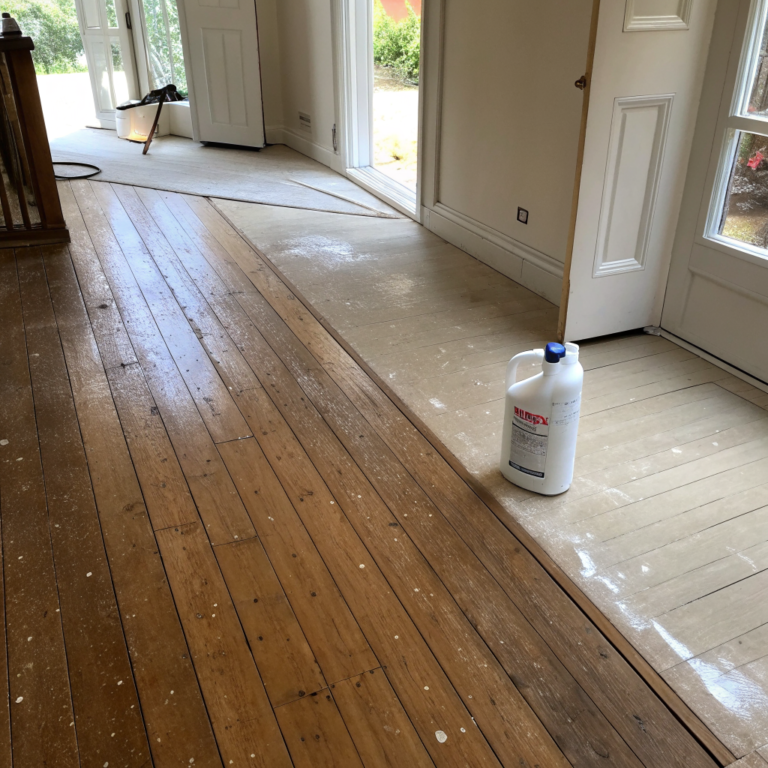
What to Avoid When Cleaning Wood Floors
Certain habits cause more long-term damage to wood floors than the dirt they are meant to remove. Knowing what to skip protects the finish and saves you from a costly refinishing job later.
- Avoid soaking the mop or letting puddles sit, since standing water can seep into seams and cause warping or cupping over time.
- Avoid steam mops on solid hardwood or laminate unless the manufacturer specifically states the floor is steam-safe, since heat and moisture together can damage many finishes.
- Avoid ammonia-based or oil-based furniture polishes marketed for wood, since they can build up a hazy film that is difficult to remove.
- Never mix vinegar or dish soap with bleach or other household cleaning chemicals; combining cleaning agents like this must not be done, regardless of how tough the stain seems.
- Avoid abrasive scrub pads or scouring powders, which can scratch a finished surface even if the wood itself feels sturdy.
For a broader look at which homemade mixes are genuinely safe across different surfaces in your home, the guide on homemade cleaning solutions that are actually safe covers general precautions worth keeping in mind alongside floor-specific care.
Drying and Aftercare
Wood floors need to dry fully and evenly after any wet cleaning method, since lingering moisture is one of the main causes of warping and finish clouding. Open windows, run a ceiling fan, or use a dry microfiber cloth to speed up drying in humid weather. For a whole-house approach to gentle, low-toxicity cleaning and drying, see a non-toxic cleaning routine for the whole house.
Once dry, a floor that still looks streaky or dull may simply have residue from a soap solution that was too strong. Going over it once more with a barely damp cloth of plain water, followed by another dry pass, usually clears this up without needing a second full cleaning cycle.
Frequently Asked Questions
Can I use this homemade cleaner on engineered wood floors?
A mild, well-wrung solution can often be used on engineered wood with a sealed finish, but seams between planks are more vulnerable to swelling than solid hardwood. Check the manufacturer’s care instructions first, and keep the mop as dry as possible near seam lines.
How often should I deep clean my wood floors?
Most homes do fine with a damp mopping every one to two weeks, depending on foot traffic and pets, alongside more frequent sweeping or vacuuming. Floors in high-traffic entryways or kitchens may need attention more often since they collect grit and spills faster. If you have pets, consider a tailored approach—see our pet-safe floor cleaner for hardwood floors guide for specifics about frequency and product choice.
What if my floor still looks dull after cleaning?
Dullness after cleaning often points to leftover soap residue rather than dirt, so try a follow-up pass with a barely damp cloth of plain water. If dullness persists, the finish itself may be worn and could need a professional assessment rather than more cleaning.
Is vinegar safe for all hardwood finishes?
No, vinegar is only appropriate for sturdy, sealed finishes like polyurethane, and even then only in small amounts. Waxed, oiled, or unfinished wood can be dulled or damaged by vinegar’s acidity, so a plain mild-soap solution is the safer default for those surfaces.
Can I use a steam mop instead of this homemade recipe?
Only if the floor manufacturer specifically states the flooring is steam-safe, since heat combined with moisture can affect many wood finishes differently than a damp mop does. When in doubt, a well-wrung microfiber mop with a mild solution is the more cautious choice.
Everything Mentioned Above
Before you leave, grab the tools you need to get the job done right the first time:
*As an Amazon Associate, TidyFormula earns from qualifying purchases.