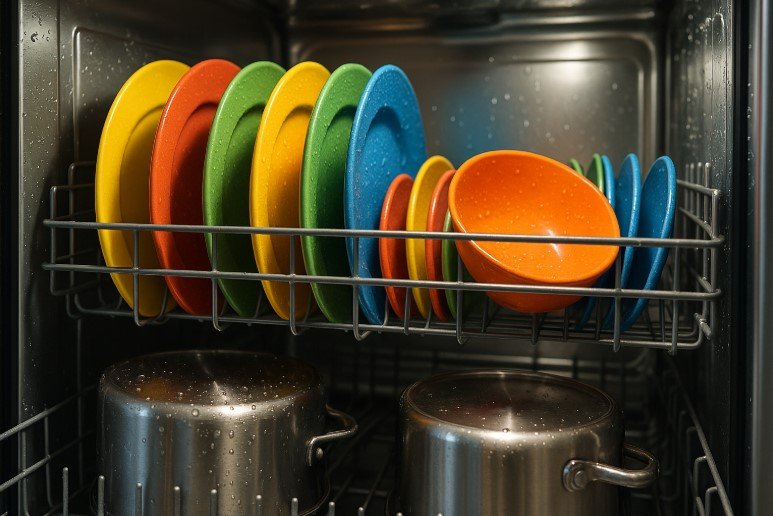
Can You Put 100% Melamine in the Dishwasher? (Safe Guide for Everyday Use)
Yes—100% melamine can go in the dishwasher if the manufacturer labels it dishwasher-safe. Place it on the top rack unless the care instructions specifically allow otherwise, and use a normal or gentle cycle. If the item is unmarked, hand-washing is the safest option. Never put melamine in the microwave, oven, or under a broiler.
The term “100% melamine” identifies the material; it does not automatically guarantee that every product can tolerate the same dishwasher temperatures or drying cycle.
What Is 100% Melamine?
100% melamine dinnerware is made from a hard, molded melamine resin. It often looks like ceramic or porcelain but is much lighter and more resistant to breaking during everyday use.
- It’s break-resistant, so it’s popular in homes with kids, outdoor dining, RVs, and picnics.
- Unlike ceramic, it won’t easily chip or break if dropped, although it can still crack or chip under enough force.
- It’s typically BPA-free when labeled as such, which many modern melamine sets advertise.
A BPA-free label does not mean an item is microwave-safe. Even though melamine feels solid and ceramic-like, it has limits when exposed to high or direct heat.
Check the Care Label First
Look on the underside of the plate, bowl, or cup, as well as on the packaging, for wording such as:
What I Use For This Job
Using the right tools saves time and protects your belongings. Here are my exact recommendations:
*As an Amazon Associate, TidyFormula earns from qualifying purchases.
- Dishwasher safe
- Top rack dishwasher safe
- Hand wash only
- A dishwasher-safe care symbol
Follow the product’s instructions when they differ from general advice. Decorative finishes, printed patterns, metallic trim, or composite materials can have more restrictive care requirements than plain melamine.
The “Top Rack Only” Rule and Why Heat Matters
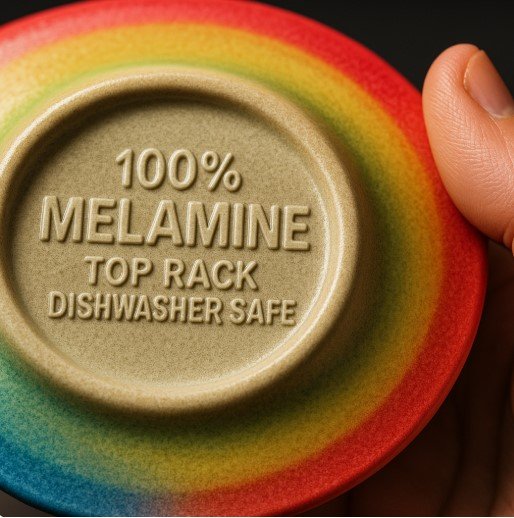
Many melamine products are marked “top rack only”. The top rack generally keeps the dinnerware farther from an exposed heating element and reduces the intensity of heat during washing and drying.
Why the Top Rack Matters
- The bottom heating element in some dishwashers becomes very hot.
- The lower rack may receive more intense, direct heat during the drying cycle.
- Melamine tolerates normal serving temperatures but is not intended to function as heat-proof cookware.
Placing melamine on the top rack:
- Reduces exposure to direct heat.
- Helps prevent warping, surface deterioration, or damage to printed designs.
- Can extend the useful life and appearance of plates, bowls, and cups.
If the manufacturer specifically says the item is safe on either rack, follow those instructions. Otherwise, use the top rack as the safer default.
How to Wash Melamine in the Dishwasher
- Check the underside. Confirm that the piece is dishwasher-safe and note whether it says top rack only.
- Scrape off leftover food. Use a soft utensil rather than a metal scraper that could mark the surface.
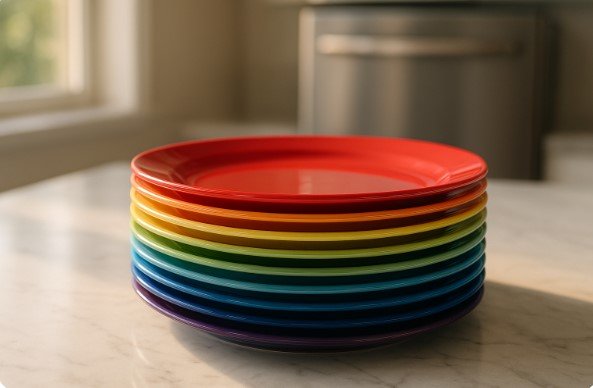
- Load it securely on the top rack. Place plates in separate slots and angle bowls so water can drain.
- Keep pieces separated. Do not wedge melamine tightly against metal cookware, knives, or utensils that could scratch it.
- Choose a normal or gentle cycle. Avoid high-temperature sanitize settings unless the manufacturer expressly permits them.
- Use air-dry or low heat when possible. This limits unnecessary heat exposure.
- Let the pieces cool before stacking. Check for trapped water and dry it with a soft towel if needed.
Secure lightweight cups and small bowls so water jets cannot flip them over. If a piece repeatedly turns over, fills with dirty water, or moves into contact with the heating area, wash it by hand instead.
When Hand-Washing Is the Better Choice
Hand-wash melamine when:
- The item has no readable care label.
- It is marked hand wash only.
- It has metallic accents, delicate printed decoration, or applied decals.
- Your dishwasher has only high-heat cycles.
- The piece is vintage and its care instructions are unknown.
Use warm water, mild dish soap, and a soft sponge or cloth. Avoid steel wool, abrasive scouring pads, and harsh powdered cleaners because they can dull or scratch the finish.
Melamine vs. the Microwave: The Critical Difference
Here’s the big rule:
Melamine + Dishwasher = Okay when labeled dishwasher-safe
Melamine + Microwave = No
Why You Should Never Microwave Melamine
- Melamine is not designed for the high, direct heating involved when food is microwaved.
- Hot food can heat the dish unevenly and stress the material.
- Repeated or excessive heating can contribute to:
- Weakening of the material.
- Fine cracks, warping, or surface damage.
- Unwanted migration of material components into food under improper high-heat use.
A piece does not have to visibly melt to be damaged. Repeated microwave use can gradually deteriorate the surface or structure.
Use Melamine for Serving, Not Heating
- Use melamine plates and bowls for serving, eating, and kid-friendly meals.
- To reheat food, use:
- Microwave-safe glass
- Microwave-safe ceramic
- Clearly labeled microwave-safe BPA-free plastic containers
Transfer the food to melamine after heating. Do not put melamine in a conventional oven, toaster oven, air fryer, under a broiler, or directly on a stovetop or grill.
Signs Your Melamine Is Damaged
Melamine can last for years when treated correctly, but it does not last forever. Inspect each piece after washing and replace it when the food-contact surface is no longer smooth and intact.
1. Fading or Discoloration
- Colors or patterns look washed out or uneven.
- Certain areas appear more faded, especially in the center of a plate or bowl.
- The printed finish begins peeling or separating from the surface.
Fading alone may be cosmetic, but peeling, blistering, or exposed material is a reason to stop using the piece for food.
2. Hairline Cracks or Crazing
- Fine lines or spiderweb cracks appear across the surface.
- Food and stains collect in the cracks.
- The cracks remain visible after normal washing.
Retire the piece from food use if it has cracking or crazing. A damaged surface is difficult to clean thoroughly and may continue to deteriorate.
3. Warping
- The plate no longer sits flat on the table.
- Edges curve noticeably up or down.
- Bowls feel twisted or uneven.
Warping indicates excessive heat exposure. Stop using the affected dishwasher setting, move the remaining pieces to the top rack, and select air-dry or a lower-temperature cycle.
4. Rough or Chalky Texture
- Areas feel less smooth, slightly chalky, or etched.
- The surface has deep utensil marks or scratches that hold discoloration.
- The finish becomes dull after repeated abrasive cleaning.
Switch to a soft sponge and mild dish soap at the first sign of surface wear. Replace pieces that are deeply scratched, flaking, or no longer have a sound food-contact surface.
5. Chips or Sharp Edges
Although melamine is break-resistant, a hard impact can chip an edge or create a sharp point. Discard or retire chipped pieces rather than continuing to use them for serving food.
Removing Food Residue and Stains
If the dishwasher leaves food residue, do not immediately switch to a hotter cycle. First check how the item is loaded and whether another dish is blocking the spray.
- Rinse or soak the piece briefly in warm, soapy water.
- Clean it with a soft sponge or dishcloth.
- Repeat the normal dishwasher cycle only after correcting the loading problem.
- For persistent stains, follow the dinnerware manufacturer’s cleaning directions.
Avoid scraping stains with knives or metal tools. Do not use bleach or another strong cleaner unless the manufacturer specifically approves it for that product, and never mix cleaning products.
Drying and Storing Melamine Dinnerware
- Use air-dry or low-heat drying when available.
- Allow dishes to cool before handling or stacking them.
- Dry any water trapped between rims, feet, or stacked pieces.
- Store plates and bowls only when fully dry.
- Do not stack heavy cookware on top of melamine pieces.
If a plate feels unusually hot, soft, distorted, or unstable after a dishwasher cycle, let it cool without bending it. Inspect it before using it again and choose a lower-heat washing method for the rest of the set.
Quick Safety Checklist for Melamine Dinnerware
- ✅ Check the product label before putting it in the dishwasher
- ✅ Use the top rack unless the manufacturer permits another placement
- ✅ Choose a normal or gentle cycle and air-dry when possible
- ✅ Great for kids, outdoor dining, and everyday serving
- ✅ Often labeled BPA-free—check the packaging or underside
- ❌ Do not use in the microwave
- ❌ Avoid ovens, toaster ovens, air fryers, broilers, grills, and direct stovetop heat
- ❌ Do not use abrasive pads or metal tools on the surface
- ❌ Replace pieces that are cracked, chipped, warped, peeling, or deeply scratched
Frequently Asked Questions
Can melamine go on the bottom rack of the dishwasher?
Only if the manufacturer’s care instructions allow it. The top rack is the safer default because it is usually farther from direct heating elements. Products marked “top rack only” should never be placed on the bottom rack.
Can I use the dishwasher’s sanitize or heated-dry setting?
Avoid high-temperature sanitize and heated-dry settings unless the melamine manufacturer specifically approves them. A normal or gentle wash followed by air-drying reduces heat exposure.
What should I do if my melamine has no dishwasher-safe marking?
Hand-wash it with warm water, mild dish soap, and a soft sponge. “100% melamine” describes the material but does not confirm that a particular finish, pattern, or product is dishwasher-safe.
Are bamboo-melamine products cared for the same way?
Not necessarily. Products that combine melamine resin with bamboo or other plant fibers may have different heat and dishwasher restrictions. Follow the exact care instructions for the composite product rather than assuming that standard melamine guidance applies.
Everything Mentioned Above
Before you leave, grab the tools you need to get the job done right the first time:
*As an Amazon Associate, TidyFormula earns from qualifying purchases.