Can You Put Pottery & Ceramics in the Dishwasher? 7 Costly Mistakes to Avoid
Yes—many modern pottery and ceramics can go in the dishwasher if they’re labeled dishwasher-safe and high-fired, but low-fired, vintage, crazed, or metallic-trim pieces should be hand-washed to avoid cracks, dull glazes, or leaching.
If you’re staring at a handmade mug or heirloom plate wondering, “Will the dishwasher ruin this?” you’re not alone. The fear of destroying a favorite piece with one careless cycle is very real—especially with handmade or sentimental ceramics.
The Science: Why Pottery & Ceramics Are / Aren’t Dishwasher Safe
“Ceramics” and “pottery” cover a lot of ground—earthenware, stoneware, porcelain, bone china, handmade studio pieces, and mass-produced dinnerware. Whether they survive the dishwasher comes down to three things:
- The clay body (earthenware vs stoneware vs porcelain)
- The glaze (quality, crazing, and any metals)
- Dishwasher conditions (heat, strong detergents, and water jets)
1. Clay type: earthenware vs stoneware vs porcelain
Different clays behave very differently in the dishwasher:
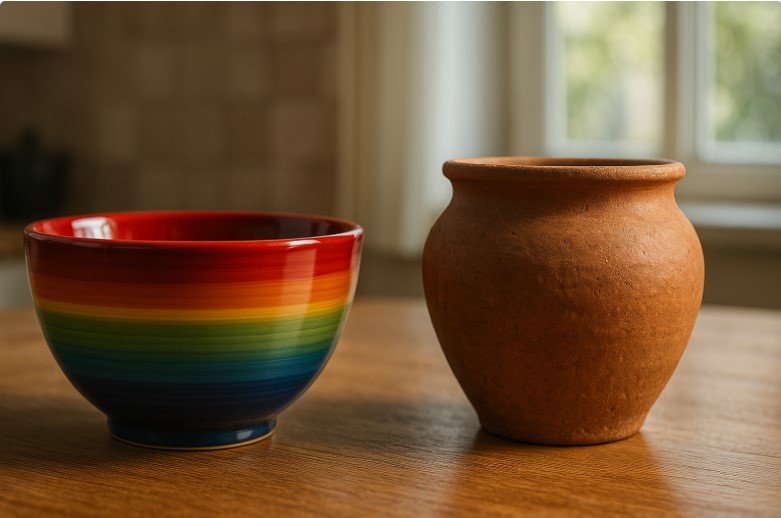
- Earthenware (terracotta, many rustic “pottery” pieces)
- Fired at lower temperatures → more porous and fragile.
- High heat and detergents can drive water into the body, causing weakening, cracking, and glaze wear, so it’s generally not recommended for dishwashers.
- Stoneware
- Fired hotter, usually denser and stronger than earthenware.
- Many stoneware dishes are labeled dishwasher safe and tolerate higher temperatures, though glazes can still dull over time.
- Porcelain / bone china
- Fired at even higher temperatures; often vitrified (glass-like and non-porous).
- Frequently safe for the dishwasher if the maker says so, but decorations (gold rims, decals) may not be.
What I Use For This Job
Using the right tools saves time and protects your belongings. Here are my exact recommendations:
*As an Amazon Associate, TidyFormula earns from qualifying purchases.
2. Glaze quality & crazing (tiny cracks)
The glaze is often the real deal-breaker. A good glaze should be:
- Non-porous
- Smooth (no fine crackle lines)
- Stable under high heat and alkaline detergents
Tiny, spider-web cracks called crazing look charming but act like highways for water and detergent. In dishwashers, crazed glazes can:
- Trap moisture → odors and potential bacteria
- Stain easily (tea, coffee, tomato sauce)
- Worsen over time as the cracks spread
- Eventually weaken the piece so it chips or breaks
If you see crazing—especially on food-contact surfaces—treat the piece as hand-wash only.
3. Detergents, heat & aggressive spray
Dishwashers are harsh environments:
- High temperatures plus sudden changes (cold rinse to hot dry) can create thermal shock, leading to cracks, especially in thicker or poorly fired pieces.
- Strong alkaline detergents gradually erode and dull glazes and can make them more porous over time.
- Strong water jets cause repeated impact, which can chip rims and handles if items knock into each other.
Even ceramics marked “dishwasher safe” can lose shine after years of cycles.
4. Handmade, vintage & unknown glazes
With handmade pottery and vintage ceramics, there are extra unknowns:
- Older or hobby glazes may contain lead or other metals that can leach more under dishwasher’s intense heat and strong detergents.
- Small studios may recommend gentle handling and hand washing to preserve surfaces and decoration.
If you don’t know how it was made—and especially if it’s a cherished piece—hand wash it.
The “Top Rack Only” Rule (And When It Matters)
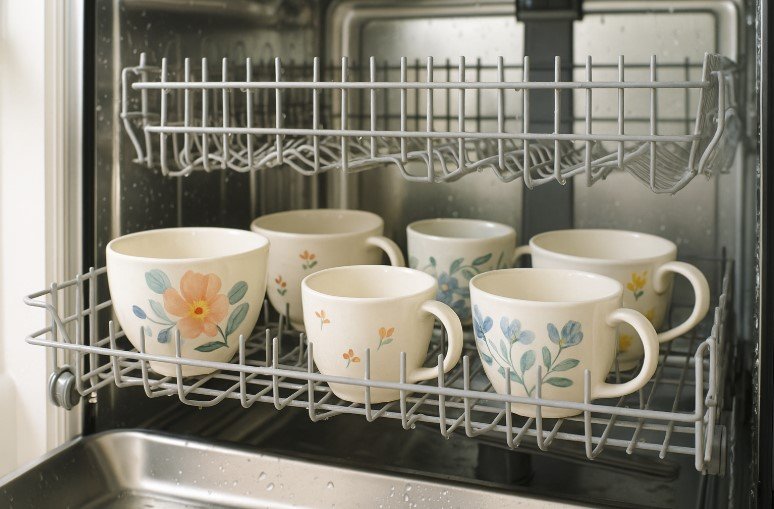
You’ll often see advice like “dishwasher safe – top rack only.” Here’s why that matters for pottery and ceramics.
Why the top rack is gentler
The bottom rack is closest to:
- The heating element, where temperatures can spike more than at the top
- The strongest water jets, especially during heavy cycles
This means:
- More direct heat and faster temperature swings
- More impact from spray arms and bouncing items
By contrast, the top rack:
- Is farther from the heating element
- Gets slightly lower temperatures
- Exposes delicate pieces to less intense spray
This makes it a safer spot for:
- Thin porcelain
- Handmade mugs and bowls
- Items with decals or intricate glazes
High-heat cycles and harsh spray are known contributors to glaze damage, dulling, cracking, and chipping in stoneware and other ceramics.
When you shouldn’t rely on the top rack
“Top rack only” is not a magic shield. You should still avoid the dishwasher if:
- The piece is earthenware or obviously porous
- There’s visible crazing or cracks in the glaze
- It has metallic luster, gold, silver, or platinum trim
- It’s a sentimental, one-of-a-kind or expensive handmade piece
- The maker explicitly says hand wash only
Step-by-Step Guide: Safely Washing Pottery & Ceramics in the Dishwasher
If you’ve decided your piece is okay for the dishwasher, follow this safer method.
1. Check the bottom & inspect the surface
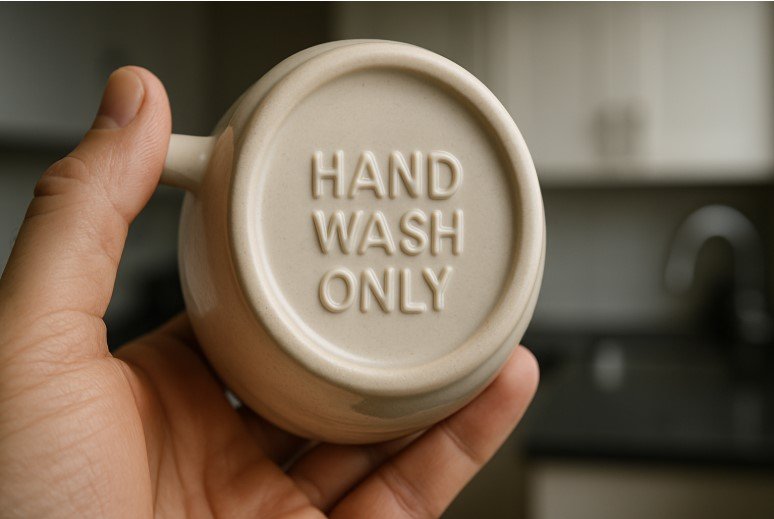
- Look for markings.
- “Dishwasher safe” from a reputable brand is your best green light.
- Inspect the glaze.
- Avoid the dishwasher if you see fine crackle lines, chips, or rough spots, especially on food-contact areas.
2. Pre-rinse gently
- Rinse off heavy food, especially acidic or strongly colored sauces.
- Avoid extreme temperature shock—don’t go from fridge-cold straight into a piping hot cycle.
3. Load correctly (top rack preferred)
- Place pottery and ceramics on the top rack whenever possible.
- Make sure pieces don’t touch each other or metal cutlery to reduce chipping.
- Secure handles and tall mugs so they won’t tip and slam during the cycle.
4. Choose gentler settings
- Use a normal, gentle, or eco cycle rather than “sanitize” or “heavy soil” for everyday ceramic.
- Avoid extra-hot drying or “high temp” options where possible—these accelerate glaze wear and thermal stress.
- Use a mild, non-abrasive detergent; avoid anything marketed as “booster,” “industrial,” or heavily caustic.
5. Dry & inspect after the wash
- Let items cool down in the machine, then open the door to release steam.
- Check for new dull patches, hairline cracks, or chips.
- If you see early damage, switch that piece to hand washing from now on.
What Could Go Wrong in the Dishwasher?
Here’s exactly what you’re risking when you toss pottery and ceramics into a standard cycle.
1. Dull, etched or faded glazes
Over time, the combo of high heat + alkaline detergents + aggressive spray can:
- Strip the glaze’s shine
- Make surfaces rough or chalky
- Fade colors and designs
Dishwasher detergents are designed to be powerful; on delicate or lower-quality glazes, they can gradually erode the surface.
Dishwasher stress can trigger or worsen crazing, especially on older or under-fired pieces. Once a glaze is crazed:
- It can absorb stains (coffee, tea, wine)
- Moisture can become trapped in the body
- The ceramic becomes weaker and more prone to breakage
- There’s more surface area for bacteria to cling to in the cracks
3. Chipping, scratching & rim damage
In a crowded rack, pottery bumps into:
- Metal utensils
- Other plates and bowls
- Rack tines
This repeated impact, combined with spray pressure, raises the risk of chips along rims and bases, especially for stoneware and thicker pieces.
4. Thermal shock cracks
Sudden changes from cool to very hot water (or vice versa) can cause thermal shock, particularly in thicker pottery or pieces with uneven walls. That can result in:
- Hairline fractures
- Audible “pings” as the piece cools
- Sudden, catastrophic cracking later—even outside the dishwasher
5. Damage to metallic or decorative details
Pieces with:
- Gold or silver rims
- Metallic luster glazes
- Delicate decals or overglaze decoration
are especially vulnerable. These details can fade, flake or peel under repeated dishwasher cycles, even if the underlying porcelain or stoneware survives.
6. Possible leaching from low-quality or vintage glazes
Some older or non-food-safe glazes contain heavy metals (like lead) that are more likely to leach under high heat and harsh detergents. Dishwashers accelerate that process, especially if the glaze is crazed or worn.
For vintage or unknown pieces, hand wash only is the safest approach.
Best Alternative: Hand Washing Pottery & Ceramics
If your gut says “I’d be devastated if this broke,” it belongs in the sink, not the dishwasher.
How to hand wash pottery & ceramics safely
- Prep the sink
- Line the bottom with a rubber mat or folded towel to cushion slips.
- Use warm—not scalding—water
- Avoid extreme temperature changes.
- Choose a gentle detergent
- Regular dish soap is fine; avoid abrasives or bleach.
- Soft tools only
- Use a soft sponge or cloth; no steel wool or gritty scrubbing pads.
- Rinse well & air dry
- Rinse thoroughly and dry on a rack; avoid stacking heavy items while they’re still warm and slightly more fragile.
This method dramatically extends the life of glazes and decorations on both handmade and mass-produced ceramics.
FAQ: Common Questions About Pottery, Ceramics & Dishwashers
1. Is handmade pottery actually dishwasher safe?
Sometimes. Many modern studio potters design their high-fired stoneware or porcelain to be dishwasher safe, but most still recommend top rack, mild detergent, and skipping high-heat cycles—or hand washing for best longevity. Always follow the potter’s own care instructions.
2. Can you put glazed pottery with a gold rim in the dishwasher?
It’s not recommended. Metallic glazes, gold rims, and luster decorations can dull, fade, or peel in the dishwasher, even if the base ceramic is otherwise safe. Hand wash anything with metallic or ornate decoration.
3. Are ceramic mugs safe in the dishwasher?
Many modern stoneware or porcelain mugs marked “dishwasher safe” hold up well, especially on the top rack. However, handmade, vintage, or crazed mugs should be hand washed to avoid glaze damage, staining, and potential leaching.
Check for:
- A “dishwasher safe” symbol or text on the base
- A smooth, intact glaze with no crazing
- Manufacturer or potter guidance online or on care cards
If you aren’t sure—and especially if the item is porous, antique, or sentimental—treat it as hand-wash only.
Everything Mentioned Above
Before you leave, grab the tools you need to get the job done right the first time:
*As an Amazon Associate, TidyFormula earns from qualifying purchases.