How to Clean Oven Without Scrubbing: The Vapor-Phase Protocol
There are few household tasks as universally dreaded as cleaning the oven. It usually involves kneeling on a hard kitchen floor, your head inside a dark, greasy box, inhaling toxic fumes while you scrub until your arms ache. It is the definition of drudgery.
As the Lead Researcher at TidyFormula, I believe in working smarter, not harder. The burnt-on carbon and polymerized grease lining your oven are tough, but they are not invincible. They are simply chemical bonds waiting to be broken.
If you are searching for how to clean oven without scrubbing, you are looking for a chemical solution, not a mechanical one. And for those specifically asking how to clean oven without scrubbing or baking soda (perhaps you dislike the gritty residue), we have designed a protocol that relies entirely on gas expansion and alkalinity.
⚡ The TidyFormula™ Quick Answer
The Recommendation: The most effective no-scrub method is the “Ammonia Vapor” technique. The fumes soften carbon deposits overnight, turning them into a wipe-away jelly.
- The Mix: 1 cup Ammonia + 1 pot of Boiling Water.
- Time: 8–12 Hours (Passive soaking time).
- Effectiveness: High (Professional Degreasing Standard).
The Method: “The Vapor-Phase Degreasing Protocol”
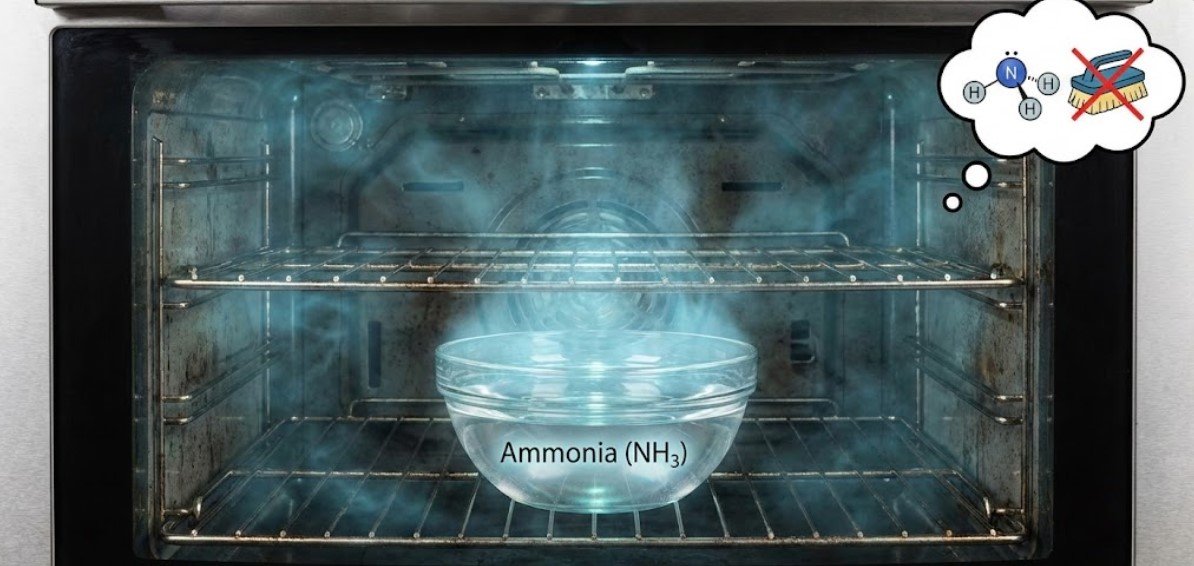
Why do we scrub? We scrub to apply friction to break the bond between the grease and the enamel. But what if we could break that bond at a molecular level while we sleep?
What I Use For This Job
Using the right tools saves time and protects your belongings. Here are my exact recommendations:
*As an Amazon Associate, TidyFormula earns from qualifying purchases.
This method utilizes Ammonia ($\text{NH}_3$). Unlike liquid cleaners that only treat the spot they touch, ammonia releases gas. This gas expands to fill the entire cavity of the oven, coating the roof, the sides, the racks, and the glass in a powerful alkaline layer. It is the ultimate answer for how to clean oven without scrubbing or baking soda.
🧪 Tools & Ingredients
You don’t need a hazmat suit, but you do need to respect the chemistry here.
- Household Ammonia: The standard yellow or clear liquid found in the laundry aisle.
- Boiling Water: Essential for thermodynamics (heat increases the release of ammonia gas).
- Two Heat-Safe Containers: One small ceramic/glass bowl for ammonia, one large pot for water.
- Dish Soap: For the final wipe down.
- A Microfiber Cloth or Sponge: To wipe away the sludge.
Step-by-Step Execution
Step 1: The Thermal Jumpstart
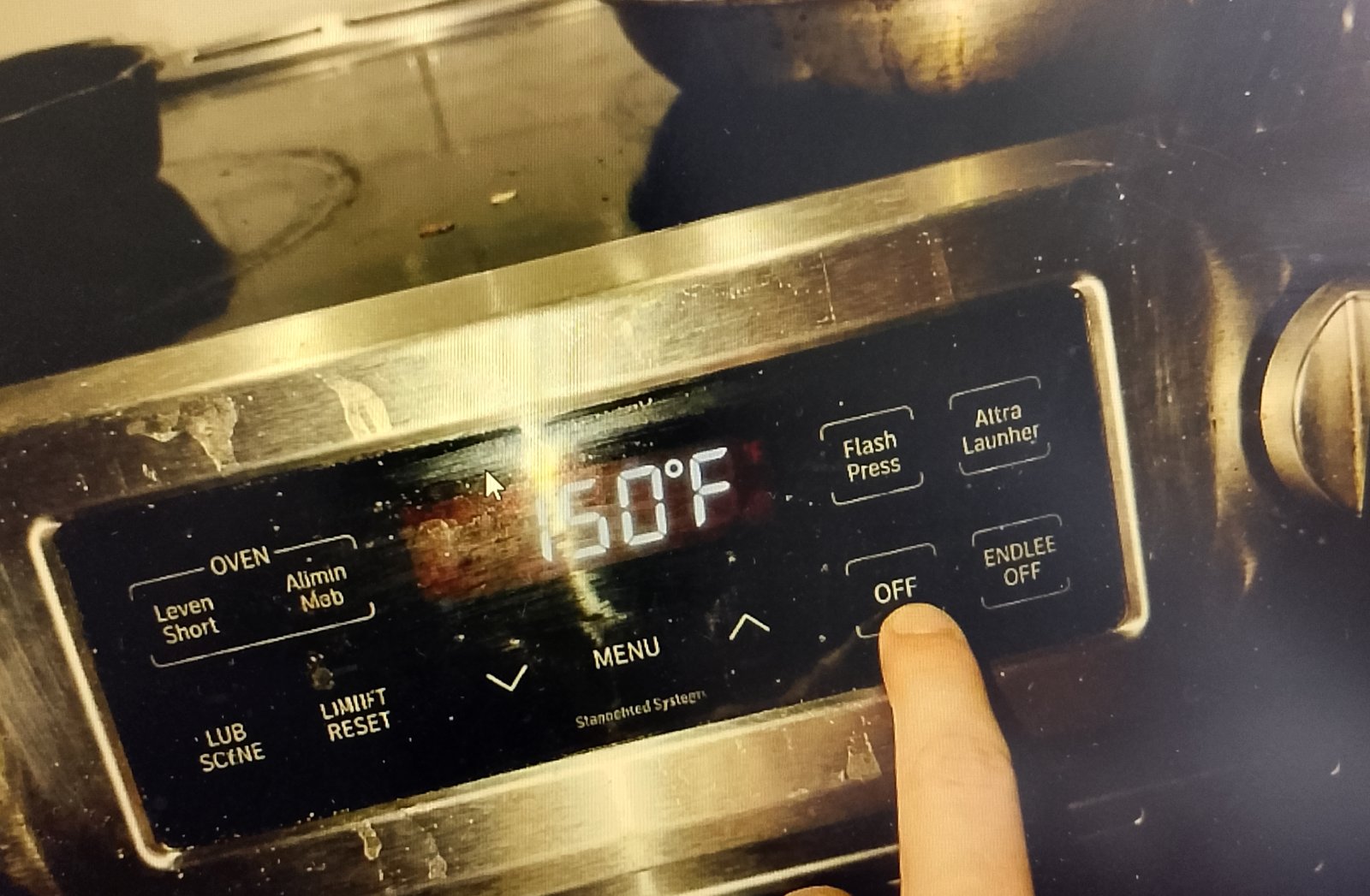
Preheat your oven to 150°F (65°C). Once it reaches temperature, turn it off. This is crucial. We want the oven warm to energize the grease molecules and encourage the ammonia to vaporize faster, but we do not want it hot enough to boil the ammonia or melt your containers.
Step 2: The Dual-Zone Setup
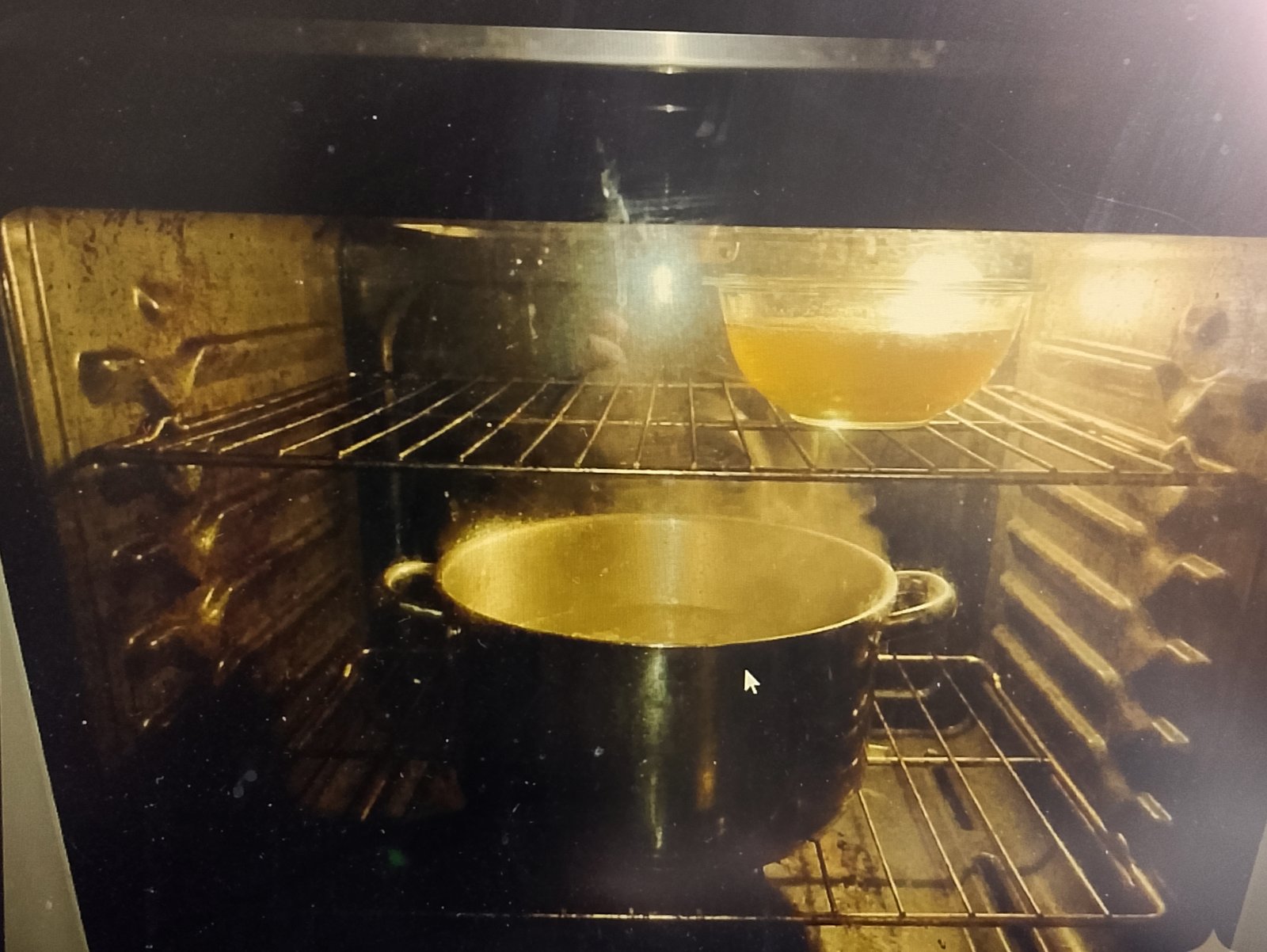
This is where the physics happens. Place the pot of boiling water on the bottom rack (or the floor of the oven). Place the bowl with 1 cup of ammonia on the top rack.
Why two bowls? The boiling water creates steam (humidity), which keeps the grease moist and prevents the ammonia from drying out. The ammonia provides the alkaline fumes.
Step 3: The Incubation (Overnight)
Close the oven door. Do not open it. Go to sleep. Let the oven sit for at least 8 to 12 hours.
During this time, the ammonia gas is performing a process called saponification on the animal fats and polymer breakdown on the burnt sugars. It is turning the hard, black crust into a soft, soapy sludge.
Step 4: The Reveal and Wipe
The next morning, open the oven door and step back immediately. The fumes will be potent. Open your kitchen windows. Remove the bowls.
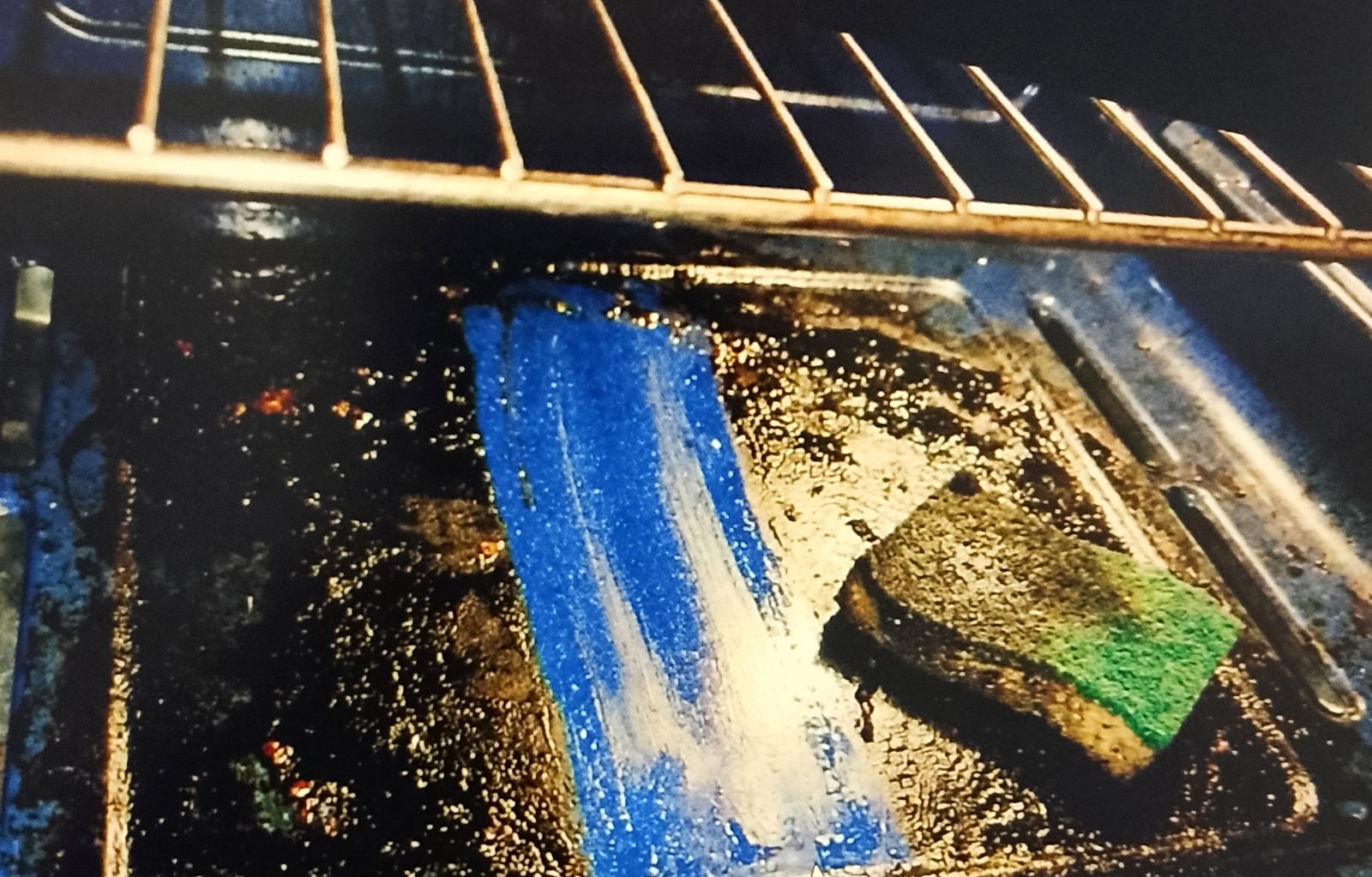
Add a squirt of dish soap to the leftover ammonia bowl (don’t waste it!) and dip your sponge or cloth into it. Wipe the oven walls. The grease should slide off like melting butter.
If you are also cleaning your electronics, check our guide on [how to clean a laptop fan]
🧪 The Science: Why It Works
Grease and burnt food are acidic in nature (fatty acids). Ammonia is a strong base (Alkaline). When the ammonia fumes contact the grease in a humid environment, a chemical reaction occurs that converts the insoluble fat into a soluble soap. Essentially, you are turning the dirt itself into a cleaning agent that rinses away with water. This is why gas-phase cleaning works where liquids fail—gas creates 100% surface contact.
Alternative: The “Steam-Lemon” Method (No Ammonia)
If you are looking for how to clean oven without scrubbing or baking soda but you also cannot tolerate the smell of ammonia, you can use the Steam-Lemon method. Note: This works best for light-to-medium soil, not heavy carbon buildup.
- Fill an oven-safe bowl with water and the juice of 2 lemons (throw the rinds in too).
- Bake at 250°F for 30 minutes.
- Let it cool with the door closed for another 30 minutes.
- The citric acid in the steam helps loosen grime, though it is less powerful than the ammonia protocol.
Comparison: TidyFormula Protocol vs. The “Self-Clean” Button
You might be wondering, “Why not just press the Self-Clean button?” As a researcher, I strongly advise against it for older ovens.
| Method | Mechanism | Risk Level | Scrubbing? |
|---|---|---|---|
| Vapor-Phase (Ammonia) | Chemical Dissolution | Low (Fumes only) | Zero |
| Self-Clean Cycle | Pyrolysis (Extreme Heat 900°F+) | High (Fire, Fuse Blowout) | Zero |
| Baking Soda Paste | Mild Abrasive | None | High (Elbow Grease) |
Pro-Tips for Glass Doors
The ammonia fumes will clean the glass door significantly, but gravity often pulls grease down to the bottom edge. If you strictly want to know how to clean oven without scrubbing or baking soda on the glass specifically, use a Razor Blade Scraper.
Hold the razor at a 45-degree angle on wet glass. It physically lifts the carbon without scratching the glass. It sounds scary, but it is standard practice in the detailing world.
💡 Read Next: Since you’re tackling glass, check our guide on how to clean mirrors without Windex for a streak-free finish.
Read Next: How to clean an oven without chemicals
Frequently Asked Questions (FAQ)
Can I use this method on a gas oven?
Yes, but ensure the pilot light is out if you are leaving liquid chemicals inside overnight, or simply ensure the containers are stable and won’t spill into the burner assembly. The fumes are flammable in extremely high concentrations, but a cup of household ammonia is generally safe if the oven is off.
What if I don’t have ammonia?
If you are asking how to clean oven without scrubbing or baking soda and lack ammonia, commercial oven cleaners (like Easy-Off) work on the same chemical principle (Sodium Hydroxide). They are faster (20 minutes) but much more caustic/toxic than the slow ammonia method.
Why do experts warn against the “Self-Clean” feature?
The “Self-Clean” cycle heats the oven to dangerous temperatures (over 900°F) to turn ash into dust. This extreme heat stress often fries the control board (the computer brain) of modern ovens, blow the thermal fuse, and release toxic fumes if your oven has Teflon-coated racks.
Will the ammonia smell linger in my food?
No. Ammonia is highly volatile, meaning it evaporates completely. Once you wipe the oven out with soapy water and let it air dry for an hour, no chemical residue remains.
Can I use baking soda if I want to?
Absolutely. While this guide focused on how to clean oven without scrubbing or baking soda, you can use baking soda as a final polish for the glass door if you miss that “gritty” cleaning feel.
Everything Mentioned Above
Before you leave, grab the tools you need to get the job done right the first time:
*As an Amazon Associate, TidyFormula earns from qualifying purchases.