15 Minute Daily Cleaning Routine
A 15-minute daily cleaning routine works best when you focus on visible mess, high-use surfaces, and one quick floor pass instead of trying to deep-clean every room. Keep moisture light on wood, electronics, and unfinished surfaces, and use products only as directed on their labels.
The goal is maintenance: preventing clutter, crumbs, soap residue, and dust from turning into a much larger weekend job. A consistent short routine is usually more useful than an ambitious checklist you only complete occasionally.
⚡ The TidyFormula™ Quick Decision
Best approach: Work in the same order each day: reset clutter, wipe kitchen and bathroom surfaces, then finish with a quick sweep or vacuum of the busiest floor areas.
Use caution with: Use a barely damp cloth rather than spraying directly on wood furniture, painted finishes, electronic controls, or screens.
Set up a routine you can actually finish
The best 15-minute routine is one that matches your household’s daily mess pattern. Start with the rooms that collect the most dishes, crumbs, shoes, towels, and visible clutter rather than dividing time equally between every room.
What I Use For This Job
Using the right tools saves time and protects your belongings. Here are my exact recommendations:
*As an Amazon Associate, TidyFormula earns from qualifying purchases.
- A small basket or bin for items that belong in another room
- A microfiber cloth or other soft reusable cleaning cloth
- A dry dusting cloth for electronics and delicate finishes
- Your usual surface cleaner, used according to its current label
- A broom, dustpan, cordless vacuum, or lightweight vacuum
- A small laundry hamper or bag for used towels and clothing
Keep these supplies together in a portable caddy or in the room where you use them most. If your cleaning supplies are hard to find, the routine will feel longer than it is.
Check surfaces before you wipe
Most daily cleaning can stay simple, but the right amount of moisture matters. Use a dry or barely damp cloth on surfaces that can be damaged by standing liquid, and check manufacturer instructions for specialty finishes.
- Wood, veneer, and unfinished surfaces: Dust first and use very little moisture. Wipe spills promptly, then dry the area.
- Painted cabinets and walls: Use a soft cloth with light pressure. Scrubbing can dull paint or leave shiny spots.
- Stone counters: Use a product intended for the specific stone or follow the counter manufacturer’s guidance. Avoid assuming that every household cleaner is suitable.
- Electronics and controls: Turn off or unplug items when appropriate, and never spray cleaner directly onto screens, buttons, outlets, or openings.
- Glass and mirrors: Use a clean cloth and avoid overspray near painted trim, wood frames, and electrical fixtures.
If a surface is new to you, has a delicate coating, or has already developed dull spots or discoloration, test a cleaner in a hidden area first. Stop if the finish changes, color transfers to the cloth, or a sticky film appears.
Your 15-minute daily cleaning routine, step by step
Use a timer and move forward when each segment ends. This routine is meant for ordinary daily upkeep, not heavy grease, sticky spills that need extra attention, or a room that has been neglected for weeks.
- Minutes 1–3: Reset the obvious clutter. Carry a basket through the main living area, kitchen, and bathroom. Put away items that have an immediate home, such as shoes, mail, cups, remote controls, and toiletries. Place anything that belongs elsewhere in the basket rather than walking back and forth between rooms.
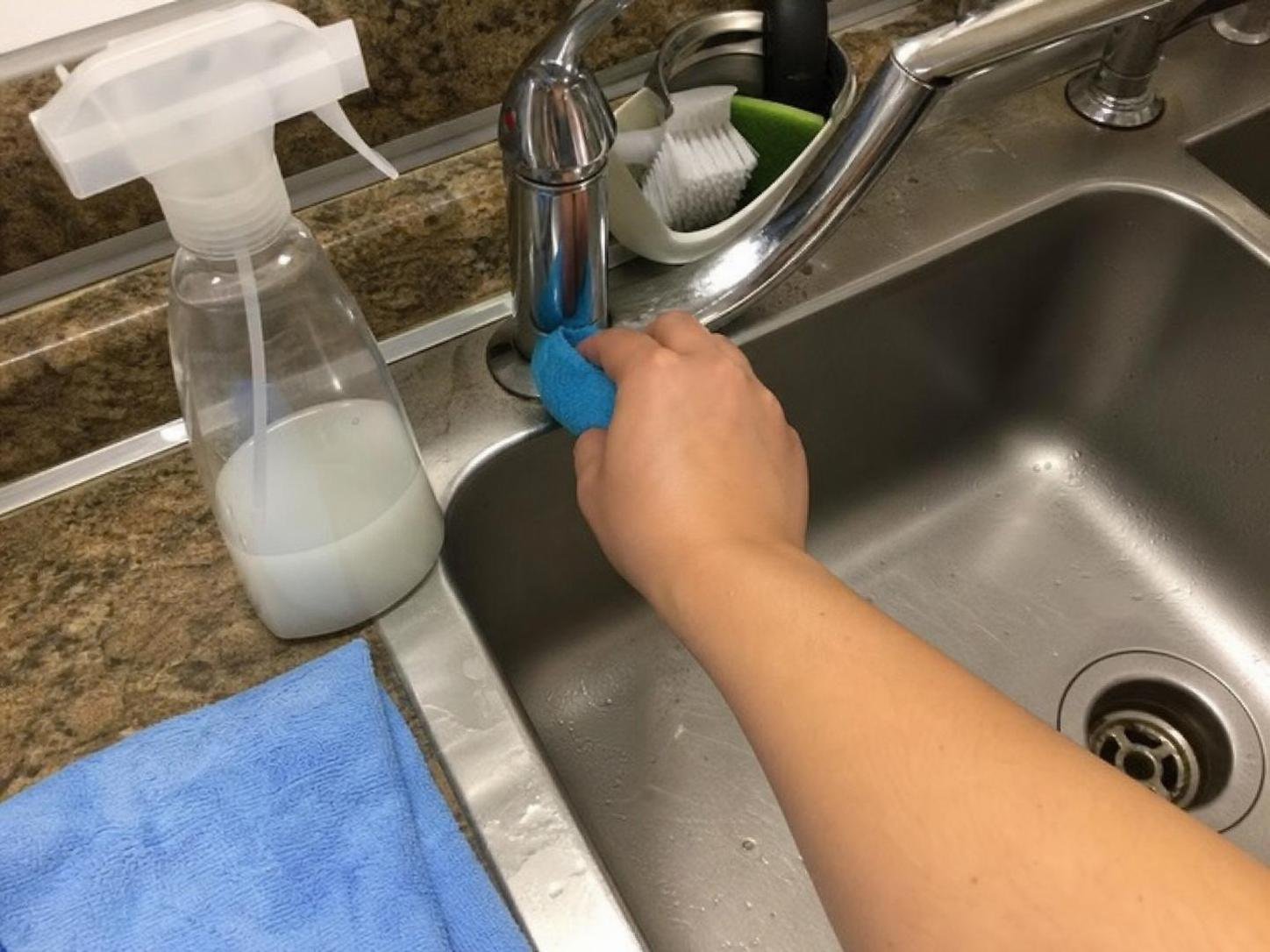
- Minutes 4–7: Clear and wipe the kitchen. Load or stack dishes, discard food scraps, and wipe crumbs from the counters and table. Use a clean cloth and the appropriate cleaner for the counter material, or a lightly damp cloth if the surface only needs a quick refresh. Wipe up water around the sink and faucet base so it does not sit on the counter or cabinet edge.
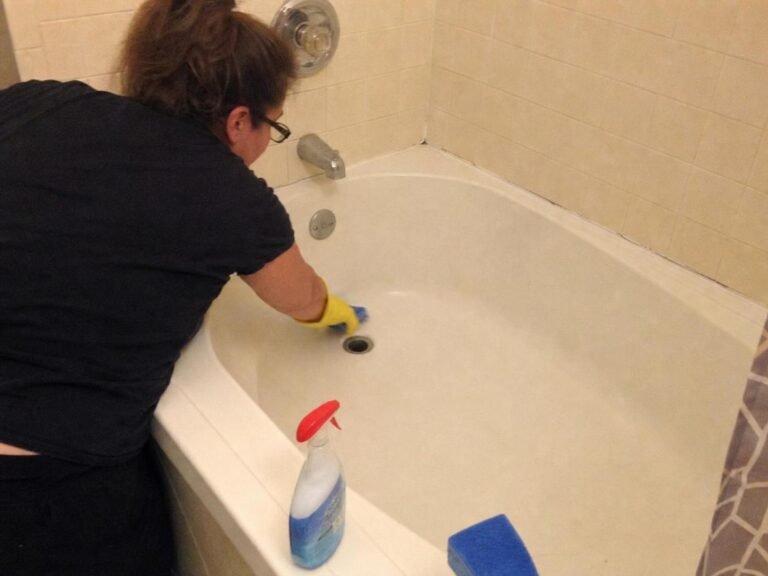
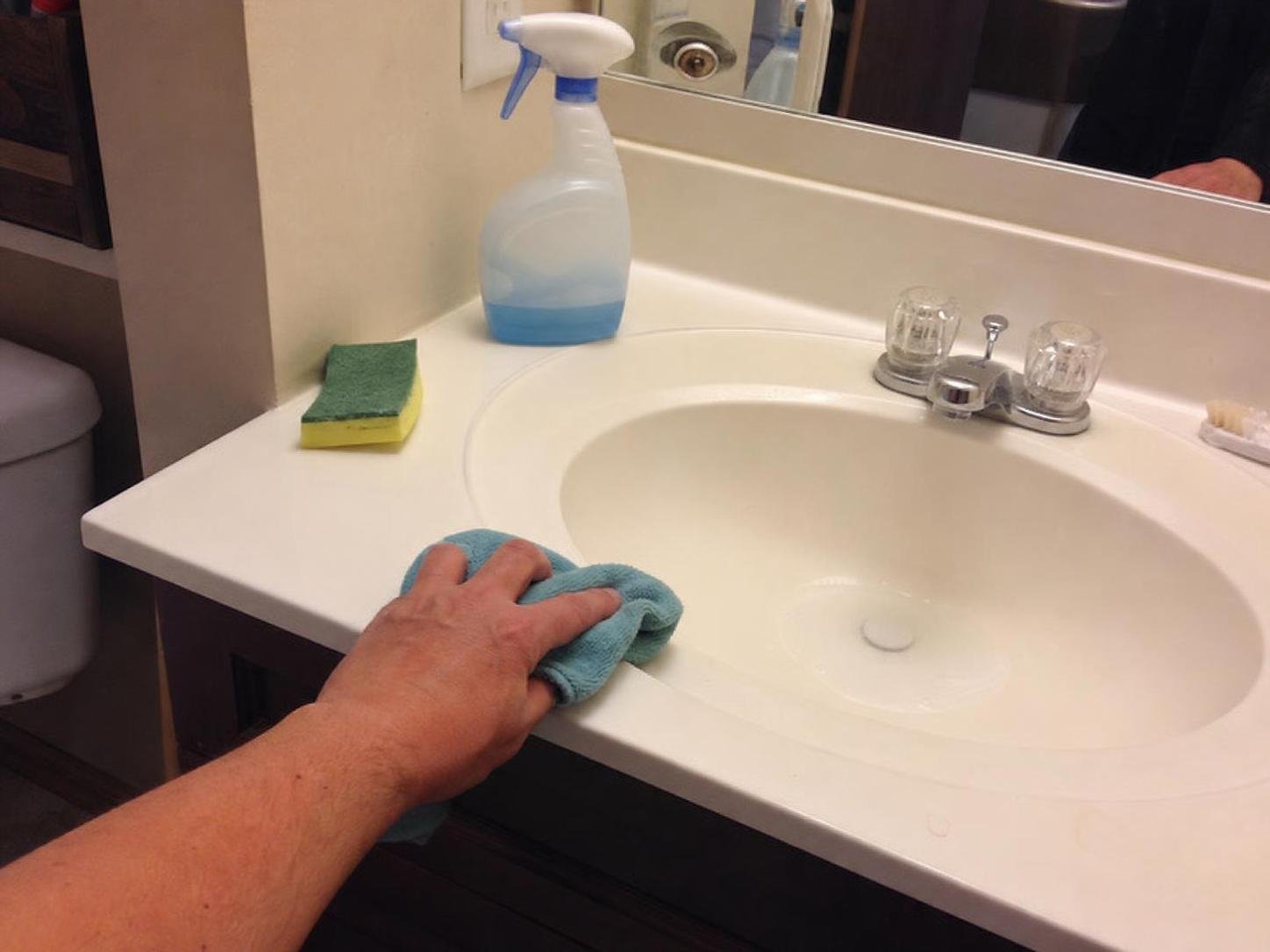
- Minutes 8–10: Refresh the bathroom. Hang towels, put products back in place, and wipe the sink, counter, and faucet with a suitable cloth or labeled cleaner. Give the mirror a quick spot-clean only if toothpaste marks or splashes are noticeable. A daily pass is for visible residue, not a full fixture scrub.
- Minutes 11–13: Handle the floor where it shows. Sweep or vacuum the kitchen, entry, dining area, and any spot where crumbs, pet hair, or tracked-in debris collect. Focus on open floor and around the table rather than moving furniture or cleaning every edge.
- Minutes 14–15: Finish the reset. Empty the small trash if it is full, return the basket items that take only a moment, and straighten cushions, blankets, or entry shoes. If the basket still has several items, leave it for a scheduled reset later rather than letting this routine run over.
🧪 Why This Works
This order removes the mess that spreads most easily: loose items create visual clutter, crumbs get tracked through rooms, and water or product residue becomes harder to remove once it dries. Cleaning the busiest areas first gives you a more noticeable result without turning a short routine into a deep-cleaning session.
Keep daily cleaning separate from deeper chores
A short routine should maintain your home, not replace periodic work such as washing floors, cleaning appliances, dusting vents, or scrubbing shower walls. Reserve those tasks for a weekly or rotating plan so the daily routine stays manageable.
| Daily 15-minute routine | Save for a longer cleaning session |
|---|---|
| Put away visible clutter and dishes | Sort drawers, cabinets, or paper piles |
| Wipe fresh counter, sink, and mirror marks | Remove built-up residue from fixtures or grout |
| Sweep or vacuum high-traffic floor areas | Mop full floors, move furniture, or clean baseboards |
| Empty a full trash can | Wash the trash can or clean recycling bins |
| Fold blankets and straighten cushions | Wash covers, treat stains, or clean upholstery |
A broader household cleaning checklist can help you assign those deeper jobs to specific days without crowding them into your daily reset.
Common mistakes that make the routine harder
The biggest mistake is treating every visible imperfection as urgent. Keep the routine focused on fresh messes and high-use areas, then make a note of anything that needs a separate cleaning session.
Trying to clean every room every day
This usually leads to rushed wiping and unfinished tasks. If a guest room, formal dining room, or low-use bathroom looks fine, skip it. Put your time into the kitchen, bathroom, entry, and living area instead.
Using one dirty cloth on every surface
A cloth that is greasy, heavily dusty, or saturated with cleaner can leave streaks and residue. Switch to a fresh side of the cloth, rinse it if appropriate for the product used, or grab another cloth before moving from the kitchen to the bathroom.
Spraying cleaner too heavily
Overspray can run into seams, cabinet edges, appliance controls, and nearby floors. Spray onto the cloth when cleaning small areas or moisture-sensitive surfaces, unless the product label specifically directs otherwise.
Letting the catch-all basket become permanent storage
The basket is useful because it prevents repeated trips during the 15 minutes. It stops working if it becomes a pile that never gets emptied. Return its contents after the routine, during an evening reset, or before the next day’s cleaning session.
Adding a deep-cleaning task “just this once”
A sticky stove spill, a shower that needs scrubbing, or a full refrigerator clean can easily consume the whole routine. Handle the urgent spot if necessary, then skip lower-priority daily tasks or schedule the larger job separately.
What to do if wiping leaves streaks or residue
Streaks usually mean there was too much cleaner, too much water, or a cloth that was already loaded with residue. Do not add more product immediately.
- Use a clean, dry microfiber cloth to buff the surface gently.
- If the product label allows rinsing, wipe with a fresh lightly damp cloth and dry afterward.
- For glass or mirrors, use a clean lint-free cloth and lighter pressure rather than repeatedly spraying the same area.
- For wood, painted finishes, and electronics, reduce moisture and stop using the product if the surface becomes dull, tacky, or discolored.
If residue returns after several light wipe-downs, check whether the cleaner is appropriate for that surface. Manufacturer instructions take priority for coated countertops, specialty flooring, appliance screens, and finished furniture.
Make the routine easier to maintain
Consistency matters more than completing every task perfectly. Give each household member a small part of the reset when possible, such as clearing dishes, putting away shoes, or checking the entry floor.
Use a simple rotating list for jobs that do not belong in the daily routine. This cleaning chores checklist can help you separate everyday maintenance from weekly and occasional tasks.
Wash reusable cloths after they become visibly soiled or start leaving lint and residue. Let damp cloths dry openly before placing them in a hamper or closed container; storing them wet can leave them musty and less pleasant to use.
Frequently Asked Questions
Should you do the same 15-minute routine every day?
Use the same basic order, but adjust the focus to your home. For example, spend more time on the entry after a wet day, on the kitchen after cooking, or on the living room after a busy evening.
What if you miss a day?
Resume the next day without trying to make up every missed task at once. Start with dishes, trash, visible clutter, and the floor areas that need attention most.
Can this routine replace weekly cleaning?
No. It reduces daily buildup, but it does not replace periodic work such as mopping, dusting less-used surfaces, cleaning the shower more thoroughly, laundering linens, or addressing built-up grease and mineral residue.
What should you skip when time is especially tight?
Skip low-visibility straightening and clean the kitchen counter, sink area, bathroom sink, and busiest floor path first. Those areas tend to look and feel neglected fastest when daily maintenance is missed.
Keep the routine short and repeatable: clear clutter, wipe only the surfaces that need it, and clean the busiest floor areas. Use light moisture on sensitive materials, let reusable cloths dry between uses, and save larger jobs for a separate checklist.
Everything Mentioned Above
Before you leave, grab the tools you need to get the job done right the first time:
*As an Amazon Associate, TidyFormula earns from qualifying purchases.